“Luck” Is Not An Oil Train Disaster Plan

from the Waterkeeper Alliance — terrific foto if not photoshopped . . . . and incidentally, who thinks shipping highly volatile oil like the Bakken crude is a good idea, anyway?

We cannot accept the inevitability of oil train derailments.
View this email in your browser

7f20d23f-edbc-4c89-8a6d-56bc9e293ea2.jpg
Photo courtesy of Columbia Riverkeeper.

On Friday, June 3, a train carrying Bakken crude oil, which was fracked in North Dakota and bound for refinery in Puget Sound, derailed and exploded in Mosier, Oregon. The derailment spilled 42,000 gallons of Bakken crude oil, some of which leached into the nearby Columbia River. Mosier’s wastewater treatment plant was shut down due to damage and contamination and its water reserves were quickly exhausted to fight the flames and cool the overheating train cars. A nearby school, filled with 200 children, was quickly evacuated and the students were unable to return for the final days of their school year. Due to the heroic effort of firefighters, and some good fortune, there were no fatalities, and of the 96 train cars hurtling down the tracks, only 16 derailed, with 4 cars igniting and leaking oil.

Many are saying that Mosier is lucky to have not seen more extensive damage and injury. According to Mosier Fire Chief Jim Appleton, a windy day, which is the norm in the Columbia Gorge, could have burned down the town and the neighboring forests. “Only extraordinary luck spared us from a devastating calamity,” he said. While Mosier was fortunate in this instance, it is frightening to think that a situation involving a massive fire, evacuations, sewage system and drinking water shut downs, and oil contamination could be considered “lucky.”
72287a44-206d-415c-8175-6c89dfe111d7.jpg

Waterkeeper Alliance President Robert F. Kennedy Jr. joined leaders of the Yakama Nation, Umatilla, and Warm Springs tribes, along with the Mayor of Mosier, Arlene Burns, to call for an end of dangerous fossil fuel transport on the Columbia River. Photo by Liv Smith.

Every time one of these oil trains rolls through a town, along a river, or over a bridge, there is a risk of disaster. Just three years ago, an oil train derailed in Lac Megantic, Quebec and killed 47 people. The federal government has predicted that these types of oil trains will derail an average of ten times per year over the next two decades, causing more than $4 billion in damages and threatening lives. The government seems to accept that these catastrophes are going to happen and they are crossing their fingers that they will be “lucky” like Mosier rather than “unlucky” like Lac Megantic.

Shortly after the derailment, Appleton voiced his deep concern, saying, “I hope that this becomes death knell for this mode of shipping this cargo. I think it’s insane. I’ve been very hesitant to take a side up to now, but with this incident, and with all due respect to the wonderful people that I’ve met at Union Pacific, shareholder value doesn’t outweigh the lives and happiness of our community.”

We cannot accept the inevitability of these derailments. We must call on our elected leaders to stand with communities like Mosier, and use all of their authority to stop reckless oil trains. Waterkeepers have been fighting dangerous oil trains and advocating for better rail infrastructure for years. Lucky or unlucky, these disasters are a threat to communities across the country and they must be prevented.

To clean water,

Marc Yaggi
Executive Director
Waterkeeper Alliance

DONATE NOW
Facebook
Facebook
Twitter
Twitter
Instagram
Instagram
YouTube
YouTube
Donate
Donate
outline-dark-facebook-48.png Share
outline-dark-twitter-48.png Tweet
outline-dark-forwardtofriend-48.png Forward
Copyright © 2016 Waterkeeper Alliance, All rights reserved.

You are receiving this email because you opted in at our website, gave a donation, or signed on to an advocacy action.

Contact Us:
Waterkeeper Alliance
180 Maiden Lane, Suite 603
New York, NY 10038
212.747.0622
info

Want to change how you receive these emails?
You can update your preferences or unsubscribe from this list

Waterkeeper Alliance, Inc. is a 501(c)(3) non-profit organization with Top-Rated status from Charity Watch and a Four Star rating from Charity Navigator.

open.php?u=a9af8670090f134f6168ccfdc&id=5f42dfb930&e=d3b14281c2

Posted in Uncategorized | Leave a comment

Who’s downloading pirated papers? Everyone

Another case of untrammeled greed mascarading as business acumen, even virtue (“returning investment” to the stockholders — even if it is 100’s of times more than no-risk funds put in up-front.)

Who’s downloading pirated papers? Everyone
http://www.sciencemag.org/news/2016/04/whos-downloading-pirated-papers-everyone

By John BohannonApr. 28, 2016 , 2:00 PM

Just as spring arrived last month in Iran, Meysam Rahimi sat down at his university computer and immediately ran into a problem: how to get the scientific papers he needed. He had to write up a research proposal for his engineering Ph.D. at Amirkabir University of Technology in Tehran. His project straddles both operations management and behavioral economics, so Rahimi had a lot of ground to cover.

But every time he found the abstract of a relevant paper, he hit a paywall. Although Amirkabir is one of the top research universities in Iran, international sanctions and economic woes have left it with poor access to journals. To read a 2011 paper in Applied Mathematics and Computation, Rahimi would have to pay the publisher, Elsevier, $28. A 2015 paper in Operations Research, published by the U.S.-based company INFORMS, would cost $30.

Related content:

He looked at his list of abstracts and did the math. Purchasing the papers was going to cost $1000 this week alone—about as much as his monthly living expenses—and he would probably need to read research papers at this rate for years to come. Rahimi was peeved. “Publishers give nothing to the authors, so why should they receive anything more than a small amount for managing the journal?”

Many academic publishers offer programs to help researchers in poor countries access papers, but only one, called Share Link, seemed relevant to the papers that Rahimi sought. It would require him to contact authors individually to get links to their work, and such links go dead 50 days after a paper’s publication. The choice seemed clear: Either quit the Ph.D. or illegally obtain copies of the papers. So like millions of other researchers, he turned to Sci-Hub, the world’s largest pirate website for scholarly literature. Rahimi felt no guilt. As he sees it, high-priced journals “may be slowing down the growth of science severely.”

The journal publishers take a very different view. “I’m all for universal access, but not theft!” tweeted Elsevier’s director of universal access, Alicia Wise, on 14 March during a heated public debate over Sci-Hub. “There are lots of legal ways to get access.” Wise’s tweet included a link to a list of 20 of the company’s access initiatives, including Share Link.

read more: http://www.sciencemag.org/news/2016/04/whos-downloading-pirated-papers-everyone

Posted in Uncategorized | Leave a comment

ICIJ Corporate Database

The International Consortium of Investigative Journalists database of Offshore Corporations from the files of Mossack-Fonseca is here.

There are 39 offshore corporations registered in the British Virgin Islands with PARADISE in the name.

Posted in Uncategorized | Leave a comment

AEROSOLS: A New Climate Change Challenge

[From the March/April edition of Foreign Affairs (page 135). I am surprised by the breadth and complexity of the aerosol issues, which add a major dimension to my understanding of the climate change dilemma.]

The Next Front on Climate Change

How to Avoid a Dimmer, Drier World

Veerabhadran Ramanathan, Jessica Seddony, and David G. Victor

After dithering for decades, governments finally seem to be pay ing serious attention to the problem of global climate change.

Late last year, at the Paris climate conference, they adopted a major new agreement to limit global warming, beginning a process to strengthen commitments to reduce greenhouse gas emissions over time.

For many observers, the promises of the Paris conference offer too little, too late, because emissions are high and still rising and because there will be major disruptions to the climate even if countries meet their emissions reduction pledges. Nevertheless, it had been 18 years since the world’s governments left a major climate summit with an agreement in hand, so just getting to yes in Paris has offered climate diplomacy fresh credibility.

Until now, governments have focused on limiting the greenhouse gases that cause global warming and its attendant hazards, such as rising sea levels and stronger storms. But there is more to climate change than higher temperatures. Many of the activities that cause greenhouse gas emissions—burning coal for power, diesel for transport, and wood for cooking, for example—also yield ultra-small particles known as aerosols, which blanket vast areas in a haze that blocks and scatters sunlight. By reducing the solar energy that reaches the earth’s surface, aerosols reduce evaporation and slow the water cycle that governs where, when, and how much rain falls.

For years, climate scientists have believed that a warmer world would be wetter, because higher temperatures hasten evaporation and increase rainfall. But even when these higher temperatures are accounted for, a world dimmed by aerosols will in fact be drier in many places—including some areas, such as the Sahel and other regions in sub-Saharan Africa, that have long suffered from drought because they rely on rainfall to sustain subsistence agriculture. According to many of the most reliable models, such as those produced by the National Center for Atmospheric Research and Princeton University’s Geophysical Fluid Dynamics Laboratory, China, North America, and South Asia are also in danger of more frequent and severe droughts owing to aerosols. Indeed, for much of the world, aerosol-induced dimming and drying are among the most immediate dangers posed by pollution.

The good news is that swift action on aerosols is possible, with huge potential benefits. Many of the tools needed to make rapid cuts to aerosol emissions are already available, and policymakers around the world—notably in Europe and the United States, and also in East Asia—have shown how to use them. Since aerosols have a short atmospheric life span, the climatic benefits of emissions cuts would appear quickly, within only a couple of decades. What is more, speedy action on aerosols would bring huge global health benefits: roughly seven million people die each year from causes related to particulate pollution, and cutting down on aerosols would dramatically reduce the death toll. In light of these potential benefits, governments around the world should ensure that aerosols play a central role in their environmental policies by encouraging the development and deployment of cleaner technologies for power generation, transportation, and household cooking, heating, and lighting.

Measures to limit aerosol pollution tend to receive less public attention than the broader campaign against greenhouse gases, but they, too, should be an essential component of global action against climate change.

DIMMER AND DRIER

Climate scientists have known about the dimming effect of aerosols since at least the 1970s, but most research has focused on their effects on temperature. Darker aerosols, such as diesel soot and other kinds of black carbon, absorb sunlight and accelerate warming. But lighter aerosols, such as the sulfates and nitrates formed from coal, gasoline, and other fuel emissions, cool the planet by reflecting sunlight back into space. That explains, in part, why the world hasn’t seen more of a temperature increase from the greenhouse gases already present in the atmosphere. (This masking effect is powerful enough that some advocates of geoengineering have proposed injecting more reflective aerosol particles into the atmosphere in order to cool the earth.)

Focusing on how aerosols affect temperature, however, has distracted policymakers from the important and distinct effects that aerosols have on the water cycle. These effects are most pronounced in the Northern Hemisphere, which is the source of most of the world’s aerosols and thus suffers the most dimming from these pollutants. But because air currents tend to carry pollution, water droplets, and water vapor far from their origins, aerosols produced in one region can also affect rainfall far afield.

Since the 1880s, when reliable record keeping began, global temperatures have increased by about 0.9 degrees Celsius. And as the planet has warmed, rainfall at latitudes above 45 degrees has generally increased. But twice since the mid-twentieth century, surges in aerosol emissions have significantly disrupted this pattern, reducing rainfall in a number of regions.

The first disruption was the result of the sulfur dioxide emissions produced by the massive combustion of coal and other fuels across Europe and North America in the mid-twentieth century, driven by rapid industrial growth after World War II. From the 1950s to the late 1980s, global emissions of sulfur dioxide (which in the atmosphere becomes sulfate, a reflective aerosol) nearly doubled, reducing the amount of sunlight reaching the earth’s surface by about two percent on average. As a direct result of this dimming, average rainfall in the Northern Hemisphere declined by between three and four percent over the same period. Indeed, there is strong evidence that sulfur dioxide emissions in the United States and western Europe contributed to the Sahelian megadroughts that began in the 1960s and continued through the 1990s, a period during which precipitation in the Sahel and some other parts of sub-Saharan Africa fell by between 25 and 50 percent relative to twentieth-century averages.

Thanks to stringent air pollution laws introduced in the 1970s and strengthened steadily in the following years, the blanket of aerosols over Europe and North America has thinned since the 1980s. From 1980 to 2000, the average amount of sunlight that reached the earth’s surface in these regions increased by about four percent-enough to lift average annual precipitation on land areas in the Northern Hemisphere by a similar magnitude.

[In 2010, China and India received between 10 and 15 percent less sunlight than they did in 1970.]

A second surge in aerosols is now playing out in East Asia and South Asia. These regions, which have rapidly industrialized over the past four decades, have seen a two- to fourfold increase in sulfur dioxide and black carbon emissions since the 1970s. As a result, in 2010, China and India received somewhere between ten and 15 percent less sunlight than they did in 1970. As the wind has carried sulfates and black carbon over thousands of miles, the dimming effect has extended to the atmosphere over the Indian Ocean, reducing the evaporation of seawater and thus weakening the monsoons that bring much-needed water to East Asia and South Asia every year. From 1950 to 2002, the most recent period for which estimates are available, there was a seven percent decrease in average annual rainfall over the Indo-Gangetic Plain, the fertile belt of land crossing eastern Pakistan, northern India, and Bangladesh that is home to more than one billion people, many of them dependent on rain-fed agriculture. Over the same period, summer monsoon rainfall in parts of northern China decreased by more than ten percent.

The desiccation of China’s north and the region’s recent drought, in 2010 and 2011, have affected not only agriculture but also other water dependent activities, such as hydroelectric power generation. The consequences have worried Chinese authorities to such a degree that they are building canals and pipelines that will eventually divert some 1.6 trillion cubic feet of water to the region each year. Some of China’s repressive policies toward water-rich Tibet are motivated by the Chinese government’s desire to maintain control over the nation’s fragile water supplies and their hydropower potential.

China has the capacity and the financial means to protect itself from erratic precipitation by investing in water infrastructure. So do other relatively wealthy countries, which can also respond to droughts by importing more water-intensive products and refocusing domestic economic activity on crops and industries that are less dependent on precipitation. Strategies such as these, along with aggressive measures to improve water-use efficiency, have allowed California, for example, to grow its economy even as it suffers its worst drought in modern history.

But things are different in much of the developing world, where water infrastructure and state capacity are more limited and a higher proportion of the population depends on locally sourced food produced on rain-fed land. In South Asia, for example, 60 percent of the agricultural land is rain-fed. That proportion reaches 90 percent in Latin America and 95 percent in sub-Saharan Africa. Many countries in these regions can’t easily turn to infrastructure and trade to solve their food production problems because of limited budgets and because they lack the capacity to rapidly shift production to new crops and industries. And many of these countries are particularly dependent on agriculture: nearly half of all employment in India is in farming, and even in richer Brazil, agricultural laborers account for 15 percent of the work force. All told, more than 400 million farmers, along with their dependents, count on rain-fed agriculture for their livelihoods. Countries such as Brazil, Colombia, Sudan, and Zimbabwe, which rely on hydropower for between 60 and 80 percent of their electricity generation, face additional risks from the dimming.

Forty percent of the world’s population is already expected to live J under severe water stress by 2050. That proportion will likely increase as aerosol-induced dimming further disrupts the water cycle. And as governments around the world are beginning to realize, water scarcity is not only an economic and humanitarian challenge but also a geopolitical one: as supplies of fresh water dwindle, states will begin to jockey for access to them, as they already have, for example, in north eastern Africa, where Egypt has squabbled with Ethiopia over its construction of a massive hydroelectric dam on the Blue Nile.

CLEANING THE AIR

Although the costs of aerosol-induced dimming are high, the policies needed to reduce the pollution that causes it are relatively clear. Cutting aerosols will require action in three main sectors: electric power generation, transportation, and household energy services for the poor.

With regard to electric power generation, most of the concern about aerosols centers on burning coal, which is responsible for more than 70 percent of the world’s sulfur dioxide emissions. Given its environmental and health impacts, conventional coal power is increasingly hard to justify. So if coal is to remain part of the global energy mix in the coming decades, coal-fired power plants will need to become more efficient and include equipment to remove sulfur dioxide and other pollutants from their emissions. As the technology to do so improves, new coal plants will also need to capture and store carbon dioxide emissions—an expensive prospect. At the same time, governments and firms will have to invest more in other energy sources. Natural gas, which emits much lower levels of most pollutants (including aerosols) than coal does, is one option, and in North America, the shale boom has dramatically cut the cost of supplying it. Making gas friendlier for the climate and the water cycle will require more work to plug leaks in the natural gas supply and transmission system (since those leaks release methane, a potent green house gas), and it will require greater frugality in the use of water to drill and frack shale gas wells. Of course, there are also many options beyond natural gas, such as nuclear, solar, and wind power.

Regulators in California and the European Union, meanwhile, have already pioneered policies that cut aerosol emissions from transportation. They have mandated cleaner fuels and combustion technologies, such as low-sulfur diesel and exhaust systems equipped with efficient particulate filters and catalytic converters. Officials elsewhere should follow their lead, and they should pair these regulations with rigorous compliance regimes, which are currently lacking in many countries.


Eliminating combustion altogether, perhaps through electric vehicles, could be a next step. In the meantime, subsidy reforms can help limit the use of some of the dirtiest fuels. Changes to India’s fuel-pricing regime, for example, have encouraged car buyers there to shift from diesel to gasoline engines, which emit far fewer aerosols. Transitioning large commercial and public-transportation vehicles to natural gas could also help.

Cutting aerosol emissions produced by burning dirty fuels in the world’s poorest households is another way to reduce global dimming. Just over one billion people, most of them in the developing world, rely on kerosene to light their homes, and three billion use solid fuels, such as crop residue and dung, for cooking and heating. Burning these fuels with traditional technologies generates aerosols that damage lungs along with the climate: the particulates emitted by biomass based cooking and heating are responsible for about a third of the dimming in South Asia. Cleaner technologies for cooking, heating, and lighting, such as energy-efficient cookstoves and solar lanterns, are readily available, and making them universally accessible would offer huge health and environmental benefits to the world’s poor. Ensuring such access by 2030 would cost up to $50 billion per year—a high price, but one that should be manageable if it is shared among a number of states, including rich countries, which would themselves benefit from lower aerosol emissions in the developing world.

Since aerosols have a short atmospheric life span, pursuing policies such as these could significantly reduce global dimming within ten or 20 years. That would dramatically limit the risk of droughts and irregular monsoons. It would also heat up the planet by reducing the atmosphere’s reflective aerosol “mask,” however, so any effort to reduce global dimming must be accompanied by significant cuts to carbon dioxide and other greenhouse gas emissions.

ACT FAST

As governments build on what they achieved at the Paris climate conference, they must set politically feasible targets for future action. Focusing on aerosols could help. Whereas greenhouse gas emissions will bring about relatively distant and diffuse dangers, aerosols cause immediate and localized harm. That should raise the incentives for governments to  act against them, and it should raise the willingness of their constituencies to accept such action. Indeed, in the case of aerosol reductions, the parochial interests that have so often stymied broader climate diplomacy need not hinder progress. That is why some countries that have long been reluctant to do much about global pollution—from China and India to Brazil and the United States—have pursued bolder policies when it comes to pollutants that have localized effects, such as aerosols.

As states sharpen their pledges to reduce greenhouse gas emissions in the coming years, they should also make distinct pledges to cut aerosols. (So far, few states have done so: of the 186 emissions-reduction pledges submitted before the Paris climate conference, only a handful, including Chile’s and Mexico’s, mentioned aerosols.) And they should broadcast the promise of these reductions to build public support for the policies needed to achieve them. As such policies take hold, they will generate rapid, tangible benefits, encouraging even more progress on the changing climate’s other challenges.

Unfortunately, even the most effective climate diplomacy will leave the world’s poorest states exposed to the higher temperatures, rising sea levels, and disruptions in rainfall caused by industrial pollution. As a result, governments will have to work to adapt. Today, the countries with the highest emissions—among them, China, Japan, the United States, and the members of the European Union—are on track to raise around $100 billion per year by 2020, much of which will be used to help vulnerable states adjust to the dangers of a changing climate.

As for how to spend these funds, a variety of efforts will be needed, and states should be willing to experiment to determine which programs work best, sharing the know-how they gain with one another. As they do so, they should invest in infrastructure and technologies that address the effects of both warming and dimming, such as irrigation methods that can better protect farmers from erratic rainfall and new kinds of drought-resistant crops. Indeed, innovation in water conservation technologies remains massively underfunded, despite their huge promise. Finally, governments should remove protectionist policies in their countries’ agricultural sectors, which limit the ability of consumers to access foreign sources of food when erratic rainfall and higher temperatures harm local production.

The dimming caused by aerosols has already made the world’s water supplies less secure. It is both economically and technologically feasible to reverse this process. Doing so will require a concerted global effort, but failing to do so will compound the risks of drought and poverty already in store as a result of the world’s changing climate.

Authors:

VEERABHADRAN RAMANATHAN is Distinguished Professor of Atmospheric and Climate Sciences at the Scripps Institution of Oceanography at the University of California, San Diego.
JESSICA SEDDON is Founder and Managing Director of Okapi Research and Advisory and a Senior Fellow at the Centre for Technology and Policy at the Indian Institute of Technology Madras.
DAVID G. VICTOR is a Professor at the School of Global Policy and Strategy at the University of California, San Diego, and the author of Global Warming Gridlock: Creating More Effective Strategies for Protecting the Planet.
© Foreign Affairs
Posted in Climate Change, Governance | Leave a comment

Projected World Fisheries Management Strategies

From the Proceedings of the National Academy of Sciences (open access) — for detailed examination of the background data for this important study, download the article WITH Supplemental Informaiton at <http://www.pnas.org/content/early/2016/03/28/1520420113.full.pdf?with-ds=yes>

This is interesting, important stuff — wish I were smart enough to understand what it would mean specifically for Caribbean fisheries management.
– – – – – – – – – – – – – – – – – – – – – – – – – – – – – – – – – – – – – – – – – – – – – – – – –

  • > Early Edition
  • > Christopher Costello, doi: 10.1073/pnas.1520420113

Global fishery prospects under contrasting management regimes

  1. Christopher Costelloa,1,
  2. Daniel Ovandoa,
  3. Tyler Clavellea,
  4. C. Kent Straussb,
  5. Ray Hilbornc,
  6. Michael C. Melnychukc,
  7. Trevor A. Branchc,
  8. Steven D. Gainesa,
  9. Cody S. Szuwalskia,
  10. Reniel B. Cabrala,
  11. Douglas N. Raderb, and
  12. Amanda Lelandb

Author Affiliations

  1. Edited by James A. Estes, University of California, Santa Cruz, CA, and approved February 26, 2016 (received for review October 14, 2015)
  1. Abstract
  2. Full Text
  3. Authors & Info
  4. Figures
  5. SI
  6. Metrics
  7. Related Content
  8. PDF
  9. PDF + SI

Significance

What would extensive fishery reform look like? In addition, what would be the benefits and trade-offs of implementing alternative approaches to fisheries management on a worldwide scale? To find out, we assembled the largest-of-its-kind database and coupled it to state-of-the-art bioeconomic models for more than 4,500 fisheries around the world. We find that, in nearly every country of the world, fishery recovery would simultaneously drive increases in food provision, fishery profits, and fish biomass in the sea. Our results suggest that a suite of approaches providing individual or communal access rights to fishery resources can align incentives across profit, food, and conservation so that few trade-offs will have to be made across these objectives in selecting effective policy interventions.

Next Section

Abstract

Data from 4,713 fisheries worldwide, representing 78% of global reported fish catch, are analyzed to estimate the status, trends, and benefits of alternative approaches to recovering depleted fisheries. For each fishery, we estimate current biological status and forecast the impacts of contrasting management regimes on catch, profit, and biomass of fish in the sea. We estimate unique recovery targets and trajectories for each fishery, calculate the year-by-year effects of alternative recovery approaches, and model how alternative institutional reforms affect recovery outcomes. Current status is highly heterogeneous—the median fishery is in poor health (overfished, with further overfishing occurring), although 32% of fisheries are in good biological, although not necessarily economic, condition. Our business-as-usual scenario projects further divergence and continued collapse for many of the world’s fisheries. Applying sound management reforms to global fisheries in our dataset could generate annual increases exceeding 16 million metric tons (MMT) in catch, $53 billion in profit, and 619 MMT in biomass relative to business as usual. We also find that, with appropriate reforms, recovery can happen quickly, with the median fishery taking under 10 y to reach recovery targets. Our results show that commonsense reforms to fishery management would dramatically improve overall fish abundance while increasing food security and profits.

Recent advances in our understanding of global fishery status (14) provide a foundation for estimating the targets for, and potential benefits from, global fishery recovery. Although existing aggregate estimates make a compelling general case for reform (5, 6) new data, models, and methods allow for more detailed analysis of the benefits and trade-offs of contrasting management regimes. Indeed, emerging empirical evidence shows that effective reforms and scientific assessments taken by some countries have already placed their fisheries on a positive path (1, 7). Reforms span a range of approaches, from scientifically informed harvest policies to institutional reforms that restructure the incentives in a fishery to align profits with conservation. In many cases, these changes have successfully reduced fishing effort to sustainable levels and stabilized overfished stocks (7, 8). These cases of successful management contain lessons that can be applied more broadly and also suggest that effects of fishery reform will differ across fisheries, nations, and reform policies. However, these new data, models, and lessons learned have never been synthesized to inform the future potential from global fishery recovery.

Here, we ask, what might be the future of global fisheries under alternative management regimes? In addition, what might happen if we undertook the reforms that previous studies have stressed are urgently needed? We couple the latest individual fishery data to bioeconomic models to estimate alternative scenarios of fishery recovery for individual fisheries, countries, and the globe. We seek to inform policy recommendations for recovering fisheries, including insights regarding the following: (i) what is the status of fisheries across the globe? (ii) Are there strong trade-offs or synergies between recovery efforts that emphasize fishery profits vs. catch vs. biomass conservation? (iii) In a world with limited resources to devote to fishery recovery, which countries provide the most compelling and urgent cases for fishery reform? In addition, (iv) how long will benefits of reform take to arrive?

We examined three approaches to future fishery management: (1) business-as-usual management (BAU) (for which status quo management is used for projections) (SI Appendix), (2) fishing to maximize long-term catch (FMSYFMSY), and (3) rights-based fishery management (RBFM), where economic value is optimized. The latter approach, in which catches are specifically chosen to maximize the long-term sustainable economic value of the fishery, has been shown to increase product prices (primarily due to increased quality and market timing) and reduce fishing costs (primarily due to a reduced race to fish); these are reflected in the model. In all scenarios, we account for the fact that fish prices will change in response to levels of harvest.

For each fishery, we estimate future trajectories out to 2050 of catch, profit, and biomass under each policy. Other social objectives such as employment, equity, or biodiversity conservation are clearly important, and may be correlated with these outcomes, but are not explicitly modeled here. Aggregating across fisheries provides country and global estimates of the consequences and trade-offs of alternative policies for recovering fisheries. A strength of our approach is the ability to forecast effects for fisheries in the Food and Agriculture Organization (FAO) “not elsewhere included” (NEI) category (SI Appendix).

Bioeconomic theory provides some predictions for the trade-offs across alternative societal objectives of food, profit, and biomass conservation. Perhaps the most salient point is that the three objectives can go hand-in-hand, at least in comparison with a fishery in a depleted state. Consider, for example, a small-scale open-access fishery in the developing tropics, with biomass [scaled by biomass at maximum sustainable yield (MSYMSY)] B/BMSY=0.3BBMSY0.3 (overfished) and fishing pressure (scaled by the fishing pressure that would generate MSYMSY) F/FMSY=1.7FFMSY1.7 (overfishing). Such a fishery would be near bionomic equilibrium (9), so biomass and profit would be low, but stable from year to year. Because the stock has been overfished, the catch is also small—in this case, it is just one-half of MSYMSY. Recovering such a fishery would eventually increase fish catch, profit, and fish biomass.

However, there are nontrivial cases in which trade-offs do exist. For example, consider a fishery with B/BMSY=0.4BBMSY0.4 and F/FMSY=2.5FFMSY2.5, where biomass is lower than optimal and still declining. Despite the low biomass, fishing mortality is so large that harvest remains high—in this case, it is MSYMSY. Although such pressure will ultimately reduce the stock, the inevitable economic and food provision consequences of that overexploitation have yet to be realized. Implementing recovery in such a fishery is likely to increase biomass, and will almost surely increase profits and catches relative to their long-run values under BAU, but may not increase catches relative to their current levels (see SI Appendix, Fig. S1, for illustrative example).

Any given harvest policy will have effects that play out differently over time. By explicitly modeling the dynamics for each fishery under each harvest policy, we can examine the timing of effects in detail. To do so, we estimated the intrinsic growth rate, carrying capacity, and MSYMSY for each fishery in our dataset, using a structural data-limited assessment approach (10). This arms us with a microlevel structural bioeconomic model for all fisheries in our database.

Timing of effects is particularly important when considering food provision and profit motives. For example, China, the country with the largest volume of fish catches, has proposed new goals to increase seafood consumption by 50% over the next 6 y (11). Our analysis allows us to examine the extent to which alternative management policies for wild fisheries can achieve such an objective for China. Similarly, if a country is interested primarily in the profitability to fishers, then it may focus on policies that emphasize profit recovery, which may involve adopting institutional reforms that improve economic efficiency. These harvest policies often call for sharp reductions in current fishing effort to allow rapid rebuilding of stocks (although, because we consider costs, it is rarely optimal to completely close the fishery during rebuilding). Such measures often impose significant short-run economic losses that are sometimes politically infeasible, but when such a policy is economically optimal, the long-run gains will outweigh the short-run costs.

Previous SectionNext Section

Results and Discussion

We estimate that global MSYMSY is 98 million metric tons (MMT) (after scaling up to account for data gaps), which is substantially larger than the 80 MMT reportedly caught across the globe in recent years (12), but is consistent with MSY calculations in ref. 6 (83–100 MMT) and ref. 5 (95 MMT). Our estimate reduces MSYMSY of forage fish and assumes no unreported historical catch. Incorporating a recent global estimate of illegal fishing (23%) (13), our estimate of MSYMSY would rise to 121 MMT. Our estimates of each fishery’s current B/BMSYBBMSY and F/FMSYFFMSY are plotted in Fig. 1 for all global fisheries (Fig. 1A) and for three illustrative oceanic regions (Figs. 1 B–D). The Northeast Pacific is known to be well managed—our estimates accord with this (Fig. 1B). Many fisheries in the Northeast Atlantic are in poor condition, although 56% are on a path toward sustainability, as fishing pressure is below FMSYFMSY (Fig. 1C). As a final illustration, we estimate very low biomass and continued high fishing mortality for the bulk of fisheries in the Western Central Pacific (Fig. 1D). The worse a fishery’s current status, the larger the potential gains from reform. Overall, we estimate the global median fishing mortality is F/FMSY=1.5FFMSY1.5 (overfishing is occurring) and biomass is B/BMSY=0.78BBMSY0.78 (stocks are overfished); these are consistent with refs. 4, 5, and others.

Fig. 1.

Current fishery status (“Kobe”) plots for four illustrative regions. Each dot represents a fishery. The red dots represent data from RAM database, and the black dots represent our estimates for unassessed fisheries. Dot size scales to fishery catch. Shading is from a kernel density plot. The green triangle is the median and the green square is catch-weighted mean, for the given region. Panels represent data from all global fisheries in our database (A), Northeast Pacific (B), Northeast Atlantic (C), and Western Central Pacific (D) regions.

Taking estimated current fishery status as a starting point, for each of the three future policies (BAU, FMSYFMSY, RBFM), we consider two scenarios. The first scenario applies the policy only to stocks of “conservation concern” (i.e., the 77% of stocks for which we estimate B/BMSY<1BBMSY1 and/or F/FMSY>1FFMSY1, which roughly corresponds to the FAO definition of “fully exploited” or “over-exploited”). Under that scenario, stocks not of conservation concern are assumed to maintain current biomass forever. The second scenario applies the policy to all stocks. Because the conservation concern scenario provides a less optimistic estimate of global benefits of reform, we adopt it as the default. There, we find that simultaneous gains for catch, profit, and biomass (RBFM relative to BAU) is a likely outcome for the majority of stocks (56%; Fig. 1), and countries (23 of the top 30 in harvest) of the world.

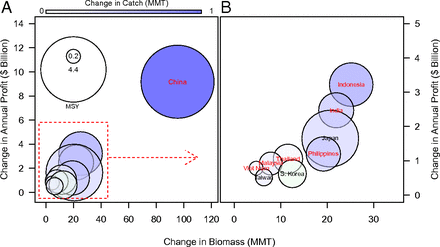
Focusing on the 10 countries with the greatest potential absolute increase in fishery profits relative to BAU also shows substantial gains in both conservation and catch (Fig. 2). China’s immense fisheries show enormous potential (Fig. 2A); other prominent fishing nations in Asia, such as Indonesia, India, Japan, and Philippines, also secure large reform benefits along all three dimensions (Fig. 2B). Seven of these 10 countries derive >50% of profit increases from the NEI species groups (red, Fig. 2).

Fig. 2.

Absolute changes in projected 2050 biomass, profit, and catch (color) for the 10 countries [China, Indonesia, India, Japan, Philippines, Thailand, Malaysia, Republic of Korea, Vietnam, and Taiwan (A); see B for exploded view of nine countries] with the greatest increase in profit under economically optimal harvest strategy (RBFM) compared with BAU for stocks of conservation concern for fisheries in our dataset. Size of circle indicates the MSYMSY (in million metric tons) for stocks of conservation concern in the country. Country names in red indicate countries for which >50% increase in profit comes from fisheries in the FAO category “NEI.”

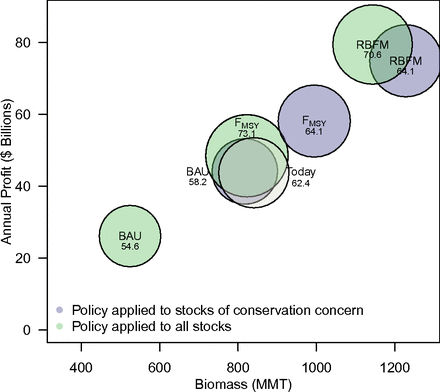
Although results thus far suggest that nearly every country in the world stands to gain from fishery recovery regardless of its objectives, some important distinctions emerge across recovery policies. Although all reasonable recovery policies are expected to give rise to increases in biomass of fish, albeit to different levels, we expect the RBFM class of policies, which focuses on economics returns, to achieve the highest levels of biomass (14). The FMSYFMSY policy will have lower fish biomass, lower profits, and slower recovery times, but upon complete recovery, will ultimately generate the largest catch. The aggregated catch, profit, and biomass under each policy scenario illustrates that trade-offs across policies are small for the aggregated global fishery (Fig. 3).

Fig. 3.

Aggregate global effects on projected 2050 profit and biomass of alternative policies applied to fisheries in our dataset. Size and printed number indicate catch in baseline year (“Today” bubble) or in 2050 (all other bubbles).

Applying the stated policy only to stocks of conservation concern, the RBFM policy gives rise to annual increases of 2 MMT in catch, $31 billion in fisheries profit, and 388 MMT in biomass compared with current levels (Fig. 3). These values rise substantially (to 16 MMT, $53 billion, and 619 MMT) when all fisheries, not just those of current conservation concern, are managed more effectively and when comparing to BAU (Fig. 3); this accounts for fishing more aggressively on currently underexploited stocks. Each of these values could reasonably be adjusted upward by an additional 28% because our database covers only the 78% of reported catch with adequate data. The largest gains accrue from fisheries with the most depleted status, although these gains may be limited if depleted fisheries have crossed tipping points beyond which recovery may not be possible (15). Even targeting reforms at just fisheries of conservation concern, global fishery profits are 29% higher under RBFM than under FMSYFMSY (Fig. 3); this wedge grows to 64% when applying policies to all fisheries (Fig. 3). This increase in profits under RBFM relative to FMSYFMSY has two components: an “optimization effect” (68% from optimizing the harvest policy) and a “pecuniary effect” (32% from price increases and cost decreases). Although we have not explicitly modeled effects of fishery reform on consumers, they are likely to benefit from the catch increases (and price decreases) that arise from fishery recovery. Consumers may also benefit from higher quality product under RBFM, albeit at a commensurately higher price.

Although the most suitable institutional reforms to achieve recovery will depend on social, economic, and ecological objectives and conditions, various approaches such as cooperatives (16, 17), territorial rights (18, 19), or individual transferable quotas (8, 20) could be used to improve economic results under a range of harvest policies. Although these all fall under the umbrella of RBFM, each will bring different benefits in different settings that must be weighed against the costs of reform. Although these costs have not been explicitly modeled here, experience from countries such as Iceland, New Zealand, and Australia suggest that they are likely to be only a fraction of the potential benefits identified here (21). Our results suggest that some of the greatest economic improvements in fisheries may come more from improving institutions than from improving the status of fished stocks. Furthermore, these gains in profit can occur quickly following institutional reforms, because they do not exclusively rely on stock recovery. Such rapid economic gains can help offset many of the necessary short-term costs associated with stock recovery when catches must temporarily decline to enable recovery.

To ensure model tractability and to apply it at a global scale, we made a number of simplifying assumptions. SI Appendix contains an extensive description and set of robustness checks and sensitivity analyses; we note a few here. First, because our entire analysis is built on estimates of the current fishery status, it is natural to ask how sensitive our results are to these uncertain estimates. We performed numerous routines to estimate our model’s ability to predict out of sample, broken out by region and fishery size. Results suggest that our methods for estimating B/BMSYBBMSY and F/FMSYFFMSY are more robust for fisheries in the developed world that are not extremely overfished. The presence of low-to-moderate unreported fishing does not bias these estimates (although it will bias MSYMSY estimates downward). Second, predictions of absolute economic effects rely on estimates of economic parameters (demand and costs). To this end, we built a price database derived from export values and other data. We transformed the data to ex-vessel equivalents and modeled demand with a constant elasticity of −1.15, consistent with refs. 22 and 23. We model costs by identifying the unassessed fisheries estimated to be in bionomic equilibrium and backing out the cost that drives profit to zero under open-access equilibrium. This procedure results in costs per MT that are consistent with those in ref. 24 and generates mean cost/revenue ratios of 67% in the current fishery. We conducted numerous sensitivity analyses examining the effects of a range of these biological and economic parameters; although these affect our quantitative predictions, our qualitative findings are largely unaffected. We also performed a historical analysis where catches for all assessed stocks from 1980 to 2012 were predicted using the model with data up to 1980 only. Actual catch compares extremely well with the model’s prediction (correlation, 0.99; value of P < 1%).

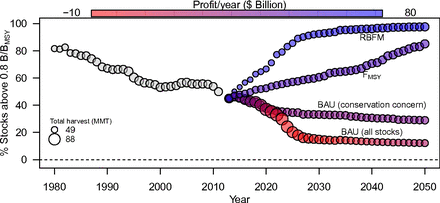
Our model allows us to make novel predictions of the timing of fishery status into the future under alternative management approaches (Fig. 4). If the BAU policy is applied to all fisheries, the proportion below a recovery target of 0.8BMSYBMSY (see ref. 25 and SI Appendix) rises from 53% today to 88% in 2050 and the proportion experiencing fishing pressure above FMSYFMSY rises from 64% to 84%. These values are consistent with those of Quaas et al. (26), who estimate declines under BAU for all stocks studied, with an estimated biological decline of about 77%. We find that, if reform efforts are put in place now, the median time to recovery would be just 10 y, and by midcentury, the vast majority (98%) of stocks could be biologically healthy and in a strong position to supply the food and livelihoods on which the world will increasingly rely.

Fig. 4.

Timing of projected recovery under alternative policies for recovering fisheries of conservation concern in our dataset. Size and color indicate global catch and profit by year, respectively.

Previous SectionNext Section

Materials and Methods

We developed a novel approach combining several sources of data and models to conduct fishery-level analyses. Our database of 4,713 fisheries is drawn from both the RAM Legacy Stock Assessment database (27) and the FAO marine capture databases (species–country–FAO region triples) (28). Excluding fisheries that failed to meet minimum criteria (SI Appendix), this process accounts for 78% of reported global catch. Because data availability varies across these fisheries and by region, we used surplus production models consistently across all fisheries to estimate MSY-related parameters and predict future trajectories of biomass.

We extracted biomass and fishing mortality directly from stock assessments for the 397 fisheries included from the RAM database (43% of catch in our database). Status of the remaining 4,316 “unassessed” fisheries are estimated using a novel two-step process involving global regression analysis and a structural fisheries modeling approach (merging methods in refs. 4 and 10; SI Appendix), if available, or extracted from FAO State of World Fisheries and Aquaculture database (12). The structural modeling approach, catch-MSY (10), assumes stationarity of MSYMSY, FMSYFMSY, and BMSYBMSY parameters; see SI Appendix for further details including sensitivity analyses. The set of fisheries categorized as NEI by the FAO were handled with a two-step process using an appropriate comparison set of fisheries from the global database and imputing values to the NEI stock (SI Appendix); this could be improved with better reporting of catches of these species. Although trophic effects are not explicitly modeled, they may play a role in the potential benefits of rebuilding fisheries. In reality, each stock we have modeled exists within a larger ecosystem context that influences the dynamics of each species within it (e.g., ref. 15). Recovering predatory species increases predation on prey species. Consequently, reform projections from single-species models may be optimistic for ecosystems in which many piscivorous species are recovered. To partially account for this, we conservatively reduced MSY of all forage fish stocks, which provide a food source for many higher–trophic-level fish and mammals, by 25% (29).

We assessed the future trajectories of all individual fisheries up to midcentury (2050) using a Pella–Tomlinson surplus production model (30) with fishery-specific life-history parameters, described as follows:

Bt+1=Bt+ϕ+1ϕgBt(1−(BtK)ϕ)−Ht,Bt1Btϕ1ϕgBt1BtKϕHt
[1]

where ((ϕ+1)/ϕ)gϕ1ϕg is the intrinsic rate of the growth for the species, K is the carrying capacity, and HtHt is the harvest in year t. We assume stationarity in g and K parameters. We set the growth curve parameter ϕ at 0.188, per refs. 31 and 32, such that BMSYBMSY occurs at 40% of K; alternatives are analyzed in SI Appendix. Estimates of MSYMSY and g were also derived from the RAM database for assessed fisheries. In cases where only some of these values are provided, we used available data to calculate missing values (e.g., estimating MSYMSY from CatchCatch, B/BMSYBBMSY and F/FMSYFFMSY, and g as MSY/BMSYMSYBMSY) or performed a two-step process described above.

For each fishery, we modeled a range of fishing policies, each of which assigned a scaled fishing mortality rate tailored to that specific stock (i.e., a “control rule”) for all possible realizations of biomass. Profit in a period is revenue (price times catch) minus the cost of fishing, which is an increasing function of the fishing mortality applied. Prices are adjusted each year from a global seafood demand curve with constant elasticity of −1.15. Our base case scenario assumed zero discounting (for which profit is optimized dynamically); higher discount rate scenarios are reported in SI Appendix. This allowed us to predict the annual catch, profit, and biomass of fish in the ocean across a range of alternative harvest policies, as reported above.

Previous SectionNext Section

Acknowledgments

We are grateful to National Center for Ecological Analysis and Synthesis for computation support. We acknowledge financial support from the David and Lucile Packard Foundation, Waitt Foundation, and Helmsley Charitable Trust.

Previous SectionNext Section

Footnotes

  • 1To whom correspondence should be addressed. Email: costello.
  • Author contributions: C.C., C.K.S., R.H., M.C.M., T.A.B., S.D.G., C.S.S., D.N.R., and A.L. designed research; C.C., D.O., T.C., C.K.S., M.C.M., C.S.S., and R.B.C. performed research; D.O., T.C., R.H., M.C.M., C.S.S., R.B.C., and D.N.R. analyzed data; and C.C., S.D.G., R.B.C., D.N.R., and A.L. wrote the paper.
  • The authors declare no conflict of interest.
  • This article is a PNAS Direct Submission.
  • This article contains supporting information online at www.pnas.org/lookup/suppl/doi:10.1073/pnas.1520420113/-/DCSupplemental.

Freely available online through the PNAS open access option.

Previous Section

References

    1. Worm B, et al.

    (2009) Rebuilding global fisheries. Science 325(5940):578–585
    .Abstract/FREE Full Text

    1. Worm B,
    2. Branch TA

    (2012) The future of fish. Trends Ecol Evol 27(11):594–599
    . CrossRefMedlineWeb of Science

    1. Branch TA,
    2. Jensen OP,
    3. Ricard D,
    4. Ye Y,
    5. Hilborn R

    (2011) Contrasting global trends in marine fishery status obtained from catches and from stock assessments. Conserv Biol 25(4):777–786
    . CrossRefMedline

    1. Costello C, et al.

    (2012) Status and solutions for the world’s unassessed fisheries. Science338(6106):517–520
    . Abstract/FREE Full Text

    1. Arnason R,
    2. Kelleher K,
    3. Willmann R

    (2009) The Sunken Billions: The Economic Justification for Fisheries Reform (The International Bank for Reconstruction and Development/The World Bank, Washington, DC)
    .

    1. Sumaila UR, et al.

    (2012) Benefits of rebuilding global marine fisheries outweigh costs. PLoS One7(7):e40542
    . CrossRefMedline

    1. Hilborn R,
    2. Ovando D

    (2014) Reflections on the success of traditional fisheries management. ICES J Mar Sci 71:1040–1046
    . Abstract/FREE Full Text

    1. Costello C,
    2. Gaines SD,
    3. Lynham J

    (2008) Can catch shares prevent fisheries collapse? Science321(5896):1678–1681
    . Abstract/FREE Full Text

    1. Clark C,
    2. Munro G

    (1975) The economics of fishing and modern capital theory: A simplified approach. J Environ Econ Manage 2(2):92–106
    . CrossRefWeb of Science

    1. Martell S,
    2. Froese R

    (2013) A simple method for estimating MSY from catch and resilience. Fish Fish14:504–514
    . CrossRef

    1. Ministry of Agriculture of China

    (2014) China Food and Nutrition Development Guideline 2014–2016(Ministry of Agriculture of China, Beijing)
    .

    1. FAO

    (2014) The State of World Fisheries and Aquaculture (Food and Agriculture Organization of the United Nations, Rome)
    .

    1. Agnew DJ, et al.

    (2009) Estimating the worldwide extent of illegal fishing. PLoS One 4(2):e4570
    .CrossRefMedline

    1. Clark CW

    (2010) Mathematical Bioeconomics: The Mathematics of Conservation (Wiley, Hoboken, NJ)
    .

    1. Travis J, et al.

    (2014) Integrating the invisible fabric of nature into fisheries management. Proc Natl Acad Sci USA 111(2):581–584
    . Abstract/FREE Full Text

    1. Deacon RT

    (2012) Fishery management by harvester cooperatives. Rev Environ Econ Policy6:258–277
    . Abstract/FREE Full Text

    1. Ovando DA, et al.

    (2013) Conservation incentives and collective choices in cooperative fisheries. Mar Policy 37:132–140
    . CrossRef

    1. Wilen JE,
    2. Cancino J,
    3. Uchida H

    (2012) The economics of territorial use rights fisheries, or TURFs. Rev Environ Econ Policy 6:237–257
    . Abstract/FREE Full Text

    1. Gelcich S, et al.

    (2012) Territorial user rights for fisheries as ancillary instruments for marine coastal conservation in Chile. Conserv Biol 26(6):1005–1015
    . CrossRefMedline

    1. Arnason R

    (2012) Property rights in fisheries: How much can individual transferable quotas accomplish? Rev Environ Econ Policy 6:217–236
    . Abstract/FREE Full Text

    1. OECD

    (2003) The Costs of Managing Fisheries (OECD, Paris)
    .

    1. Asche F,
    2. Bjorndal T

    (1999) Demand Elasticities for Fish: A Review (Food and Agriculture Organization of the United Nations, Rome)
    .

    1. Delgado CL,
    2. Wada N,
    3. Rosegrant MW,
    4. Meijer S,
    5. Ahmed M

    (2003) Fish to 2020: Supply and Demand in Changing Global Markets (International Food Policy Research Institute and WorldFish Center, Penang, Malaysia)
    .

    1. Lam VWY, et al.

    (2011) Construction and first applications of a global cost of fishing database ICEAS. J Mar Sci 68:1996–2004
    .

    1. Hilborn R

    (2010) Pretty good yield and exploited fishes. Mar Policy 34:193–196
    . CrossRef

    1. Quaas MF,
    2. Reusch TB,
    3. Schmidt JO,
    4. Tahvonen O,
    5. Voss R

    (2016) It is the economy, stupid! Projecting the fate of fish populations using ecological-economic modeling. Glob Change Biol22(1):264–270
    . CrossRef

    1. Ricard D,
    2. Minto C,
    3. Jensen OP,
    4. Baum JK

    (2012) Examining the knowledge base and status of commercially exploited marine species with the RAM Legacy Stock Assessment Database. Fish Fish13:380–398
    . CrossRef

    1. FAO

    (2014) FAO Statistics and Information Service of the Fisheries and Agriculture Department: Total Fishery Production 1950–2012 (Food and Agriculture Organization of the United Nations, Rome)
    .

    1. Pikitch EK, et al.

    (2014) The global contribution of forage fish to marine fisheries and ecosystems. Fish Fish 15:43–64
    . CrossRef

    1. Pella JJ,
    2. Tomlinson PK

    (1969) A generalized stock production model. Inter-Am Trop Tuna Comm Bull 13:416–497
    .

    1. Branch TA,
    2. Hively DJ,
    3. Hilborn R

    (2013) Is the ocean food provision index biased? Nature495(7442):E5–E6, discussion E7
    . CrossRefMedline

    1. Thorson JT,
    2. Cope JM,
    3. Branch TA,
    4. Jensen OP

    (2012) Spawning biomass reference points for exploited marine fishes, incorporating taxonomic and body size information. Can J Fish Aquat Sci69:1556–1568
    . CrossRefWeb of Science

  • Facebook
  • Twitter
  • Google+
  • CiteULike
  • Delicious
  • Digg
  • Mendeley

What’s this?

Posted in Uncategorized | Leave a comment

Citizen Science: Tools for the Masses in the Digital Age

From the Washington Post — <https://www.washingtonpost.com/national/health-science/how-to-find-a-flying-squirrel-citizen-scientists-are-enlisted-to-help-scientists/2016/03/21/6c32ffd2-cb63-11e5-ae11-57b6aeab993f_story.html>

“Citizen Science” tools are the kind of projects that the new NatureTech.Solutions grant program will be looking to reward — stay tuned for details. . . .

Health & Science

How to find a flying squirrel: Citizen scientists are enlisted to help scientists.

By John M. Blodgett March 21

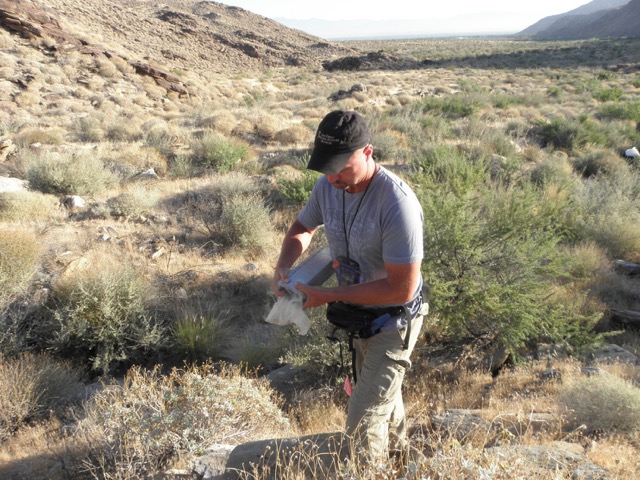
Mammalogist Scott Tremor carries an animal captured in Palm Canyon near Palm Springs, Calif. (Aharon Sasson/Courtesy of the San Diego Natural History Museum)

Since 2008, San Diego mammalogist Scott Tremor has been looking for the elusive San Bernardino flying squirrel, which can glide more than 300 feet between trees. He has conducted surveys in its historical range east of Los Angeles, but he found nothing. Now, with some reported sightings in the area, he is determined to find the mammal — “the right way” this time, as he put it — by enlisting ordinary people to look in their back yards for the nocturnal animal, which may be labeled an endangered species this spring.

Such citizen scientists — volunteers who perform research alone or alongside professionals — have contributed to science since the 1800s. They discovered Comet Hale-Bopp, improved navigation charts for sailors, set their computers to search for extraterrestrial life and, in the case of Erin Brockovich, figured out what was polluting a community’s water. The term “citizen scientist” was coined in a 1979 issue of New Scientist, according to Muki Haklay, a University College London professor and the director of its Extreme Citizen Science group,

[How Hale and Bopp found their comet]

What’s new is that professionals such as Tremor, who works at the San Diego Natural History Museum, find citizen scientists to be an important adjunct to their classic approach to investigation. With technology so easily available, more ordinary people than ever are participating in scientific research.

The San Bernardino flying squirrel, which can glide more than 300 feet between trees, may soon be labeled an endangered species. (Courtesy of the San Diego Natural History Museum)
According to Jennifer Shirk of the Citizen Science Association, a group founded in 2013, mobile and Internet technologies have fueled a huge growth in participation focused not only on local issues such as the San Bernardino squirrel but also on larger ones such as climate change.

The association and others like it in Europe, Australia and elsewhere have formed in recent years to promote citizen science, assist in its practice and build a community around it, Shirk said.

The U.S. government is also getting involved. In September, the White House held an online forum to highlight contributions that citizen scientists have made to agriculture, health and other fields, and launched a website that federal agencies can turn to for help in organizing projects.

That event, Shirk said, was “a major vote of confidence” in the value of volunteers.

Citizen science can yield information that is otherwise difficult or impossible to come by, said Alison Cawood, coordinator for citizen science at the Smithsonian’s Environmental Research Center in Edgewood, Md. “There is no way that one lab can have enough people to answer questions that require lots of data collection over a short period of time or over a large geographic scale. No lab can afford or reasonably manage the efforts of that many people, nor can they put effort into hiring people they may only need for a day or a week per year,” she said. “Only volunteers make sense for projects like that.”

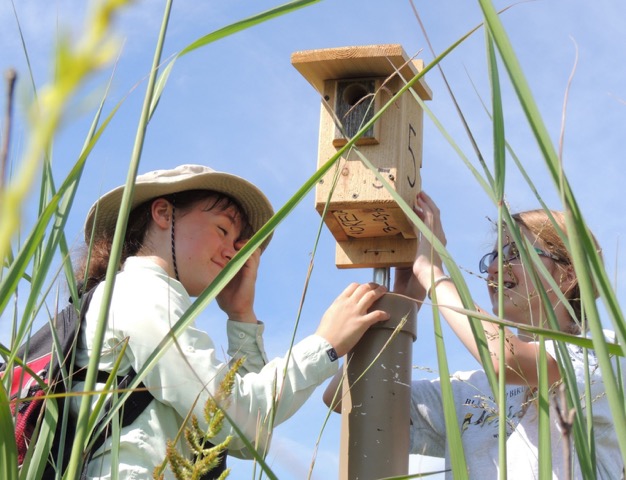
Anna Rose, left, and Adriana Losey of the Central Ohio Chapter of the Ohio Young Birders Club install a predator guard beneath a new tree swallow nest box at Ottawa National Wildlife Refuge in Oak Harbor, Ohio. (Nina Harfmann)

Cawood does recruiting on SciStarter.com, a citizen scientist website, and volunteer websites including Idealist.com. She also emails new opportunities to past volunteers and to those who have expressed an interest in participating.

Using these methods, she found about 100 volunteers for a study last summer of a parasite affecting mud crabs in Chesapeake Bay. Most of the participants collected crabs in the field, while a handful worked alongside paid staff to measure each one and count how many contained the parasite. Cawood said a postdoctoral fellow is using the data to study how the parasite evolves and to better understand invasive parasites and diseases in coastal marine ecosystems.

A project named eBird is a vivid example of the scale of work that can happen when citizen scientists get involved. The online study was launched in 2002 by the Cornell Lab of Ornithology and the National Audubon Society. Since then, said the lab’s Christopher Wood, more than 250,000 people from every country in the world have submitted 300 million records of bird sightings for inclusion in a database.

“When you put that much data in the hands of researchers and scientists,” Wood said, “you can answer a huge variety of questions . . . [that] you wouldn’t be able to answer with smaller-scale studies.”

In January, for example, Wood’s team announced that eBird data had helped researchers model the migration of 118 species, spanning the Western Hemisphere, for an entire year. Such a project was previously impossible. “Species ranges are no longer polygons on a map” based on expert opinion of where a species might be found, said Wood’s colleague Brian Sullivan. Now, he said, those ranges can be based on field observations “that give us an idea of how many of each species we can expect to find on a particular day in a particular place.”

Wood said such data can help improve conservation efforts. For example, he said, the Nature Conservancy, in collaboration with farmers in California, uses eBird data to time the flooding of rice fields for precisely when migrating shorebirds need such habitat for feeding and resting.

In addition to providing sheer numbers and geographic range, citizen scientists can perform tasks that hardware or software can’t.

“The detection and identification of birds is a highly nuanced process that machines aren’t capable of yet,” Sullivan said. Only humans can discern birds by what they look like and sound like and then classify them according to species, for example. “Without humans, eBird would not exist,” he said.

Citizen scientists can also cause problems for researchers. For example, Cawood said, volunteers can create biases in data when they make observations only on weekends or during nice weather, distortions that professional scientists generally don’t cause

“Volunteers do what fits with their schedules, which is perfectly reasonable,” she said. “There are ways to deal with this” — through statistics or the design of experiments, for example — “but it can present a complication. You just aren’t always sure what you are going to get with volunteers in the way that you are with staff you have hired specifically to do a job.”

Citizen science can have a positive impact in labs as well.

Professional scientists are using tools from Public Lab, a nonprofit that got its start by designing do-it-yourself scientific instruments — including kites equipped with digital cameras — so volunteers could survey damage caused by the 2010 Deepwater Horizon oil spill in the Gulf of Mexico. Because of Public Lab, ecologist Chris Fastie of Middlebury College in Vermont said, he can modify a camera to take infrared photos, which are used to analyze plant health, for less than $100.

“I can do it without using grant money, and students can use the cameras for undergraduate projects or graduate research,” he said. “Commercially available equivalents cost thousands of dollars, so most students never get their hands on one. [Public Lab] changes the equation for who can participate in making this type of scientific observation.”

For Luisa Serrano of Yucaipa, Calif., who has seen the San Bernardino flying squirrel at her cabin near Big Bear Lake, being a citizen scientist is a civic duty. A lifelong birdwatcher and eBird contributor who let Tremor set up remote cameras, seed feeders and hair-collecting tubes at her cabin, she said volunteering for science gives a greater purpose to her enjoyment of watching wildlife.

“If you think of [the environment] as our life-support system, then we have a huge obligation to take the best care of it that we possibly can,” she said. “You may not live to see the final good results of your participation, but at least you’re contributing, and I think that’s important.”

Links:

Public Lab — <https://publiclab.org>

Citizen Science at Smithsonian’s Environmental Research Center —
<cawooda@serc.si.edu>

Citizen Science Association — <http://staging.citizenscience.org>

Posted in Civil Society, Science | Leave a comment

Competitive Yoga?? This is just Wrong. . . .

from Racked <http://www.racked.com/2016/2/24/11054576/yoga-competition-olympics#6332049>

Champions of Zen

Inside the controversial world of competitive yoga

CHAVIE LIEBER Feb 24, 2016, 9:00a Photos by Cole Wilso,

Picture this: a hundred people sitting around a boxing ring at a Brooklyn gym one snowy evening in late January. Instead of gathering to watch people fight, they are there to watch people bend, twist, and fold their bodies into contorted yoga poses.

The room is completely silent as all eyes focus on the center of the ring, where 22 yogis will each demonstrate six different postures before the night is through. A panel of judges is positioned at a table in front of the ring while they analyze the movements, stone-faced.

Slowly but surely, the room comes to life. When Craig Friedman, a competitor in the senior division, breathes heavily through Dandayamana Dhanurasana, standing bow pose, his knees quiver as he pulls one leg up in the air to make a straight line with the one planted on the ground, and the crowd claps encouragingly. Beads of sweat drip down Friedman’s forehead as he brings his leg into Janu Sirsasana, head-to-knee pose, and the judges take swift notes.

Then Victoria Gibbs, tall and taut in a black bodysuit, takes the ring. Bending backwards to grab her shins, she completes Chakra Bandhasana, full wheel pose, to the sounds of soft gasping from the impressed audience. Moments later, she’s morphing into Vrscikasana, scorpion pose, and veins pop out of her forehead as she tries not to wobble while balancing on her forearms.

A few feet off away from the ring is an area where a dozen competitors are warming up their splits, backbends, handstands, and downward dogs on gym mats. They watch the competition and swap tips. Nikki Ortiz, a 27-year-old from Ecuador who teaches at Yoga to the People, says the atmosphere is friendly: “Nobody wants anyone else to fall. They just want you to do your best.”

These yoga enthusiasts are competing in the USA Yoga Asana New York regional championship, now in its 13th year. This is just one of 16 such events that will take place around the country in 2016, and those who earn the highest scores tonight will face off against champions from other regionals during a final competition in Jackson Hole, Wyoming in May. Those winners will then go on to compete in the international championships, where representatives from participating countries like Australia, Spain, Mexico, Switzerland, Chile, England, and Denmark will battle for the title of world champion.

The US competitions are organized by the United States Yoga Federation, also referred to as USA Yoga, an LA-based nonprofit with a mission to develop and promote yoga as a sport. Its clever logo resembles the NBA’s, but with a yogi doing standing bow pose instead of a basketball player dribbling a ball.

“Nobody wants anyone else to fall. They just want you to do your best.”

“The whole purpose is to inspire others to take on the practice and gain the benefits of yoga,” says Joseph Encinia, president of USA Yoga and an international yoga champion himself. “We find that the more people see competitions, the more they are interested.”

And the more steam competitive yoga picks up, the more polarizing it’s become.

Posted in Uncategorized | Leave a comment

An Example: Caribbean “Priority” for Information Technology

But it should be understood that outsourcing is a meaningful alternative to building in-house capacity. Of course. And somehow there is no dollar cost associated with outsourcing. Or we could call it “mainstreaming.”

from the CIVIC e-mail dGroup, quoting the Cayman Compass https://www.caymancompass.com/2016/02/28/governments-it-budget-halved-since-2008/

Government’s IT budget halved since 2008

Computers chief ‘unclear’ on services provided

By Brent Fuller
February 28, 2016

While information technology was playing a larger role each day in public governance, the Cayman Islands was slashing its IT budget year after year, finance records reveal.

Government’s budget for the Computer Services Department, which handles IT services for central government entities, was about $12 million during the 2008/09 fiscal year.

Following a series of annual reductions, by 2013/14 the budget had been cut to less than $6.5 million. In the current year, 2015/16, the budget is just under $7 million, according to Acting Chief Officer for the Ministry of Home Affairs Wesley Howell.

“At a time when government has more demands on IT services, the IT budget was shrinking,” Mr. Howell told the Legislative Assembly’s Public Accounts Committee on Friday.

Mr. Howell is not banking on a significant increase in funding to computer services for the upcoming government budget year. Rather, he said the mission and services provided by the department would have to change.

For the most part, he expects a greater reliance on outsourced day-to-day operational activities for IT. “It’s already happening at this point, it’s not coordinated,” Mr. Howell said.

Newly appointed Computer Services Department Interim Director David Smailes told the committee Friday it was unclear to him at this stage “what services we provide to government.”

Mr. Howell and Mr. Smailes’s statements were made during a review of a 2015 audit report that indicated the government’s IT infrastructure is vulnerable to external and internal sabotage, that development of the system has been “ah hoc” for a number of years, and that IT management and security “has not been a priority” for government managers.

Former Auditor General Alastair Swarbrick reported on the situation in 2012 in a review that was shielded from public view. Auditors made the follow-up 2015 evaluation public after determining government had done little to improve a dire situation with IT security and that in some cases the problem had gotten worse.

A number of other areas covered in the report revealed the depth of government’s IT deficiencies. No one was hired for a two-year period to review and maintain IT security for the system, Mr. Howell confirmed. He said computer services staffers “did the best they could” at the time to cover the gaps.

Another potential gap existed within the statutory authorities and government-owned companies that operate separately from the central government. In many cases, the Computer Services Department does not provide services to those entities, which hire their own technical staff.

Mr. Howell agreed that no one was looking at the 26 outside agencies to see if their security procedures were adequate, and that these entities, which include Cayman Airways, the Cayman Islands Airports Authority and the Health Services Authority, were on their own.

“We have a collection of silos,” Mr. Howell said.

Mr. Howell said a “baseline” recommendation for minimum government computer security parameters had been sent to Cabinet for review. However, he said computer services still has “financial challenges” and might not be able to perform all those functions under the current budget.

When the Ministry of Home Affairs took over the Computer Services Department in 2013, it began to replace some IT hardware and software, but noted the department was still operating based on “incremental changes” to the budget, not the “radical changes that we feel are needed.”

“This is a … national matter,” he said. “IT affects the entire Cayman Islands, not just one department.”

Posted in Access, Governance, Information, Small Island | Leave a comment

The Wise Ass on a Hill Speaks

A note from Bruce Potter

Posted in Uncategorized | Leave a comment

New Country Income and Well Being Analyses . . . .

Focus on Poverty: Hidden inequality data unmasked

By Sally Murray

Off the coast of Lagos, Nigeria, land is being reclaimed from the sea to host Eko Atlantic, a futuristic new city for the mega-rich. Touted as the ‘Hong Kong of Africa’, it will boast the continent’s largest shopping mall and financial hub, a marina, private international schools and hospitals, and 250,000 residents.

Ten kilometres away is the slum neighbourhood of Makoko, also built on water and already home to 250,000 people. They live along polluted waterways, in densely packed stilted houses, under constant threat of demolition by government.

“we can [now] see just how poorly Nigeria’s economy is set up to serve most people, and how rampant inequality there is compared to other countries”

Sally Murray

It’s well known that Nigeria’s richest and poorest people are worlds apart. But what about the typical, middle-income person? How does Nigeria’s growth, wealth and poverty affect them? Until earlier this month, it was very hard to access data on mid-income groups in most countries. Now, for the first time, the US think-tank Center for Global Development (CGD) has published figures on the middle (median) incomes of almost all countries.

It turns out that the middle earner in Nigeria takes home just US$1.80 each day — below the international poverty line of US$1.90 a day. The data also shows that in several countries with a similar GDP (gross domestic product) per capita to Nigeria, the middle earner has a more comfortable living: more than US$7 in Tonga and US$9 in Bolivia, for example. Meanwhile, in Nigeria’s northern neighbour Niger — six times poorer as a country per capita — the middle earner lives on US$1.90 per day.

It’s incredible that this data wasn’t published before. We knew Nigeria had an inequality problem, but until now discussions have been steered by per capita (mean) incomes — and these are heavily skewed by the incomes of the mega-rich. But by looking at median income statistics we can see just how poorly Nigeria’s economy is set up to serve most people, and how rampant inequality there is compared to other countries.

For countries at the lower end of the income scale, median income is not just a tangible statistic that can be easily understood, it is also highly correlated with the sorts of measures we want it to illuminate: poverty, inequality and the living standard of the majority. [1]

If it’s so useful, why has median income data only just been made available? CGD had to use a convoluted method to drag it (kicking and screaming) from the World Bank’s PovcalNet, a repository of data from over 850 household surveys from 126 countries, first made publicly available five years ago. Much of that data is itself recent: when global poverty rates were estimated in 1990, the analysis had only 22 household surveys to draw on. [2]

Today, the science of household data collection and analysis remains far from perfect: a huge amount of data has been collected, but only the simplest, most crucial, income, consumption and inequality data is readily comparable across countries.

Posted in Uncategorized | Leave a comment