
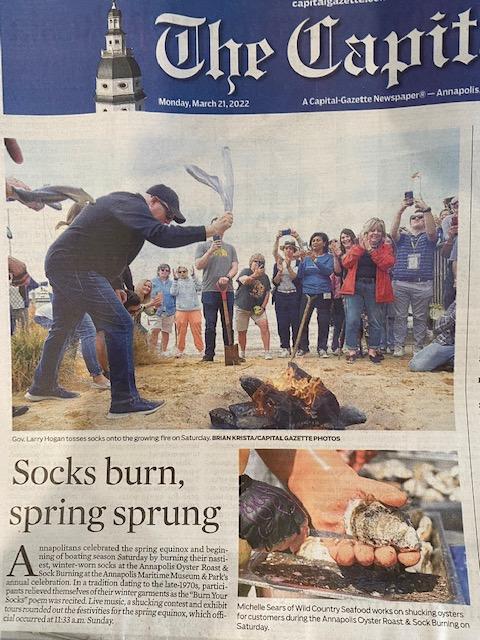
Gov. Larry Hogan is the kind of moderate Republican who brings clean socks to a sock burning party.
Bruce Potter443-454-9044
Gov. Larry Hogan is the kind of moderate Republican who brings clean socks to a sock burning party.
Bruce Potter443-454-9044
https://www.npr.org/2022/03/03/1083931647/russia-ukraine-invasion-michael-kimmage
Bruce Potter443-454-9044
Scroll down
The Royal Caribbean Symphony of the Seas has a construction date of 2018 and a total size of 228,081 gross tons. The ship measures 1,188 feet (362 meters) in length and falls in line as number 1 among Royal Caribbean’s 36 existing and former cruise ships. It’s included in Royal Caribbean’s Oasis Class. At full capacity, the Symphony of the Seas holds 7,718 passengers. That includes 5,518 cruise vacationers and 2,200 staff members. The Royal Caribbean Symphony of the Seas total number of staterooms is 2,745.
Symphony of the Seas Size & Stats
This link is sent to you from https://www.hcn.org
You are receiving this mail because someone read a page at
High Country News – Know the West
and thought it might interest you.
It is sent by bpotter@irf.org with the following comment:
“Good story and excellent photos depicting the environmental recovery of the Channel Islands offshore California near Los Angeles.”
See the Channel Islands’ stunning ecological recovery
The conservation success story is an example of what decades of work can accomplish.
Today it’s coffee at Office Depot, day before yesterday it was a dozen eggs at Walgreens.

Bruce
443-454-9044
. . . . there were so many non-profits, insurance and real estate agents?

[Just kidding — really nice and very much appreciated, and best wishes to all.]
Bruce 443-454-9044
New information to me, from this page in the Weather.com website: <https://weather.com/health/allergy/news/2018-11-08-fall-allergy-cities-2018 >
Go to the URL above to see graphics and the actual list of 50 cities
= = = = = = = = = =
Which City Is the Worst for Fall Allergies This Year?
By Tiarra MukherjeeMarch 26, 2021
If you’re sniffling, sneezing, wheezing, itchy-eyed and always the first one sick after Labor Day — you’ve probably got fall allergies. Making matters worse, where you live might affect your symptoms. The good news is, the Asthma and Allergy Foundation of America (AAFA) knows your pain and so, to help you get ahead of it, they released their latest list of top 100 fall allergy capitals.
“Unlike earlier years when the fall capitals were mostly northeastern, the cities on this year’s list are concentrated heavily in the south” says Angel Waldron, AAFA Health Resources Advocate. In fact, the top three most challenging cities for people with allergies are all in the south: McAllen, Texas; Louisville, Kentucky; and Jackson, Mississippi. “That region is a prime environment for weeds,” she continues, and two of those weeds — ragweed and pigweed — are the allergens that people struggle with most in the fall.
The AAFA uses three factors to determine its city rankings: use of allergy medication, the availability of nearby allergists, and pollen count per capita.The first two factors have remained primarily constant over the years — pollen count has not.
This year, fall pollen is more regionally widespread and concentrations have intensified. The AAFA says that this is directly correlated to climate change. “This is our 14th year doing this research and the pollen scores have skyrocketed,” says Waldron. “There is nothing else happening other than global warming that is causing it. Increased rainfall and increased temperatures and milder winters all contribute to more greenery, more weeds, and more pollen.”
Texas is of particular note this year, with three cities — McAllen, San Antonio and El Paso — ranking high on the list. These cities also rank much higher than the last time the research was published in 2016, with San Antonio jumping from 16th to fourth place and El Paso jumping from 49th to 11th place.
This is because “the Texas climate is perfect for mold and pollen survival,” explains Waldron, and because the region is home to the Mountain Cedar tree, a tree that releases a lot of pollen into the air. “The [Mountain Cedar tree] pollen travels effortlessly by northerly winds from the hill country,” she says. “This can cause havoc on people with allergic rhinitis [seasonal allergies] in Texas.”
Texas has also always had a problem with ragweed, according to Dr. Hethu Parekh, an allergy specialist at Austin Family Allergy and Asthma. He’s also seen an increase in dust allergies in his patients, the result of late summer dust storms. Plus, he adds, “with more rain as of late, specifically in Central Texas, mold concentrations have gone up and we’re seeing more patients with mold allergies.”
While this might sound like a lot of bad news for allergy sufferers in Texas, don’t start packing your bags just yet. “Pollen spores are so lightweight, they can travel up to 500 miles — so we’re not telling people in Texas to move,” Waldron says. “We really just want folks to become educated about their surroundings, consult a specialist and then find the treatment that’s right for you. There is not one cure for everyone, so it is very important to get individualized treatment.”
Want to see where your hometown ranks on their list? Click through the slideshow above to find out.
This long BBC article begins with the example of John Mussington, in Barbuda.
 | Bruce on Dr Kenrick Leslie, CBE, ED of… |
 | Bruce Potter on K Street at Twilight |
| bpotter1 on Who is putting us in the … |
| Michael O'Neal on Virgin Islands Natural Resourc… |
| Bruce Potter on Maybe this is how the end of t… |

 Potter's Weal