Serious Issue as We Become More Embedded in a Global, Knowledge-Intensive Economy

From the Washington Post — use the link to see all the graphics. . . <http://www.washingtonpost.com/blogs/wonkblog/wp/2015/03/02/u-s-millennials-post-abysmal-scores-in-tech-skills-test-lag-behind-foreign-peers/?tid=hybrid_experimentrandom_1_na>

Wonkblog

U.S. millennials post ‘abysmal’ scores in tech skills test, lag behind foreign peers

By Todd C. Frankel March 2

American millennials did not do well on this test. (Bigstock photo)
There was this test. And it was daunting. It was like the SAT or ACT — which many American millennials are no doubt familiar with, as they are on track to be the best educated generation in history — except this test was not about getting into college. This exam, given in 23 countries, assessed the thinking abilities and workplace skills of adults. It focused on literacy, math and technological problem-solving. The goal was to figure out how prepared people are to work in a complex, modern society.

And U.S. millennials performed horribly.

That might even be an understatement, given the extent of the American shortcomings. No matter how you sliced the data – by class, by race, by education – young Americans were laggards compared to their international peers. In every subject, U.S. millennials ranked at the bottom or very close to it, according to a new study by testing company ETS.

“We were taken aback,” said ETS researcher Anita Sands. “We tend to think millennials are really savvy in this area. But that’s not what we are seeing.”

The test is called the PIAAC test. It was developed by the Organization for Economic Co-operation and Development, better known as the OECD. The test was meant to assess adult skill levels. It was administered worldwide to people ages 16 to 65. The results came out two years ago and barely caused a ripple. But recently ETS went back and delved into the data to look at how millennials did as a group. After all, they’re the future – and, in America, they’re poised to claim the title of largest generation from the baby boomers.

U.S. millennials, defined as people 16 to 34 years old, were supposed to be different. They’re digital natives. They get it. High achievement is part of their makeup. But the ETS study found signs of trouble, with its authors warning that the nation was at a crossroads: “We can decide to accept the current levels of mediocrity and inequality or we can decide to address the skills challenge head on.”

The challenge is that, in literacy, U.S. millennials scored higher than only three countries.

In math, Americans ranked last.

In technical problem-saving, they were second from the bottom.

“Abysmal,” noted ETS researcher Madeline Goodman. “There was just no place where we performed well.”

But surely America’s brightest were on top?

Nope. U.S. millennials with master’s degrees and doctorates did better than their peers in only three countries, Ireland, Poland and Spain. Those in Finland, Sweden and Japan seemed to be on a different planet.

Top-scoring U.S. millennials – the 90th percentile on the PIAAC test – were at the bottom internationally, ranking higher only than their peers in Spain. The bottom percentile (10th percentile) also lagged behind their peers. And the gap between America’s best and worst was greater than the gap in 14 other countries. This, the study authors said, signaled America’s high degree of inequality.

The study called into question America’s educational credentialing system. While few American test-takers lacked a high school degree, the United States didn’t perform any better than countries with relatively high rates of failing to finish high school. And our college graduates didn’t perform well, either.

ETS researchers tried looking for signs of promise – especially in math skills, which they considered a good sign of labor market success. They singled out native-born Americans. Nope. They tried native-born Americans with at least one college graduate parent – a big group when compared to other countries. That didn’t work. They looked at race – white and Asian Americans did better, but still fell behind similar top performers in other countries and below the OECD average.

The ETS study noted that a decade ago the skill level of American adults was judged mediocre. “Now it is below even that.” So Millennials are falling even further behind.

“It doesn’t seem like it’s going to get better if we stay on the road we’re on,” Goodman said.

Want to try your hand with sample PIAAC test questions?

Literacy No. 1 Literacy No. 2 Literacy No. 3

Math No. 1 Math No. 2 Math No. 3 Math No. 4

Tech Problem-Solving questions

Posted in Development, Information | Leave a comment

How to Conduct a No-Holds-Barred Environmental Advocacy Campaign: One View

from Grist <http://grist.org/politics/dr-evil-is-defending-big-oil-is-anyone-defending-climate-the-same-way/&gt;

Dr. Evil is defending Big Oil — is anyone defending climate the same way?

By David Roberts on 2 Mar 2015 10:21 am

There was a story in The New York Times last October that didn’t get the attention it deserved. It was about a speech given last June in Colorado Springs to a bunch of energy executives by “Dr. Evil,” i.e., Richard Berman, the guy who does PR for pretty much every nasty industry you can name.

Berman is notorious. This Boston Globe investigation is probably the best single-serving account of his history and tactics, but you can find similarly damning stories in The New York Times, Mother Jones, 60 Minutes, and many other outlets. And you can peruse Berman Exposed, a project of Citizens for Responsibility and Ethics in Washington.

Berman’s genius lies in exploiting what is legal. If a business or industry wants to fight off a public-interest campaign — against corn syrup, say, or against fracking — it can hire PR firms itself. But that leaves it open to negative public opinion. No business wants to be the face of a controversial campaign.

What Berman does is start nonprofit “educational” groups as a thin front for his business. The Center for Consumer Freedom works to discredit anti-obesity campaigns. The Employment Policies Institute battles campaigns to raise the minimum wage. And so on. (He’s got dozens). These groups often have no address but that of Berman and Company, no employees but Berman, and no one on their boards but industry reps and current and former Berman and Company employees.

The nonprofits then hire Berman and Company to run PR campaigns. The beauty of this arrangement, from industry’s perspective, is that nonprofits don’t have to disclose their donors. So industries can funnel money to Berman without being identified with it. And he can say and do things they would never, ever be publicly associated with. The nonprofit groups serve, effectively, as money laundering/anonymizing operations.

What’s more, the media is very often too lazy to check into legit-sounding nonprofits, so these front groups get op-eds placed, representatives on news shows, and “studies” reported to the public, all without being identified as agents of industry. It’s quite the racket.

Bill McKibben, pondering how best to strangle your puppies.Berman’s latest target is greens. He’s got front groups going after EPA power plant rules, the fossil-fuel divestment movement, and anti-fracking activists. For a taste, you can check out his BigGreenRadicals.com, which is worth your time if only to appreciate the hilariously evil-looking picture of Bill McKibben they dug up.

This is all quite lamentable and has been lamented at length, many times. I mean, Berman is so scummy his own son has publicly and vociferously denounced him. But he doesn’t care.

And that’s why it’s worth listening to him, and worth reading the transcript of that speech he gave energy execs. It’s a fascinating discourse on how to shape public opinion by someone who is a) very good at it and b) utterly unburdened by scruples. This is how to win when you don’t care about decency or honesty or the opinion of your peers. This is how to win when you only care about winning.

My impression, when I hear liberals discussing public opinion and communications, is that they often conflate what will work with what is good or righteous or honest. Their goal is to change public opinion, yes, but they are also keenly interested in being viewed a certain way, in being perceived as honest or objective or nonpartisan. They confuse strategies that appeal to them, their own values and worldview, with strategies that produce desired outcomes.

Berman doesn’t have that problem. Everyone sees him as an evil turd and he doesn’t care, at all. He really only cares about moving the needle, defending his corporate clients, and fighting off the “nanny state.” He only cares about winning. It lends a certain clarity to his thinking.

With that in mind, let’s look briefly at what he says in that speech, along with some illustrative videos of his work.

1. Always be on the offensive.

The key is to shape public judgment. “If you want public judgment on your side, you have to start the conversation,” Berman says. “You’re on defense if you’re responding to somebody else.”

You always attack, frame the issue, establish the battlefield. If you are responding to someone else’s accusations, even if your defense is accurate, you are losing.

2. The best offense is ad hominem.

Berman is explicit and unapologetic that going on the offensive means “shooting the messenger,” i.e., discrediting opponents, depriving them of moral authority. “The logic of the offense campaign,” Berman says, “is diminishing the other side’s ability to capture people’s imagination and to become credible.”

He goes after the people and groups running public-interest campaigns and tries to “reposition” them in the public’s mind as unelected, greedy, meddlesome nanny-staters. He’s done it to the Humane Society, unions, and now green activists.

The value of this strategy is that trust undergirds all factual disputes. If you stop trusting, say, the Humane Society, if you start viewing it as a money-making bureaucracy, then it doesn’t matter what the Humane Society says about any specific issue, or the facts it marshals. You’ve made a judgment about them.

3. Being first, establishing common knowledge, is half the game.

“You know the guy that gets to make the first opinion, the first impression, has a huge advantage,” Berman notes, “because people don’t want to admit they were wrong the first time.” Getting out first and broadly helps create what he calls “common knowledge,” i.e., the kinds of things that “everybody knows,” even though most people can’t tell you where they heard it.

His example: Everybody knows that driving is more dangerous than flying. In most cases people can’t tell you exactly where they heard that, or cite any statistics, but they just … know it. It’s out there.

Once something becomes common knowledge, it is extremely difficult to dislodge it. This is part of the brilliance of the right-wing media machine. It surrounds conservatives with dozens of voices, all saying the same thing, which leads to the strong impression that, hey, where there’s smoke, there’s fire. This is how all conservatives “know” Obamacare is failing, even though it is succeeding beyond expectations.

4. A tie is a win for the status quo.

When you are defending the status quo, you don’t necessarily need to convince the public that your side is right. You just need to confuse the issue. If you make people doubt the other side’s messengers and fill the air with a bunch of contradictory statistics and facts, most people won’t have the wherewithal to dig through it all. They will simply tune out:

You get in people’s mind a tie. They don’t know who is right. … People are not prepared to get aggressive in moving one way or another. I’ll take a tie any day if I’m trying to preserve the status quo.

This is one reason why preventing change is easier than generating it.

5. Humor works. (And so does scorn.)

Berman:

We like to use humor because humor doesn’t offend people and at the same time they get the message. … Wherever possible I like to use humor to minimize or marginalize the people on the other side.

6. Emotion works better than facts; negative emotions linger longer.

Berman doesn’t get into this in the energy speech, but he has touched on it elsewhere. Here’s a bit from the Globe story:

Berman gave one of his most revealing talks about his strategy in a locale far from his Washington office. Meeting with a group of Nebraska farmers in 2010, he told them it was more effective to “hit people in their heart rather than their head,” according to a report on the talk by Nebraska Farm Bureau News. “Emotional understanding is very different — it stays with you. Intellectual understanding is a fact and facts trump other facts. When I understand something in my gut, you’ve got me in a very different way.”

Berman then explained why he believes such attacks work. “People remember negative stuff,” Berman said. “They don’t like hearing it, but they remember it … We can use fear and anger — it stays with people longer than love and sympathy.”

7. “If you want a video to go viral, have kids or animals.”

I’ll leave you with a series of questions.

A) Could you, or would you, behave like Dr. Evil on behalf of clean energy or climate mitigation?

B) If there were a Dr. Evil of clean energy or climate mitigation, would you hire him?

C) Would you give money to a nonprofit front group that funneled money to him, if you knew the donation would never be disclosed?

D) Would you publicly denounce him if his tactics came to light?

My strong suspicion is that if a Dr. Evil did pop up fighting for progressive causes, liberals would line up to disown him, thus demonstrating their precious independence and moral superiority. My further suspicion is that, of the vast amount of money being spent by left-leaning foundations, green NGOs, and clean energy industry groups to shape public opinion about climate change, approximately zero of it is being deployed with the same ruthless, unscrupulous ferocity that Berman brings to defending the status quo. Is that a good thing?

Never miss a David Roberts post. Enter your email and we’ll send him to you.

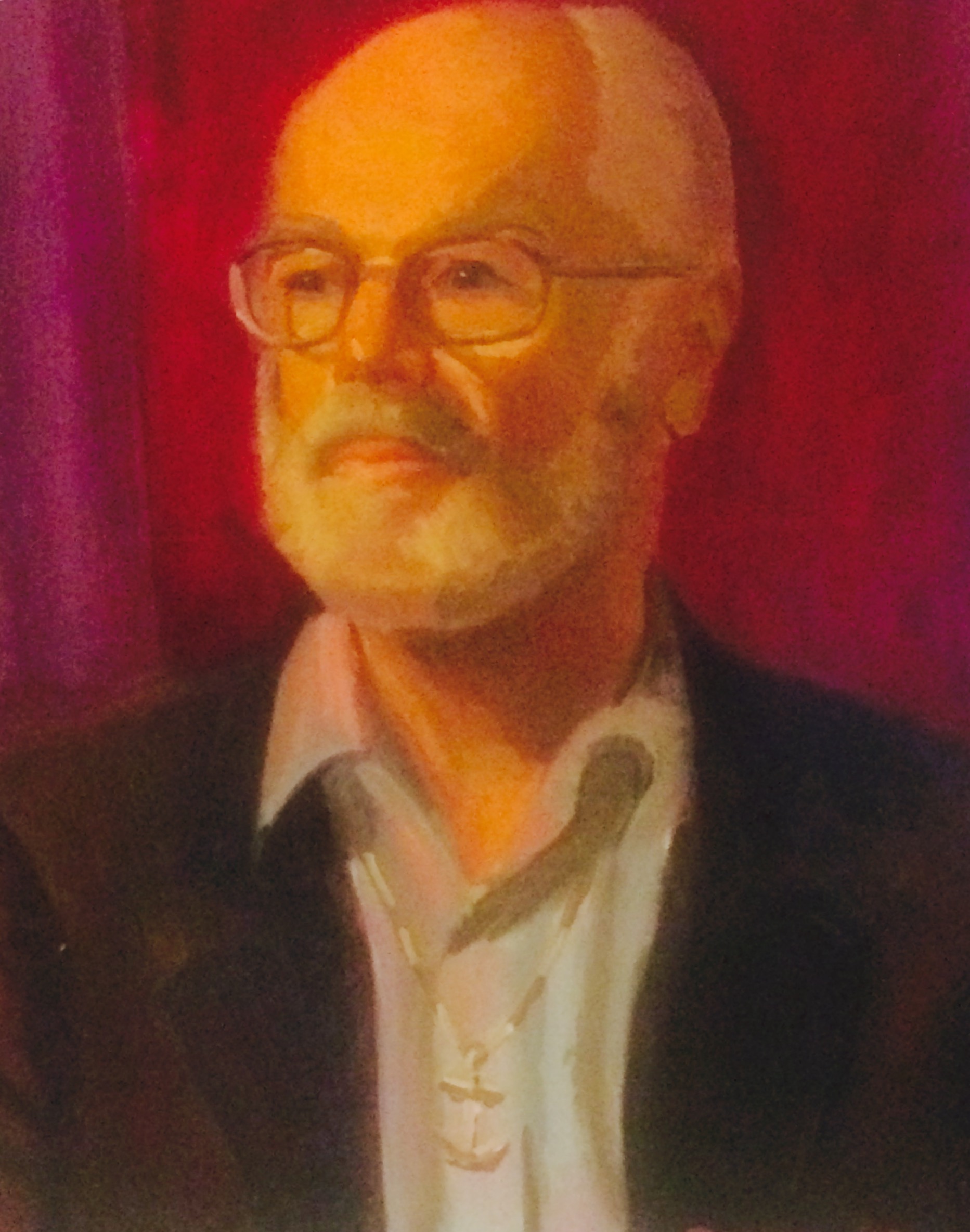
Bruce
bpotter

Posted in Uncategorized | Leave a comment

Spring Robin

Posted in Uncategorized | Leave a comment

Why I Favor Small Islands — in the Caribbean and other tropical places . . . .

— well, one reason, anyway . . . .

Guard Delivers Provisions to Ice-Bound Chesapeake Bay Island

February 20, 2015 1:11 PM

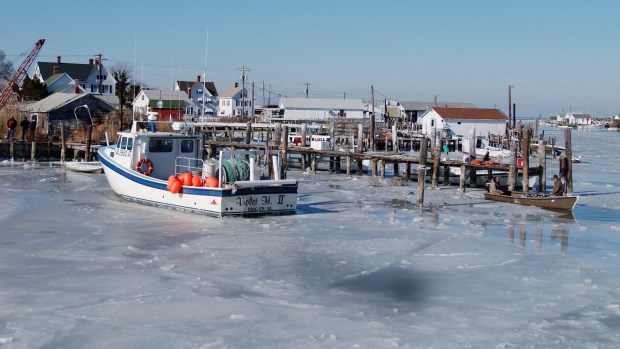
Fishing boats sit frozen in ice in the harbor of Tangier Island, Virginia as residents wait for a Coast Guard ice breaker to clear the harbor. (Photo by Glenn Beil/Getty Images)

UPDATED: Feb. 20, 2015 1:34 p.m.

TANGIER ISLAND, Va. (WNEW/AP) — The Virginia National Guard flew in food, medicine and mail to ice-bound Tangier Island, and the mayor said a Coast Guard cutter was on its way Friday to open a passage to this tiny fishing and tourism outpost in the middle of Chesapeake Bay.
Like many longtime islanders, Mayor James “Ooker” Eskridge played down Tangier’s plight but said medicines were essential for those who could not get off the island. Tangier has no drugstore.
“But you know, we’re not starving out here,” he said in an interview. “This happens when you live in the middle of the Chesapeake Bay.”
The guard’s 224th Aviation Regiment used a UH-60 Black Hawk helicopter Thursday to deliver milk, eggs, bread and prescription medicines to the 1.2-square-mile island of 460 people.

While the island has a grocery, many islanders hop on a ferry to Crisfield, Md. — 14 miles away — for larger purchases. Ice has made that route impassable. The only way off the island now is by air; the island has a small airport.
Like most of the Mid-Atlantic, Tangier has shivered through an unseasonable cold stretch, dipping to 9 degrees Friday. It received about 8 inches of snow this week.
Islanders who are accustomed to the isolation said many newcomers hadn’t planned ahead for the long winter months.
“We plan for it. We stock up our cabinets,” said Judith Eskridge, the mayor’s wife. “Some of the new people who come, they don’t know.
“It’s inconvenient, but it’s not life-threatening.”
Another longtime islander, the mayor’s nephew Tommy Eskridge, agreed. “We’re used to it. Like it’s not our first rodeo.”
The island’s frozen place in the bay has brought hardship. Some are unable to pay bills or visit relatives who are hospitalized on the mainland. Many on the island pilot or crew tugboats, often in two-week shifts. They’ve been stranded on the mainland.
Because of its isolation, many Tangier residents still retain the linguistic echoes of the island’s settlers, primarily from Cornwall along England’s southwest coast. John Smith, the intrepid Jamestown settler, is believed to be the first European to step foot on the island four centuries ago.
Many islanders fish or haul in the bay’s beloved blue crabs.
The island is a popular destination for tourists, who explore it by foot. Most islanders get around on golf carts.
Mayor Eskridge said the ice is “the worst it’s been in a long time” and has kept oystermen from Tangier Sound and a bountiful season. The season ends in two weeks.
“It puts the guys out of work,” he said. “We just can’t get the boats out to them.
“You look out there and it looks like the Arctic.”
In late January of 2003, the island was locked in ice and isolated for more than a week due to the extreme winter weather. Food stocks on the island had been dwindling, and following the deaths of several residents whose bodies were unable to be evacuated because the bay was sealed in ice, the U.S. Coast Guard intervened to break free a route to the island.
Follow WNEW on Twitter
(TM and Copyright 2015 CBS Radio Inc. and its relevant subsidiaries. CBS RADIO and EYE Logo TM and Copyright 2015 CBS Broadcasting Inc. Used under license. All Rights Reserved. This material may not be published, broadcast, rewritten, or redistributed. The Associated Press contributed to this report.)

Posted in Uncategorized | Leave a comment

More Deep Data Analysis from Nate Silver’s “538” Blog Site

Well, maybe “Deep Doodoo Analysis . . . “ would be more accurate.from <http://fivethirtyeight.com/datalab/the-consequences-of-no-one-picking-up-their-dogs-poop-are-horrifying/>
PETS

The Consequences Of No One Picking Up Their Dog’s Poop Are Horrifying

4:50 PMJAN 29 By WALT HICKEY

Kyona, a rescue dog from Japan, contemplates the snow in Carl Shurz Park on Jan. 4, 2014, after a storm dropped up to 7 inches of snow in New York City.

YANA PASKOVA / GETTY IMAGES

New York just endured a substantial batch of snow — if not exactly the blizzard that was advertised. That set it up for the unfortunate defrost, leaving the city’s sidewalks covered in piles of dog crap people didn’t pick up.

This inevitability prompted a bit of speculation on my part: What would happen if nobody in New York picked up after their dog? How weird would it get and how fast? This hypothetical might seem far-fetched, but not picking up after dogs is somewhat common. A 1999 study of Chesapeake Bay area residents estimated 41 percent of people who walked their dog in public rarely or never picked up after it.

Let’s take this step by step:

First, how many dogs are in New York? I’m going with a 2012 estimate from economists at the New York City Economic Development Corp.: 600,000 dogs.

So, how much do they poop?

I thought about trying to find how much dog food is sold in New York, figuring inflows equal outflows. But that seemed imprecise. After a bit of digging, I uncovered some actual scholarship: A 1999 paper from the Watershed Protection Techniques journal indicates that dogs poop about 0.32 pounds per day (I assume there’s substantial variation between breeds). Seems about right.

Multiplying the number of dogs by that poop rate gives us 96 tons dropped each day in New York City.

How much is that exactly? Repeated attempts to Google the density of dog poop went unrewarded, and while I’m typically down to conduct IRL measurements, I’m not in this case. However, given that New York has 12,750 miles of sidewalk, that comes out to a pound of dog crap for every 350 feet of sidewalk every day (if we assume they only relieve themselves on sidewalks). After a week, that’d be a pound every 50 feet.

Besides the aesthetic problems — or improvement, if we’re talking Times Square — there’s a public health issue. Dog shit has 23,000,000 fecal coliform bacteria per gram, so that’s an additional 2 quadrillion coliform bacteria added to the sidewalks each day, give or take, which can’t be healthy. Studies of three midsize cities found that 10 to 50 percent of bacteria in air samples was derived from dog waste.

There might be environmental effects, too. Not that the Hudson River is exactly a paragon of cleanliness, but microbiologists suggest that dog poop can be a big polluter. The Environment Protection Agency says domestic animals — which includes cats, which at least have the decency to pick a place and stick with it — contribute nitrogen and phosphorous to ground and surface waters, and poop from pets can contribute to eutrophication and closure of shellfish beds.

Indeed, even if we let poop pile up, we’d really be in the shit when it rains. New York relies — in most areas — on a combined sewer system, which means that storm drains and residential waste water all go to the same pipe, which is then treated at one of the city’s wastewater treatment plants. The city treats 1.3 billion gallons dailyand can remove 85 to 95 percent of pollutants when everything is going swimmingly.

The city’s treatment plants can handle about double the normal flow. But if they reach their limit, there’s a “combined sewer overflow” (CSO), which is when the stuff they can’t handle gets dumped into rivers. The city says plants can capture more than 80 percent of a CSO, but we can suppose about a fifth of the mess is still getting in the river. Factor in 96 tons of dog crap every day, and the East River would be slightly more disgusting than usual.

What would happen if people didn’t pick up their dog’s crap? Pestilence, plague, pollution, declining property values (I assume) and possible environmental damage. In reality, if 41 percent of New Yorkers didn’t clean up after their dog (as was found in the Chesapeake Bay study), 39.3 tons of dog crap gets left on the sidewalks each day — a little less than the weight of a subway car on the F train.

The moral of the story? First, pick up your dog’s poop, even in the snow. Second, the way New York handles its wastewater is fascinating. Third, you get really strange ads for the next couple of days if you repeatedly search for the density of dog poop.

COMMENTS Add Comment

WALT HICKEY @walthickey

Walt Hickey is FiveThirtyEight’s lead writer for lifestyle.

Posted in Uncategorized | Leave a comment

New Financing Tool from The Nature Conservancy

Behind one of the Nature Conservancy’s largest ever forest purchases

Backing a $134m land acquisition is a financial institution which wants to raise money from investors who care about the environment

land in montana
The Nature Conservancy bought land in Montana’s Blackfoot River Valley, backed by a bank whose purpose is to protect nature. Photograph: The Nature Conservancy

Sponsored by:

imgad?id=CICAgKCTiKmRpgEQARgBMggUaiGAUU4otgAbout this content

Marc Gunther

Friday 30 January 2015 15.25 EST

Shares

27

Comments

0

Even for the Nature Conservancy, which attracts more money than any other US environmental nonprofit – revenues were $1.1bn last year – buying 165,000 acres of land in Washington’s Cascade Mountains and Montana’s Blackfoot River Valley for $134m is, quite literally, a very big deal.

To raise the money in a timely manner and to negotiate the acquisition, which closed last week, the conservancy relied on NatureVest. Launched last spring, NatureVest is a division of the conservancy that functions much like a bank, albeit a bank whose purpose is to protect nature.

sustainable business

Join Guardian Sustainable Business

Sign up today and receive exclusive member newsletters, networking opportunities, member-only discounts and more.

Click here

NatureVest raises money from institutions and high-net-worth individuals who care about the environment but want to get their investment back, perhaps with a modest return. It then invests that money in conservation projects – land acquisitions, sustainable ranching, green infrastructure or eco-tourism – that can generate money so it can pay back its investors.

Its purpose is to help the Nature Conservancy tap into what is believed to be a growth industry known as impact investing. Impact investing is loosely defined as putting money into a business or nonprofit with the expectation of generating social or environmental change, along with a financial return.

As Marc Diaz, the managing director of NatureVest, told me when we met recently: “Most people have a limited pool of money to give away. People wonder if there is more they could do with the rest of their resources.”

The deal that closed last week provides a glimpse into how NatureVest operates. The Nature Conservancy is acquiring the land, which includes forests, rivers and wildlife habitat, from Plum Creek, a publicly traded timber company. In his 2014 year-end letter to Nature Conservancy supporters, Mark Tercek, the group’s president and CEO, described the acquisition as a “very big financial commitment” and went on to say:

I think this will be one of TNC’s most significant land deals ever. The acquisition connects vast landscapes previously broken up into a checkerboard pattern of public and private ownership. In the process, it conserves vast swaths of wildlife habitat, protects sources of clean water, and expands recreational access. In my view, no organization other than TNC could have taken on this project.

Only a small fraction of the purchase price comes from traditional donations. The Wyss Foundation, which is the charitable foundation of Hansjörg Wyss, a Swiss-born health-care entrepreneur who now lives in Wyoming, provided the vast majority of financing for the project, in return for majority ownership of the land. Another $8m is coming from The David and Lucile Packard Foundation, which is providing a five-year loan with a 1% interest rate.

Advertisement

Both foundations expect to get repaid over the next five to 10 years, as the Nature Conservancy gradually sells the land to state and federal agencies, which will then protect it. This may sound risky, but it’s a tried and true way to conserve land. (Most of the land acquired in a previous, even bigger, nearby purchase, called the Montana Legacy Project, has already been sold to government and private conservation owners.)

“While the size and scope of the deal are unusual, it’s a pretty conventional land transaction,” says Eric Love, senior director of conservation transactions at the conservancy.

What sets this transaction apart is its capital structure. If all goes according to plan, the Wyss and Packard Foundations will get their money back and redeploy it into other conservation projects.

Susan Phinney Silver, who oversees about $180m in program-related investments for the Packard Foundation, told me by phone: “We have a fixed pool of capital. We’re not profit-motivated, but we are very motivated to maintain our capital. We need to recycle it.” Indeed, she says, Packard is seeking more opportunities to support conservation finance.

None of this, it must be said, is entirely new. The Packard Foundation has been making investments to support its mission since the 1980s. It has invested in a forestry company called Ecotrust Forest Management and a sustainable seafood fund called Sea Change Management. For its part, the Nature Conservancy once operated a private-equity fund that invested in businesses with a sustainability focus in Latin America, and more recently it sold $25m in fixed-income Conservation Notes to institutions and retail investors.

In November, NatureVest and EKO Asset Management Partners published an 88-page report called Investing in Conservation that found that private investors intend to deploy $5.6bn in conservation investments over the next five years. That’s way up from about $1.9bn that these private investors had deployed from 2009 to 2013. The reported surveyed 51 private investors, including foundations, fund managers and corporations.

The challenge facing conservation investors is a shortage of deals, not a shortage of money, the report found. That’s where NatureVest hopes to play a role.

“We’re at a moment when the market is unbalanced. There’s a lot of capital that wants to do conservation,” Diaz says. “Our job is to provide that deal flow, the way to put that money to work that appeal to a breadth of conservation priorities.”

To that end, NatureVest currently has a pipeline of about 50 deals. They range across the conservation landscape (pun intended), including land-acquisition projects in the American west, a Kenyan cattle ranch, an Australian water trading scheme, protected marine reserves in the Seychelles and Belize and green urban infrastructure designed to improve water quality around Washington DC.

NatureVest’s operating expenses are paid by the Robertson Foundation, the Jeremy & Hannelore Grantham Environmental Trust and founding sponsor JPMorgan Chase.

The finance hub is funded by EY. All content is editorially independent except for pieces labelled “brought to you by”. Find out more here

Posted in Uncategorized | Leave a comment

Property Shenanigans (again) in TCI

From the Washington Post, Sunday, January 25

Business

At Emerald Cay — paradise to the 1 percent — at the glimmering edge of good sense

Share on Facebook
Share on Twitter
Share on LinkedIn
Share via Email
More Options

Resize Text
Print Article
Comments 15

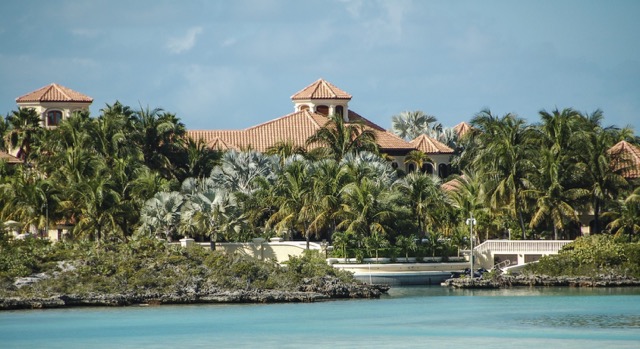
Emerald Cay is a multimillion-dollar property with 10 bedrooms, a private tennis court and a 6,000-bottle wine cellar. It’s also a symbol of ugly capitalist greed. (Steven Pearlstein/The Washington Post)
By Steven Pearlstein Columnist January 23

Turks and Caicos — I’m sitting on the patio of a rental house looking out over a turquoise inlet known as Silly Creek in this Caribbean island paradise. My wife and I are here to celebrate 30 wonderful years of marriage. Just at the moment, though, I’m thinking about greed.

Across the creek is Emerald Cay, a 2.3-acre island estate accessed by a remote-controlled swing bridge and a driveway paved with Turkish marble. According to a local real estate Web site, the 30,000-square-foot main house features 10 bedrooms and 10 baths, a three-story great room and equally grand library, along with a 6,000-bottle wine cellar. In addition to a caretaker’s lodge and a guest house, there is a lighted tennis court, two swimming pools, a beach volleyball court, two beaches, separate boat and personal watercraft docks and a fully equipped exercise pavilion with 360-degree views.

Steven Pearlstein is a business and economics columnist who writes about local, national and international topics. View Archive

After circumnavigating Emerald Cay in a sea kayak the other day, I became rather curious about who would want to own such an over-the-top vacation property. It didn’t take much digging to discover the answer.

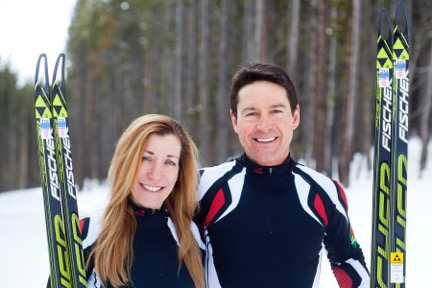
The story begins in 1999 with a high-flying hedge fund manager named Gary di Silvestri. Di Silvestri is a Staten Island boy who went to Georgetown and Columbia Business School and eventually became chief investment officer of something calling itself Deutsche Suisse Asset Management Ltd. Di Silvestri and his wife are best known today for having wheedled their way into the 2014 Winter Olympics in Sochi, Russia, by arranging to be designated as the cross-country ski team from the tropical island of Dominica. But back in 1999, their focus was on getting into the real estate development game in Turks & Caicos by ingratiating themselves with the island’s notoriously corrupt political leadership. Emerald Cay became their signature project.

Shortly after construction on the island began, financial and real-estate markets cratered, and the di Silvestris began negotiations to sell the still-incomplete project to Tim Blixseth. Blixseth was the founder and developer of the ultra-exclusive Yellowstone Club, the Montana enclave where several hundred owners of multimillion-dollar homes pay $75,000 a year in membership and maintenance fees to enjoy the exclusive use of a private, 10,000-foot ski mountain and championship golf course. Gary di Silvestri was an early Yellowstone member and a Blixseth friend.

Gary and Angelica di Silvestri, embroiled in lawsuits related to Emerald Cay, used connections to represent the island nation Dominica at the 2014 Winter Olympics — as its cross-country ski team. (Janie Osborne/Associated Press)

With Yellowstone starting to take off, Blixseth decided to expand the concept with something he called Yellowstone World Club, a collection of opulent retreats that he offered on a time-share basis to 150 of the world’s most discriminating One Percenters willing to plunk down initiation fees of up to $10 million. The nine properties included two 150-foot yachts, a 14th-century chateau outside of Paris, a fly-fishing lake near Cody, Wyo., and a private golf club just down the road from St. Andrews in Scotland, in addition to Emerald Cay. To finance the purchase of the properties, Blixseth arranged a $375 million loan from Credit Suisse, the big Swiss bank, offering as collateral his stake in the Yellowstone Club and other personal assets, including his 300-acre home in Palm Springs, Calif., with its private, 19-hole golf course (the extra hole is in case of a tie).

The sale of Emerald Cay to Blixseth was completed around 2005 for a price of around $28 million.To avoid U.S. income taxes and the hefty property transfer tax in Turks and Caicos, di Silvestri and Blixseth arranged for the sale to be structured as a series of stock sales among several shell corporations, according to court documents here and in the United States valuing the property at the artificially low price of $10 million.

It wasn’t long, however, before Blixseth had more than taxes to worry about. The financial crisis that began in 2007 dried up interest in both the Yellowstone Club and Yellowstone World. Blixseth and his wife were in the middle of a messydivorce. And with the value of its collateral shrinking, Credit Suisse was looking to get its $375 million back. By 2010, Yellowstone Club was in bankruptcy and the bankruptcy trustee was looking to collect more than $200 million from Blixseth and his wife by seizing whatever assets they could get their hands on. Meanwhile, tax authorities here in Turks and Caicos, having uncovered the tax fraud at Emerald Cay, put an $8 million lien on the property.

The legal wrangling over all this continues to this day. Last month, Blixseth spent several days in jail for refusing to provide complete answers in one of the many court proceedings against him. Blixseth, meanwhile, has filed a series of countersuits accusing his wife, the bankruptcy trustee, Credit Suisse and the state of Montana of needlessly forcing the Yellowstone Club into bankruptcy as part of a conspiracy to steal his stake and his other assets. In the suit, Blixseth demands $24 billion in damages for himself and other Yellowstone property owners. In a separate action filed in federal district court in Miami, Blixseth accuses di Silvestri of being the real mastermind behind the tax fraud on Emerald Cay and seeks $28 million in damages.

Maybe it’s the rum punch, but it seems to me that what we have in this twisted tale is a parable of much that has gone wrong in American capitalism.

If nothing else, it certainly illustrates how the super-rich have hijacked the institutions of modern capitalism — a financial system that no longer channels investment capital to its highest and best use, a tax system that no longer requires all citizens to pay their fair share, a legal system that increasingly offers justice only to those who can afford to pay for it. Nothing, it seems — not even the Olympics — is immune from the corrupting influence of big money. And no matter how much they screw up, no matter how much loss and dislocation they may cause to others, the super-rich always seem to come out of it with their lifestyle, their self-assurance and their inflated sense of self-worth intact.

But this is also a parable about greed — and, in particular, the indulgence and sense entitlement that has become so endemic among those who, because of some combination of luck and skill, have risen to the top of the economic ladder. The ethic underlying Emerald Cay and the Yellowstone Club is that there is a small group of people so special, so productive, so worthy that it is entitled not to have to share a beach, or a ski slope or a tropical island with anyone else — that it should have the right to insulate itself from the stresses and frustrations and compromises of ordinary life, never forced to rely on common spaces or public services or having to rub shoulders with anyone with a net worth of less than $25 million.

Yellowstone Club mastermind Tim Blixseth did jail time in December for refusing to give answers about his purchase of Emerald Cay from di Silvestri, who he is suing for $28 million in damages. (Michael Albans/Associated Press)

One of the thought experiments I do with my economics class at George Mason is to ask the students to define greed. Invariably someone suggests that greed is wanting more than you need. Would that mean, I ask, that a person who buys a BMW rather than a Ford Focus is greedy? Unhappy with that distinction, someone else invariably suggests greed is wanting things that hurt other people. Would that mean, I ask, you are greedy if you decide to leave the employer who gave you your first job to take another where the pay was $2 an hour more?

The point of the exercise is to point out that in a free-market economy in which self-interest drives workers to be more productive, consumers to be more discriminating and investors to take more risk, it’s hard to draw the line between self-interest and greed. That conundrum has led some market purists to conclude that there can be no distinction, or that, as the fictional Gordon Gekko infamously argued, greed is good.

Most of us are reluctant to embrace such conclusions. However difficult it may be to define, greed offends moral instincts and intuitions that, for good reason, have become hard-wired into our nature. Actions strike us as greedy if the pleasure they bring to some are vastly outweighed by the misery they cause to others. People are greedy if their hunger for acquisition becomes such an all-consuming obsession that riches cannot be enjoyed. Greed is an invitation to wasteful consumption and a misallocation of scarce resources. Greed leads to a brutish indifference to the plight of others and can be a pretext for illegal behavior. Greed erodes civic virtue and undermines the faith, trust and confidence we have in each other and in fairness of the market system.

The dirty little secret about capitalism is that, while it has provided the highest standard of living for the greatest number, it involves a delicate balancing between self-interest and the common interest. It requires the incentive and the freedom to produce, invest and consume, but it also requires the self-restraint not to push things to the point where they are economically wasteful or harmful or erode our sense of mutual trust and mutual responsibility.

Or to put it another way, the best system is one in which people are free to build Emerald Cay or join the Yellowstone Club — but have the good sense not to.

This is Steven Pearlstein’s last column for a while. For the next three months, he’ll be focused on writing a book on the moral contradictions of capitalism, to be published next year by St. Martin’s Press.

Posted in Uncategorized | Leave a comment

Endangering the Earth

from a Mother Jones reprint of a Guardian article at <http://www.motherjones.com/environment/2015/01/humans-destorying-planet-earth>

ENVIRONMENTClimate Change, Climate Desk, Top Stories

We’re Destroying the Planet in Ways That Are Even Worse Than Global Warming

4 ways humans are endangering life on Earth

—By Oliver Milman
| Fri Jan. 16, 2015 4:07 PM EST

Aidenvironment/Flickr
This story originally appeared in the Guardian and is republished here as part of the Climate Desk collaboration.
Humans are “eating away at our own life support systems” at a rate unseen in the past 10,000 years by degrading land and freshwater systems, emitting greenhouse gases and releasing vast amounts of agricultural chemicals into the environment, new research has found.
Two major new studies by an international team of researchers have pinpointed the key factors that ensure a livable planet for humans, with stark results.
Of nine worldwide processes that underpin life on Earth, four have exceeded “safe” levels: human-driven climate change, loss of biosphere integrity, land system change, and the high level of phosphorus and nitrogen flowing into the oceans due to fertilizer use.
Researchers spent five years identifying these core components of a planet suitable for human life, using the long-term average state of each measure to provide a baseline for the analysis.
They found that the changes of the last 60 years are unprecedented in the previous 10,000 years, a period in which the world has had a relatively stable climate and human civilization has advanced significantly.
Carbon dioxide levels, at 395.5 parts per million, are at historic highs, while loss of biosphere integrity is resulting in species becoming extinct at a rate more than 100 times faster than the previous norm.
FREAHWATER
Graphic: Guardian; Source: PIK PR
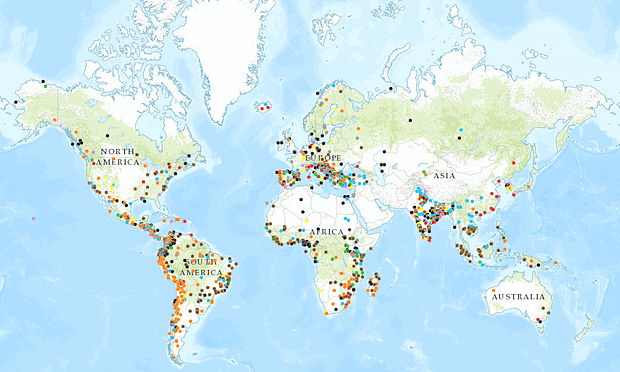
Since 1950, urban populations have increased sevenfold, primary energy use has soared by a factor of five, while the amount of fertilizer used is now eight times higher. The amount of nitrogen entering the oceans has quadrupled.
All of these changes are shifting Earth into a “new state” that is becoming less hospitable to human life, researchers said.
“These indicators have shot up since 1950 and there are no signs they are slowing down,” said Will Steffen of the Australian National University and the Stockholm Resilience Center. Steffen is the lead author on both of the studies.
“When economic systems went into overdrive, there was a massive increase in resource use and pollution,” Steffen said. “It used to be confined to local and regional areas but we’re now seeing this occurring on a global scale. These changes are down to human activity, not natural variability.”
Steffen said direct human influence upon the land was contributing to a loss in pollination and a disruption in the provision of nutrients and fresh water.
“We are clearing land, we are degrading land, we introduce feral animals and take the top predators out, we change the marine ecosystem by overfishing—it’s a death by a thousand cuts,” he said. “That direct impact upon the land is the most important factor right now, even more than climate change.”
There are large variations in conditions around the world, according to the research. For example, land clearing is now concentrated in tropical areas, such as Indonesia and the Amazon, with the practice reversed in parts of Europe. But the overall picture is one of deterioration at a rapid rate.
“It’s fairly safe to say that we haven’t seen conditions in the past similar to ones we see today and there is strong evidence that there [are] tipping points we don’t want to cross,” Steffen said.
“If the Earth is going to move to a warmer state, 5 to 6 [degrees Celsius] warmer, with no ice caps, it will do so and that won’t be good for large mammals like us. People say the world is robust and that’s true, there will be life on Earth, but the Earth won’t be robust for us.
“Some people say we can adapt due to technology, but that’s a belief system, it’s not based on fact. There is no convincing evidence that a large mammal, with a core body temperature of 37 [degrees Celsius], will be able to evolve that quickly. Insects can, but humans can’t and that’s a problem.”
Steffen said the research showed the economic system was “fundamentally flawed” as it ignored critically important life support systems.
“It’s clear the economic system is driving us towards an unsustainable future and people of my daughter’s generation will find it increasingly hard to survive,” he said. “History has shown that civilizations have risen, stuck to their core values and then collapsed because they didn’t change. That’s where we are today.”
The two studies, published in Science and Anthropocene Review, featured the work of scientists from countries including the United States, Sweden, Germany, and India. The findings will be presented in seven seminars at the World Economic Forum in Davos, which takes place from January 21 to 25.

Posted in Uncategorized | Leave a comment

Memorial for Capt. Jake (Walter Franklin) Jacobs, Pilot and South River Environmental Champion

2015_01_08_Jake_Jacobs

Family and friends of Walter Franklin (Jake) Jacobs celebrated a memorial on Sunday (11 January, 2015) morning commemorating the late Captain Jacobs, who passed away this past Thursday. Jake’s family asked that donations in lieu of flowers be made to the South River Federation, in which he had been a stalwart for the past 15 years or more.

Here is the short obituary for Jake, followed by a downloadable version of the memorial booklet:

Walter Franklin Jacobs, 85, of Cape Saint John died January 8, 201 5 in Annapolis, Maryland

Bom March 12, 1929, the son of Carl B. and Ruth McGinnis Jacobs, of Linthicum Heights,

“Captain” Jacobs was a Chesapeake Bay Ship Pilot for 44 years. He gradu ated Glen Burnie High School in the class of 1946, attended Virginia Polytechnic Institute and served in the Marine Corps before beginning his six-year pilot appren ticeship in 1952.

He was predeceased by his first wife, Betty Merle Smith Jacobs and his brother George C. Jacobs. He is survived by his wife, Claudia McLaughlin, daughters Martha S. Jacobs, Jean E. Cronan and her husband James, granddaughters Sara E. Cronan and Angela C. Laxson, and numerous nephews and nieces.

A life-long citizen of Anne Arundel County, Jacobs was a fierce opponent of the return of slot machines to Maryland. He was active in Democratic politics and environ mental groups, including the Severn River Association, the Magothy River Land Trust, South River Federation, and the Lower Western Shore Tributary Team.

He had been a long-time member of the Parole (Annapolis) Rotary Club until health issues forced him to resign.

Captain Jacobs was repeatedly recognized for his environmental activities: he was named a Pearl of the Chesapeake for his ground-breaking gift of a parcel of land (Kurrle Knoll) to the Magothy River Land Trust. In 2006 The Severn River Association presented the Captain the “Blue Heron Award” as “the embodiment of the benevolent volunteer” and in 2012 again expressed gratitude to him for his “dedication to SRA” as a “model participant” at meetings of the Association.

The Association of Maryland Pilots, in 2012, presented Captain Jake with the honor ary title “Commodore of the Chesapeake” in recognition of his “noteworthy career as a maritime professional and a community volunteer,” citing his distinguished service to a number of organizations devoted to the preservation of the Chesapeake Bay and its rivers and streams.

Walter was a consummate gentleman, known for his generosity and good humor. He will forever be singing whilst “Sailing Down the Chesapeake Bay.”

Jake Jacobs

Posted in Watershed Management | Tagged | Leave a comment

Dealing with Bird Die-Offs at Poplar Island in the Chesapeake Bay

Rona Kobell, writing in the current edition of The Bay Journal <http://www.bayjournal.com/article/new_practices_mulled_to_thwart_bird_die_offs_at_poplar_island?utm_source=Chesapeake+Bay+News&utm_campaign=50ec4a931f-Chesapeake_Bay_News4_23_2013&utm_medium=email&utm_term=0_71ced15df1-50ec4a931f-61676821>, describes the multiple secondary problems that arise from the successful “restoration” of Poplar Island in the middle Chesapeake.

These issues are not trivial, easily foretold, or cost-free to solve, but they are vital to the long term health of the ecosystems in which we are partners.

Posted in Uncategorized | Leave a comment