Farming with Biodiversity: An Experiment

from the Bay Journal <http://www.bayjournal.com/article/farmer_goes_wild_fostering_native_plants_alongside_organic_produce?utm_source=Chesapeake+Bay+News&utm_campaign=a8532bb12e-Chesapeake_Bay_News4_23_2013&utm_medium=email&utm_term=0_71ced15df1-a8532bb12e-61676821>

Farmer goes wild fostering native plants alongside organic produce

The goal is to show how biodiversity creates value, both ecologically and financially.

  • By Whitney Pipkin on March 06, 2014

Landowner Nick Lapham walks with his dog through one of the native meadows he’s fostered to grow wild as natural habitat. A forest in the distance has filled in the hillsides that were once planted as an orchard. (Whitney Pipkin)
Nick Lapham shows some of the cards drawn by an artist who lives on the property. The cards highlight the species promoted by his biodiverse style of farming. (Whitney Pipkin)
Organic carrots harvested from the farm in early October wait to be washed. (Whitney Pipkin)
The flowering native meadows are often abuzz with local pollinators, a habitat improvement that also benefits the organic farm. (Whitney Pipkin)
Assorted organic squashes are stored in coolers on the farm, to be sold to customers through its CSA program or at farmers markets. (Whitney Pipkin)

Landowner Nick Lapham walks with his dog through one of the native meadows he’s fostered to grow wild as natural habitat. A forest in the distance has filled in the hillsides that were once planted as an orchard. (Whitney Pipkin)

In many ways, the more than 400 acres that Nick Lapham manages and farms south of Virginia’s Shenandoah National Park is the wildest it has been since the 1750s.

Native meadows flourish on scattered plots, abuzz with pollinators and busy with coveys of quail scurrying underfoot. Deer and bear wander over from the thickly wooded areas of the national park, helping themselves to apples and pears lingering in the orchard. (Bears don’t seem to mind the deer fences.) Salamanders and pickerelweed are as much a part of the operation as kale and winter squash.

But that’s just the way Lapham, an environmentalist-turned-farmer, wants it.

“It’s amazing to be an hour and 25 minutes from Washington, DC, and to tell people that you have timber rattlesnakes and black bears in your backyard,” Lapham said.

When a family member who had lived on the property a decade ago stopped by for a visit, she couldn’t believe the level of wilderness that had grown up between the farm and the national park that’s now a neighbor.

A lush forest covers the hillside that used to be part of the oldest orchard in Rappahannock County. Lapham said the same family that got the farm through a land grant in the mid-1700s owned it until the mid-1990s, clearing and farming much of what has now returned to forest.

“To me, what makes this exciting is to be at that intersection and really look at merging conservation and agriculture,” Lapham said. “Is that doable?”

After his career in international environmental policy in the Clinton administration and for the U.N. Foundation, the 44-year-old Lapham moved his family from “big Washington” to Little Washington, VA. He bought the farm, located near the iconic food destination, Inn at Little Washington, in 2006.

He admitted to not knowing much about farming at the time, and his breadth of conservation knowledge was limited in many ways to the big picture.

“I wanted to see if I could find a way to operate a business consistent with the values and principles that I had been espousing,” he said from his kitchen table in the historic farmhouse where he now lives most of the time.

He set out to manage a farm in the context of a greater ecosystem. In a grand experiment he views as a (partially self-funded) continuation of his environmental career, Lapham wants to see if the two can flourish together as part of a financially and ecologically viable venture.

Farm biologist?

To that end, his may be the only small-scale farm in the country with a conservation biologist on staff.

Sam Quinn was the only biologist employed by a farm at the International Congress for Conservation Biology in Baltimore, where he talked about his unique job to 7,000 attendees this past year.

Quinn, 28, is employed halftime by The Farm at Sunnyside, and halftime by Lapham, himself, who hopes to someday support the position entirely on the farm’s ledger.

As a biologist on a farm, Quinn consults with the farm’s manager, Sean McDermott, on things like pest control and management. He considers how measures that might be good for the produce will impact beneficial species and water quality, and he looks for non-traditional products for selling at markets.

Lapham said that managing a farm for both food and biodiversity creates “a healthy tension between our farmer and our biologist.”

Outside of the farm business, Quinn chips away at a long-term vision for biodiversity on the property. He assesses soil quality in various fields, which helps direct decisions about what to plant where. He measures water quality in ponds and works to restore plants that historically existed on the land.

Lapham said it’s difficult to quantify the value and income that some of these improved practices bring to the farm.

“I’d like to be able to make a case within a few years that these services are adding to the bottom line sufficiently to at least cover the costs,” Lapham said. “Proving that is likely to be one of the more challenging aspects of what we’re about.”

Quinn and Lapham work closely when it comes to one of the most vexing problems for an organic vegetable farm in the middle of the woods: invasive species. The farm was home last year to one of the most robust populations of invasive brown marmorated stinkbugs in the state, according to entomologists from Virginia Tech University.

For a bug that snacks on about 350 different species of plants, the Farm at Sunnyside was like an all-you-can-eat buffet of biodiversity.

Quinn and the rest of the farm’s staff lives on the property in several small dwellings that were already there. (Lapham has placed the property under easement with the Virginia Outdoors Foundation, which limits its ability to be developed further.)

Along with a full-time farm manager, the farm employs 10 other workers at peak season to grow 45 varieties of organic vegetables and fruit.

Just 18 of the total 420 acres are devoted to these main crops, which are sold through a CSA (community-supported agriculture) program on the farm and at DC-area farmers markets.

But the rest play a vital supporting role.

Selling biodiversity

While many farmers in the Chesapeake Bay watershed incorporate practices known to improve soil and water quality, these changes are often bolstered by grants or government funding.

Lapham’s farm has a few acres that were enrolled in the federal Conservation Reserve Program by the previous owner, but he plans to let the contract expire while maintaining those lands in conservation.

He wants to see if the conservation measures he knows are good for the farm’s environment can be good for its bottom line as well — without federal assistance.

“It’s another way of thinking about how biodiversity creates value,” he said. “And if biodiversity is going to survive, it has to create value.”

That’s why, alongside its vegetables, the farm also sells bouquets of black-eyed Susans, butterfly weed and other wildflowers grown in its meadows. Its wildflower honey bears a QR code that takes consumers to the farm’s website, where they can read about the environment that flavored it.

Native paw paws and spicebush berries that grow on the farm have made their way to the market as well. The farm staff suggests to customers that they cut the paw paw in half and spoon it into their mouths like pudding, enjoying an antioxidant-packed fruit that’s been growing locally for generations. The spicebush berries can be ground into a spice or used to flavor mulled cider.

Lapham is looking at growing more of these wild species on the farm, taking advantage of their natural drought resistance and acclimation while educating new audiences on what to do with them.

It turns out that many of these native fruits, like chokeberry, are rich in antioxidants and easier to grow without the use of pesticides or additives.

Lapham also has commissioned an artist who lives on the property to capture the farm’s landscape and creatures in a way that might help tell its story.

The farm began selling cards featuring the art at farmers markets this year. A red-spotted newt stars on one and a cluster of purple-bloomed pickerelweed on another. The flourishing of both species at the farm is an indication of restored aquatic habitats.

A note explaining this is written — in ink harvested from black walnuts on the farm — on the back of each card.

“Intellectually, I love the idea of being able to tell the story and also have art be integral to what we’re doing. It’s another way of educating people about why this stuff is so cool,” Lapham said.

Lapham has many more thoughts on how the farm’s multifariousness could one day bolster its bottom line. He’s always considering how to balance what is best for the farm and its specific environment with what can support it economically.

That’s why he took the fields that would be harvested for hay, which requires fuel and labor to mow, and converted them to naturalized meadows. That’s why they probably won’t continue to struggle with bears and deer and invasive pests to maintain an orchard. The farm will focus instead on vegetables and native plants and not try to “do it all.”

To ask, “What does the land foster?” and plant accordingly is essentially a new approach to farming. Lapham hopes to find — or help establish — a market that supports that kind of thinking, a customer base that truly understands what he’s trying to accomplish.

“The ultimate would be to one day have a market for biodiversity,” he said. “If we create the mosaic of wildlife I want here, it would be for the broader public good.”

Posted in Uncategorized | Leave a comment

It’s NOT the Warming, It’s the VARIABILITY

From the excellent Conservation Magazine from Washington University  —  http://conservationmagazine.org/2014/02/dont-expect-climate-change-reduce-winter-deaths/

[As we’ve said many times, the hardest thing we’ll have to address in Climate Change Adaptation is the greater variability in climate impacts.]

Don’t expect climate change to reduce winter deaths

Conservation This Week

People often think that one silver lining of climate change is that winter-related deaths will drop. But that’s not necessarily the case, researchers have found after studying mortality patterns in the UK. Over the past few decades, the link between cold days and winter deaths has largely vanished.

The team studied excess winter deaths, which are the additional number of deaths in winter compared to those in fall or spring. These deaths could be due to factors such as hypothermia, slipping on ice, or the flu.

From 1951 to 2011, the number of excess winter deaths in England and Wales became less variable, the researchers report in Nature Climate Change. In other words, mortality used to swing wildly from low to high from one year to the next; in recent years, it has been fairly stable.

The team then tried to figure out which factors could explain the yearly variation. From 1951 to 1976, the number of days when the temperature dipped below 5 degrees Celsius seemed to be partly responsible. Housing features, such as central heating and hot water, and the severity of the flu also played a role.

But from 1976 to 2011, only flu activity explained the variation, the researchers found. That means that “milder winters resulting from climate change are unlikely to offer a winter health dividend,” the team writes. Instead, winter deaths have been dropping because houses now provide better protection from the cold, health care has improved, and people at risk are getting more support.

In fact, climate change could even increase winter deaths by making the weather more variable. Sudden drops in temperature have become more common in the UK, and people could be “caught off-guard by abrupt changes,” the researchers warn. They recommend that policymakers continue to encourage housing upgrades, such as improved insulation, and to work toward higher flu vaccination rates. Roberta Kwok | 25 February 2014

Source: Staddon, P.L., H.E. Montgomery, and M.H. Depledge. 2014. Climate warming will not decrease winter mortality. Nature Climate Change doi: 10.1038/nclimate2121.

Image © Natalya Chumak | Shutterstock

pf icon small Dont expect climate change to reduce winter deaths
Posted in Climate Change | Tagged | Leave a comment

Bay Needs More Work and MONITORING

Report: Bay cleanup shows promise; more work and monitoring ahead

  • Stormwater runoff

File photo

Stormwater runoff

Polluted stormwater runoff — such as this sediment-laden water in Annapolis — is a vexing problem for the Chesapeake Bay. A report released Tuesday says several programs to clean the bay are working but more work needs to be done to reduce stormwater runoff.

Posted: Wednesday, February 26, 2014 9:00 am | Updated: 12:11 pm, Wed Feb 26, 2014.

By E.B. FURGURSON III pfurgurson

Data gleaned from scores of scientific studies indicate elements of the Chesapeake Bay cleanup plan are working.

A report issued Tuesday showed efforts over the past 30 years have reduced pollution, lowered nutrients and slowed sediment in local waterways but more vigilance, hard work and monitoring lies ahead.

That was a primary conclusion of “New Insights: Science-based evidence of water quality improvements, challenges and opportunities in the Chesapeake” which compiled data under the auspices of the Chesapeake Bay Program and its partners the University of Maryland Center for Environmental Science and the U.S. Geological Survey.

Those who produced the report over a four-year period hope it will be a useful tool for the public and bay cleanup decision-makers. The public can learn what the considerable bay restoration expenditures have accomplished and managers can see which techniques provide the most promise in particular situations.

The report concluded the Clean Water Act, Clean Air Act and reductions in agricultural runoff are all working to improve water quality in the bay and its watershed.

But it also warned that despite those successes, progress could be undermined by not continuing to do the work and not reacting to expected population growth and the development that it will bring. It also cautioned that many efforts suffer a lag time before progress is apparent and that patience is required.

“We have learned the local actions can have positive impacts on water quality, “ said Nick DiPasquale, director of the Chesapeake Bay Program at the report’s release in Annapolis Tuesday. “We are building nature’s resilience back into the bay ecosystem. (The report) is confirmation it can be done. Now we need to refocus and redouble our efforts — in more places, in more ways and with increased dedication.”

Among the primary results:

  • Improvements to wastewater treatment plants have decreased the amount of excess nutrients being dumped into local waters. In some areas that has led to a resurgence in underwater grasses.
  • Reducing nitrogen spewing into the atmosphere from vehicles and power plants under the Clean Air Act have led to less pollution in streams and the bay.
  • Checking nutrient pollution from agricultural runoff through cover crops, managing fertilizer and manure application can reduce nutrients in waterways.

A major component just getting underway is stormwater pollution control to curb nitrogen, phosphorous and sediment pollution. There are techniques beginning to be applied to correct years of unchecked stormwater runoff in many older urban and newer suburban areas of the 64,000 square-mile watershed, home to 17 million people.

“We are not seeing much intensity in stormwater practices out there yet,” said Rich Batuik, the bay program’s associate director for science.

Evidence in one Anne Arundel study included in the report showed mixed results reducing nitrogen in certain stream restoration designs, but good reductions in sediment, which carries phosphorous.

Continued scientific monitoring of new techniques and theories used in the struggle to mend the bay is vital, the report stressed.

If a method is shown not to work, then adjustments can be made and lessons can be learned.

“The study is checking reality. We have this blueprint for the bay. But to see it as a perfect thing that will lead us to Valhalla is nonsense,” said John Boesch, president of the University of Maryland Center for Environmental Science. He said with this study and future monitoring, “We can see where things are not happening and understand why.”

“Some practices work better than others,” bay program spokesman Margaret Enloe said. “The location of a stream, or a restoration effort makes a difference. It seems everyone wants a simple solution to a very complex problem.”

© 2014 CapitalGazette.com. All rights reserved. This material may not be published, broadcast, rewritten or redistributed.

Posted in Erosion & Sediment Control, Monitoring | Leave a comment

Watershed Impacts of Development in the BVI

Happened to come across this article in an old on-line issue of BVI Yachting and Property Guide on critical sustainable development issues in the BVI by Shannon Gore of Coastal Management Consulting <http://www.cmcbvi.com/>:

Smart Development
Written by Shannon Gore
Friday, 05 October 2012
Numerous articles have been written regarding island erosion, coral reef degradation from sedimentation and impacts from the loss of wetlands, but these are all actually just small parts of a much bigger picture. A watershed is an area of land in which all water that is under it or drains off it flows into the same place. The term never seems to come into conversation when arguing about environmental degradation but without watershed management, we will lose the very same resources people come to see – white sandy beaches, crystal blue waters, healthy reefs and lush green dramatic landscapes. On top of that, local residents will experience more landslides and flooding.
Image
The simplest way to explain what multi-dimensional and highly complex systems watersheds are is to use the “ridge to reef” concept that states both upland areas (up to the top of the hill) and receiving coastal waters (coral reefs and seagrass beds) are affected by all development between the two. Our high volcanic islands consist of numerous watersheds, in fact, according to a 1990 watershed survey carried out by the Agriculture Department, Tortola alone has 41 watersheds.
For islands like Anegada that are relatively flat, the entire island is the watershed.
There are ways to minimize impacts from development but unless you understand what a watershed is and how it works, mitigation measures will fail miserably. People simply forget that for every action, there is an opposite and equal reaction. Not understanding what reaction could happen, will more likely cost you a lot of money to fix the problem or at the least, make for angry neighbours.The first step in understanding watersheds is to realize the underlying geologic structure of the bedrock guides how stable a hillside is and whether or not it is prone to landslides. Without going into the geologic complexities of our islands, the Department of Disaster Management has employed various technical experts to carry out the research necessary to better understand our islands’ geologic makeup and also conducts hazard vulnerability assessments on new developments.

Throughout the BVI, the soil overlaying bedrock is thin and with low permeability of underlying bedrock, rainfall runs over the surface and down steep hillsides through ghut channels and either directly into the bays or into wetland areas. This simplistic hydrologic model is complicated when human activities such as deforestation, infilling of wetlands, road cutting and carving gigantic holes in the hillside occur. There is nothing wrong with development but people forget the reaction to such actions results in accelerated erosion rates of soil that ends up in coastal waters degrading water quality and killing the reefs. There is also the reaction of flooding in areas where it never flooded before, especially after a pond has been filled in since water no longer has anywhere else to go but places such as outside your front doorstep. Mitigating these reactions to development is all part of watershed management.

Prevention is the key but in many cases, as development continues, these problems continue to occur throughout the Caribbean. So what do you do? To start with, the amount of water on the hillside has to be reduced before reaching the bottom of the hill. Every individual building on an island contributes to the collective amount of water that is redirected from what would have otherwise been a natural route towards a ghut or filtered and absorbed through vegetation; instead, the water finds a new way down the hill. Improving the efficiency of drainage around a building such as through the use of swales (to slow water down) or redirecting water towards natural ghuts is a start. Also creating more permeable surface areas to compensate what was lost from making the building footprint impervious. Terracing not only provides more permeable surface area to hold water, but plants make for a much better landscape than a concrete retaining wall. Terracing is also a lot cheaper than putting up a big grey wall.

There is always going to be water that makes it to the bottom of the hill, which is why wetlands and ponds are so important. Wetlands provide a place for water to settle before being filtered out to sea. However, the concept to re-establish ponds by digging a big hole where it used to be sounds like a good idea but it’s a bit more complicated. First off, it’s not always possible since new buildings don’t move very easily. Secondly, more water volume flows off most hills these days than 50 years ago since there are a lot more buildings. If the same ponds did still exist, they would be over capacity. Re-designing a pond that will be functional requires, at minimum, the expertise of an engineer, hydrologist AND wetland specialist, but finding all three on the same island is extremely rare.

So the next time you see problems such as flooding or murky water near the coastline after a rainfall, ask yourself if where you live or work has contributed to the problem.

Last Updated ( Friday, 05 October 2012 )
Posted in Climate Change, Development, Erosion & Sediment Control, Watershed Management | Leave a comment

Account of Cruise Ship (Cunard Victoria) to Pitcairn Island . . .

from the blog of a long-time buddy (college, actually)

Diary == 2014
a periodic photographic diary …

← Pitcairn Island, Australia == February 16, 2014 Sunday == Say Hello to the Descendants of the Bounty Mutineers
Current Header = Moai Statues on Easter Island = February 13, 2014 →

The Southern Pacific Ocean approaching Tahiti == February 17, 2014 Monday == Pitcairn Island is down to only One Dog

Posted on February 17, 2014 by petecrow
East of Pepeete, Tahiti, February 17, 2014 Monday

The stop at Pitcairn Island was a hoot. Promptly at 7:30am a small boat loaded with the entire population of the island (minus 5 elderly) could be seen pushing off from a landing through binoculars and here they came piled everywhichway in the boat. Young, old, tattooed and universally friendly, white and English.

Almost all of them are descendants of Fletcher Christian who led the mutiny on the Bounty and then hid out here to avoid capture in 1790 until he himself was murdered in a dispute over women with the natives on the small island a few years later.

Not to worry – wooden replicas of the Bounty were for sale for $125 – tee shirts for upwards to $45 with “Mutiny!” inscribed on the front. Once on board the 50 or so residents set up a huge shop of stores in the Queens Room, and one of their number, gave two really interesting and intelligent lectures in the theater .

While they sold their goods and the lady spoke, the Victoria slowly chugged around the island until, nearing noon, all of the Pitcairn residents (7th Day Adventists, by the way) were put back in their boat and off they went home.

Along the way they invited anyone who might like to move to Pitcairn to come right along – “we would love to have you all move here.”

Pitcairn is a British Overseas Territory, not as I wrote and was earlier told, a property belonging to Australia. It has one policeman (I met him in an elevator) and one doctor. The island is down to one dog. They get provisioned every four weeks and see about a dozen cruise ships a year. Economically they are kept alive by subsidies by the British government. The Pitcairn governor is in New Zealand where the kids from Pitcairn are also sent to go to high school. New Zealand is not exactly around the block – think 3,000 miles or more.

Next we sail a couple of days and pull into Tahiti.

Posted in Uncategorized | Leave a comment

Not Your Average Live-Aboard Sailor – Honest.

Wretched conditions on sailboat lead to child abuse charges
[Keep in mind that wind chill conditions the past 6 weeks have frequently been below 10 degrees F.]
Posted: Wednesday, February 19, 2014 10:00 am | Updated: 11:48 pm, Wed Feb 19, 2014.

By BEN WEATHERS bweathers

A mother and father have been charged with child abuse after they were found living in squalor on a sailboat in the Magothy River with two children, an adult son and two dogs, a Natural Resources Police spokeswoman said.

John Kelly and Sherri Kelly have been charged with two counts each of felony second-degree child abuse and misdemeanor neglect of a minor. Both are being held at the Jennifer Road Detention Center in Parole.

Following bail review hearing on Tuesday, John Kelly is being held on a $50,000 bond and Sherri Kelly is being held on a $25,000 bond, a jail representative said.

Two boys, estimated to be in their early teens, were taken into custody by Anne Arundel County Child Protective Services, Natural Resources Police spokeswoman Candus Thomson said.

The couple’s adult son is believed to be in his early 20s, Thomson said.

Investigators had a hard time identifying the Kellys, Thomson said. The mother and father have no Social Security numbers and have been tied to a handful of aliases in at least six different states, Thomson said.

“They’ve given us names there’s no way to verify.”

Both Kellys claimed to investigators to be “constitutionalists” who didn’t believe in the government’s right to govern them. As he was arrested, John Kelly told investigators that he was not a citizen of any of the 50 states, Thomson said.

NRP has not released mugshots of the Kellys, to protect the identities of the children.

The Kellys were arrested on Friday after the U.S. Coast Guard, along with county Child Protective Services, boarded their 28-foot sailboat moored in ice on the Magothy River near the mouth of Cypress Creek in Severna Park.

They found the family of five and two dogs living in a 9-by-10-foot space, with no electricity, heat or running water, Thomson said.

The boat’s bow was filled with dirty clothes and trash. Soiled toilet paper and bags of feces were found in the boat’s bathroom, Thomson said.

The family was sleeping on a small, makeshift mattresses. The temperature on board was around 50 degrees at the time, Thomson said.

Investigators fond canned goods on board, but no stove with which to cook them.

The only way to get off the boat was on a pool float held together by duct tape. During interviews, investigators learned that John Kelly was the only one to ever leave the boat by getting on the float and scooting across the ice to shore, Thomson said.

One of the boys was wearing shoes several sizes too big with no socks. The boys told investigators that they haven’t been to school since sometime before Jan. 1, Thomson said.

Prior to the arrests, authorities had come in contact with the family three times in recent weeks.

On. Jan. 28, the Coast Guard responded to Poplar Island, off the Eastern Shore, where they found the family on another sailboat stuck in the ice, with no heat or fuel.

The family was taken to shore after the rudder on the boat had broken. The Kellys later told investigators that they had purchased the second sailboat for $1, Thomson said.

On Feb. 9, the NRP received calls about the sailboat moored on the Magothy near the mouth of Cypress Creek. Callers reported seeing young boys huddled together on the boat’s deck, Thomson said.

The NRP checked to see if the family was OK but lacked probable cause to inspect the boat and left, Thomson said.

Last Wednesday the NRP once again checked on the boat after receiving multiple calls. The family was again asked if they wanted to be pulled to shore and they refused, Thomson said.

After a third set of calls last Friday, the Coast Guard and county Child Protective Services were notified, Thomson said.

Investigators have both boats and are searching them for clues to determine the identities of the family. Thomson noted that the case was rare for the agency, which generally handles boating and hunting offenses.

from the Annapolis Capital Gazette <http://www.capitalgazette.com/news/for_the_record/mother-father-charged-with-child-abuse-after-family-found-living/article_9962d5a0-a921-5258-ab06-ee0097200695.html>

www.twitter.com/BenW_TheCapital

Bruce
bpotter

Posted in Uncategorized | Leave a comment

CDC Expert Says Chikungunya Likely to Spread in USA

From the University of Minnesota, Center for Infectious Disease Research and Policy: <http://www.cidrap.umn.edu/news-perspective/2014/02/expert-says-chikungunya-likely-keep-spreading>

Expert says chikungunya likely to keep spreading

Robert Roos | News Editor | CIDRAP News

| Feb 18, 2014

aedes_aegypti.jpg

CDC / Prof. Frank Hadley Collins

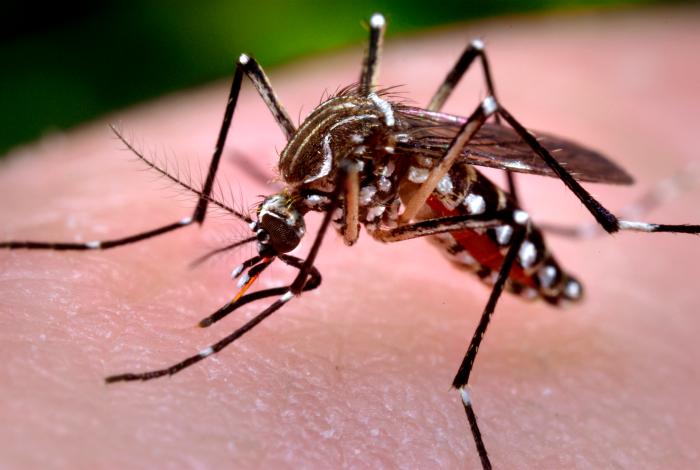
An Aedes aegypti mosquito, one of two species that are the chief carriers of the chikungunya virus.

With chikungunya, a viral disease that causes severe joint pain, spreading in the Caribbean, a US expert said today that the virus is likely to reach other parts of the Americas, possibly including the United States.

“We expect chikungunya to continue to spread to other areas in the Americas,” said J. Erin Staples, MD, PhD, of the Centers for Disease Control and Prevention (CDC), during a teleconference to educate clinicians about the mosquito-borne disease.

From 2006 to 2009, 106 chikungunya cases were identified in travelers returning to the United States, but those cases did not trigger any local outbreaks, Staples said. “But with outbreaks now in the Caribbean, we anticipate the number of cases in travelers will increase, which may result in introduction and local spread in some areas of the US.”

Cases jumped last week

In December, chikungunya cases on the Caribbean island of St. Martin marked the first outbreak in the Americas involving local transmission. The number of cases there and on neighboring islands has grown steadily since then.

The count of confirmed cases in the region jumped by 490 between Feb 7 and 14, reaching nearly 2,000, the European Centre for Disease Prevention and Control (ECDC) said in its weekly Communicable Disease Threats Report issued yesterday. It said there has been one death.

The island of Martinique had most of the new confirmed cases with 326, the ECDC reported. Other islands and countries that reported new cases included the French part of St. Martin, 52; the Dutch side of St. Martin, 5; Saint Barthélemy, 21; Guadeloupe, 81; Anguilla, 4 imported cases; and French Guyana, 1 imported case.

When probable cases are included, the total number of cases in the region is 2,106, according to a breakdown in the full ECDC report.

Chikungunya virus is spread mainly by Aedes aegypti and A albopictus mosquitoes, which are widespread in the Americas and also carry the dengue virus, Staples said in the teleconference. She called those species “aggressive daytime biters.”

“We’re not able to predict yet if chikungunya would become endemic to the US,” she said in answering a question. Many parts of the country, particularly the Southeast, have mosquitoes that could become infected, and they could see small, localized outbreaks, similar to recent outbreaks of chikungunya in Europe and of dengue in the United States, she added.

Staples said there are signs that the Asian strain of chikungunya virus circulating in the Caribbean is preferentially spread by A aegypti. In the United States, that species is limited to southern states, suggesting that any related US outbreaks would be in those states, she said.

She explained that in people infected with chikungunya, the virus multiplies to high levels in the blood, so mosquitoes that bite them can become infected and spread the virus to other people. That means patients should be protected from mosquitoes to help prevent more cases.

Most infected people get sick

Describing the disease, Staples said 72% to 97% of infected people experience symptoms—far higher proportions than is true of West Nile virus and dengue, both of which are likewise mosquito-borne.

The main symptoms are fever and pain in multiple joints on both sides of the body, typically in the hands and feet, but in other joints as well. The disease has very low mortality, but groups at risk for more severe cases are neonates, those over 65 years old, and those with various chronic conditions, such as cardiovascular disease, Staples said.

The acute symptoms usually resolve in 7 to 10 days. However, some patients have persistent joint pain that continues for months to years afterward, she said.

With no specific treatment for chikungunya, “the mainstay is supportive care with fluids and rest,” Staples commented.

There is no vaccine for the disease either. “There have been several vaccines in preclinical or early clinical development, but nothing in the pipeline now that we’d expect to be available anytime in the near future,” she said.

She explained that one of the difficulties in vaccine development is that when outbreaks occur, they tend to be large and to move through populations fairly quickly. “Trying to predict when and how an outbreak might spread is one of the limitations.”

Concerning testing for chikungunya, labs that offer testing include the CDC, state health department facilities in California, Florida, and New York, and one commercial lab, Focus Diagnostics, Staples reported. She added that cases should be reported to state health departments, and the latter are encouraged to report them to the CDC.

Staples was asked whether chikungunya infection confers lasting immunity to the virus. She replied that on the basis of limited information, the CDC believes that’s the case.

“But some people who get infected feel better for a short period of time but then get those persistent symptoms, so it might seem like they were re-infected, but it’s in fact a continuation of the symptoms they had,” she added. “We would not expect someone to get re-infected years later.”

As for infection control issues, the CDC believes chikungunya is mostly a bloodborne pathogen, with no evidence of droplet or respiratory transmission, Staples said.

See also:

Related Feb 10 CIDRAP News item

Feb 17 ECDC update covering chikungunya in Caribbean

Related Dec 30, 2013, CIDRAP News story

CDC chikungunya information for healthcare providers

CDC Travelers’ Health article on chikungunya

Posted in Uncategorized | Tagged | Leave a comment

Saving Mountain Maryland

saving mountain maryland.

Posted in Fracking, Watershed Management | Leave a comment

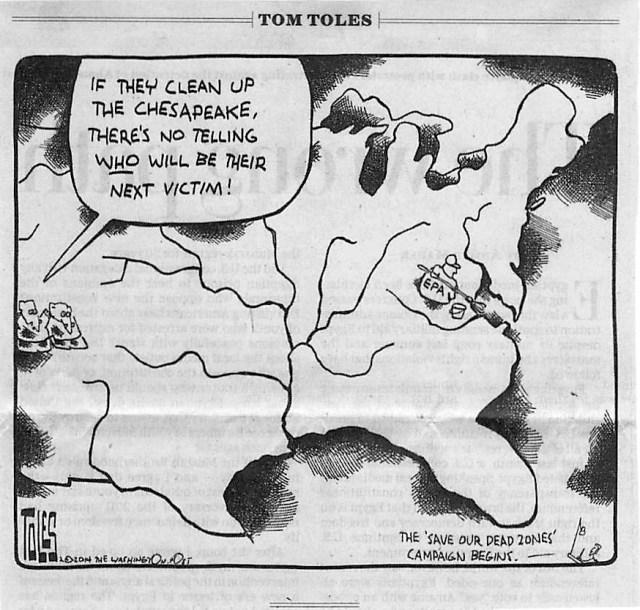
Don’t Let Them Clean Up the Chesapeake . . . . .

Don't Let Them Clean Up the Chesapeake . . . . .

Posted in Uncategorized | Tagged , | Leave a comment

NYTimes: Chikungunya Fever is Advancing thru the Eastern Caribbean

from the Americas section of the Sunday NY Times: <http://www.nytimes.com/2014/02/09/world/americas/virus-advances-through-east-caribbean.html?_r=0>

Virus Advances Through East Caribbean

By FRANCES ROBLESFEB. 8, 2014

Launch media viewer

The Aedes aegypti mosquito carries Chikungunya fever. James Gathany/Centers for Disease Control and Prevention, via Associated Press
MIAMI — A painful mosquito-borne virus common in Africa and Asia has advanced quickly throughout the eastern Caribbean in the past two months, raising the prospect that a once-distant illness will become entrenched throughout the region, public health experts say.

Chikungunya fever, a viral disease similar to dengue, was first spotted in December on the French side of St. Martin and has now spread to seven other countries, the authorities said. About 3,700 people are confirmed or suspected of having contracted it.

It was the first time the malady was locally acquired in the Western Hemisphere. Experts say conditions are ripe for the illness to spread to Central and South America, but they say it is unlikely to affect the United States.

“It is an important development when disease moves from one continent to another,” said Dr. C. James Hospedales, the executive director of the Caribbean Public Health Agency in Trinidad. “Is it likely here to stay? Probably. That’s the pattern we have observed elsewhere.”

Tracking Outbreaks

Reports of locally acquired Chikungunya virus as of January 2014

0209-web-subCARIBBEANmap-artboard_1.pngSource: Centers for Disease Control and Prevention

Chikungunya fever is particularly troublesome for places such as St. Martin, a French and Dutch island 230 miles east of Puerto Rico, where two million tourists visit annually. In an effort to keep the disease from affecting tourism and crippling the island economy, local governments began islandwide campaigns of insecticide fogging last week and house-to-house cleanups of places where mosquitoes could breed.

The French side of St. Martin to the north has had 476 confirmed cases, the largest cluster in all of the islands, while the Dutch side has had 40 cases, according to the Caribbean Public Health Agency.

Already, the travel search engine Kayak said there was a 75 percent decline in searches for St. Martin in the past three weeks, compared to the same period last year.

Searches for Martinique, which has had 364 confirmed chikungunya cases, were down 18 percent.

“When I read about chikungunya, I thought: ‘There’s a mosquito in St. Martin waiting for me, rubbing its little feet together waiting to get a hold of me,’ ” said Betsy Carter, a New York City novelist who was scheduled to travel to St. Martin with two other couples in January. “So we all decided not to go.”

Ms. Carter was particularly nervous, because she had contracted a different disease from a sand fly a few years ago in Belize, which caused half her hair to fall out. Despite having bought insurance, last month the three couples lost $9,000 they paid to stay at Dreamin Blue, a luxurious villa overlooking Happy Bay.

“The owners said they would spray the house,” Ms. Carter said. “But what if you want to leave the house?”

Public health and tourism officials on the islands are urging visitors to wear long sleeves and insect repellent high in DEET.

“Not a lot of bookings were canceled, but there were a few people not understanding exactly what this was, thinking it was a pandemic on a large scale,” said Kate Richardson, a spokeswoman for the French St. Martin’s tourism board. “People got a bit scared, and a few of them have declined to take their trips.”

She said the hotel association had not reported the number of cancellations.

Chikungunya (pronounced chik-en-GUN-ya) causes high fever and muscle pain, symptoms similar to those caused by dengue fever, which has swept the Caribbean for several years. While dengue can be fatal and chinkungunya rarely is, experts said the effects of chikungunya, such as pain in the small joints, tend to last longer, sometimes for months.

Ann M. Powers, a vector-borne disease specialist at the Centers for Disease Control and Prevention, said past outbreaks in other nations had incapacitated people because the pain in their wrists and ankles was so severe.

“They miss school and work,” she said. “It’s quite a drain on resources and the work force.”

Nora E. Kelly, an Ontario restaurant comptroller, is leaving for St. Martin on Sunday with a group of 28 friends who have tracked the disease closely and loaded up on insect repellent.

“It’s been a miserable winter,” Ms. Kelly said. “Chikungunya is not going to stop me from getting on that plane in a million years.”

The health ministry in Sint Maarten, the Dutch side of the Caribbean island, said no Canadian, European or American tourist at a resort had fallen ill.

“In order to keep the virus under control, various proactive steps have been taken and continue to be taken by both the Dutch and French authorities,” Lorraine Scot, a spokeswoman for the ministry, said in a statement.

Those steps include fogging, surveillance of suspected cases, biological lab investigations and a public-awareness campaign alerting people to the dangers of standing water, where mosquitoes lay their eggs.

The virus has also been detected in the British Virgin Islands, Dominica, French Guiana, Guadeloupe and St. Barthélemy.

“It certainly has the potential to move to a lot of other places in the Western Hemisphere,” Ms. Powers said. “All of Central America and big parts of South America would certainly be susceptible.”

The disease is not likely to spread to the United States, because it is carried by two species of mosquito that prefer warm climates.

Chikungunya was first identified in Tanzania in 1952. The name translates to “that which bends up” in the Kimakonde language of Mozambique.

According to the World Health Organization, since 2005, nearly two million cases have been reported in India, Indonesia, Malvides, Myanmar and Thailand.

An epidemic hit Northern Italy in 2007, and in 2006 thousands were sickened in Réunion, a French island east of Madagascar.

Correction: February 8, 2014
Because of an editing error, an earlier version of a picture caption misstated the name of a species of mosquito that carries Chikungunya fever. It is Aedes aegypti, not aegpyti.

Bruce
bpotter

Posted in Uncategorized | Leave a comment