Good News; Bad News

from the Southern Maryland newspapers on line:

 Fee hike proposed for those on septic tanks

Money would upgrade state’s sewer plants

advertisement

If you flush a toilet in the state of Maryland, you are supposed to be paying a fee to do so.

Those on public sewer pay $2.50 a month, or $30 a year, to the Chesapeake Bay Restoration Fund. Those on their own septic systems pay $30 a year on their property taxes.

A workgroup of a state task force on sustainable growth and wastewater disposal has recommended the septic system annual fee be increased to $60 next year and to $90 by 2015. Sixty percent of people in St. Mary’s County use septic tanks.

There are 420,000 septic systems in the state, according to the Maryland Department of the Environment.

Most of this “flush tax” money helps pay to upgrade sewer plants and replace failing septic systems.

The proposed hike in fees “would be used to address the remainder” of sewer plants “that haven’t been done yet,” said Jay Apperson, spokesman for the Maryland Department of the Environment.

By the end of September 2010, the monthly sewer plant fee had raised $297 million to be distributed to the state’s 67 sewer plants that discharge into the bay’s tributaries.

The current fee will fall $530 million short of the $1.5 billion it will take to upgrade all of the plants, according to the latest report by the bay restoration fund advisory committee.

Now the focus is on increasing the yearly fee on septic systems. “The word on the street that we’re hearing is perhaps doubled or tripled,” said Jacquelyn Meiser, director of the St. Mary’s County Metropolitan Commission.

Commission President Jack Russell (D) said he heard about the recommendation to increase that fee, but said, “All this stuff is so very vague.”

“The task force will eventually vote on the recommendations it will send to the governor,” Apperson said, by Dec. 1.

In St. Mary’s County, the design to upgrade the treatment process at the Marlay-Taylor Water Reclamation Facility in Lexington Park is 65 percent completed, Meiser told the county commissioners Tuesday.

Construction could begin by next summer and would take two years. The cost estimate is $35.5 million, covered by the Navy paying $7.1 million, a loan of $16.8 million from the Maryland Department of the Environment and $11.6 million from the bay restoration fee.

By getting the design in earlier than other sewer plants in the state, that bay restoration money should be secured easily, said Joe St. Clair, chairman of the MetCom board.

The Marlay-Taylor plant collects and treats sewage from Lexington Park, California, Great Mills, Piney Point, St. George Island, St. Mary’s City and Callaway, serving more than 37,000 people.

A state report in January said 16 plants in Maryland have already upgraded the treatment process from biological nutrient removal to enhanced nutrient removal. That is the upgrade planned for the Marlay-Taylor plant.

Nitrogen and phosphorus enter the Chesapeake Bay from three primary sources sewer plants and urban and agricultural runoff.

Nitrogen and phosphorus fuel algae blooms in the water, which decay. The bacteria breaking down the algae deprive the water of oxygen for other marine life.

While Marlay-Taylor will be upgraded, its capacity won’t be expanded. The plant can handle 6 million gallons of sewage a day, or 24,000 sewer hookups. One hookup is expected to produce 250 gallons a day, which is the statewide standard, Meiser said.

The rate of growth in St. Mary’s has slowed in recent years and some hookups previously allocated for future development have been relinquished, said David Chapman, planner with the St. Mary’s County Department of Land Use and Growth Management.

“For the short term, we don’t see a heavy demand for allocation,” he said. There are 1,700 hookups remaining at Marlay-Taylor.

jbabcock@somdnews.com

Posted in Uncategorized | Leave a comment

Beautiful Sunrise this Morning!

See Chris Trumbauer’s sunny greeting at his Facebook page:

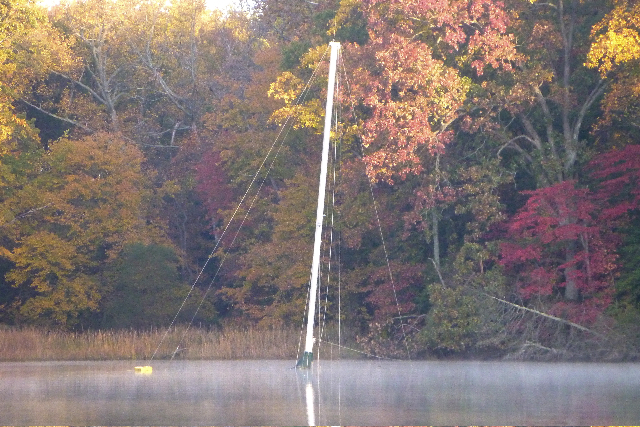
Marred only by this sunken sailboat in Church Creek that is now deeper in the muck than before, and will get REALLY hard to manage when we have a bit of a storm and the boat tips over. Too bad no one in County or State government gives a damn about removing it before even more damage is done.

P1030201sm
Posted in Uncategorized | Leave a comment

Strange Object Seen in Church Creek

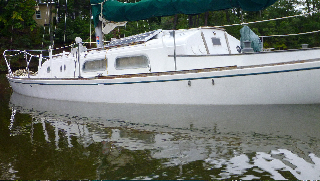
Hmm — maybe it’s the boat that sank there several weeks ago??

P1030078

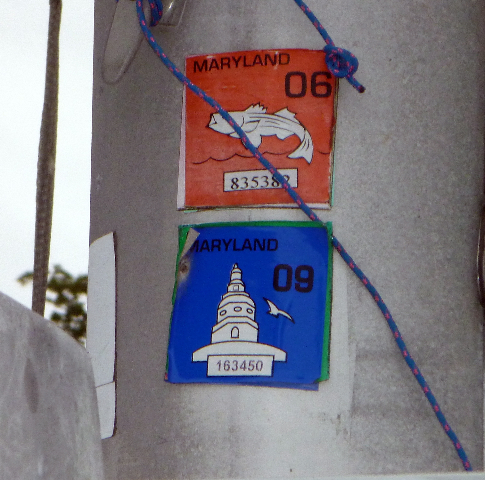
The one that had these decals so DNR could get the owner to move it???

. . .  or will it stay there forever??

P1020902P1020904

Posted in Uncategorized | Leave a comment

Poor Ryland Hammered by HOUMOUNGOUS Fine: 8/100’s of 1% of last year’s loss!

. . .  and the bottom line is that Virginia get $11,000. . . 

Ryland Homes Fined for Polluting Chesapeake Bay

October 14, 2011 10:53 pmBy: 

logoThe Ryland Group Inc., one of the nation’s largest homebuilders, will pay a civil penalty of $625,000 to several states to resolve alleged Clean Water Act violations at its construction sites, including sites located in the Chesapeake Bay Watershed, the Department of Justice and the U.S. Environmental Protection Agency (EPA) announced.

Ryland will also invest in compliance programs to improve employee training and increase management oversight at all current and future construction sites.   The company is also required to inspect its current and future construction sites routinely to minimize storm water runoff from sites.

Without proper onsite pollution controls, sediment-laden storm water runoff from construction sites can flow to the nearest waterway and degrade water quality. EPA estimates the settlement will prevent millions of pounds of sediment from entering U.S. waterways every year.  In addition, storm water can pick up other pollutants, including concrete washout, paint, used oil, solvents, and trash.

Virginia Attorney General Ken Cuccinelli applauded the EPA’s action.

“When the EPA works within the bounds of its authority to enforce environmental regulations to keep contaminated storm water from flowing into the Chesapeake Bay, I support its efforts to protect Virginia’s natural resources,” said Cuccinelli.

The government complaint, filed simultaneously with the settlement agreement in the U.S. District Court in Charlotte, N.C., alleges a pattern of violations that was discovered through site inspections and by reviewing documentation submitted by Ryland. The alleged violations include failure to obtain permits until after construction began, failing to obtain permits at all, or failing to comply with permit requirements at sites where Ryland did obtain permits. Alleged permit violations include not developing complete storm water pollution prevention plans, failure to conduct adequate inspections, and failure to install or implement adequate storm water controls or practices.

The Clean Water Act requires permits for the discharge of storm water runoff.   Ryland’s permits require that construction sites have controls in place to prevent pollution from being discharged with storm water into nearby waterways.   These controls include safeguards such as silt fences, phased site grading, and sediment basins to prevent common construction contaminants from entering waterways.

The settlement requires Ryland to obtain all required permits; develop site-specific pollution prevention plans for each construction site; conduct additional site inspections beyond those required by storm water regulations; and document and promptly correct any problems detected. The company must properly train construction managers and contractors on storm water requirements and designate trained staff for each site.   Ryland must also submit national compliance summary reports to EPA based on its quarterly management oversight inspections and reviews.

Seven states have joined the settlement. Colorado, Florida, Illinois, Indiana, Maryland, Nevada, and Virginia will receive a portion of the $625,000 penalty.   The settlement also includes sites in California, Georgia, Kentucky, Minnesota, North Carolina, South Carolina, and Texas.  Virginia’s portion of the settlement is $11,241.

“Although Virginia is only receiving a small portion of the financial settlement, this case was more about ensuring appropriate storm water controls at construction sites and preventing future damage to the bay,” said Cuccinelli.

The consent decree, lodged in the U.S. District Court for the Western District of North Carolina, is subject to a 30-day public comment period and approval by the federal court.   Once notice is published in the Federal Register, a copy of the consent decree will be available on the Justice Department website at www.justice.gov/enrd/Consent_Decrees.html.
 

Posted in Uncategorized | Leave a comment

Another DNR Triumph of Environmental Protection: Three tons down . . .

Out paddling my kayak, I noticed on Saturday (1 October) that Tranquil, a long-time semi-derelict anchorer in Church Creek was looking a bit more “laid back” than usual.

P1020899

A neighbor on the other side of the cove said that the sinking condition of the boat had been reported to DNR on Friday, 30 September, and they said they had checked it out and figured it was filling from rain [I don’t think so.], but would be OK.

P1020904

SO I guess they should have been able to find the owner of record?

And then I went by today (Tuesday, October 4th)  and this is what I saw:

P1020923

So is the DNR staffed by former submariners who still think their success is measured by “Tonnage Sunk?”

It is going to be SO much harder to refloat and remove the hulk, rather than simply pumping it out.

Do it right, please???
Posted in Uncategorized | Leave a comment

Just to keep us from getting too complacent. . . “emerging contaminants of concern”

http://www.sciencedaily.com/releases/2011/09/110921142029.htm

Public release date: 21-Sep-2011
[ Print | E-mail | Share Share ] [ Close Window ]

Contact: Todd McLeish
tmcleish@uri.edu
40-187-478-982
University of Rhode Island

‘Emerging contaminants of concern’ detected throughout Narragansett Bay watershed

Chemicals found at low levels at all sites tested

URI researcher: ‘Emerging contaminants of concern’ detected throughout Narragansett Bay watershed

NARRAGANSETT, R.I. – September 21, 2011 – A group of hazardous chemical compounds that are common in industrial processes and personal care products but which are not typically monitored by the Environmental Protection Agency have been detected throughout the Narragansett Bay watershed, according to a URI researcher.

Rainer Lohmann, associate professor of chemical oceanography, and graduate student Victoria Sacks, with the help of 40 volunteers, tested for the presence of the chemicals in 27 locations. The compounds were found at every site.

“Being exposed to these compounds is the hidden cost of our lifestyle,” said Lohmann. “It’s frustrating that as we ban the use of some chemical compounds, industry is adding new ones that we don’t know are any better.”

Lohmann said the good news is that the chemicals were detected at extremely low levels.

“By themselves, none of these results makes me think that we shouldn’t be swimming in the bay or eating fish caught there,” he said. “But we only tested for three compounds that might be of concern, and we know there are hundreds more out there. The totality of all those compounds together is what may be worrisome.”

The three compounds the researchers measured, which scientists refer to as “emerging contaminants of concern,” are: triclosans, antibacterial agents found in many personal care products and which have been identified as posing risks to humans and the environment; alkylphenols, widely used as detergents and known to disrupt the reproductive system; and PBDEs, industrial products used as flame retardants on a wide variety of consumer products. PBDEs have been banned because they cause long-term adverse effects in humans and wildlife.

PBDEs, methyltriclosan and triclosan were found in highest concentrations in the Blackstone River, Woonasquatucket River and in upper Narragansett Bay, while some detergents were detected at similar levels at nearly every site.

“Many of the trends in society – from early puberty changes to some diseases – may be caused by chemical exposures,” said Lohmann. “They trigger hormones and disrupt the normal functioning of the body. We have no resistance against them.”

The chemical compounds were detected using polyethelene passive samplers, thin pieces of plastic that absorb chemicals that are dissolved in water. The volunteers placed the samplers in various rivers and coves in the Narragansett Bay watershed in the fall of 2009 and retrieved them two to three weeks later. The chemical compounds were then extracted from the samplers in a lab at the URI Graduate School of Oceanography.

“We couldn’t have done this work without the volunteers,” Lohmann said. “They have helped us find potential sources for some of these chemicals.”

“Unfortunately, no matter how you choose your lifestyle, you can’t avoid exposure to these compounds,” he added. “You just can’t escape.”

###


[ Back to EurekAlert! ] [ Print | E-mail | Share Share ] [ Close Window ]

AAAS and EurekAlert! are not responsible for the accuracy of news releases posted to EurekAlert! by contributing institutions or for the use of any information through the EurekAlert! system.

Posted in Uncategorized | Leave a comment

Developer BSJ Partners LLC fined $500,000 for Dumping Untreated Sewage into Bay

Now THAT’s the way to get their attention!

from the Baltimore Sun at 

http://www.baltimoresun.com/features/green/bs-gr-choptank-river-20110811,0,7519456.story

Cambridge country club fined $500,000 for pollution violations

Horn’s Point accused of discharging raw sewage into Choptank wetlands

  • Email
  • print
  • increase text sizedecrease text size

August 11, 2011

A Cambridge country club was ordered to pay an “extraordinary penalty” of $500,000 by a Dorchester CountyCircuit Court for discharging raw sewage into wetlands along the Choptank River that eventually flow into theChesapeake Bay, according to a Thursday announcement from the state attorney general’s office.

BSJ Partners LLC, owner-operator of Clearview at Horn’s Point, formerly known as the Cambridge Country Club, was ordered to pay a $485,000 civil penalty for environmental violations, a $15,000 penalty for failing to submit discharge monitoring reports for three years; and a $500 penalty for discovery violations.

“The extraordinary penalty we secured in this case is a severe warning to anyone who would pollute our wetlands, our rivers and the Chesapeake Bay,” said Attorney General Douglas F. Gansler in a statement. “This office will aggressively pursue and punish those who violate the law and harm the health and well-being ofMaryland‘s precious natural resources.”

Gansler’s office said that for more than two years, the owners saved $424,000 by diverting raw sewage from a failed septic system through an underground conduit it constructed into the wetlands instead of pumping and hauling the waste or connecting to a nearby municipal sewer line.

High levels of fecal coliform were found in Jenkins Creek, which feeds the Choptank River, by the Maryland Department of the Environment, impacting shellfish harvesting.

An attorney for BSJ had no comment.

Meredith.cohn@baltsun.com

Posted in Uncategorized | Leave a comment

Urban Design Buzz. . . . .

from the NY Times
SQUARE FEET

Cities See the Other Side of the Tracks

Ryan Collerd for The New York Times
The Reading Viaduct, an old elevated railway line in Philadelphia, would cost $50 million to demolish versus $36 million to retrofit, according to the Center City District, a business improvement group.

The High Line park, built on an elevated railway trestle inManhattan, has become both a symbol and a catalyst for an explosion of growth in the meatpacking district and the Chelsea neighborhood.

Related

Now cities around the country, including Chicago, Philadelphia and St. Louis, are working up plans to renovate their aging railroad trestles, tracks and railways for parkland. Cities with little public space are realizing they badly need more parks, and the High Line has taught that renovating an old railway can be the spark that helps improve a neighborhood and attract development.

The High Line’s first and second sections cost $153 million, but have generated an estimated $2 billion in new developments. In the five years since construction started on the High Line, 29 new projects have been built or are under way in the neighborhood, according to the New York City Department of City Planning. More than 2,500 new residential units, 1,000 hotel rooms and over 500,000 square feet of office and art gallery space have gone up.

“Cities recognize parks are good for their economies. They’re no longer a nice thing to have, but a must,” said Will Rogers, president and chief executive of the Trust for Public Land, a national conservation group in San Francisco.

The area around the park, sprinkled with small offices under 200,000 square feet, has become a draw for start-ups and creative companies.

“I think the High Line is a big attraction. It’s created a lot more buzz to the area,” said Matthew Bergey, first vice president at the commercial brokerage firm CB Richard Ellis in New York. “Like with any destination, people will come if it’s cool and has buzz.”

Though plans in many cities have a long way to go before becoming reality, a point in favor of reuse is that it can be cheaper to renovate old rail structures than to tear them down. The Reading Viaduct, an old elevated railway line in Philadelphia, would cost $50 million to demolish versus $36 million to retrofit, according to the Center City District, a business improvement group.

In Chicago, where a 2.65-mile elevated rail line slices through four residential areas, tearing down the line would be prohibitively costly. With 37 bridges and large earthen embankments, the Bloomingdale Trail, as it is now called, snakes east to west across Chicago and is simply too big to go.

“If you’ve driven around Chicago, you’ll have seen it,” said Beth White, director of the Chicago office of the Trust for Public Land, which is helping to build the trail.

As with other, similar rail lines around the country, passenger and freight trains have not operated on the Chicago line in at least 10 years. The only traffic most of these lines see is an occasional runner or bike rider, even though trespassing is usually forbidden.

The impetus for redevelopment has mostly come from neighbors rather than developers, because the vision is so grand and stretches across entire neighborhoods. “It’s hard for private development to be visionary unless it’s a large-scale development where you can create a community,” said Mr. Rogers, a former Chicago developer. “Instead, you’re responding to a small site and not a larger community.”

After years of grass-roots work, the Bloomingdale Trail is moving forward after Rahm Emanuel, who made completing the trail one of his campaign promises, was elected mayor in February. Over the next year, design concepts and engineering work will get under way. The Bloomingdale Trail will allow bikes and dogs, interconnect with new and existing ground-level parks and cost $40 million to $75 million.

In St. Louis, plans are in the works to renovate a 2.1-mile elevated rail trestle and turn it into a park as part of a larger waterfront revitalization project. The Iron Horse Trestle, estimated to cost $50 million, does not have a timeline. Organizers hope to have the first one-mile phase completed in five years.

“You have to be deliberate if you want this to last. It’ll reflect St. Louis and be unique to it,” said Susan Trautman, the executive director of Great Rivers Greenway District, a public group developing the Iron Horse Trestle.

Despite the High Line’s visibility and help in showing donors and residents nationwide what is possible with an abandoned trestle, most cities realize they cannot mimic it. The park runs through Manhattan, the most densely populated area in the country, and attracted large sums of money from celebrities.

“The High Line is not easily replicable in other cities,” said James Corner, principal of James Corner Field Operations, a New York architecture firm that designed the High Line with Diller Scofidio and Renfro. “It’s not just, ‘Build a cool park and they will come.’ It’s, ‘Build a cool park and connect it to a framework.’ ”

Developers are hesitant to rely on these potential parks as they assemble new projects. In October, Mike and Matt Pestronk pounced on a 10-story office tower next to the Philadelphia viaduct when it fell into foreclosure and bought it for $5 million. The brothers, who had been watching the building for years and waiting for its price to drop, bought it because it was a good deal. The developers plan to renovate the vacant office tower for $25 million and turn it into apartments.

“The rents we project are that it doesn’t happen,” said Mike Pestronk, principal of Post Brothers Apartments in Philadelphia, referring to the viaduct project. “If it does, it’ll help us get higher rents.”

Still, the brothers are trying to improve the area and have done some “guerrilla improvements” to the viaduct, such as weeding and putting down plywood to cover holes, and installing artwork and live video projections on two sides of their building.

Plans for the viaduct are slowly moving ahead after nearly 10 years of grass-roots work. By the end of the year, the City Council is expected to approve a neighborhood improvement district that, among other things, would help oversee construction and fund-raising. As a first step, a small section of the trestle owned by a regional transportation authority would be redeveloped for $5.5 million.

“What we want to do is build the first phase, like New York, and have people say they love it and want to do the rest,” said Paul R. Levy, the president of the Center City District. “We do not need the Mercedes-Benz that they built in New York.”

The city is in talks with Reading International, a public company based in Commerce, Calif., that owns most of the viaduct.

James Corner’s firm is riding his New York success to other cities, even if their projects only marginally resemble the High Line. In Seattle, an old elevated highway that runs along the waterfront and is at risk of collapse during an earthquake will be torn down and replaced with a series of parks, open areas and new transit. Traffic will be routed away from the area. Final designs and a cost estimate will be ready by the middle of next year.

“We weren’t hiring them to come to Seattle to recreate the High Line,” said Steve Pearce, the project manager of Waterfront Seattle, a civic partnership. Our effort is to create a new front porch for the city, a social mixing chamber.”

Atlanta also hired Mr. Corner to help redevelop a 22-mile rail corridor encircling the city. In the next 25 years, Atlanta plans to add 1,300 acres of parks and green spaces, public transit and trails along the necklace, increasing Atlanta green space by nearly 40 percent. The project’s cost is put at $2.8 billion.

“The High Line is a park, and they made a conscious decision not to interact with private development,” said Ethan Davidson, a spokesman for the Atlanta BeltLine, as the rail corridor is known. “Atlanta is the kind of city where one project can transform a city. This very much knits the city together.”

This article has been revised to reflect the following correction:

Correction: August 2, 2011

An earlier version of this article did not mention Diller Scofidio and Renfro, designers of the High Line project in Manhattan.

Posted in Uncategorized | Leave a comment

NASA LAUNCHES NEW OPEN GOVERNMENT BLOG

What a great idea — maybe they could sell it to Congress?

Posted in Uncategorized | Leave a comment

Sugar-Coated Satan Sandwich . . .

Posted at 11:00 AM ET, 08/01/2011

A sugar-coated Satan sandwich, with a side of peas, please


The U.S. Capitol building on Monday morning. (Mario Tama/Getty Images)

With a debt deal reached after weeks of negotiations, the country might be breathing a sigh of relief that an end to the political posturing is near. But what posturing it was.

We were going to cover the moon in yogurt. President Obama was a jilted lover left weeping at the alter. There were reports of hobbits and trolls infiltrating the Capitol.

Oh, the merry-making wordplay wound its way straight into this journalist’s heart. Thanks to Rep. Emanuel Cleaver (D-Mo.), chairman of the Congressional Black Caucus, the festivities have yet to end, despite a deal being reached.

Cleaver declared the deal “a sugar-coated satan sandwich.”

What is a Satan sandwich exactly? According to a 2004 Urban Dictionary definition, it’s “The chiefest of hell’s dark delights, it is said that just one bite of it arouses an unspeakable lust of terrific potency.”

I’m not sure that’s what Cleaver meant, or I’ve been following the debt debate all wrong. The Twitter peanut gallery is already gleefully embracing the new meal. It seems to be a bigger hit than Obama’s peas.

This Beelzebub Burger with Mephistopheles Mayo and Lucifer Lettuce on a Ba’al Bun really needs some Azrael Arugula cc: @daveweigelless than a minute ago via web  Favorite  Retweet  Reply

Nono, he meant seitan. Probably. RT @AndrewKroll: can’t get over the fact a US congressman called a bill a “sugar-coated Satan sandwich.”less than a minute ago via Echofon  Favorite  Retweet Reply

What’s the calorie count in a “sugar-coated Satan sandwich?” Worse than a Beelzebub melt, right?less than a minute ago via web  Favorite  Retweet  Reply

Which restaurant in DC adds a “Sugar-Coated Satan Sandwich” to its menu first? Imagining charred meat, mad hot sauce, crackly/sweat breadless than a minute ago via TweetDeck  Favorite  Retweet Reply

By
  |  11:00 AM ET, 08/01/2011 
Posted in Uncategorized | Leave a comment