-
Recent Posts
Recent Comments
Bruce on Dr Kenrick Leslie, CBE, ED of… Bruce Potter on K Street at Twilight bpotter1 on Who is putting us in the … Michael O'Neal on Virgin Islands Natural Resourc… Bruce Potter on Maybe this is how the end of t… Archives
- July 2026
- June 2026
- March 2026
- September 2025
- June 2024
- February 2024
- May 2023
- November 2022
- October 2022
- September 2022
- August 2022
- May 2022
- March 2022
- February 2022
- January 2022
- December 2021
- November 2021
- September 2021
- August 2021
- July 2021
- June 2021
- May 2021
- April 2021
- March 2021
- February 2021
- January 2021
- December 2020
- November 2020
- October 2020
- September 2020
- August 2020
- July 2020
- June 2020
- May 2020
- April 2020
- March 2020
- February 2020
- January 2020
- December 2019
- November 2019
- October 2019
- September 2019
- August 2019
- July 2019
- June 2019
- May 2019
- April 2019
- March 2019
- February 2019
- November 2018
- October 2018
- September 2018
- August 2018
- July 2018
- June 2018
- May 2018
- April 2018
- March 2018
- February 2018
- January 2018
- December 2017
- November 2017
- October 2017
- September 2017
- August 2017
- July 2017
- June 2017
- May 2017
- April 2017
- March 2017
- February 2017
- January 2017
- December 2016
- November 2016
- October 2016
- September 2016
- August 2016
- July 2016
- June 2016
- May 2016
- March 2016
- February 2016
- January 2016
- December 2015
- November 2015
- October 2015
- September 2015
- July 2015
- June 2015
- May 2015
- April 2015
- March 2015
- February 2015
- January 2015
- December 2014
- November 2014
- October 2014
- September 2014
- August 2014
- July 2014
- June 2014
- May 2014
- April 2014
- March 2014
- February 2014
- January 2014
- December 2013
- November 2013
- October 2013
- September 2013
- August 2013
- July 2013
- June 2013
- May 2013
- April 2013
- March 2013
- January 2013
- December 2012
- November 2012
- October 2012
- August 2012
- July 2012
- June 2012
- April 2012
- March 2012
- February 2012
- January 2012
- December 2011
- November 2011
- October 2011
- September 2011
- August 2011
- July 2011
- June 2011
- May 2011
- April 2011
- March 2011
- February 2011
- January 2011
- December 2010
- November 2010
- October 2010
- September 2010
- August 2010
- July 2010
- June 2010
- May 2010
- April 2010
- March 2010
- February 2010
- January 2010
- December 2009
- November 2009
- October 2009
- September 2009
- August 2009
- July 2009
- June 2009
- May 2009
- April 2009
- March 2009
- February 2009
- December 2008
- November 2008
- October 2008
- September 2008
- May 2008
- March 2008
- January 2008
- December 2007
Categories
- Access
- Beaches
- Biodiversity
- Chesapeake Bay
- Civil Society
- Climate Change
- Close to Home
- Conservation
- Coral Reefs
- Development
- Disaster Management
- Dissemination
- energy
- Erosion & Sediment Control
- Finance Services
- Fracking
- Fun
- Futures
- Governance
- Health
- Information
- Media
- Monitoring
- politics
- Resource Management
- Sand mining
- Science
- Small Island
- Tourism
- Uncategorized
- Watershed Management
Meta
Three things you can do for the Environment
Wading on an unaccustomed beach during low tide, 8 November 2011
1) Support County Councilman Chris Trumbauer
Ok, make that FOUR things you can do for the environment.
2) Support Chris Trumbauer’s Stormwater Restoration Fund (Bill Number 79-11)
The bill was introduced at the County Council on Monday, 7 November 2011.
3) Pay your dues to your local River Keeper group. . .
If you don’t know any, check the web site of the Water Keeper Alliance, or better yet, just join the South River Federation
— one of the most effective watershed groups in the entire Chesapeake Bay Watershed.
4) If you live near these deer, on the South River, make a special contribution to the
Watershed Restoration projects of the South River Federation.
It’s expensive work — one small watershed will cost a million dollars to repair damages inflicted over the past 50+ years — but it’s absolutely necessary if we want to be able to swim and fish safely in our local streams and rivers. It literally is one of the best investments you can make.
S
Posted in Uncategorized
Leave a comment
Who Woulda Guessed? The 1% Earned It . . . .
From Ezra Klein’s blog at Washington Post.com
Commenter ToddinHB asks:How many of the 1% inherited their money, made their fortunes with a sizable trust fund, or made their money manipulating the financial system, without adding anything to the general welfare of the state?
New York University economist Edward Wolff has done the best work I’ve seen on the contribution of inheritance to wealth inequality, and his latest paper, coauthored with the Bureau of Labor Statistics’ Maury Gittleman, is chock full of relevant data on the matter. In 2007, the last year Wolff and Gittleman look at, wealth transfers (mainly inheritances, but also including gifts) made up, on average, 14.7 percent of the total wealth of the 1 percent (more specifically, the top 1 percent in terms of wealth). Interestingly, inheritance’s share has declined over time. In 1992, 27 percent of the wealth of the top 1 percent came from wealth transfers.Wolff and Gittleman also find that because wealth transfers generally make up a bigger portion of the wealth of poor and middle-class people, they actually reduce wealth inequality, in aggregate. “Our simulations show that eliminating inheritances either in full or in part actually increases overall wealth inequality and, in particular, sharply reduces the share of the bottom 40 percent of the wealth distribution,” they write. So while there’s no doubting that the rich are inheriting a lot of money — 14.7 percent of the wealth of the top 1 percent isn’t nothing, after all — it remains the case that inheritance does not increase wealth inequality.
Posted in Uncategorized
Leave a comment
Good News; Bad News
from the Southern Maryland newspapers on line:
Fee hike proposed for those on septic tanks
Money would upgrade state’s sewer plants
If you flush a toilet in the state of Maryland, you are supposed to be paying a fee to do so.
Those on public sewer pay $2.50 a month, or $30 a year, to the Chesapeake Bay Restoration Fund. Those on their own septic systems pay $30 a year on their property taxes.
A workgroup of a state task force on sustainable growth and wastewater disposal has recommended the septic system annual fee be increased to $60 next year and to $90 by 2015. Sixty percent of people in St. Mary’s County use septic tanks.
There are 420,000 septic systems in the state, according to the Maryland Department of the Environment.
Most of this “flush tax” money helps pay to upgrade sewer plants and replace failing septic systems.
The proposed hike in fees “would be used to address the remainder” of sewer plants “that haven’t been done yet,” said Jay Apperson, spokesman for the Maryland Department of the Environment.
By the end of September 2010, the monthly sewer plant fee had raised $297 million to be distributed to the state’s 67 sewer plants that discharge into the bay’s tributaries.
The current fee will fall $530 million short of the $1.5 billion it will take to upgrade all of the plants, according to the latest report by the bay restoration fund advisory committee.
Now the focus is on increasing the yearly fee on septic systems. “The word on the street that we’re hearing is perhaps doubled or tripled,” said Jacquelyn Meiser, director of the St. Mary’s County Metropolitan Commission.
Commission President Jack Russell (D) said he heard about the recommendation to increase that fee, but said, “All this stuff is so very vague.”
“The task force will eventually vote on the recommendations it will send to the governor,” Apperson said, by Dec. 1.
In St. Mary’s County, the design to upgrade the treatment process at the Marlay-Taylor Water Reclamation Facility in Lexington Park is 65 percent completed, Meiser told the county commissioners Tuesday.
Construction could begin by next summer and would take two years. The cost estimate is $35.5 million, covered by the Navy paying $7.1 million, a loan of $16.8 million from the Maryland Department of the Environment and $11.6 million from the bay restoration fee.
By getting the design in earlier than other sewer plants in the state, that bay restoration money should be secured easily, said Joe St. Clair, chairman of the MetCom board.
The Marlay-Taylor plant collects and treats sewage from Lexington Park, California, Great Mills, Piney Point, St. George Island, St. Mary’s City and Callaway, serving more than 37,000 people.
A state report in January said 16 plants in Maryland have already upgraded the treatment process from biological nutrient removal to enhanced nutrient removal. That is the upgrade planned for the Marlay-Taylor plant.
Nitrogen and phosphorus enter the Chesapeake Bay from three primary sources sewer plants and urban and agricultural runoff.
Nitrogen and phosphorus fuel algae blooms in the water, which decay. The bacteria breaking down the algae deprive the water of oxygen for other marine life.
While Marlay-Taylor will be upgraded, its capacity won’t be expanded. The plant can handle 6 million gallons of sewage a day, or 24,000 sewer hookups. One hookup is expected to produce 250 gallons a day, which is the statewide standard, Meiser said.
The rate of growth in St. Mary’s has slowed in recent years and some hookups previously allocated for future development have been relinquished, said David Chapman, planner with the St. Mary’s County Department of Land Use and Growth Management.
“For the short term, we don’t see a heavy demand for allocation,” he said. There are 1,700 hookups remaining at Marlay-Taylor.
Posted in Uncategorized
Leave a comment
Beautiful Sunrise this Morning!
See Chris Trumbauer’s sunny greeting at his Facebook page:
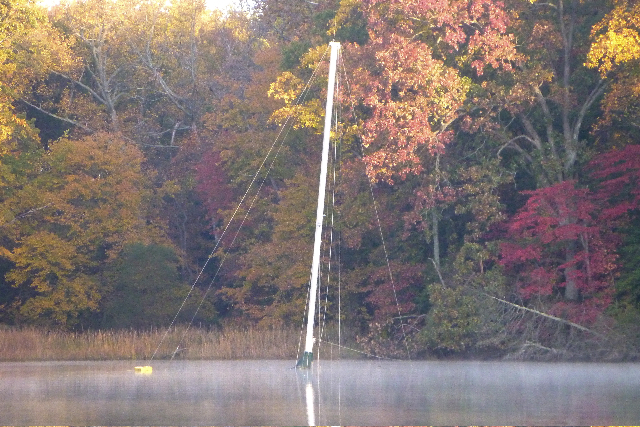
Marred only by this sunken sailboat in Church Creek that is now deeper in the muck than before, and will get REALLY hard to manage when we have a bit of a storm and the boat tips over. Too bad no one in County or State government gives a damn about removing it before even more damage is done.
Posted in Uncategorized
Leave a comment
Strange Object Seen in Church Creek
Hmm — maybe it’s the boat that sank there several weeks ago??
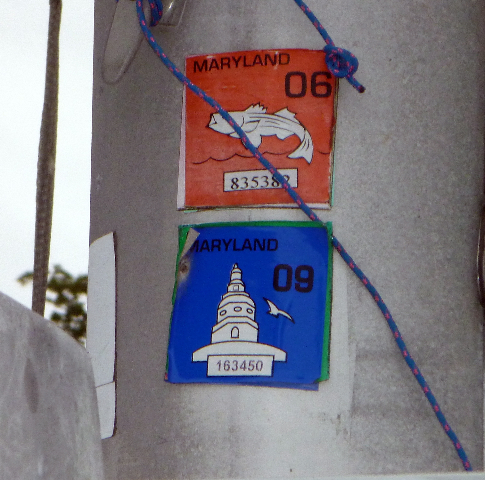
The one that had these decals so DNR could get the owner to move it???
. . . or will it stay there forever??
Posted in Uncategorized
Leave a comment
Poor Ryland Hammered by HOUMOUNGOUS Fine: 8/100’s of 1% of last year’s loss!
. . . and the bottom line is that Virginia get $11,000. . .
Ryland Homes Fined for Polluting Chesapeake Bay
The Ryland Group Inc., one of the nation’s largest homebuilders, will pay a civil penalty of $625,000 to several states to resolve alleged Clean Water Act violations at its construction sites, including sites located in the Chesapeake Bay Watershed, the Department of Justice and the U.S. Environmental Protection Agency (EPA) announced.
Ryland will also invest in compliance programs to improve employee training and increase management oversight at all current and future construction sites. The company is also required to inspect its current and future construction sites routinely to minimize storm water runoff from sites.
Without proper onsite pollution controls, sediment-laden storm water runoff from construction sites can flow to the nearest waterway and degrade water quality. EPA estimates the settlement will prevent millions of pounds of sediment from entering U.S. waterways every year. In addition, storm water can pick up other pollutants, including concrete washout, paint, used oil, solvents, and trash.
Virginia Attorney General Ken Cuccinelli applauded the EPA’s action.
“When the EPA works within the bounds of its authority to enforce environmental regulations to keep contaminated storm water from flowing into the Chesapeake Bay, I support its efforts to protect Virginia’s natural resources,” said Cuccinelli.
The government complaint, filed simultaneously with the settlement agreement in the U.S. District Court in Charlotte, N.C., alleges a pattern of violations that was discovered through site inspections and by reviewing documentation submitted by Ryland. The alleged violations include failure to obtain permits until after construction began, failing to obtain permits at all, or failing to comply with permit requirements at sites where Ryland did obtain permits. Alleged permit violations include not developing complete storm water pollution prevention plans, failure to conduct adequate inspections, and failure to install or implement adequate storm water controls or practices.
The Clean Water Act requires permits for the discharge of storm water runoff. Ryland’s permits require that construction sites have controls in place to prevent pollution from being discharged with storm water into nearby waterways. These controls include safeguards such as silt fences, phased site grading, and sediment basins to prevent common construction contaminants from entering waterways.
The settlement requires Ryland to obtain all required permits; develop site-specific pollution prevention plans for each construction site; conduct additional site inspections beyond those required by storm water regulations; and document and promptly correct any problems detected. The company must properly train construction managers and contractors on storm water requirements and designate trained staff for each site. Ryland must also submit national compliance summary reports to EPA based on its quarterly management oversight inspections and reviews.
Seven states have joined the settlement. Colorado, Florida, Illinois, Indiana, Maryland, Nevada, and Virginia will receive a portion of the $625,000 penalty. The settlement also includes sites in California, Georgia, Kentucky, Minnesota, North Carolina, South Carolina, and Texas. Virginia’s portion of the settlement is $11,241.
“Although Virginia is only receiving a small portion of the financial settlement, this case was more about ensuring appropriate storm water controls at construction sites and preventing future damage to the bay,” said Cuccinelli.
The consent decree, lodged in the U.S. District Court for the Western District of North Carolina, is subject to a 30-day public comment period and approval by the federal court. Once notice is published in the Federal Register, a copy of the consent decree will be available on the Justice Department website at www.justice.gov/enrd/Consent_Decrees.html.
Posted in Uncategorized
Leave a comment
Another DNR Triumph of Environmental Protection: Three tons down . . .
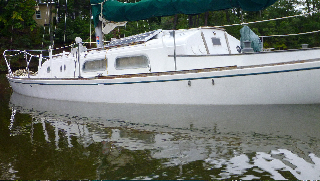
Out paddling my kayak, I noticed on Saturday (1 October) that Tranquil, a long-time semi-derelict anchorer in Church Creek was looking a bit more “laid back” than usual.
A neighbor on the other side of the cove said that the sinking condition of the boat had been reported to DNR on Friday, 30 September, and they said they had checked it out and figured it was filling from rain [I don’t think so.], but would be OK.
SO I guess they should have been able to find the owner of record?
And then I went by today (Tuesday, October 4th) and this is what I saw:
So is the DNR staffed by former submariners who still think their success is measured by “Tonnage Sunk?”
It is going to be SO much harder to refloat and remove the hulk, rather than simply pumping it out.
Do it right, please???
Posted in Uncategorized
Leave a comment
Just to keep us from getting too complacent. . . “emerging contaminants of concern”
http://www.sciencedaily.com/releases/2011/09/110921142029.htm
Public release date: 21-Sep-2011
[ Print | E-mail |
Share ] [ Close Window ]
Contact: Todd McLeish
tmcleish@uri.edu
40-187-478-982
University of Rhode Island
[ Print | E-mail |
tmcleish@uri.edu
40-187-478-982
University of Rhode Island
‘Emerging contaminants of concern’ detected throughout Narragansett Bay watershed
Chemicals found at low levels at all sites tested
URI researcher: ‘Emerging contaminants of concern’ detected throughout Narragansett Bay watershed
NARRAGANSETT, R.I. – September 21, 2011 – A group of hazardous chemical compounds that are common in industrial processes and personal care products but which are not typically monitored by the Environmental Protection Agency have been detected throughout the Narragansett Bay watershed, according to a URI researcher.
Rainer Lohmann, associate professor of chemical oceanography, and graduate student Victoria Sacks, with the help of 40 volunteers, tested for the presence of the chemicals in 27 locations. The compounds were found at every site.
“Being exposed to these compounds is the hidden cost of our lifestyle,” said Lohmann. “It’s frustrating that as we ban the use of some chemical compounds, industry is adding new ones that we don’t know are any better.”
Lohmann said the good news is that the chemicals were detected at extremely low levels.
“By themselves, none of these results makes me think that we shouldn’t be swimming in the bay or eating fish caught there,” he said. “But we only tested for three compounds that might be of concern, and we know there are hundreds more out there. The totality of all those compounds together is what may be worrisome.”
The three compounds the researchers measured, which scientists refer to as “emerging contaminants of concern,” are: triclosans, antibacterial agents found in many personal care products and which have been identified as posing risks to humans and the environment; alkylphenols, widely used as detergents and known to disrupt the reproductive system; and PBDEs, industrial products used as flame retardants on a wide variety of consumer products. PBDEs have been banned because they cause long-term adverse effects in humans and wildlife.
PBDEs, methyltriclosan and triclosan were found in highest concentrations in the Blackstone River, Woonasquatucket River and in upper Narragansett Bay, while some detergents were detected at similar levels at nearly every site.
“Many of the trends in society – from early puberty changes to some diseases – may be caused by chemical exposures,” said Lohmann. “They trigger hormones and disrupt the normal functioning of the body. We have no resistance against them.”
The chemical compounds were detected using polyethelene passive samplers, thin pieces of plastic that absorb chemicals that are dissolved in water. The volunteers placed the samplers in various rivers and coves in the Narragansett Bay watershed in the fall of 2009 and retrieved them two to three weeks later. The chemical compounds were then extracted from the samplers in a lab at the URI Graduate School of Oceanography.
“We couldn’t have done this work without the volunteers,” Lohmann said. “They have helped us find potential sources for some of these chemicals.”
“Unfortunately, no matter how you choose your lifestyle, you can’t avoid exposure to these compounds,” he added. “You just can’t escape.”
###
[ Print | E-mail |
Share ] [ Close Window ]
AAAS and EurekAlert! are not responsible for the accuracy of news releases posted to EurekAlert! by contributing institutions or for the use of any information through the EurekAlert! system.
Posted in Uncategorized
Leave a comment
Developer BSJ Partners LLC fined $500,000 for Dumping Untreated Sewage into Bay
Now THAT’s the way to get their attention!
from the Baltimore Sun athttp://www.baltimoresun.com/features/green/bs-gr-choptank-river-20110811,0,7519456.story
Cambridge country club fined $500,000 for pollution violations
Horn’s Point accused of discharging raw sewage into Choptank wetlands
, August 11, 2011
A Cambridge country club was ordered to pay an “extraordinary penalty” of $500,000 by a Dorchester CountyCircuit Court for discharging raw sewage into wetlands along the Choptank River that eventually flow into theChesapeake Bay, according to a Thursday announcement from the state attorney general’s office. BSJ Partners LLC, owner-operator of Clearview at Horn’s Point, formerly known as the Cambridge Country Club, was ordered to pay a $485,000 civil penalty for environmental violations, a $15,000 penalty for failing to submit discharge monitoring reports for three years; and a $500 penalty for discovery violations. “The extraordinary penalty we secured in this case is a severe warning to anyone who would pollute our wetlands, our rivers and the Chesapeake Bay,” said Attorney General Douglas F. Gansler in a statement. “This office will aggressively pursue and punish those who violate the law and harm the health and well-being ofMaryland‘s precious natural resources.”
Gansler’s office said that for more than two years, the owners saved $424,000 by diverting raw sewage from a failed septic system through an underground conduit it constructed into the wetlands instead of pumping and hauling the waste or connecting to a nearby municipal sewer line.
High levels of fecal coliform were found in Jenkins Creek, which feeds the Choptank River, by the Maryland Department of the Environment, impacting shellfish harvesting.
An attorney for BSJ had no comment.
Meredith.cohn@baltsun.com
Posted in Uncategorized
Leave a comment