Core Concepts of the No Growth Movement

August 31, 2009, 10:20 AM

 Do We Have to Outgrow Growth?By ANDREW C. REVKIN

 NY Times Blog at http://dotearth.blogs.nytimes.com/2009/08/31/daly-on/

 Following the Nobel laureate Kenneth Arrow, Herman Daly has responded to my query about whether there is an upside to the recent consumption slowdown, and to the broader question of whether humans can or should shift from their current growth-focused economic norms to a new definition of progress. Does he see a viable real-world path to his “steady state” vision of the economy?

 >
Yes Andy, I do. And it is clear that the growth-driven path is not > viable, and in all likelihood no longer even economic. The Classical > Economists already laid it out long ago, especially John Stuart > Mill. Recently the “real-world path” you refer to has been outlined > by the British Sustainable Development Commission in their report “ > Prosperity Without Growth” [Dr. Daly wrote the foreward]. Also the > path for Canada has been carefully studied by Canadian economist > Peter Victor in “ Managing Without Growth: Slower by Design, Not > Disaster“. In addition see the C.A.S.S.E. statement on economic > growth and its conflict with biodiversity preservation (see > steadystate.org) signed by many professional organizations and > individuals, including Paul Ehrlich and I think E.O. Wilson. Will > mainstream growth economists ever wake up? Maybe, maybe not. Keynes > said, “We are capable of turning off the sun and the stars because > they do not pay a dividend.”
>
I also asked him about my notion that the ongoing spike in human numbers and appetites is akin to a testosterone-fueled teenager going through puberty, and about what the species equivalent of adulthood might look like:

 When we “grow up” the first thing to do is to stop further growth, to become a mature steady state in physical dimensions, and then concentrate on qualitative development and maintenance: knowledge, wisdom, justice, the noosphere, etc. Arrested development in the adolescent growth phase leads to giantism, obesity, overpopulation, resource wars, and massive die-offs.

  Juliet Schor of Boston College contributed a comment echoing Dr. Daly’s conclusions. Some techno-optimists and economists see an endless series of innovations always redefining the basket of things we call resources. After all, coal was just a black rock for most of human history; silicon was beach sand, and now it’s the heart of semiconductors and solar panels. The result, this group says, is that infinite aspirations can in fact fit on a finite planet.

 Do we have to outgrow growth or embrace it?

Posted in Uncategorized | Leave a comment

Virgin Islands Natural Resources: Waves of Change – Description & Prescription by Marcia Taylor and Lihla Noori

UVI_Waves of Change_Taylor-Noori_2009_08.pdf
Posted in Beaches, Climate Change, Development, Uncategorized | 2 Comments

DEET Problems Important for Tropical Islands

from Science News

DEET’S NASTINESS EXTENDS TO HUMANS
Study finds the bug-repellent ingredient stopped an enzyme from doing its job
Web edition : Wednesday, August 5th, 2009
  Text Size

DEET, the active ingredient in many bug repellents, doesn’t only cripple mosquitoes — it also meddles with mammals. A new study examining DEET’s effects on insects, mice and human proteins reports that the chemical interferes with a prominent central nervous system enzyme. This effect is magnified when exposure to DEET is combined with exposure to certain pesticides, researchers report online August 4 in BMC Biology.

The results are consistent with previous studies, says Bahie Abou-Donia of the Duke University Medical Center in Durham, N.C, who was not involved in the new work.

“DEET is a good chemical for protection against insects,” he says. “But prolonged exposure results in neurological damage, and this is enhanced by other chemicals and medications.”

Led by Vincent Corbel of the Institut de Recherche pour le Développement in Montpellier and Bruno Lapied of the University of Angers in France, the researchers examined DEET’s effects on mosquitoes, cockroach nerves, mouse muscles, and enzymes purified from fruit flies and humans. Applications of DEET slowed or halted the actions of the enzyme acetylcholinesterase. This enzyme hangs out between nerve and muscle cells, breaking down a messenger molecule after it has passed information from one cell to another. If this messenger isn’t properly recycled, it can build up and lead to paralysis.

Certain pesticides are designed to shut down this enzyme in insects, which may explain DEET’s enhanced toxicity when used by someone already exposed to these chemicals.

Abou-Donia says that these effects should be clearly labeled on products containing DEET, or N,N-diethyl-3-methylbenzamide. He notes that in Canada, insect repellents can contain no more than 30 percent DEET. The United States — where 100 percent DEET repellents are available — should consider such restrictions, he says.

Font_downFont_up

Posted in Uncategorized | Leave a comment

Why Science News is Getting More Worser. . . . .

Why Science News is Getting More Worser. . . ..

It’s all a matter of opinion — severalexcellent links at the web page. . . .

Janet Ralot’s excellent blog from ScienceNews: http://snurl.com/or8si  [www_sciencenews_org]

Home / Blogs / Science & the Public /Blog entry
NEWS OF SCIENCE: CHOOSEWISELY
By Janet Raloff
A provocative piece in the Aug. 17 Nation by author/bloggerChris Mooney and Sheril Kirshenbaum, a marine biologist from DukeUniversity, suggest science reporting isn’t valued as it once was.One measure of this: declining numbers of seasoned journalistscovering research – and a declining number of column inches andbroadcast minutes of science coverage.
How can this be? You’d think we’d want more and better researchnews with the growing threat of climate change; a need for newer andmore efficient energy technologies; threats of flu pandemics; amigration of U.S. jobs to high-tech firms in the developing world; andchronic illnesses that are eating up an increasing share of the U.S.gross domestic product. In fact, the public may have a big appetitefor news on such topics. But these days, media coverage and the humanresources devoted to science and technology issues are not dictated bysurveys of audience preferences.
A meteoric three-decades rise in S&T coverage, beginning in theimmediate post-Sputnik era, “sought nothing less than tobring science to the entire public, to mediate between the technicaland the lay, the wonky and the approachable,” Mooney and Kirshenbaumargue. “The thinking was that translating scientific knowledge intoa form everyone could understand would help forge a more enlightenedcitizenry and, ultimately, a stronger democracy.”
Hard to argue with that.
But several trends have been conspiring to erode S&T mediaperformance. First, a move to turn the media into big revenuegenerators. The fact that the reporting and producing of news is anexpensive operation appears to have escaped the attention of theidiots who have recently been investing in newspapers and broadcastnetworks. After buying into enormous debt to acquire news operations,media moguls have suddenly realized that they can’t raise the moneyto easily pay off that debt. Especially as ad revenues have beenmoving away from the mainstream media, or MSM, and onto the Internet.The result: Experienced (and better paid) reporters and editors havebeen jettisoned over the past two years in favor of more (and lowercost) newbies.
I can understand why this strategy might appeal to a media ownerbecause those newbies can fill a news hole as effectively as theirpredecessors did. Unfortunately for news consumers, what inexperiencednewbies offer is often no more than a succession of bite-size reportson developments devoid of context and perspective. Mooney andKirshenbaum describe this trend pithily: “As a rule, journalists arealways in search of the dramatic and the new. When it comes toscience, however, this can lead [inexperienced reporters or editors]to pounce on each ‘hot’ new result, even if that findingcontradicts the last hot result or is soon overturned by a subsequentstudy. The resulting staccato coverage can leave the public hopelesslyexasperated and confused.”
The approach that works in much political coverage – a search forbalance by providing the arguments of one side contrasted againstthose of the “other” side – sometimes falls on its face inS&T reporting.
First, sometimes there aren’t two sides. There might be essentiallyjust one. To contrast it against one or more largely uninformed ormisinformed fringe groups won’t provide balance. It will just serveto elevate the credibility of groups that don’t deserveit.
Or there may be more than two sides. Perhaps five or more. To focus onany one or two – to the exclusion of the others – also does thepublic a disservice and again falls far short of the”balance.”
Or sometimes the news is not a controversy – with spicy competingquotes – but a slowly emerging trend that strengthens from someconventional wisdom into a general truth. Reporting this may not be assexy as covering some political debate on climate change or the ethicsof cloning. Still, the emerging truth may be what we need to hear.Even if it’s not what we hoped or wanted to hear. And that’s”how much of the press managed to bungle the most importantscience-related story of our time: global warming,” Mooney andKirshenbaum contend. They covered quotes or developments that appearedto contradict conventional wisdoms. They didn’t cover the steadytransformation of a “wisdom” into a truth.
Trend two: Over the past three decades, the news media has splinteredfrom a few major local newspapers and a handful of national networksinto a proliferating universe of free or near-free cable and onlinesources. At least initially, those alternative media parasitized theMSM for content. Today, online and cable media are increasingly doingtheir own reporting and often well. But most have focused on politicalor niche topics. Few offer full-service reporting on the universe ofissues that shape our lives – especially science and tech. And thevast majority of “news” on the Internet amounts toblogs.
Blogs can be well researched and reasoned. But most instead are meresnippets of fact or some anecdote wrapped in a blanket of opinion. Andmost consumers don’t appear to have figured out how to separate theone from the other. In fact, Mooney and Kirshenbaum maintain, “Theweb . . . empowers good and bad alike. Accurate science and the moststunning misinformation thrive side by side . . . and there is noreason to think good scientific information is somehow beating [thebad] back.”
Commentary has its place. But it should augment sound reporting, notattempt to substitute for it. Indeed, the Best Science Blog, lastyear, came down to a confrontation between two “polemical” sites -one that assaults religious faith and another that challengesmainstream interpretations of the science of climate change. ConcludeMooney and Kirshenbaum: “the Internet is not unifying our culturearound a comprehensive or even reliable diet of scientificinformation, and it isn’t replacing what’s being lost in the oldmedia.”
On July 13, Mooney and Kirshenbaum’s new book came out,”Unscientific America: How Scientific Illiteracy Threatens ourFuture” (2009, Basic Books, 224 pp.). I haven’t had a chanceto read it yet. But it seems to tackle in greater depth the issuesthey bring up in The Nation.
So what’s the solution? The pair argue for a move toward nonprofitreporting and commentary. They recommend encouraging the reporting andanalysis of S&T developments by universities, research-interestgroups and others. I guess we, at Science News, fall into thatgeneral rubric.
But what we really need are more challenging and discriminating newsconsumers.
Learning how to discriminate news from cherry-picked data, commentaryand polemicism may need to start in elementary school and continue oninto college. Local community groups should offer refresher coursesfor those who finished their formal education ages ago.

We need to accept that the definition ofnews is morphing – as is its delivery and quality. Increasingly,it’s up to all of us to choose our sources of that continuingeducation wisely.

--

      37 Years of Environmental Service toSmall Tropical Islands
Posted in Uncategorized | Leave a comment

MAPPING resources — esp for communities and advocacy. . . and twitter

Sunday sermonette, sort of . . . . . . .

 People always ask,” What’s the good of Twitter” The answer of course is I don’t know, what do YOU want to do? One of the things I try to do for Island Resources Foundation is to pass appropriate technologies to users that work in small island communities. This post below is an example of a Twitter message:

 diving into information design to visualize complexity. Incredible stuff: http://tr.im/t26A http://tr.im/t27p http://tr.im/t27J

 This is a tweet by Christian Kreutz — he’s one of 60-or-so people and institutions that I follow on Twitter. I don’t remember how I came across his name, but I do know that he works with information technologies and sustainable development from some base in Europe, so I’m delighted to be able to read his occasional inspired posts –

Posted in Uncategorized | Leave a comment

Sea Level Rise: Important Article in New Scientist 10 July 2009

Sea Level Rise: Important Article in New Scientist10 July

From the July 4-10 NewScientist athttp://www.newscientist.com/article/mg20327151.300-sea-level-rise-its-worse-than-we-thought.html
or
http://sn.im/nf0lp  [www_newscientist_com]

and following the article is a copy of the NewScientist Editorialon the same subject:

http://sn.im/nf19k  [www_newscientist_com]

These reports are both a good reference (the NewScientistis a great UK science policy magazine — for science what theEconomist is for political economics), and AN IMPORTANT REMINDERthat we need to feature future SEA LEVEL RISE issues in all of ourreports. In fact, I regret not including a climate change/sea levelimpacts point in the “Lessons Learned” paper for our recentNevis Peak Park Inventory and Management Plan.
        I wouldadd only one thing from the perspective of small islands and our manyyears of natural resource conservation work: It’s even MORE WORSERthan that!  The NewScientist does not discuss the need torecover, restore and rebuild critical coastal ecosystems whosedestruction has ALREADY badly compromised the ability of coastal andmarine ecosystems to provide critical ecosystem services. For example,there is new evidence that coastal ecosystem losses are directlyimplicated in the catastrophic failure of reef and other marineecosystems in the Caribbean. Rebuilding these systems would be hard atany time; rebuilding them in the face of multi-meter seal level riseAND increasing storm frequency is going to be virtually impossibleunless we build public acceptance and the legal and institutionalreforms to enable public authorities to take the steps necessary torebuild mangroves, wetlands and fringing reefs.

-=-=-=-=-=-=-=-=-=-=-=-=-=-=-=-=-=-=-=-=-

Sea level rise:It’s worse than we thought
             01July 2009 byAnil Ananthaswamy
              Magazine issue 2715.
               Forsimilar stories, visit the Climate Change Topic Guide

P0e374e51_1
photocaption
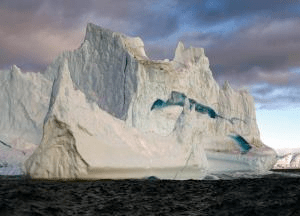
Greenland is alreadylosing enough ice to raise sea level by 0.8 millimetres per year(Image: Nick Cobbing)

See our relatededitorial
FOR a few minutes David Holland forgets about his work and screamslike a kid on a roller coaster. The small helicopter he’s riding in isslaloming between towering cliffs of ice – the sheer sides of giganticicebergs that had calved off Greenland’s Jakobshavn glacier. “Itwas like in a James Bond movie,” Holland says afterwards.”It’s the most exciting thing I have everdone.”
Jakobshavn has doubled its speed in the past 15 years, drainingincreasing amounts of ice from the Greenland ice sheet into the ocean,and Holland, an oceanographer at New York University, has been tryingto find out why. Scientists like him are more than a little astonishedat the rate at which our planet’s frozen frontiers seem to beresponding to global warming. The crucial question, though, is whatwill happen over the next few decades and centuries.
That’s because the fate of the planet’s ice, from relatively small icecaps in places like the Canadian Arctic, the Andes and the Himalayas,to the immense ice sheets of Greenland and Antarctica, will largelydetermine the speed and extent of sea level rise. At stake are thelives and livelihoods of hundreds of millions of people, not tomention millions of square kilometres of cities and coastal land, andtrillions of dollars in economic terms.
In its 2007 report, the Intergovernmental Panel on Climate Change(IPCC) forecast a sea level rise of between 19 and 59 centimetres by2100, but this excluded “future rapid dynamical changes in iceflow”. Crudely speaking, these estimates assume ice sheets are abit like vast ice cubes sitting on a flat surface, which will stay inplace as they slowly melt. But what if some ice sheets are more likeice cubes sitting on an upside-down bowl, which could suddenly slideoff into the sea as conditions get slippery? “Larger rises cannotbe excluded but understanding of these effects is too limited toassess their likelihood,” the IPCC report stated.
Even before it was released, the report was outdated. Researchers now know far more. And whilewe still don’t understand the dynamics of ice sheets and glaciers wellenough to make precise predictions, we are narrowing down thepossibilities. The good news is that some of the scarier scenarios,such as a sudden collapse of the Greenland ice sheet, now appear lesslikely. The bad news is that there is a growing consensus that theIPCC estimates are wildly optimistic.
The oceans are already rising. Global average sea level rose about 17centimetres in the 20th century, and the rate of rise is increasing.The biggest uncertainty for those trying to predict future changes ishow humanity will behave. Will we start to curb our emissions ofgreenhouse gases sometime soon, or will we continue to pump ever moreinto the atmosphere?
Even if all emissions stopped today, sea level would continue to rise.”The current rate of rise would continue for centuries iftemperatures are constant, and that would add about 30 centimetres percentury to global sea level,” says Stefan Rahmstorf of thePotsdam Institute for Climate Impact Research in Germany. “If weburn all fossil fuels, we are likely to end up with many metres of sealevel rise in the long run, very likely more than 10 metres in myview.”
This might sound dramatic, but we know sea level has swung from 120metres lower than today during ice ages to more than 70 metreshigher during hotperiods. There isno doubt at all that if the planet warms, the sea will rise. The keyquestions are, by how much and how soon?
To pin down the possibilities, researchers have to look at what willhappen to all the different contributors to sea level under variousemissions scenarios. The single biggest contributor to sea level riseover the past century has been the melting of glaciers and ice caps outside of Greenlandand Antarctica,from Alaska to the Himalayas. According to one recent estimate, the continued loss of thisice will add another 10 to 20 centimetres to sea level by 2100. Itcannot get much worse than this: even if all this ice melted, sealevel would only rise by about 33 centimetres.
Expandingwaters
The second biggestcontributor has been thermal expansion of the oceans. Its futurecontribution is relatively simple to predict, as we know exactly howmuch water expands for a given increase in temperature. A study published earlier thisyear found thateven if all emissions stopped once carbon dioxide levels hit 450 partsper million (ppm) – an unrealistically optimistic scenario – thermalexpansion alone would cause sea level to rise by 20 centimetres by2100, and by another 10 centimetres by 3000. At the other extreme, ifemissions peak at 1200 ppm, thermal expansion alone would lead to a0.5-metre rise by 2100, and another 1.4 metres by 3000 (see “Howhigh, how soon?”).
Then there are the great ice sheets of Greenland and Antarctica, whichhold enough water to raise sea level by about 70 metres. Untilrecently, their contribution to sea level rise was negligible, and theIPCC predicted that Greenland would contribute 12 centimetres at mostto sea level rise by 2100, while Antarctica would actually gain iceoverall due to increased snowfall. “A lot of new results havebeen published since then to show that this very conservativeconclusion does not hold,” says Eric Rignot of the University ofCalifornia, Irvine.
To study the ice sheets, Rignot and colleagues have combinedsatellite-based radar surveys, aircraft altimetry and gravitymeasurements using NASA’s GRACE satellite. They found that ice loss isincreasing fast. Greenland is now losing about 300 gigatonnes of iceper year, enough to raise sea level by 0.83 millimetres. Antarctica islosing about 200gigatonnes per year, almost all of it from West Antarctica and theAntarctic Peninsula, raising levels by 0.55 millimetres. “Themass loss is increasing faster than in Greenland,” Rignot says.”It’ll overtake Greenland in years to come.”
If this trend continues, Rignot thinks sea level rise will exceed 1metre by 2100. Sounderstanding why Greenland and Antarctica are already losing icefaster than predicted is crucial to improving ourpredictions.
The main reason for the increase is the speeding up of glaciers thatdrain the ice sheets into the sea. One cause is the knock-on effect ofwarmer air melting the surface of the ice: when the surface ice melts,the water pours down through crevasses and moulins to the base ofglaciers, lubricating their descent into the sea. Fears about theimpact of this phenomenon have receded somewhat, though: Antarctica isthought to be too cold for it to be a big factor, and even inGreenland it is only a summertime effect. “It’s significant, butI don’t think it’s the primary mechanism that would be responsible fordramatic increases in sea level,” says glaciologist RobertBindschadler at the NASA Goddard Space Flight Center in Greenbelt,Maryland.
There is another way for surface melt to affect sea level, though.Meltwater fills any crevasses, widening and deepening the cracks untilthey reach all the way down to the base of the ice. This can have adramatic effect on floating ice shelves. “Essentially, you arechopping up an ice shelf into a bunch of tall thin icebergs, likedominoes standing on their ends,” says Bindschadler. “Andthey are not very stable standing that way.” They fall over, andpush their neighbours out to sea.
The most famous break-up in recent times – that of the Larsen B iceshelf on the Antarctic Peninsula in 2002 – likely happened this way.While the break-up of floating ice shelves does not raise sea leveldirectly, the disintegration of Larsen B had consequences that modelsat the time failed to predict. With little to resist their advance,glaciers behind Larsen B immediately began to move up to eight timesfaster. Five smaller ice shelves in the rapidly warming AntarcticPeninsula have also broken up and many others aredisintegrating.
What liesbeneath
Surface melt poseslittle threat in West Antarctica, as it is so much colder. Here thedanger comes from below. Take the ice shelf holding back the massive Pine Islandglacier, which isthinning in a strange pattern. Radar scans have revealed giant”ripples” up to 100 metres deep on itsunderside.
Bindschadler thinks that the currents created by winter winds raiserelatively warm water from a few hundred metres down in the AmundsenSea off West Antarctica. This melts the underside of the ice shelf andgets trapped in the space it carves out, thus continuing to melt theice from below over a few seasons. As the ice shelf thins, the PineIsland glacier behind it is speeding up, from 3 kilometres per yearthree years ago to over 4 kilometres per year according to the latestunpublished measurements by Ian Joughin of the University ofWashington in Seattle.
What does this have to do with global warming? Climatechange, aided andabetted by the loss of ozone, has strengthened the winds that circle Antarctica.This is speeding up the Antarctic circumpolar current and pushingsurface waters away from the coast, causing deeper, warmer water towell up.

Along with theThwaites glacier and some smaller ones, Pine Island glacier drains athird of the West Antarctic ice sheet. This ice sheet is particularlyvulnerable to ocean heat because much of it rests on the seabed, akilometre or more below sea level. This submarine ice will not raisesea level if it melts, but if it goes a lot of higher-level ice willend up in the ocean. The vulnerable parts contain enough ice to raise sea level3.3 metres – lessthan the 5 metres that was once estimated but more than enough to havecatastrophic effects.

Any increase in thetemperature of seawater in contact with ice can lead to relativelyrapid melting, as with the cavities discovered by Bindschadler.”The ocean has an enormous amount of heat compared to theatmosphere,” he says.
Even in Greenland, where the ice sheet rests on land above sea level,ocean heat still matters. When not dodging giant icebergs, Holland hasbeen trying to find out why Greenland’s Jakobshavn glacier startedmoving faster in 1997, speeding up from around 6 kilometres per yearto more than 9 kilometres per year by 2000 and 13 kilometres per yearby 2003. The glacier continues to drain ice from the Greenland icesheet at a higher rate than before.
The increase had been attributed to lubrication by meltwater, butHolland’s team recently stumbled across data from local fishing boats,which deploy thermometers in bottom-trawling nets. One fact stood out:the temperature of the subsurface waters around West Greenland jumpedin 1997, prior to the massive calving of Jakobshavn.
As the teamreported last year, though, the real trigger lay in what happened in1996. That year, the winds across the North Atlantic weakened, slowingdown the warm Gulf Stream. The weakened current meandered aimlesslyand hit west Greenland. “A modest change in wind gives you a bigbang in terms of ice sheet dynamic response,” saysHolland.
Findings like these suggest that predicting sea level rise is eventrickier than previously thought. If relatively small changes in windsand currents could have a big impact on ice sheets, we need extremelygoodmodels of regionalclimate as well as of ice sheets. At the moment we have neither – andwhile regionalclimate models areimproving, ice sheet models are still too crude to make accuratepredictions.
“They are coarse models that don’t include mechanisms that allowglaciers to speed up,” says Rignot. “And what we are seeingtoday is that this is not only a big missing piece, this could be thedominant piece. We can’t really afford to wait 10 to 20 years to havegood ice sheet models to tell people, ‘Well, sea level is actuallygoing to rise 2 metres and not 50 centimetres’, because theconsequences are very significant, and things will be pretty muchlocked in at that point.”
So climate scientists are looking for other ways to predict sea levelrise. Rahmstorf, for instance, is treating the Earth as one big blackbox. His starting point is the simple idea that the rate of sea levelrise is proportional to the increase in temperature: the warmer Earthgets, the faster ice melts and the oceans expand. This held true forthe last 120 years at least. “There is a very close andstatistically highly significant correlation between the rate of sealevel rise and the temperature increase above the pre-industrialbackground level,” says Rahmstorf.
Extrapolating this to the future, based on IPCC emissions scenarios,suggests sea level will rise by between 0.5 and 1.4 metres – and thehigher estimate is more likely because emissions have been risingfaster than the IPCC’s worst-case scenario. Rahmstorf’s study got amixed receptionwhen it first appeared, but he can feel the winds of change. “I sensethat now a majority of sea level experts would agree with me that theIPCC projections are much too low,” he says.
Could even Rahmstorf’s estimate be too low? It assumes the relationbetween temperature and sea level is linear, but some experts, mostprominently James Hansen of NASA’s Goddard Institute for Space Studiesin New York, argue that because there are multiple positive feedbacks,such as the lubrication of glaciers by meltwater, higher temperatureswill lead to accelerating ice loss. “Why do I think a sea levelrise of metres would be a near certainty if greenhouse gas emissionskeep increasing?” Hansen wrote in New Scientist (28 July 2007, p 30). “Because while thegrowth of great ice sheets takes millennia, the disintegration of icesheets is a wet process that can proceed rapidly.”

Hansen has made nospecific prediction, however. So just how bad could it get? TadPfeffer of the University of Colorado in Boulder decided to workbackwards from some of the worst-case scenarios: 2 metres by 2100 fromGreenland, and 1.5 metres from West Antarctica, via the Pine Islandand Thwaites glaciers. Just how fast would the glaciers have to bemoving for the sea level to rise by these amounts? Pfeffer found that glaciers in Greenlandwould need to move at 70 kilometres per year, and Pine Island andThwaites glaciers at 50 kilometres per year, from now until 2100.Since most glaciers are moving at just a few kilometres per year, toPfeffer and many others, these numbers seem highlyunrealistic.
Worstcase
So what ispossible? For scenarios based on conservative assumptions, such as adoubling of glacier speeds, Pfeffer found sea level will rise byaround 80 centimetres by 2100, including thermal expansion. “Forthe high end, we took all of the values we could change and we pushedthem forward to the largest numbers we imagined would be reasonable,”says Pfeffer. The answer: 2 metres.
These estimates fit well with recent studies of comparable periods in the past, which have foundthat sea level rise averaged up to 1.6 metres per century attimes. There is ahuge caveat in Pfeffer’s number crunching, though. “An importantassumption we made is that the rest of West Antarctica stays put. Andthis is the part of West Antarctica that is held behind the Ross iceshelf and the Ronne ice shelf,” says Pfeffer. “Those two iceshelves are very big, and very thick, and very cold. We don’t see away to get rid of those in the next century.”
Holland is not so sure. He has been studying computer models of oceancurrents around Antarctica, and he doesn’t like what he sees. Thesubsurface current of warm water near the frozen continent, known asthe circumpolar deep water, branches near the coast, and one branchhits Pine Island – which is probably why the ice there is thinning andspeeding up. “Another branch of it comes ever so close to theRoss ice shelf,” says Holland. “In some computer simulationsof the future, the warm branch actually goes and hitsRoss.”
While it is impossible to predict exactly what will cause this, thelessons from Jakobshavn show that a small change in the wind patternsover Antarctica might be enough to shift the warm current towards andeventually underneath the Ross ice shelf. Then even this gigantic massof ice – about the size of France – becomes vulnerable, regardless ofhow cold the air above it is. Pfeffer agrees that the Ross and Ronneice shelves are the wild cards. “If we pull the plug on thosetwo, then we create a very different world.”
Is there really a danger of a collapse, which would cause a suddenjump in sea levels? Paul Blanchon’s team at the National AutonomousUniversity of Mexico in Cancun has been studying 121,000-year-oldcoral reefs (pictured above) in the Yucatan Peninsula, formed duringthe last interglacial period when sea level peaked at around 6 metreshigher than today.His findingssuggest that at one point the sea rose 3 metres within 50 to 100years.
We just don’t know if this could happen again in the 21st century.What is clear, though, is that even the lowest, most conservativeestimates are now higher than the IPCC’s highest estimate. “Mostof my community is comfortable expecting at least a metre by the endof this century,” says Bindschadler.
Most glaciologistswho study Greenland and Antarctica are expecting at least a metre riseby the end of the century
And it will notstop at a metre. “When we talk of sea level rising by 1 or 2metres by 2100, remember that it is still going to be rising after2100,” Rignot warns.
All of which suggests we might want to start preparing. “Peoplewho are trying to downplay the significance say, ‘Oh, the Earth hasgone through changes much greater than this, you know, in thegeological past’,” says Pfeffer. “That’s true, but it’scompletely irrelevant. We weren’t there then.”
What it allmeans
If a 1 metre risein sea level doesn’t sound like much, consider this: about 60 millionpeople live within 1 metre of mean sea level, a number expected togrow to about 130 million by 2100.
Much of this population lives in the nine major river deltas in southand southeast Asia. Parts of countries such as Bangladesh, along withsome island nations like the Maldives, will simply be submerged.
According to a2005 report, a1-metre rise in sea level will affect 13 million people in fiveEuropean countries and destroy property worth $600 billion, with theNetherlands the worst affected. In the UK, existing defences areinsufficient to protect parts of the east and south coast, includingthe cities of Hull and Portsmouth.

Besides inundation,higher seas raise the risk of severe storm surges and dangerousflooding. The entire Atlantic seaboard of North America, including NewYork, Boston and Washington DC, and the Gulf coast will become morevulnerable to hurricanes. Today’s 100-year storm floods might occur asoften as everyfour years – inwhich case it will make more sense to abandon devastated regions andtowns than to keep rebuilding them.
Now is the timeto prepare for the great floods
        01July 2009
              Magazine issue 2715.
               Forsimilar stories, visit the Editorials Topic Guide
THREE key facts about rising sea levels need to be hammered home tothe world’s politicians and planners: sea-level rise is now inevitable, it will happenfaster than most of us thought, and it will go on for a very longtime.
Even if greenhouse gas emissions stopped tomorrow, the oceans willcontinue to swell as they warm, and as glaciers and ice sheets melt orslide into the sea(see “Going, going…”). The growing consensus among climate scientists isthat the “official” estimate of sea-level rise in the lastreport of the Intergovernmental Panel on Climate Change – 0.2 to 0.6metres by 2100 – is misleading. It could well be in the region of 1 to2 metres, with a small risk of an even greater rise. And barring amegaproject to cool the planet, it could take several thousand yearsfor the system to reach equilibrium – by which time sea level will besomewhere between 10 and 25 metres higher than it istoday.
For many islands and low-lying regions, including much of theNetherlands, Florida and Bangladesh, even small rises will spellcatastrophe. Most countries, however, will only lose a tiny percentageof their land, even with a very big rise. The problem is what has beenbuilt on that land: large parts of London, New York, Sydney and Tokyo,to mention just a few cities. Unless something can be done, greatswathes of urban sprawl will vanish beneath the waves. It will take amassive engineering effort to protect these cities – an effort thatmay be beyond economies that have been brought to their kneesby climatechange.
In a few hundredyears, large parts of London, New York and Sydney will vanish beneaththe waves
None of this meanswe should despair, and stop trying to curb emissions; the more we pumpinto the atmosphere, the higher and faster the seas will rise. Butalongside these efforts, we need to start acting now to minimise theimpact of future sea-level rise. That means we must stop building inthe danger zone.
Countless billions are being spent on constructing homes, offices,factories and roads in vulnerable coastal areas. For instance, theglittering skyscrapers of Shanghai, China’s economic powerhouse, arebeing built on land that is a mere 4 metres above sea level onaverage, and which is sinking under the weight of its buildings and aswater is extracted from the rocks beneath them.
In cities that have been around for hundreds of years, this sort ofdevelopment may be understandable. But planning for new coastaldevelopments is to fly in the face of reality. If we want to build alasting legacy for our descendants, we should do so on the plentifulland that is in no danger from the sea. It is one of the easiestways to mitigate climate change, and we should be acting on itnow.

-=-=-=-=-=-=-=-=-=-=-=-==-=-=-=-=-=

--

      37 Years of Environmental Service toSmall Tropical Islands
Posted in Uncategorized | Leave a comment

Article on (LACK OF) Effect of Protected Areas on Wildlife (KENYA Parks)

Article on (LACK OF) Effect of Protected Areas on Actual W

Disturbingly like Beets & Rogers,

Environmental Conservation 28 (4): 312-322 © 2001 Foundation for Environmental Conservation DOI:10.1017/S0376892901000340

Degradation of marine ecosystems and decline of fishery resources in marine protected areas in the US Virgin Islands

CAROLINE S. ROGERS1* AND JIM BEETS2

1US Geological Survey, PO Box 710, St John, USVI 00830,USA and 2Jacksonville University, Department of Biology and Marine Science,

2800 University Blvd N, Jacksonville, Florida 32211, USA

10 August 2001

PLoS ONE

RESEARCH ARTICLE

The Status of Wildlife in Protected Areas Compared to Non-Protected Areas of Kenya

David Western1*, Samantha Russell1, Innes Cuthill2

1
African Conservation Centre, Nairobi, Kenya, 2 School of Biological Sciences, Bristol University, Bristol, United Kingdom
Abstract Top

We compile over 270 wildlife counts of Kenya’s wildlife populations conducted over the last 30 years to compare trends in national parks and reserves with adjacent ecosystems and country-wide trends. The study shows the importance of discriminating human-induced changes from natural population oscillations related to rainfall and ecological factors. National park and reserve populations have declined sharply over the last 30 years, at a rate similar to non-protected areas and country-wide trends. The protected area losses reflect in part their poor coverage of seasonal ungulate migrations. The losses vary among parks. The largest parks, Tsavo East, Tsavo West and Meru, account for a disproportionate share of the losses due to habitat change and the difficulty of protecting large remote parks. The losses in Kenya’s parks add to growing evidence for wildlife declines inside as well as outside African parks. The losses point to the need to quantify the performance of conservation policies and promote integrated landscape practices that combine parks with private and community-based measures.

Citation: Western D, Russell S, Cuthill I (2009) The Status of Wildlife in Protected Areas Compared to Non-Protected Areas of Kenya. PLoS ONE 4(7): e6140. doi:10.1371/journal.pone.0006140
Editor: Michael Somers, University of Pretoria, South Africa

Received: August 22, 2008; Accepted: June 1, 2009; Published: July 8, 2009


Copyright: © 2009 Western et al. This is an open-access article distributed under the terms of the Creative Commons Attribution License, which permits unrestricted use, distribution, and reproduction in any medium, provided the original author and source are credited.

Funding: Support for the study was provided by the Liz Claiborne Art Ortenberg Foundation. The funders had no role in study design, data collection and analysis, decision to publish, or preparation of the manuscript.
Competing interests: The authors have declared that no competing interests exist.

Introduction Top

The need for ecosystem-wide monitoring has become more pressing as the goals of conservation have expanded from saving endangered species and national parks to sustaining biological diversity, ecosystem function and ecological services [1], [2], [3]. Quantification of species trends and the factors governing population and ecosystem viability are vital to forecasting, planning and managing wildlife populations, and in auditing the success of alternative conservation policies and practices.

Despite the need to quantify conservation programs, few studies have looked at the success of protected areas, which now cover 10% of the earth’s land surface
[4], relative to non-protected areas [5]. Several factors account for the paucity of conservation audits. First, the level of monitoring needed to assess conservation performance is expensive and calls for long-term commitment and planning. Research priorities have focused on charismatic species and the most urgent conservation threats. Long-term ecological monitoring has, consequently, been given little attention [6], [7] until the establishment of a network of Long Term Ecological Research sites [8]. Exceptions for large mammal ecosystems include long-term ungulate counts in Africa, conducted in national parks such as Kruger [9], Serengeti [10], Ngorongoro [11] Maasai Mara [12] Nairobi [13], [14] and Nakuru [15]. These counts provide population trends for individual parks, but do not compare the success of parks per se with similar non-protected areas, or the protected area systems as a whole with country-wide wildlife trends. Second, there has been little coordination among individual researchers, conservation organizations, government agencies or landowners conducting wildlife censuses. The lack of coordination and standardization creates methodological problems in comparing discontinuous data and different counting methods [5]. Data are often hard to locate, verify and synthesize because they are so scattered in agency reports, private files and journals. Third, complex ecological interactions such as rainfall-ungulate and predator-prey oscillations make it difficult to distinguish human-induced from background ecological changes. Owen-Smith and Ogutu [16] underscore the importance of long-term systematic monitoring in Kruger National Park for teasing out the impact of conservation policies and management practises from rainfall, predation and other ecological factors.

Lamenting the lack of quantitative data, Struhsaker et al.
[17] used questionnaire surveys to gauge the success of protected areas relative to community-based conservation and non-protected areas in Africa. Questionnaires are, however, subjective and may aggravate rather than resolve debates over conservation policies and paradigms [18], [19]. Sutherland et al. [20] noted that conservation practice relies more on anecdote and myth than quantitative evidence and called for more evidence-based conservation.

Despite a lack of systematic monitoring, there has been a large number of individual wildlife censuses conducted in eastern and southern Africa since the 1960s. Scholte and Caro
[5] have shown that it is possible to statistically combine such disparate counts and methodologies to compare protected area with non-protected areas systems. To compare wildlife trends as a function of protected area status in Tanzania, Scholte and Caro [5] compiled censuses for seven census zones over two time periods a decade apart (late 1980s-early 1990s with late 1990s-early 2000s). The aggregate population trends show wildlife declining in all census zones over the decade, but with the level of protection significantly slowing declines and in some species reversing trends.

Caro and Scholte
[5] point out that a raft of studies now point to ungulate declines inside as well as outside parks across Africa. If substantiated, the declines raise grave concerns about the adequacy of parks and point to the need for a radical review of conservation policies. A major review should, however, be grounded in more substantial evidence about the park trends and the underlying causes. Deficiencies in boundary design and area coverage or inadequate protection and ecological management [21], [22] could account for the losses. The first calls for major changes in national conservation policy, the second for changes in parks’ management practices. Quantifying the importance of parks in conserving wildlife, as well as quantifying the wildlife trends and their causes, calls for a serious investment in ecological monitoring. The monitoring should include multi-species censuses and environmental variables in order to tease out human-induced from natural trends, and to provide a quantitative audit and comparative analysis of conservation strategies.

Here we assemble continuous multi-species ungulate censuses of sufficient duration and on a large enough scale to transcend climatic cycles and to compare protected areas with matching non-protected areas of Kenya. We also compare the importance of Kenya’s protected area system relative to country-wide wildlife numbers and trends.

Wildlife audits of the rangelands have been conducted by the government’s Department of Remote Sensing and Resource Surveys (DRSRS) since 1977. The rangelands cover three quarters of Kenya’s 440,000 km2 land surface and all but a small proportion of its large herbivore populations
[23], [24]. The counts cover all species Thomson’s gazelle-sized (15 kg) and larger, giving a good measure of the large ungulate community which dominates the savannas [25]. The DRSRS national audits show that wildlife has declined by more than a third over the last 25 years [23], [24]. Due to the uncoordinated nature of counts and scattered results, no such audit of national parks and reserves has been conducted, despite counts dating from as early as the 1950s and 1960s [13], [26].

Here we assemble over 270 counts conducted over the last 25 years or more to assess wildlife trends in national parks relative to countrywide trends. The counts include published censuses and formal reports where possible, but most are drawn from unpublished counts from public institutions, individual researchers and volunteer groups.

Kenya has 23 terrestrial national parks under the administration of the Kenya Wildlife Service and 26 national reserves under district administration. Collectively, the parks and reserves cover 8% of the national land surface of Kenya. Many parks and reserves have too few counts to assess long-term trends. We have therefore included in our study all parks that had a baseline count by 1977 and have been counted repeatedly until at least 1997, giving 20 years of contemporaneous data.
The study includes 73% of the area covered by national parks and an estimated 95% of the national wildlife population [23]. Unfortunately, data is only available for one national reserve, Maasai Mara, which is under district administration. The Maasai Mara does, however, account for most of the wildlife found in national reserves. Grunblatt et al. [23], calculate that the remaining national reserves account for 32% of all national protected area coverage in Kenya, but only 2% of the national wildlife population. The sparse populations in national reserves reflect their marginal wildlife importance in most cases, as well as heavy livestock occupation and poor protection.

Our audit of Kenya’s protected areas was analyzed using standard methodologies with four objectives in mind. First, we assess wildlife numbers and trends in one of Africa’s premier protected area systems. Second, we compare trends in protected and non-protected areas similar in setting. We did so by matching contemporaneous counts inside and outside the park within the same ecosystem. Third, we compare wildlife trends in parks with nation-wide trends. Fourth, we compare the wildlife coverage given by protected areas as a proportion of national totals. We look at the numbers of all species combined rather than individual species in order to compare the trends and overall contribution of wildlife in parks to national trends and to the country-wide population. A more detailed study underway looks at species trends and changes in guild and community structure.

Results Top

Trends in National Parks and Reserves

Linear regression models were fitted using the Prais-Winsten Generalised Least Squares method, assuming errors have a first-order autocorrelation structure. The assumption of first-order autoregression was verified by partial autocorrelation of the raw data. Analyses were performed using SPSS 12.0 for Windows. All values were log10 transformed prior to analysis. Data for any missing years were estimated by linear interpolation.

Highly significant declines have occurred in three of the seven parks. These include Tsavo East and Tsavo West National Parks (combined) and Meru National Park. Nairobi National Park shows a negative but non-significant downward trend. Mara also shows a negative but insignificant decline. However, an earlier study [12], based on more complete censuses than we were able to obtain, concluded that non-migratory wildlife in Mara National Reserve declined by 58% between 1977 and 1997, and that there was no significant difference in declines in and outside the reserve [12]. Nakuru and Amboseli show non-significant increases. The five protected areas showing declines are Kenya’s most populous wildlife preserves.

Collectively, these parks account for 98% of wildlife covered by the protected areas listed in Table 1. The largest parks show the steepest declines. Wildlife populations declined 63% in Tsavo East and West between 1977 and 1997 and 78% in Meru between 1977 and 2000. There are, furthermore, indications that wildlife populations in the smaller parks have declined in more recent years as shown in Table 2 below.

Table 1.
Trends in large mammal numbers for key parks, reserves and adjoining non-protected areas within the ecosystem.

doi:10.1371/journal.pone.0006140.t001


Table 2.
Trends in large mammal populations in the three smallest National Parks of the study from 1990 onwards.
doi:10.1371/journal.pone.0006140.t002

The combined wildlife population change for all national parks listed in Table 1 is given in Figure 1 for the period 1977 to 1997. The data include interpolated counts for Tsavo East and West, Amboseli, Nakuru, Nairobi and Meru. The decline is highly significant (b = ?0.008, t = ?3.066, p = 0.007). The overall percentage loss of wildlife for all five parks is 41%. The percentage loss for Maasai Mara National Reserve over the same period was 25%.

Figure 1.
Combined wildlife population changes for Tsavo East, Tsavo West, Amboseli, Nakuru, Meru and Nairobi National Parks and between 1977 and 1997.
doi:10.1371/journal.pone.0006140.g001


Trends in Protected Areas and Adjacent Ecosystems

A comparison of wildlife trends in nationally protected areas and adjacent ecosystems is given in Table 1. Table 3 gives the values for the interaction term, which formally tests for a significant difference in the slopes (log10 numbers regressed against Year) inside and outside a given park. Analyses were performed using S-Plus. No interactions are significant, showing that yearly changes do not differ significantly inside and outside parks in the four matching areas for which data are available. No such data are available for Meru National Park. However, data for the adjacent districts of Isiolo and Samburu [24] suggest the trend outside is also steeply downwards. In the case of Nakuru, the park is ecologically isolated from the surrounding farms by an electric fence, so has no matching ecosystem.

Table 3.
The magnitudes and significance of interactions between yearly changes within parks and adjacent ecosystems.

doi:10.1371/journal.pone.0006140.t003

In Figure 2 we summarize wildlife numbers for nationally protected areas with matching ecosystems for the period 1977 to 1997, the maximum period for which there are contemporaneous counts for all areas. We have excluded Maasai Mara from this analysis because we were unable to get the full set of counts and because of the large distortion a seasonal influx of migratory wildebeest from Serengeti in Tanzania has on the resident totals for Kenya’s protected areas [23].

Figure 2.
Total wildlife populations for national parks with matching external ecosystem counts.


The parks include Tsavo East, Tsavo West, Amboseli, Nairobi but exclude Meru and Nakuru.
doi:10.1371/journal.pone.0006140.g002

The combined wildlife populations show considerable fluctuation in parks and adjoining areas, with numbers rising in the late 1970s, falling through to the mid-1980s, rising again more slowly in the late 1980s and falling steeply in the 1990s. The large fluctuations outside protected areas is likely due to their greater proportion of wet season range than parks and their more episodic use, especially with increasing settlement [27].


The fluctuations of populations outside and inside parks are closely correlated (r = 0.51, p = 0.0164) and not significantly different in slope (b = 0.00081, standard error = 0.0126, t = 0.0638, p = 0.9495). Although it is not possible to relate the national wildlife trends to rainfall, the oscillations correspond to drought cycles recorded for southern Kenya
[28], where the majority of wildlife is located. Independent evidence for fluctuations due to drought and rainfall fluxes has been shown for Nairobi [29], Tsavo [30] Amboseli [31] and Maasai Mara [12]. Climatically linked ungulate fluxes are to be expected, given the close correlation between large herbivore biomass and rainfall across a wide range of savanna ecosystems in eastern and southern Africa [32], [33], [34].

Despite the large inter-annual populations, the counts show a steep decline in wildlife populations in parks and adjacent ecosystems transcending drought cycles. The decline in parks is highly significant (b = ?0.011, t = ?3.773, p = <0.001). Aggregated wildlife populations in parks declined by 48%, from 90,691 to 47,599 between 1977 and 1997. Adjoining area populations declined by 45%, from 133,758 in 1977 to 73,394 in 1997.

Protected Areas and National Audits Compared

A meta-analysis of the DRSRS censuses of the Kenya rangelands counts between 1977 and 1997 showed a highly significantly decline in numbers [24]. Wildlife estimates derived from the regression equations for 17 districts’ censuses show a nationwide decline of 38% in wildlife numbers. Based on the data in Figure 1, wildlife populations for the combined national parks show a loss of 41% over the same period. Grunblatt et al. [23] earlier showed a loss of 32% of wildlife in Kenya rangelands between 1977 and 1994. The similar losses inside and outside protected areas as a whole reflect the losses for parks and matching ecosystems (Table 3). The parallel trends show that parks and reserves have not insulated wildlife from the steep country-wide declines of the last 30 years.

The importance of Kenya’s protected areas can be gauged by comparing the proportion of wildlife found in parks and reserves with the national total (
Table 4).

Table 4.
Percentages of wildlife found within protected areas relative to national totals, averaged for the 1990’s.
doi:10.1371/journal.pone.0006140.t004

Based on the national audit for the 1990s, national parks account for approximately 10% of all Kenya’s wildlife and national parks and national reserves for 35%. Maasai Mara accounts for 25% of the national total, underscoring its singular importance in Kenya’s protected area system.


Discussion Top

Our results have specific and general implications for conservation. Specifically, the decline in Kenya’s park populations is not surprising, given the inherent shortcomings in their design. Only a modest portion of the annual migratory range of large herbivores is included in Kenya’s parks. Most parks differentially cover dry season rather than wet season ranges of the dominant migratory species such as wildebeest and zebra [27]. Seasonal range losses will therefore reduce parks’ populations too [35].

Big parks in Kenya are no more insulated from the wildlife decline than small parks. The three largest protected areas, Tsavo (East and West), Meru and Maasai Mara [12], have the steepest wildlife losses. Poaching may account for a significant portion of the losses in Meru, but is unlikely to account for much of the losses in Tsavo or Mara. In general the security provided by the Kenya Wildlife Service since 1989 has contained poaching, as evidenced by the steady increase in rhinos [36] and elephants [37], the two species most vulnerable to poaching. Range loss in the herbivore migratory areas has been shown to account for most of the population losses in Mara [35]. Range loss due to agricultural expansion may also account for a portion of the losses in Tsavo. Habitat change and segregation effects caused by the spatial segregation of previously interlinked movements of wildlife and pastoralists in the savannas are also likely candidate causes [38], [39]. It will take refined research to decipher the relative weighting of such causes.

Two of the smallest parks, Nakuru and Amboseli, showed non-significant upward trends in population between 1977 and 1997 (
Table 1), but significant declines since 1990 (Table 2). The upward trend in both cases is explained by the exclusion of livestock after the creation of the parks and compensatory increase in wildlife, the downward trend by the dry conditions prevailing between the 1990s and 2000s [28]. In the case of Amboseli, the engagement of communities around the park in tourism revenues was also a strong contributing factor to the wildlife increase [31].

More generally, long-term monitoring in Kenya adds to growing evidence of wildlife declines in many African parks
[5]. For example, Scholte et al [40] highlight the severe decline of a number of species of antelope in the Waza National Park in Cameroon over the last 40 years, due to interacting effects of changes in rainfall, flooding and human interventions. In the Kruger National Park in South Africa, roan antelope have declined from about 450 to 45 individuals between 1986 and 1993 [41], matched by similar declines in sable and tsessebe [42]. The total of all non-migratory wildlife species in the Maasai Mara ecosystem has declined by 58% in the last 20 years [12]. Ngorongoro Crater has experienced a decline in wildebeest, Grant’s and Thompson’s gazelles since the mid-1980s [11].

The evidence of park losses points to the need for systematic monitoring of ecological trends and biological criteria for auditing conservation policies and practices. The results show sufficient variation in conservation areas and approaches to begin weighing the relative importance of various policies, strategies and management practices in conservation
[41], [43], [44], [11]. Evidence from Tanzanian parks, for example, suggests a better track record than Kenya [44]. The high caliber of Kenya’s security services rules out poaching as a factor. Two plausible additive hypotheses are, first, the larger size and greater ecological integrity of Tanzanian parks relative to Kenya’s and, second, Kenya’s lack of habitat management, especially rangeland burning, to counter pasture maturation and segregation effects [45], [38].
The value of large-scale long-term trend analysis is highlighted in a recent study showing that wildlife on private and community sanctuaries is stable or increasing [46], in contrast to the declines in protected areas and country-wide. The results of this study and our own findings suggest that parks associated with community and private conservation initiatives do better than parks with no outreach programs. Such evidence points to the need for new policies that combine national, private and community initiatives in order to sustain large free-ranging herbivore populations at an ecosystem and landscape scale [27].

Materials and Methods Top

The count data were obtained from the Department of Remote Sensing and Resource Surveys (DRSRS) for Tsavo East and West and the Kitengela, from DRSRS and Ottichilo [35] for Maasai Mara, from the Kenya Wildlife Service for Nairobi National Park and Nakuru, from Kenya Wildlife Service and Ian Douglas-Hamilton and Hillman [47] for Meru National Park and the Amboseli Research and Conservation Project for Amboseli [31].

Species covered by the surveys include: elephant (
Loxidonta Africana), buffalo (Syncerus caffer), Burchell’s zebra (Equus burchelli), giraffe (Giraffa camelopardalis ), wildebeest (Connochaetes taurinus), eland (Taurotragus oryx), waterbuck (Kobus allipsiprymnus ), warthog (Phacochoerus africanus), Grant’s gazelle (Gazelle granti), Thomson’s gazelle (Gazelle thomsonii), impala (Aepyceros melampus), lesser kudu (Tragelaphus imberbis) oryx (Oryx gazella), black rhinoceros (Diceros bicornis), topi (Damaliscus korigum) and hartebeest (Alcelaphus buselaphus),
Acknowledgments Top
We wish to acknowledge the support of the Kenya Wildlife Service, the Department of Remote Sensing and Resource Surveys for providing raw data for the audit and to Victor Mose for assistance with the analysis.
Author Contributions Top
Conceived and designed the experiments: DW. Performed the experiments: SR. Analyzed the data: IC. Wrote the paper: DW SR.
References Top
     1.      Myers N (1993) Conserving biodiversity – A research agenda for development agencies. Nature 362: 30. FIND THIS ARTICLE ONLINE
   2.      Balmford A, Bennun L, ten Brink B, Cooper D, Cote IM, et al. (2005) The convention on biological diversity’s 2010 target. Science 307: 212-213.
FIND THIS ARTICLE ONLINE
        3.      Balmford A, Bruner A, Cooper P, Costanza R, Farber S, et al. (2002) Ecology – Economic reasons for conserving wild nature. Science 297: 950-953.
FIND THIS ARTICLE ONLINE
       4.      Ervin J (2003) Protected area assessments in perspective. BioScience 53(9): 819-822.
FIND THIS ARTICLE ONLINE
   5.      Caro TM, Scholte P (2007) When protection falters. African Journal of Ecology 45: 233-235.
FIND THIS ARTICLE ONLINE
     6.      MacEwen A, MacEwen M (1982) National Parks: Conservation or Cosmetics. London: George Allen and Unwin.
  7.      Wright RG (1992) Wildlife Research and Management in the National Parks. Urbana: University of Illinois Press.
  8.      Symstad J, Chapin FS, Wall DW, Gross Kl, Huenneke LF, et al. (2003) Long-term and large-scale perspectives on the relationship between biodiversity and ecosystem functioning. BioScience 53(1): 89-98.
FIND THIS ARTICLE ONLINE
        9.      du Toit JT, Rogers KH, Biggs HC, editors. (2003) The Kruger Experience. Ecology and Management of Savanna Heterogeneity. Washington, D.C.: Island Press.
        10.     Sinclair ARE, Arcese P, editors. (1995) Serengeti II. Dynamics, Management, and Conservation of an Ecosystem. Chicago: University of Chicago Press.
     11.     Estes RD, Atwood JL, Estes AB (2006) Downward trends in Ngorongoro Crater ungulate populations 1986-2005: conservation concerns and the need for ecological research. Biological Conservation 131: 106-120.
FIND THIS ARTICLE ONLINE
    12.     Ottichilo WK, De Leeuw J, Skidmore AK, Prins HT, Said M (2000) Population trends of large non-migratory wild herbivores and livestock in the Masai Mara ecosystem, Kenya, between 1977 and 1997. African Journal of Ecology 38: 202-216.
FIND THIS ARTICLE ONLINE
       13.     Foster JB, Coe MJ (1968) The biomass of game animals in Nairobi National Park. Journal of Zoology (London) 155: 413-425.
FIND THIS ARTICLE ONLINE
        14.     EcoSystems Ltd (1982) Amboseli/Lower Rift Regional Study. Final report to the Wildlife Planning Unit, Ministry of Tourism and Wildlife, Nairobi, Kenya.
15.     Mwangi EM, Western D (1998) Habitat selection by large herbivores in Lake Nakuru National Park, Kenya. Biodiversity and Conservation 7: 1-8.
FIND THIS ARTICLE ONLINE
   16.     Ogutu JO, Owen-Smith N (2003) ENSO, rainfall and temperature influences on extreme population declines among African savanna ungulates. Ecology Letters 6: 412-419.
FIND THIS ARTICLE ONLINE
    17.     Struhsaker TT, et al. (2005) Conserving Africa’s rain forests: problems in protected areas and possible solutions. Biological Conservation 123(2005): 45-54.
FIND THIS ARTICLE ONLINE
   18.     Hockings M (2003) Systems for assessing the effectiveness of management in protected areas. BioScience 53: 823-832.
FIND THIS ARTICLE ONLINE
    19.     Goodman PS (2003b) Assessing management effectiveness and setting priorities in protected areas in KwaZulu-Natal. BioScience 53: 843-850.
FIND THIS ARTICLE ONLINE
      20.     Sutherland WJ, et al. (2004) The need for evidence-based cons
Posted in Uncategorized | Leave a comment

Alister Hughes, Doctor of Laws. . .

The Fourth of July is a period when it’s worth thinking about patriotism, which has been so badly abused in the USA in recent years.

 One of the bravest and most patriotic people I ever knew was Alister Hughes . . .

 Margaret Hughes, widow of Alister Hughes, journalist of Grenada, has recently shared with us the two files showing a picture of the young Alister, and the Citation from the University of the West Indies, when Alister was awarded the Doctor of Laws in November of 1990.

 The attached message and picture have also been placed on the Grenada History web site , that Alister and Margaret worked to set up nearly a decade ago. In a few more months we hope to be able to add links to the archive of The GRENADA NEWSLETTER that are being converted by the Digital Library of the Caribbean, and the publication of Alister’s posthumous memoir. (That will certainly be interesting!.)

 Bruce Potter

Alister_photo

Posted in Uncategorized | Leave a comment

Case Studies in Latin American Environmental Economics – Policy Relevant for Jamaica and Caribbean

[Thanks to Peter (Edwards) and Franklin (McDonald) for passing this along — I strongly second Peter’s points about why EE is important. When I returned from overseas many years ago I couldn’t figure why people were talking about sustainable development — what other kind was there? Unsustainable development?
  Later I came to feel the same way about ecological economics, which was largely developed near here. (Well, the Odum brothers invented it in Florida, but Robert Costanza certainly was the big “popularizer,” not far from Solomon’s Island where we used to sail on the Chesapeake.)
 
A second important point is that SMALL ISLANDS require their own, special ecological economic studies, for precisely the reasons that small island studies are important. Island systems are not just different in scale from continental systems, they differ qualitatively and require re-arrangement of some of the basic tools of EE.
 
Go to it.
 
Bruce Potter]
 
At 4:53 AM -0500 6/25/09, Franklin McDonald wrote:
>fyi
>
>———- Forwarded message ———-
>From: Peter Edwards
>Date: Wed, Jun 24, 2009 at 8:13 PM
>Subject: Case Studies in Latin American >Environmental Economics – Policy Relevant for >Jamaica and Caribbean
>
>Hello All,
>
>Please see below. Two web links. The first >will take you to a page that has policy briefs >and working papers that have come out of the >Latin American and Caribbean Environmental >Economics Programme (LACEEP). My own policy >brief and working paper on tourist user fees are >included. Some of you may have seen various >versions of both.
>
>Of note there are other studies that are >very applicable to Jamaica and the Caribbean >region. I have been trying to get the UWI Econ >folks in Jamaica interested in the LACEEP > programme, not sure how successful I have been. >It is a great medium to get “junior >economists/policy trained” professionals >involved in doing policy relevant projects in >their home countries. Even a marine scientist – >turned economist like me benefited greatly from >participating.
>
>Please spread the word. Forward to CaPRI folks >and any others not on this mailing list. Mr >Mac…I know you are well connected.
>
>If you go to the first link, you will see from >the policy briefs and working papers that the >studies utilize a wide range of environmental >economics techniques. These range from >Contingent Valuation (My paper, Enrique >Sanjurio, Carlos Saldariaga) methodologies to >Experimental Economics (Rocio Moreno, Alejandra >Velez – Fisheries management/co-management >issues – relevant to Pedro Banks?- Nathalie).
>
>Other topics include policy analyses of fuel >switching gas to LNG (Jessica Coria) this topic >is notably very relevant to Jamaica right now >(see attached), also water management in Brazil >(Jose Gustavo Feres), and Payment for >Environmental Services in Costa Rica (Rodrigo >Arriagada)- this one looks at forest ecosystem >services (Cockpit Country relevant? Mike and >Susan).
>
>Please take a look at the policy briefs and then >if you need more details look at the working >papers. Please also forward to >the relevant government ministries, industry >players and think tanks. UWI needs to take the >lead and catch up with the rest of Latin >America. Our governments need balanced >information to properly manage and allocate our >scarce resources.
>
>See below
>
>Link to the list of policy briefs and working papers
>
>http://www.laceep.org/index.php?option=com_content&task=view&id=28&Itemid=48
>
>LACEEP main web page
>
>http://www.laceep.org/
>
>By the way….
>
>For those who know me….I have decided to take >up a job offer at NOAA (National Atmospheric and >Oceanic Administration), National Marine >Fisheries Service (NMFS) working in the Office >of Habitat Conservation – my title is Natural >Resource Economist. I’ll be doing environmental >impact analyses and resource valuation stuff. I >am employed thru a NOAA contractor as us >non-nationals can’t be directly employed by the >federal government. Its been a long journey >this PhD but, the plan is to get some “foreign” >experience, and see how government can work >given the resources and legislative teeth. I’ll >do this for a bit before deciding to come >back home and run for Minister of Environment or >Prime Minister (hah hah).
 
>Again please forward these very useful links.
 
>Regards
 
>PETER
 
 
++++++++++++++++++++++++++++++++
Peter E.T. Edwards, PhD.
University of Delaware
Graduate College of Marine and Earth Studies
Room 312 Robinson Hall
Newark, DE 19716
http://www.ocean.udel.edu/
 

FJMcDonald Kingston Jamaica

Posted in Uncategorized | Leave a comment

Pollution on Church Creek, South River, Anne Arundel County

Pollution on Church Creek, South River, Anne Arundel Count

Here is an interesting May 2009 honors thesis by US Naval Academy midshipman first class Gregory, described in the attached poster, which shows that pollution on Church Creek, a tributary of the South River on the Chesapeake Bay near Annapolis, DOUBLED after the construction of a major shopping center in Parole at the head of the Church Creek watershed.

P1000599_annotated
Here’s a detail of the graphic marked to show the difference before and after the shopping center construction:

_users_brucegpotter_pictures_a
Maryland State law says that pollution after construction of “re-developed” sites should be slightly less than before the new construction. NOT DOUBLE previous levels.

--
—————————————————
Bruce Potter
1818 Woods Road
Annapolis, MD 21401

SMS Text message to 443 454 9044@tmomail.net   (no spaces)

E-mail:         bpotter@irf.org   
TWITTER:                brucepotter
URL:            http://www.irf.org
—————————————————————-
“Ignoranti quem portem petat, nullus suus ventas est”
“If one does not know to which port one is sailing…..no wind is favorable”
– Seneca the Younger (3BC-65AD)
—————————————————————-
Posted in Uncategorized | Leave a comment