Ron Fithian, Rock Hall town manager, Kent County Commissioner and former waterman, discusses changes to the seafood industry in the Chesapeake Bay May 10 at the Chestertown branch of the Kent County Public Library. He along with Tom McHugh recently released a documentary of interviews with men and women who worked on the water between 1945 and 1972 called “Those Were the Days: The Golden Age of Rock Hall Watermen.”
CHESTERTOWN — Working on the water is a way of life for many people living on Maryland’s Eastern Shore.
After Hurricane Agnes hit in 1972, though, pollution levels led to a decrease in the Chesapeake Bay’s health and all but ended the “golden age” of the waterman.
In an effort to preserve details about the lifestyle of watermen, Tom McHugh, director emeritus of the Mainstay in Rock Hall, and Ron Fithian, Rock Hall town manager, Kent County Commissioner and former waterman, interviewed 18 watermen and women from Rock Hall and created a documentary.
“For years, and I mean going back eight or nine years, Ron Fithian and I would sit and talk about the need to get somehow recorded these people who were in what we call the golden age of Rock Hall and working the water,” McHugh said.
McHugh and Fithian shared a few clips from their documentary “Those Were the Days: The Golden Age of Rock Hall Watermen” May 10 at the Chestertown branch of the Kent County Public Library.
“The intent is to get down what was different about that period of time compared to this period of time,” McHugh said. “And by watching even a few samples of these men and women talking, you get a sense of what those differences were.”
The full documentary features the 18 interviews conducted with men and women who worked on the water between 1945 and 1972. McHugh and Fithian originally had the idea to start the project after discussing the need to document the lifestyle of watermen before it disappears completely.
“I can remember at the height of the seafood business, that probably I wouldn’t be exaggerating if I said 75 to 80 percent of the people in Rock Hall made their living working on the water,” Fithian said.
McHugh produced the documentary with Fithian conducting the majority of the interviews and the late Clarence Hawkins conducting a few. Fithian’s experience on the water helped facilitate the flow of the interviews.
Their first attempt at obtaining a grant from Eastern Shore Heritage Inc. was unsuccessful, but on their second try, they received the grant and were able to hire a cinematographer and began conducting interviews.
“The story Tom is trying to tell is how much different it is than it was then and as to where it is now,” Fithian said.
In the documentary, those interviewed tell their stories of working on the water including what type of fishing they did and where. The stories vary from the work of oyster shuckers to chasing rockfish up the Bay.
During the presentation, Fithian and McHugh showed a few minutes of interviews with Larry Simns, James “Pork Chop” Manley, Glenwood Thomas, Syriva Johnson and Jean Sisco. Afterward, Fithian spoke about his time on the water and his outlook on if watermen, and the seafood industry on the Bay, can make a comeback.
“When I first got out of school, a lot of kids sit around and talk about how they don’t know what to do, I knew exactly what I was going to do. I was going to go work on the water,” Fithian said.
Fithian reflected on the changes the seafood industry has gone through including losing the entirety of the soft shell clamming. Fithian said there was a time when the Bay supplied all of New England’s soft shell clams, but when they spontaneously died out in the mid 1980s the business disappeared.
He also spoke on the ups and downs of the oyster business and if the seafood business in the Bay can eventually return to what it was given conservation efforts.
“So there’s been some real big changes. Will we ever see it come back? I’m not sure about that. I have my doubts to be quite honest with you because it’s changed so much,” Fithian said.
He said it was damage from Hurricane Agnes and the subsequent flooding from the Conowingo Dam after the hurricane that effectively lead to the decline of watermen.
As to how to help the Bay, Fithian said people have a lot to gain from hearing the stories of those who worked on the water and made a living out of it.
“I think that sometimes a little more attention has to be paid to those who lived their life there,” Fithian said.
“Those Were the Days” was shown as part of “The Way We Worked,” the Smithsonian Institution’s traveling exhibit. It is available at all Kent County Public Library locations.
Those Indecipherable Medical Bills? They’re One Reason
Health Care Costs So Much
Hospitals have learned to manipulate medical codes — often resulting in mind-boggling bills.
The catastrophe struck Wanda Wickizer on Christmas Day 2013. A generally healthy, energetic 51-year-old, she suddenly found herself vomiting all day, racked with debilitating headaches. When her alarmed teenage son called an ambulance, the paramedics thought that she had food poisoning and didn’t take her to the emergency room. Later, when she became confused and groggy at 3 a.m., her boyfriend raced her to Sentara Norfolk General Hospital in coastal Virginia, where a scan showed she was suffering from a subarachnoid hemorrhage. A vessel had burst, and blood was leaking into the narrow space between the skull and the brain.
During a subarachnoid hemorrhage, if the pressure in the head isn’t relieved, blood accumulates in that narrow space and can push the brain down toward the neck. Vital nerves that control breathing and vision are compressed. Death is imminent. Wickizer was whisked by helicopter ambulance to the University of Virginia Medical Center in Charlottesville, 160 miles away, for an emergency procedure to halt the bleeding.
After spending days in a semi-comatose state, Wickizer slowly recovered and left the hospital three weeks after the hemorrhage, grateful to be alive. But soon after she returned home to her two teenage children, she found herself confronted with a different kind of catastrophe. Wickizer had had health insurance for most of her adult life: Her husband, who died in 2006, worked for the city of Norfolk, which insured their family while he was alive and for three years beyond. After his death, Wickizer worked in a series of low-wage jobs, but none provided health insurance. A minor pre-existing condition — she was taking Lexapro, a common medicine for depression — meant that her only insurance option was to be funneled into the “high-risk pool” (a type of costly insurance option that was essentially rendered obsolete by the Affordable Care Act and now figures in some of the G.O.P. plans to replace it). She would need to pay more than $800 per month for a policy with a $5,000 deductible, and her medical procedures would then be reimbursed at 80 percent. She felt she couldn’t afford that. In 2011, she decided to temporarily stop working to tend to her children, which qualified them for Medicaid; with trepidation, she left herself uninsured.
And so in early 2014, without an insurer or employer or government agency to run interference between her and the hospital, she began receiving bills: $16,000 from Sentara Norfolk (not including the scan or the E.R. doctor), $50,000 for the air ambulance. By the end of January, there was also one for $24,000 from the University of Virginia Physicians’ Group: charges for some of the doctors at the medical center. “I thought, O.K., that’s not so bad,” Wickizer recalls. A month later, a bill for $54,000 arrived from the same physicians’ group, which included further charges and late fees. Then a separate bill came just for the hospital’s charges, containing a demand for $356,884.42 but little in the way of comprehensible explanation.
In other countries, when patients recover from a terrifying brain bleed — or, for that matter, when they battle cancer, or heal from a serious accident, or face down any other life-threatening health condition — they are allowed to spend their days focusing on getting better. Only in America do medical treatment and recovery coexist with a peculiar national dread: the struggle to figure out from the mounting pile of bills what portion of the fantastical charges you actually must pay. It is the sickness that eventually afflicts most every American.
What’s less understood is the extent to which our current medical-billing system itself is responsible for the high prices patients are charged. There are, of course, many factors that have led to the United States’ record-breaking $3 trillion health care bill: runaway drug prices, excessive testing and sky-high charges for even the most basic medical interventions. But all of those individual price increases have been enabled — indeed, aided and abetted — by the complex system of billing and coding that underlies bills like those sent to Wickizer. That system, with its lines of alphanumeric codes and arcane medical abbreviations, has given birth to a gigantic new industry of consultants, armies of back-room experts whom medical providers and insurance companies deploy against each other in an endless war over which medical procedures were undertaken and how much to pay for them. Caught in the crossfire are Americans like Wanda Wickizer, left with huge bills and indecipherable explanations in languages they cannot possibly understand.
Disease-classification systems originated during an outbreak of the bubonic plague in 17th-century London — epidemiologic constructs to classify and track causes of death and prevent the spread of infections among populations that spoke different languages. In the 1890s, the French physician and statistician Jacques Bertillon further systematized death reporting by introducing the Bertillon Classification of Causes of Death, the first medical-coding system, which was adopted and modified in many countries. It became an official global effort, which was periodically revised by an international commission. During the first half of the 20th century, the number of entries naturally increased with improved understanding of science, and many countries began tabulating not just causes of deaths but also the incidence of diseases.
In the 1940s, the World Health Organization took over stewardship of Bertillon’s system and renamed it to reflect a new, broader focus: the International Statistical Classification of Diseases, Injuries and Causes of Death (ICD). The codes became an invaluable tool, a common language for epidemiologists and statisticians to track the world’s afflictions. But over the last several decades in the United States, codes gradually took on a bedrock financial function as the basis for medical billing. In 1979, the government decided to use what by then were called ICD-9 codes — which specify the patient’s diagnosis — in adjudicating Medicare and Medicaid claims, with some modifications added specifically for that purpose; the United States version was called ICD-9-CM. (The country has recently moved to a new iteration, ICD-10-CM.) For its beneficiaries, Medicare pays a fixed fee for inpatient hospitalization based primarily on the ICD-CM code, which is translated into a DRG (diagnosis-related group) code — which is the immediate basis for reimbursement.
Other insurers followed in making codes the basis for billing. Coding systems begot new coding systems, because few hospitals wanted to be paid according to Medicare’s relatively low DRG standards. And because strategic coding meant increased payment, that begot coding specialists and coding courses and coding degrees. There are now different increasingly complex coding languages that define payment for different kinds of services: CPT codes, for office visits delivered by doctors, as well as HCPCS, ICD-PCS-CM and DRG, for charges that are incurred in the hospital. There are tens of thousands of codes in each lexicon that have become increasingly specific. For example, there are different codes for in-office earwax removal depending on the method used (irrigation or instruments), different codes for delivering different vaccinations and a code for each injection delivered in the hospital. Different insurers also use different coding systems. While Medicare would have most likely considered Wickizer’s brain bleed as DRG 021, if billed to a commercial insurer, it could result in more than a dozen ICD codes and hundreds of HCPCS entries.
Seemingly subtle choices about which code to use can have large financial consequences. If after reviewing a hospital chart of, say, a patient who has just had a problem with his heart, a hospital coder indicates the diagnosis code for “heart failure” (ICD-9-CM Code 428) instead of the one for “acute systolic heart failure” (Code 428.21), the difference could mean thousands of dollars. “In order to code for the more lucrative code, you have to know how it is defined and make sure the care described in the chart meets the criterion, the definition, for that higher number,” says one experienced coder in Florida, who helped with Wickizer’s case and declined to be identified because she works for another major hospital. In order to code for “acute systolic heart failure,” the patient’s chart ought to include supporting documentation, for example, that the heart was pumping out less than 25 percent of its blood with each beat and that he was given an echocardiogram and a diuretic to lower blood pressure. Submitting a bill using the higher code without meeting criteria could constitute fraud.
Each billing decision, then, can be seen as a battle of coder versus coder. The coders who work for hospitals and doctors strive to bring in as much revenue as possible from each service, while coders employed by insurers try to deny claims as overreaching. Coders who audit Medicare charts look for abuse to reclaim money or fraud that needs to be punished with fines. Hospital coders teach doctors — and doctors pay to take courses — to learn how they can “upcode” their charts to a more lucrative level with minimal effort. In a doctor’s office, a Level 3 visit (paid, say, at $175) might be legally transformed into a Level 4 (say, $225) by performing one extra maneuver, like weighing the patient or listening to the lungs, whether the patient’s illness required that or not.
While most hospitals and insurers set their own rates for each level of care, adding a step when interacting with a patient can also bring windfalls. E.R. doctors, for example, learned that insurers might accept a higher-reimbursed code for the examination and treatment of a patient with a finger fracture (usually 99282) if — in addition to needed interventions — a narcotic painkiller was also prescribed (a plausible bump up to 99283), indicating a more serious condition.
Toward the end of the 20th century and into the next, as strategic coding increased, a new industry thrived. For-profit colleges offered medical-coding degrees, and internships soon followed. Because alphanumeric coding languages are as distinct from one another as Chinese is from Russian, different degree tracks are necessary, along with distinct professional organizations that offer their own particular professional exams, certifications and licensing. Hospital systems and insurers — which have become huge, Hydra-like enterprises — now all employ roomfuls of coding-program graduates to perform these tasks. Membership in the American Academy of Professional Coders has risen to more than 170,000 today from roughly 70,000 in 2008.
Individual doctors have complained bitterly about the increasing complexity of coding and the expensive necessity of hiring their own professional coders and billers — or paying a billing consultant. But they have received little support from the medical establishment, which has largely ignored the protests. And perhaps for good reason: The American Medical Association owns the copyright to CPT, the code used by doctors. It publishes coding books and dictionaries. It also creates new codes when doctors want to charge for a new procedure. It levies a licensing fee on billing companies for using CPT codes on bills. Royalties for CPT codes, along with revenues from other products, are the association’s biggest single source of income.
Patients with good health insurance are often blissfully unaware and mostly unaffected by the jockeying that goes on over how to code their bills. But uninsured patients like Wickizer, or (increasingly) those with high deductibles, are stuck with no insurer to argue on their behalf. Her experience with the University of Virginia Medical Center is not unique: Studies have shown that hospitals charge patients who are uninsured or self-pay 2.5 times more than they charge those covered by health insurance (who are billed negotiated rates) and three times more than the amount allowed by Medicare. That gap has grown considerably since the 1980s.
Photo
Credit: Illustration by Paul Sahre
When Wickizer arrived home from the hospital in January 2014, she had trouble concentrating and finding words; she spoke deliberately, slowly. She remembers nothing before February, she says, but relied on help from her parents, who live nearby, and her boyfriend, who is retired from the Navy. She did her best to address the onslaught of bills that began appearing in her mailbox.
First, she took stock of her finances. She paid the rent for the Norfolk apartment that she and her children lived in by renting out a townhouse that she and her deceased husband had bought in Virginia Beach; after paying property tax, insurance and maintenance on the townhouse, she just broke even. She also received about $2,000 a month in Social Security survivor benefits because of her husband’s death. In addition, she had about $100,000 from her husband’s life insurance in a retirement account, which she was also hoping would help pay for her children’s college. With medical bills totaling nearly $500,000 and no health insurance, the numbers didn’t add up. “My dad said: ‘They’ll never expect you to pay that,’ ” Wickizer told me. “But they did.”
As a sign of good faith, she quickly paid $1,500 to the hospital and $1,000 to the doctors and sought to make sense of the bills. Patients today are told to be good medical consumers, but they are asked to write checks for thousands of dollars — in this case hundreds of thousands — with little explanation of what they’re for. Wickizer did what she would have done with a credit-card statement: She contacted the hospital and requested an itemized bill. Her idea was that if she could understand how much she was being charged for each procedure, she could compare the fees with the reimbursements that Medicare or another insurer would pay for those services and begin some kind of negotiation.
A month later, on March 19, the hospital finally sent a list of charges, using medical abbreviations and terminology but not revealing the all-important alphanumeric codes. Despite being 60 pages long, the tally seemed incomplete, leaving out doctor’s charges and including other fees that seemed incidental, like charges for catheters, wires and oxygen. Room charges were vastly different on different days.
Nearly simultaneously, she received a one-page bill for the hospital portion of her care, broken down only into the broadest categories, including $111,162 in room charges, $34,755.75 for pharmacy, $19,653 for labs, $8,640 for the operating room, $8,325 for anesthesia, $1,143 for the recovery room, $44,524 for medical supplies and $40,489 for radiology services, totaling $356,884.42. The bill informed her that the medical center was prepared to offer her its standard 20 percent discount for patients who are uninsured, leaving a “what you owe now” fee of $285,507.58. It noted that the hospital could offer some additional financial assistance, but only if her household of three had assets of less than $3,100 (“such as bank or retirement accounts”), which disqualified Wickizer and very likely most Americans who have ever held a job.
Next, she did her best to find out what Medicare or another insurer would have paid for her hospitalization, hoping to offer the hospital that amount from her retirement account. To understand the Medicare codes, she had to learn a bit of coding language. Would her hospitalization count as Medicare DRG 020 or 021? She estimated that in 2013, her subarachnoid hemorrhage (most likely coded, she determined, as “intracranial hemorrhage or cerebral infarction disorders, DRG 021, with procedures and major comorbidities or complications”), would have been reimbursed by Medicare for about $80,000. Had a member of the armed services experienced the same condition, Tricare, the military insurer, might have paid closer to $70,000. But to know how much a commercial insurer would have paid, she would have to figure out what HCPCS codes the hospital used to calculate her bill, and the hospital did not send those. Hospitals tend to treat their billing strategies — codes and their master price list, called a charge master — as trade secrets vital to their business. State laws and judges tend to respect that as proprietary information.
When the billers called insisting on payment of the full $285,507.58, Wickizer explained, “I don’t have this kind of money.” She offered the hospital and its doctors the $100,000 in her retirement account. They declined and suggested that she sign up for a payment plan of $5,000 a month to the hospital — and a second $5,000 plan for the physicians’ group. It was an untenable amount.
In October 2014, a sheriff affixed a summons to Wickizer’s front door, saying that the university was suing her for nonpayment. Eric Swensen, a spokesman for the University of Virginia, declined to answer questions about the case, citing patient privacy, as governed by HIPAA rules. But he noted that the university provides $270 million worth of free care to patients who meet its criterion for assistance and sets up interest-free payment plans for those who don’t.
After receiving the summons, Wickizer resorted to a technique followed by many a frustrated customer: She went on Facebook, posted her story and solicited advice. (The Facebook group Paying Till It Hurts, where she posted her story, was created in 2014 in connection with a New York Times seriesthat I wrote with the same name.) A handful of experts — patient advocates, billing professionals, lawyers and a coder — volunteered their help pro bono to try to get more information from the medical center and translate the coding that yielded the unaffordable figure. (One notable aspect of our commercialized health system is that for every person who is pushing to profit, there is another who is doing his or her best to protect patients.)
In vetting Wickizer’s bill, the experts encountered roadblocks from the medical center at every turn in a contentious battle that lasted for over a year. Multiple legal requests to review Wickizer’s chart and complete bill — with its coding elucidated — were refused. Nora Johnson, a retired hospital bill-compliance auditor from West Virginia who volunteered to help Wickizer, noted that not revealing the billing codes constituted a violation of federal law. No insurer would have paid the bills without seeing them, allowing at least a rational attempt at negotiation. As Wickizer’s team wrote to the University of Virginia in one of their letters: “No Codes = No Pay.” The University of Virginia Physicians’ Group, which independently charged Wickizer $54,000, eventually turned over its billing codes. Wickizer’s experts were able to use the bill fragments they had received in discovery, supplemented by those codes, to get a better idea of what medical procedures Wickizer received during her three-week hospitalization. From there, they tried to extrapolate how the hospital had, perhaps, coded her case. By examining the cost reports the University of Virginia hospital must file with Medicare, which indicate the amount it spends delivering certain types of care, Christine Kraft, another medical-billing expert, estimated that even by its own calculations, the medical center spent less than $60,000 treating Wickizer.
Photo
CreditIllustration by Paul Sahre
The stealth battle between hospitals and insurers over bills for each hospitalization, office visit, test, piece of equipment and procedure is costly for us all. Twenty-five percent of United States hospital spending — the single most expensive sector in our health care system — is related to administrative costs, “including salaries for staff who handle coding and billing,” according to a study by the Commonwealth Fund. That compares with 16 percent in England and 12 percent in Canada.
That discrepancy comes, in part, from the prolonged negotiations over payment and the huge number of coders, billers and collectors who have to be compensated: Their salaries and loans from those years of training in obscure languages are folded into those high charges and rising premiums. In addition, as is often the case in warfare, the big conventional army can be at a disadvantage: The insurance companies and government seem to be always one step behind the latest guerrilla tactics of providers’ coders.
For years, creative coding has been winning over what the government calls “correct coding,” meaning coding that gives providers their due, but without exaggeration. Indeed, each attempt by the government to control questionable coding to enhance providers’ revenue has seemed to only fuel more attempts. In 1996, for example, Medicare’s National Correct Coding Initiative made it clear that certain codes couldn’t appear on the same bill because they were inherently part of the same procedure. As a rule, an anesthesiologist could not, for example, separately bill for anesthesia and checking your oxygen level during your surgery. But the government created Modifier 59 — a code that could be appended to other codes to allow doctors to take exceptions to that rule in unusual cases. Modifier 59 could be used to allow for two payments in certain situations, such as when an oncology nurse needed to insert two separate IVs for two different purposes — one to administer chemotherapy, say, and another hours later because the patient seemed dehydrated. Such cases were expected to be exceedingly rare.
But just as entrepreneurial corporate tax lawyers search each new tax code for economic advantage, entrepreneurial coders and billers find loopholes to exploit at the edge of the law. An investigation by the Health and Human Services Office of the Inspector General in 2005 found many instances of Modifier 59 abuse. Forty percent of code pairs billed with Modifier 59 in 2003 were not legitimate, resulting in $59 million in overpayment. Similarly, when Medicare announced that it would pay only a set fee for the first hour and a half of a chemotherapy infusion — and a bonus for time thereafter — a raft of infusions clocked in at 91 minutes.
Like nearly every area of medicine, coding science has advanced — though not to the patient’s benefit. Commercial computer “encoder” programs maximize income from coding and make helpful suggestions (“That could be billed for Level 3,” or “Did you forget Code 54150,” indicating a circumcision on a bill for a male newborn). Today many medical centers have coders specializing in particular disciplines — joint replacement or ophthalmology or interventional radiology, for example. Advanced coding consultants advise lesser coders. The Business of Spine, a Texas-based consulting firm with a partner office in Long Island, advises spine surgeons’ billers about what coding Medicare and commercial insurers will tolerate, what’s legal and not, to maximize revenue. The evolution of this mammoth growth enterprise means bigger bills for everyone — whether through increasing premiums and deductibles on insurance policies or, as in Wickizer’s situation, depleting the savings earmarked for children’s college.
Like many medical centers, the University of Virginia Health System has turned at least some of its billing and debt collection over to professionals, third-party contractors who have no pretense of the charitable mission espoused by the University of Virginia, founded by Thomas Jefferson in 1819 to educate leaders in public service. The collectors are often paid a percentage of the money they recover. They tend not to care whether a procedure was coded well or poorly. Their task is usually to go after the total sum the hospital says it is owed.
In Wickizer’s case, the hospital brought in a law firm that specialized in debt collection, then called Daniel & Hetzel and based in Winchester, Va. For a year and a half, Wickizer’s team of experts dissected the bills and negotiated with the hospital and its representatives at the law firm over its charges and coding strategies — just as insurers do behind the scenes on patients’ behalf. The experts laid out their logic for what might constitute reasonable payment in a detailed report based on what they could discover about Wickizer’s care: how it could be coded and what other hospitals and insurers would have paid. They helped her local lawyer, Kelly Roberts, write motions for discovery and legal letters and made offers of payment between $65,000 and $80,000, which they calculated should provide the hospital a profit on the services rendered to Wickizer.
But the hospital did not accept any of the offers. In a letter, Peter Hetzel, an attorney at the firm, said his client would accept only just over $225,000, saying the University of Virginia Medical Center was “the victim here.” He noted, too, that the small rental property that Wickizer owned — appraised at $90,200 in 2014 — was considered fair game for the hospital to seize as payment. Swensen, the spokesman for the university, said that it decides on a case-by-case basis whether or not to report nonpayment to credit agencies or to pursue civil cases against patients in court. He added: “If we obtain a lien on real estate, we do not seek to sell the property if it is the patient’s primary residence.”
In February 2016, Wickizer received a letter from the state of Virginia saying that the medical center would be dunning money from any tax refund she might get. At one point, in exasperation, Wickizer wrote to her group of experts: “More than likely I am going to have to declare bankruptcy by the time this is all said and done, and I just would like to have everything settled. I want to pay them what I have and what is fair.”
968COMMENTS
By then, Wickizer was recovering physically and had married her boyfriend. But she was still struggling with stress from the uncertainty of the mammoth bills hanging over her. With court dates scheduled and postponed, motions filed and denied, she and her pro bono lawyer from Chicago, Tom Osran, along with her local lawyer were finally scheduled to face off in court with the University of Virginia Medical Center on April 29, 2016. The day before trial, after Osran was preparing to book his plane ticket to Virginia, and after I called the hospital inquiring about attending the court session, the case was dismissed. The terms of the settlement are sealed.
Nearly a year later, Wickizer remains exhausted by the ordeal. Her speech, which was hesitant when I first spoke with her more than two years ago, sounds fluid now, and she is funny and thoughtful, though she says she still occasionally needs to search to find the right word, a form of a condition known as aphasia. Now working part-time as a clerk in a small store, she would like to go back to her previous work as a bookkeeper, she told me when we spoke in March. But she has failed to secure a job; she worries that her barely noticeable speech problems make her job interviews less than optimal. Or perhaps, she frets, the problem is her credit rating, which (unknown to her at the time) dropped more than 200 points after the doctors who cared for her reported her unpaid bills to credit agencies. That black mark will remain until 2021, even though her legal case is resolved and she now has military health insurance through her husband. And, she notes with a sigh of resignation, “I’m the kind of person who’s always tried to do everything right.”
Posted inFun|Comments Off on Key Medical Costs Issue: Indecipherable Medical Bills
So the little NGOs get eaten up by the mega-international NGOs like The Nature Conservancy, WWF, etc. . . and THEY get displaced by the international consultants.
. . . . . and everything just keeps getting better and better. . . .
Doing good and doing well — A growing share of aid is spent by private firms, not charities
But they need to diversify
“THE gold rush is on!” That is how a cable from the American ambassador to Haiti described the descent of foreign firms upon Port-au-Prince in early 2010. An earthquake had flattened the city and killed hundreds of thousands. But a deluge of aid presented an opportunity. The message, released by WikiLeaks, noted that AshBritt, a Florida-based disaster-recovery firm, was trying to sell a scheme to restore government buildings, and that other firms were also pitching proposals in a “veritable free-for-all”.
During the following two years $6bn in aid flooded into a country of 10m people, for everything from rebuilding homes to supporting pro-American political parties. Of $500m or so in aid contracts from the American agency for international development (USAID), roughly 70% passed through the hands of private companies.
Haiti is one example of a trend. Though not all countries break down aid spending according to the type of contractor used, data from those that do suggest that a growing share of aid is funnelled, not through charities or non-profit foundations, but through consultancies and other private-sector contractors that profit from the work. Nearly a quarter of USAID spending in 2016 went to for-profit firms, a share that was two-thirds higher than in 2008. Britain’s Department for International Development (DfID) counts its spending slightly differently: in 2015-16, 22% of bilateral spending (as opposed to money that it paid to multilateral organisations such as the UN) went to contractors, most of them for-profit companies, up from 12% five years earlier.
Typically, firms win aid contracts at auction, rather than receiving grants, as charities do. Some have become global players. Chemonics, an American firm founded in 1975, is active in 70 countries. In 2015 it won a contract for health-care services with USAID worth up to $10.5bn over eight years. Cardno, an Australian firm, won 17% of the country’s contracts last year, worth A$945m ($709m).
One reason for the shift towards the private sector is the changing nature of aid. A smaller share now is made up of traditional projects, such as building schools or handing out food parcels, and more is “technical assistance”, for example to streamline a country’s tax code and strengthen tax collection, or to set up an insurance scheme to help farmers when crops fail. Private firms may be best-placed to advise on, or even run, these schemes.
Another reason is that even as aid budgets have grown, governments have sought to make aid departments smaller and more nimble. Both USAID and DfID have around the same number of employees now as they did when their budgets were just half as large in real terms. As aid agencies struggle to manage contracts, they have turned to the private sector.
Surprisingly little research has been done on the impact of this shift. That is partly because the oversight of aid is often poor. Think-tanks are still trying to work out where all the Haitian disaster-relief funding ended up, for example. And private-sector involvement can further obscure the picture, because the winners of bids may use a host of subcontractors, or insist that some information is kept confidential for commercial reasons.
What is known, though, is that for-profit and non-profit groups work differently. A non-profit body typically has large bureaus in the countries where it works, or forms long-standing partnerships with local charities that do. It will consider whether a proposed project fits with its charitable purpose, and whether it has suitable in-house expertise; only then will it decide whether to bid. Firms, by contrast, tend to have fewer staff, and to rely on subcontractors and freelance experts who can be flown in for as long as a project lasts. Tim Midgley of Saferworld, a charity, argues that this model means that firms may be less likely to understand local cultures, build relationships with governments and monitor long-term results. But it can also be more flexible, with firms matching expertise and staffing to each contract.
Cool aid
To shed light on the shift towards private-sector aid delivery, The Economist has analysed 4,500 subcontracts from USAID worth more than $25,000 each. (All were granted since 2010. Those for which data were not available were excluded.) A third went to for-profit firms, and the rest to charities, NGOs or other governments. For contracts where a firm was the primary contractor, on average 41% of subcontracts went to other firms; when the primary contractor was a non-profit organisation, just 27% did. Around two-fifths of all subcontractors were based in America, although most aid work is done abroad. And four-fifths of them worked with just one primary contractor, suggesting that aid work is carried out largely by stable consortia, rather than shifting alliances.
Not just aid budgets but contracts are growing bigger, says Raj Kumar of Devex, an aid-focused news organisation. One consequence is that only large bidders can stomach the risks. Together with the high cost of preparing bids—as much as $100,000—this has led to market concentration. In Britain ten firms snap up half of all contracts (or lead consortia that do). The top ten account for around the same share of USAID contracts, a much higher share than for other government departments. In Australia they account for 70%.
The sector is consolidating further, as firms seek to expand the number of countries where they have the expertise to bid for contracts, and to run them. Between 2007 and 2015 Tetra Tech, an American firm, bought ARD and DPK, two aid consultancies; Coffey International, an Australian engineering firm; and a handful of smaller Canadian consultancies. Australia’s GRM International merged with America’s Futures Group and later became part of Palladium International, a permanent consortium of six aid firms.
A smaller firm’s best chance to pick up some of this work is to join a consortium led by a larger firm. But it risks becoming mere “bid candy”, as a recent investigation by a British parliamentary committee into DfID’s use of contractors put it, with its expertise used to win a contract, after which the lead contractor keeps the work in-house. The committee also concluded that DfID focused too much on evaluating bids rather than results.
A specific concern is that, like many firms that rely on government contracts, private aid contractors may be prone to revolving-door hiring. Our analysis of data from LinkedIn, a social network, shows that, at six of America’s ten biggest aid contractors, about 5% of listed staff name USAID as their previous employer, a higher share than for any other former workplace. The agency was one of the most common ex-employers at the other four. No wrongdoing may have resulted. But the risks are evident at Adam Smith International, which turned out to have sought to win bids by using proprietary information shared by a former DfID employee who went on to work for the firm.
Another claim is that private firms may skim too much cream from their contracts. Without access to commercial information this is hard to evaluate; however, private firms do seem to pay higher salaries than charities to their top executives. We compared firms that won USAID contracts in the past eight years with data from USAspending, a state website that lists expenditures and the pay of senior staff at some government contractors. Information about wages was available for 135 for-profit firms. For comparison we looked at figures for 346 similar-sized American charities from CauseIQ, a data company. The bosses of the private firms earn on average more than $500,000 a year—more than twice as much as their non-profit peers.
A separate study published in 2014 by Marieke Huysentruyt, then at the London School of Economics, examined 457 DfID contracts from 1999 to 2003. She found that, when controlling for the type of contract, the total personnel costs proposed by non-profit firms were on average just two-fifths those proposed by private firms. What is more, the contracts won by for-profit outfits were more likely to bust their budgets and miss deadlines.
All this suggests that donor governments should improve their bidding procedures and contract management. In the meantime, aid contractors have responded to bad publicity by lobbying harder. In 2016 a group of British aid contractors set up the Centre for Development Results to represent their views and counter unfavourable headlines. In 2011 American contractors started the Council of International Development Companies, which joined forces with an older group dubbed the “Bombay Club” after the Indian restaurant where it first met. It lobbies federal politicians, arguing against aid dollars being given directly to foreign organisations and governments, which would risk cutting its members out.
A more immediate threat to the sector is that aid budgets might fall. President Donald Trump wants to reduce American aid by 28%. Australia’s government started cutting in 2011. Britain’s government has reaffirmed its commitment to spending 0.7% of gross national income on aid—a target long suggested by the UN which Britain is the first big country to meet. Nonetheless, calls to abandon it are growing ever louder.
How to be the change
One way to keep going during leaner times is to bid not only for contracts, but for grants—that is, to do some aid work at cost, without making a profit from it. When USAID funding reached a plateau in 2008, following years of fast growth, a few firms started bidding for more such grants. Take Abt Associates, a firm set up in 1965 that does research and implements aid programmes in nearly 50 countries. In 2008 17% of its revenue from USAID came in the form of grants; by 2016 that share was 31%.
Another opportunity, says Mr Kumar, is to work directly for the governments of countries that have long been aid recipients. Some have started to fund programmes similar to those paid for by donors, such as improving the way their health-care systems are administered. A third option is to expand into the fledgling “corporate-aid” sector. This strand of development work involves multinationals building capacity in poor countries, not principally for philanthropic reasons, but to benefit their businesses. Starbucks, for instance, is training coffee farmers in Rwanda and Ethiopia. Private aid contractors may be well placed to act as consultants to firms keen on such projects, or as brokers between them and local partners.
One estimate puts the total value to firms of such “aid-like” work in developing countries at around $20bn a year, a figure that is expected to rise. Having built their businesses on contracts with Western governments, private aid firms may need to diversify if they are to continue to thrive.
Posted inFun|Comments Off on From the Economist: Foreign AID Foodchain
Six Bots That Deliver Science and Serendipity on Twitter
Photo
An image from the Twitter account @mothgenerator, a bot that generates intricate images of imaginary moths and names them.
Not all Twitter bots are trying to spam, hack or peddle you fake news. Some are works of creativity, programmed to tweet diagrams of imaginary bird migrations or haikus composed of words scavenged from surveys of marine mammals.
I follow Twitter bots for serendipitous notes that take me out of my day, if just fleetingly. There’s comfort in witnessing a narrative take form outside the direct control of humans and oblivious to the breakneck clip of the internet.
Nicole He programmed this bot to tweet a photo of her fiddle-leaf fig, a common houseplant, at 10:17 every morning. Over time, you can see the plant birth new offshoots and shuffle its leaves ever so slightly.
“It’s striking how often people tweet encouraging, nice things at the plant about how shiny its leaves are or how fast it’s growing,” wrote Ms. He, a programmer and artist, in an email. “I think I’ve discovered that a humbly tweeting plant is actually the secret to world peace (or at least kindness on Twitter).”
This bot tweets descriptions of emergency room visits from a government database that tracks about 100 hospitals across the United States.
Its parent, Keith Collins, a reporter at Quartz, emailed that he didn’t expect to laugh out loud when he first looked at the data. But most of the injuries are minor, he said, and there’s something about the way they’re written in the “pithy style of a rushed E.R. doctor.” Noticing a glut of entries about patients who punched walls, he charted the age distribution of wall-punchers and found that 15-year-olds were most prolific.
Many of the bot’s retweets come with comments like “same” or “it’s me,” he said. It “gives us a chance to laugh at ourselves.”
Each tweet from @birdcolourbot is a bird name followed by a swath of colors resembling a paint chip. Each band’s width is determined by the probability of a given bird of that species being that hue.
“I’m red-green colorblind, so I’m interested in color perception and how different people see birds (or anything really),” emailed David L. Miller, the bot’s creator and a statistician with affiliations at the Woods Hole Oceanographic Institution in Massachusetts and the University of St. Andrews in Scotland.
Also dedicated to winged creatures, this bot tweets make-believe moths of all shapes, sizes, textures and iridescent colors. It’s programmed to generate variations in several anatomical structures of real moths, including antennas, wing shapes and wing markings.
Another program, which splices and recombines real Latin and English moth names, generates monikers for the moths. You can also reply to the account with name suggestions, and it will generate a corresponding moth.
Inspired by naturalist illustrations, such as those of Ernst Haeckel, the programmers designed their bot to create moths stroke by stroke, with each insect composed of tens of thousands of individual strokes. “At its core, the moth generator is a wildly byzantine drawing machine in the shape of a moth,” said Katie Rose Pipkin, an artist at Carnegie Mellon University who created the bot with Loren Schmidt.
“They have discovered a planet. A guinea pig-like creature lives there and creeps through the valleys. It is something of a mystery.” Such are the snapshots offered by Newfound Planets, a bot that tweets about fictional distant worlds.
The human behind it, Charles Bergquist, who directs the public radio program Science Friday, wrote via email that he thinks people enjoy the bot because they yearn to know what it’s like on another planet — “how big it is, might there be water or what might the sunrise look like.”
This bot also tweets about fictional lands, but based on actual erosion science. Martin O’Leary, a glaciologist at Swansea University in Wales, programmed it as part of National Novel Generation Month, a spinoff of National Novel Writing Month that challenges people to write an algorithm that writes a novel (here’s his accompanying novel).
The bot starts with a random initial terrain, then simulates how water would flow over it to create channels, valleys and coastlines. Cities are placed away from each other and near running water, and Dr. O’Leary wrote another program to name the cities.
To him, Twitter bots are a piecemeal form of science outreach. He said a lot of publicly available information about science amounted to, “Look at this amazing thing right now!” But Twitter bots “worm their way into your life, sit there and slowly give you this drip of stuff. They’re gentle.”
Posted inFun|Comments Off on “Twitter Bots:” Recreation on-line that’s good for your brain
{The issues discussed in this article about obstacles faced by non-profits working in humanitarian fields in war zones is actually only one aspect of US-inspired and -enforced regulations that affect all manner of non-profit and non-governmental organizations, especially in developing countries, such as small islands in the Caribbean. For example, to comply with US Treasury Department international financial regulations* , non-profit groups in the British Virgin Islands have to comply with hundreds of pages of burdensome regulations and reports to satisfy requirements that the US imposes on the Government of the BVI. A bit much for the local garden club, but that’s where it’s happening these days. Sounds to me like financial bullying by the United States. bp}
Scrutiny over terrorism funding hampers charitable work in ravaged countries
Mais Balkhi, right, advocacy and outreach manager for Syria Relief & Development, and Amena Waseem at work in their office in the District.
(Bill O’Leary/The Washington Post)
By Rob KuzniaApril 19 2017
As the Syrian military began laying waste to the city of Aleppo in an offensive to vanquish rebel forces last year, a doctor was at his wit’s end.Anas Moughrabieh was trying to save civilian lives, treating patients remotely via teleconference from his office in Detroit. As people were rushed into the Syrian hospital with grave head injuries, doctors there had run out of hypertonic saline, which relieves pressure in the brain. That and other simple supply shortages led many to die, including children. He looked on helplessly from 6,000 miles away.
Although the hospital was run by the Syrian American Medical Society — a District-based charity that relies on donations — lack of funding wasn’t the issue. And in this case, the brutality of the Syrian regime wasn’t responsible for the supply shortage.
The problem was a U.S. bank.
Mais Balkhi. (Bill O’Leary/The Washington Post)
During the bloody siege, the medical society had tried to wire $80,000 to a vendor in Turkey so its hospitals could stock up on medical supplies. But the U.S.-based bank, in its diligence to ensure the funds weren’t being funneled to overseas terrorists, was holding up the transfer. By the time the money went through six months later, the deadly siege was over.
“Patients on life support cannot be patient,” Moughrabieh said. “They either live or they die.”
The wire transfer delays during last summer’s bloody campaign in Aleppo reflect a broad pattern: At a time of historic humanitarian need, banks are increasingly hesitant to conduct business with charities that work in disaster zones for fear that they could be caught up in funding international terrorism.
Known in charity circles as “derisking,” because banks are seeking to avoid rather than manage risk, the issue has been brewing for about three years, largely as an unintended consequence of stepped-up efforts to counter terrorism financing, charity advocates and finance professionals say.
“The inability to get humanitarian assistance to refugees from political conflicts or natural disasters can result in death from starvation, exposure, and disease,” concluded a 2016 report from the World Bank. “The elderly and the young are particularly hurt by de-risking and are literally dying as a result.”
Two-thirds of all U.S. charities that work abroad are reporting difficulties accessing financial services because of the banking trend, according to one of two new studies that show for the first time the scope of the impact the banking trend has had on aid providers working in catastrophe zones.
“I was surprised,” said Kay Guinane, director of the D.C.-based Charity & Security Network, which represents nonprofit groups working in crisis regions and issued one of the new reports. “I don’t think any of us had any idea how big a problem this really is until we got this data.”
The other report, released last month by Duke Law’s International Human Rights Clinicand the Netherlands-based Women Peacemakers Program, found that institutional donors such as Western governments and large foundations — as well as banks — are increasingly neglecting human-rights organizations that focus their work on women’s issues and operate in areas such as Syria and Iraq.
One such grass-roots group provides secular education to children in Syria to counteract Islamic State schools.
“Women’s rights and their defenders are really often caught in the crosshairs of these very risk-averse banks and overzealous regulatory authorities,” said Jayne Huckerby, a Duke University law professor and an author of the study.
The world is facing its worst humanitarian crisis since World War II, with the United Nations estimating that 65 million people have been displaced by climate change and war and that 20 million are in danger of starvation.
Drought and famine are plaguing Somalia, Nigeria and South Sudan. A Saudi-led blockade of goods is starving innocents in Yemen. The Syrian government has been blocking aid deliveries to its own people and this month allegedly killed at least 80 civilians in a chemical attack.
The derisking trend also has prompted recent closures of orphanages in Lebanon and Sudan, has cut off relief for persecuted minorities in Burma and has terminated school programs for students in Afghanistan, according to the Charity & Security Network report.
Delays, fees, closures
Funded by the Bill and Melinda Gates Foundation, the Charity & Security Network report asserts that it is the first comprehensive empirical study on the impact that bank derisking has had on nonprofit organizations.
The 305 charities surveyed said they experienced delays in wire transfers, requests for unusual additional documentation, increased fees and account closures.
The issue stems from well-intended efforts to tighten controls on terrorism financing in the wake of the Sept. 11, 2001, attacks. Since then, the U.S. Treasury Department has labeled nine U.S. charities as supporters of terrorism and has designated 54 worldwide.
No U.S. charity has been put on a terrorist list since 2009, but the report contends that at least 5,875 of the roughly 8,665 U.S. charities that work overseas have been adversely affected by banking behavior aimed at disrupting terrorism. [But bear in mind that 10’s of thousands of overseas DOMESTIC NGOs — in developing countries — are now also being affected by FATF regulations enforced on them.]
One District-based charity, which works to promote gender equality in sub-Saharan Africa, Latin America, Lebanon and elsewhere, was hit when Citibank froze its accounts on March 10.
“Our checks have started to bounce,” said an executive, who asked that the charity not be publicly identified out of fear of retribution that could further stall its efforts. “We are working for the betterment of people’s lives in the world. We’re not doing arms trade, or something horrible like that. I am almost beside myself with frustration.”
Sue Eckert, lead author of the Charity & Security Network study and an expert on the intersection of economics and national security, said the fundamental nature of terrorist financing is changing in part because of the bank-led crackdown on traditional cash streams.
“It’s by and large not coming through the formal channels now,” she said, noting that Islamic State funds now often “derive from their physical control of territory — from oil, sale of antiquities, and taxation and extortion, including kidnapping for ransom.”
Bank associates acknowledge the problem. Rob Rowe, a vice president at the American Bankers Association, said the chaos wrought by civil war in Somalia, for example, has left bankers feeling blind.
“Unfortunately, banks just can’t send funds,” he said. “They look at it and say, ‘We can’t make the distinction between a charity that’s trying to get money to a starving family versus one that is ready to go out and buy a stockpile of Uzis to fire on civilians. We don’t have enough information, we can’t make that call, and if we make the wrong guess, we’re the ones that are in trouble.”
The financial sector has been spooked by a spate of high-profile fines. HSBC — Britain’s biggest bank — was fined nearly $2 billion in 2012 after a U.S. Justice Department probe found its controls for money-laundering inadequate. Paris-based BNP Paribas bank was fined nearly $9 billion in 2014 for violating sanctions against Sudan, Cuba and Iran.
BNP, as one example, was accused among other things of stripping information from wire transfers so they could pass through the U.S. system without raising red flags.
‘We cannot continue’
On occasion, even established charities have had their accounts closed. It happened to the Syrian American Medical Society in early 2015, more than a year before its wire-transfer debacle during the Aleppo siege in summer 2016. In February 2015, Chase Bank closed the society’s account with little explanation. JPMorgan Chase’s media relations department declined to comment,
“During that period of freezing, we weren’t able to wire money; we weren’t able to pay our staff in the U.S.,” said Randa Loutfi, a pediatrician and the organization’s director of programs.
Society officials scrambled to find a new bank. Large financial institutions politely declined, Loutfi said. She believes the word “Syria” in the title of her organization immediately made banks wary.
“We show them the license that we work under from the government,” she said. “Still, many banks were scared. They start the process and then, ‘Sorry, we cannot continue.’ ”
It took months for the organization — which treated roughly 1.4 million Syrians in 2014 alone — to get its finances back in order. The charity wound up splitting its money among three smaller banks from the Midwest.
Another U.S.-based group, Syria Relief & Development, which runs about 30 hospitals in Syria and has a shelter program for Syrian refugees in Jordan, has had its accounts closed by five different banks since 2015. Mais Balkhi, the Kansas-based organization’s advocacy and outreach manager, said dealing with banks has been one of the group’s biggest challenges.
“We’re having more attacks, people are dying, but we are sometimes unable to help because banks are closing accounts and delaying transactions,” Balkhi said.
‘Particularly vulnerable’
Much of the focus on charities as potential fronts for terrorism centers on a simple phrase: “Particularly vulnerable.”
Helping to create the mistrust of charities after Sept. 11 was a highly influential but little-known intergovernmental organization called the Financial Action Task Force, an advisory panel that formed in 1989 to combat money laundering. Immediately after the attacks, the purview of the global task force expanded to terrorist-financing concerns and it deemed nonprofit organizations “particularly vulnerable” to terrorist abuse.
In June 2016, recognizing the harm to charities caused by that designation, the Financial Action Task Force removed it. But the manual used by state and federal bank examiners in the United States who investigate banks for ethical and legal lapses still reflects the old standard, charity advocates say.
Bank derisking isn’t always the most pressing problem plaguing aid givers in crisis-ravaged countries, where they are putting their lives on the line to help. In 2016, 14 doctors working with the Syrian American Medical Society were killed in combat zones, mostly when bombs fell on hospitals.
But the banking woes compound the problems.
“It’s silly to add the money issue to all the other challenges,” Loutfi said. “We already have enough challenges.”
*As enforced through the Financial Action Task Force (on Money Laundering — FATF), also known by its French name, Groupe d’action financière (GAFI), is an intergovernmental organization founded in 1989 on the initiative of the G7 to develop policies to combat money laundering. In 2001 the purpose expanded to act on terrorism financing. It monitors countries’ progress in implementing the FATF Recommendations by ‘peer reviews’ (‘mutual evaluations’) of member countries. The FATF Secretariat is housed at the headquarters of the OECD in Paris — by Wikipedia]
This Elkhorn coral (Acropora palmata) near Buck Island, U.S. Virgin Islands, has died and collapsed. As coral reef structure degrades, valuable habitat for marine life is lost and nearby coastlines become more susceptible to storms, waves and erosion. (Curt Storlazzi/U.S. Geological Survey)
U.S. government scientists have found a dramatic impact from the continuing decline of coral reefs: The seafloor around them is eroding and sinking, deepening coastal waters and exposing nearby communities to damaging waves that reefs used to weaken.
The new study, conducted by researchers with the U.S. Geological Survey, examined reefs in Hawaii, the Florida Keys and the U.S. Virgin Islands, finding seafloor drops in all three locations. Near Maui, where the largest changes were observed, the researchers found that the sea floor had lost so much sand that, by volume, it would be the equivalent of 81 Empire State Buildings.
“We knew that coral reefs were degrading, but we didn’t really know how much until we did this study,” said USGS oceanographer Kimberly Yates, the lead study author. “We didn’t really realize until now that they’re degrading enough that it’s actually affecting the rest of the seafloor as well.”
Yates conducted the study with two other geological survey researchers and a researcher with Cherokee Nation Technologies. The work was published Thursday in the journal Biogeosciences.
Coral reefs naturally generate sand as hard coral skeletons die, and their calcium carbonate bodies become the next layer of the seafloor. Meanwhile, the living tops of coral columns grow taller and taller, which allows them to keep pace in eras of rising seas.
But as corals are subjected to more and more assaults from a combination of global climate change, local pollution and direct human-caused damage, this natural dynamic appears to have been undermined, and seafloor accretion has swung to erosion.
“When corals stop growing fast enough, and when they stop making those big skeletons, you also lose that supply of sand to the rest of the seafloor, and you lose that supply of sand to the beaches,” said Yates.
The exhaustive study started with old nautical charts, dating as far back as the 1930s in some cases, that listed seafloor depths in the vicinity of reefs. Then the scientists remeasured depths in the present.
And they found that averaged across the three areas they studied, the seafloor dropped from between 0.3 feet and 2.62 feet. At extremes, losses in specific places exceeded 13 feet.
These numbers are particularly striking when considered in the context of today’s rising seas. While the current rate of sea level rise is estimated at a little above 3 millimeters per year, the study calculated seafloor elevation loss rates that were sometimes double that — or even higher in Maui, which saw the greatest losses.
The upshot is that natural reef growth in these areas will not be able to keep up with sea level rise — rather, the reefs will fall well behind it, and coastal waters will grow deeper and deeper. In fact, they already have.
“Erosion of coral reefs and seafloor is happening much more and much faster than what was previously known or expected, enough so that it’s affecting those local sea level rises,” said Yates. “Enough so that it increases the risk to the coastlines from coastal hazards, storm waves, every day persistent waves, tsunamis and those kinds of things.”
The authors caution that these findings apply only to their study areas for U.S. coral reefs in Florida, Hawaii and the Virgin Islands. Globally, similar processes may well also be afoot — reefs across the world are generally threatened. But there could also be local processes that act very differently in other places.
They also warn that they can’t attribute seafloor changes to any one cause — or even to multiple ones. From hurricane wave action to coral collapses, many factors change the elevation of the seafloor.
Still, the researchers are convinced that the findings represent a risk to coastal communities in regions that experience major hurricane strikes.
“Think of the reefs as kind of natural speed bumps,” said David Zawada, one of the study’s co-authors and also an oceanographer with the U.S. Geological Survey. “Take that away, this wave energy, more of it is going to be able to migrate in closer to shore.”
“This is a critically important study, which shows that we are not only losing living corals but also that reefs are being eroded away around the world,” said Michael Beck, lead marine scientist at the Nature Conservancy, which has a program to study and protect Florida’s enormous reef tract, which is the third largest of its kind in the world. Beck was not involved in the study.
“Effectively, seas are not just rising but reefs are sinking and with them the many benefits they provide including flood protection to communities around the world. Their study points to why it is so urgent to act now to improve reef health through conservation and restoration.”
There is a recurrent motif that you can now detect in climate change studies when researchers are delivering weighty findings. They often invoke the “Anthropocene,” or the idea that we’re entering a new geologic epoch brought on by human alterations to the planet.
“The magnitude of reef volume lost due to erosion provides evidence for the onset of an Anthropocene reef crisis similar to ancient reef crises caused by climate change and marked in the geologic record by regional and global declines in reef volume,” the authors write.
[We urge you to check the latest comments on this article, AND the original article in Biogeosciences.]
[No wonder Pennsylvania is doing such a bad job meeting its pollution-reduction goals. According to this article from the Pittsburgh Post Gazette, they’re trying to remove potassium as a major pollutant, and the Chesapeake Bay Program (a 30-some year-old joint federal/5-state Bay restoration effort that had to do a total Reset about 6 years ago) goal is for phosphorus. At least this properly conveys the importance of Pennsylvania-sourced pollution to problems in the Bay.]
Rural pollutants that impact the Chesapeake region affect Pennsylvania trout streams
April 16, 2017 12:00 AM
John Hayes / Post-Gazette
Captain Ian Robbins navigates the Snow Goose over the Chesapeake Bay Flats.
By John Hayes / Pittsburgh Post-Gazette
HAVRE DE GRACE, Md. — Afloat at the northern tip of Chesapeake Bay, the Snow Goose is an educational vessel outfitted as a floating classroom for children, scientists and journalists. On this day, with a brisk wind blowing off the bay, the boat motored north into the briney mouth of the Susquehanna River, the environmental troublemaker that drains Central Pennsylvania and supplies Chesapeake Bay with 50 percent of its freshwater.
Despite the bay’s reputation as a once-fertile fish haven that was rapidly becoming a waste dump, there’s recent evidence that Chesapeake Bay is cleaning up. A small team from the nonprofit Chesapeake Bay Foundation uses the boat to gather data and distribute information. What happens on trout streams hundreds of miles inland impact the struggling bay.
“There’s been significant improvement during the last four years, but it’s a fragile improvement that could easily be reversed,” said Captain Ian Robbins, an environmental scientist working with the Chesapeake Bay Foundation.
First a little prehistory. The Susquehanna is the fourth oldest river on Earth. It originated on the ancient continent Pangea, and survived the separation of the North American continent from the original landmass, and four glacial epochs. Chesapeake Bay, in fact, is the ancient flooded Susquehanna River channel surrounded by shallow flooded flats.
Today, the Chesapeake Bay watershed is a huge sprawling system that drains some 64,000 square miles in Maryland, Delaware, Virginia, West Virginia, Pennsylvania, New York and the District of Columbia. It empties into one shallow tidal basin. Although the submerged river channel can reach depths of some 70 feet, the bay’s average depth is just 21 feet,
This weekend, thousands of Pennsylvania trout anglers will wade through Chesapeake watershed streams that reach as far west as Indiana County. They’ll kick up sediment containing agricultural and urban toxins that will reach the gulf in about 18 days.
Pennsylvania doesn’t border Chesapeake Bay, but 42 of its 67 counties lie within the bay watershed. Pennsylvania has two major rivers that feed the Chesapeake Bay Watershed — the Susquehanna and Potomac. Combined, they encompass 40 percent of the Chesapeake Bay watershed, and Pennsylvania discharges more nitrogen into the bay than any other state.
“Nutrients like potassium and nitrogen run off the fields, go down the river and into the bay. They remove oxygen from the water creating these dead zones where crabs and fish can’t live,” said Robbins. “We’ve found that even small improvements to the water quality can change the chemical composition and shrink those dead zones.”
The improvements were the result of the Clean Water Blueprint, an unfunded agreement among Chesapeake-impacting states to voluntarily reduce farm runoff and municipal waste that enters the bay. One state, Pennsylvania, has been chronically behind schedule. The state Department of Environmental Protection determined last year that Pennsylvania would not meet its Clean Water Blueprint goal of having 60 percent of the pollution-reduction practices necessary to restore water quality in place by 2017.
The Susquehanna was once famous for its smallmouth fishery. Last year a joint study released by the DEP, the state Fish and Boat Commission and a half-dozen partner agencies showed a connection between a widespread disease that affects smallmouth bass and agricultural runoff and municipal sewage discharge, with parasite infestation a secondary complication. DEP declared a portion of the river to be “impaired,” the first-ever designation of that kind for a major Pennsylvania waterway. But stakeholder groups that participated in the report suggested the narrow ruling covering just 4 miles of water was insufficient.
John Arway, executive director of the state Fish and Boat Commission, who for years has lobbied for Susquehanna River remediation, said at the time the long-awaited DEP action addressed only a local problem involving catfish contamination by PCB chemicals.
“Despite how long this has been going on, all the research that’s been done, this doesn’t address the issue,” he said.
Farther upstream on Chesapeake watershed tributaries, some of the same problems that impact the bay affect trout streams. Chesapeake Bay Foundation reported in 2016 that after heavy rains, levels of bacteria at some testing sites were more than 10 times higher than health standards set by the federal Environmental Protection Agency.
Test sites were chosen to gauge input by agricultural, urban, suburban and mixed land use sources, The highest levels of E. coli, a key indicator of bacterial growth, were found at a community park on Yellow Breeches Creek, a world-renowned trout stream that bisects Cumberland and York counties.
The report showed that nine of 14 samplings for E. coli returned results above the threshold set by the EPA. No testing was done to determine the impact on native and stocked trout.
E. coli and fecal coliform are relatively easy to measure in bacteria samples tested for contamination of human or animal waste. A normal part of intestinal biology, the presence of E. coli in the water does not indicate a risk to human health, but it suggests that pathogens may be present which can cause gastrointestinal illness, headaches and other symptoms.
Chemical impacts that have turned some areas of Chesapeake Bay into dead zones can do similar damage to streams hundreds of miles inland.
“The run-off nutrients come off the farms and fall to the creek bottom,” said Chesapeake Bay Foundation spokesman B.J. Small. “The mud gets stirred up by heavy flow and other things. The nitrogen and potassium, which are good when they’re in the ground on the farm, combine in the water and remove oxygen. The first thing that happens is the bug life leaves and then the fish. The oxygen-depleted areas experience a toxic bloom. They’re hard to contain because they’re gone the next day. They reform on another part of the stream or river when the conditions are right again.”
[The issue discussed here is not particular to the Trump administration, but it does illuminate many of the driving forces for basic policy positions. bp]
Daniel W. Drezner is a professor of international politics at the Fletcher School of Law and Diplomacy at Tufts University and a regular contributor to PostEverything.
James Yang for The Washington Post
Anybody who works in Washington knows that think tanks play an important role in advising the government on policy. For most bureaucrats, anything past two weeks is long term. Because experts at think tanks have fewer real-time deadlines, they specialize in the strategic thinking that many Cabinet agencies cannot do. Over the years, think tanks have had a hand in conceiving the Reagan administration’s first-term governing strategy, the expansion of NATO and the post-2006 surge in Iraq.
One organization in particular has dramatically increased its influence over the past decade. Foreign policy professionals respect its work more than that of the Heritage Foundation or the Center for American Progress. Its reach is so great that it has advised numerous foreign governments on their environmental policies. British officials relied on it when considering reforms of the National Health Service. Saudi Arabia’s ambitious economic reform program had its origins in one of the group’s reports. Its alumni are littered throughout the federal government.
The policy shop in question is McKinsey, a global — and highly profitable — consulting firm.
In the foreign policy community, think tanks are widely viewed as the traditional brokers in the marketplace of ideas. But this is changing. Whether based in investment banks like Goldman Sachs, management consultancies like McKinsey or political risk firms like the Eurasia Group, private-sector institutions have started to act like policy knowledge brokers. Consultants have been key advisers to the government for decades, but recent trends have caused their star to rise at the same time that traditional think tanks face new challenges. The University of Pennsylvania’s annual think tank report has stressed “the fierce competition think tanks are facing from consulting firms” in recent years. As the Trump White House searches for actionable foreign policy ideas, and as Jared Kushner looks to the private sector to inform his White House Office of American Innovation, do not be surprised if they turn to McKinsey more than Brookings or the Council on Foreign Relations.
If this sounds pernicious, it does not have to be. I’ve studied the practices of the think tank and consulting worlds. The latter brings real strengths. A more heterogeneous foreign policy conversation might be a good thing.
But the forces that have enhanced the influence of consultants are not weakening. What looks like heterogeneity right now might turn into a homogenous world where consultants rule the foreign policy roost. And for all the perceived flaws of think tanks, consultants have even bigger faults when it comes to thinking about international relations.
* * * * * * *
Consultants have been involved in government since World War II, when Booz Allen Hamilton reorganized the Navy to prosecute a two-ocean campaign and A.D. Little helped develop operations research to better organize military logistics. After the war, the Eisenhower administration hired McKinsey to reorganize White House functions.
In recent years, however, certain trends have accelerated the rise of consultancies in public policy. Globalization and geopolitical instability have midwifed a new class of political risk consultants with strong ties to the intelligence community. The increase in government outsourcing has created new demand for private-sector actors to provide services and advice on national security matters. Although the bread and butter of management consulting is catering to the private sector, by 2015, close to a quarter of these firms’ business came from advising government and nonprofit clients. Booz Allen and PricewaterhouseCoopers have consulted in areas like bioterrorism and cybersecurity; Edward Snowden got his start at the National Security Agency as a Booz Allen contractor. McKinsey’s influence over the Saudi reform program was so pervasive that in Riyadh, the Ministry of Planning is jokingly referred to as “the McKinsey Ministry.”
One significant way these firms affect the marketplace of ideas is through a conscious strategy of thought leadership — promoting publicly accessible and marketable ideas to catch the attention of clients. Dominic Barton, McKinsey’s global managing partner, bragged to the Economist in 2013 about the firm’s “university-like capabilities.” Many private-sector firms have set up in-house think tanks. The McKinsey Global Institute (MGI) and the McKinsey Center for Government produce foreign-policy-relevant research. JPMorgan Chase created the JPMorgan Chase Institute to advise policymakers, hiring Diana Farrell, a former National Economic Council deputy director and the former head of MGI, to run it. Kohlberg Kravis Roberts created the KKR Global Institute, integrating “expertise and analysis about emerging developments and long-term trends in geopolitics, macroeconomics, demographics, energy and natural resource markets, technology, and trade policy,” and hired David Petraeus to be its chairman.
These for-profit think tanks are generating more research pertaining to world politics. The BRICS grouping of emerging economies — Brazil, Russia, India, China and South Africa — had its origins in a 2001 Goldman Sachs study. More recently, Credit Suisse has reported about the return of multipolarity in world politics, while KPMG and HSBC have sketched out what the global economy could look like a generation from now. Some firms have developed eye-catching rankings and indices of countries, cities or other actors. The Legatum Institute built a global prosperity index . DHL and McKinsey have marketed their own indices of cross-border connectedness. Deloitte produced a global manufacturing competitiveness index. Michael Chui, a partner at MGI, told me that the creation of such rankings “is a great way to engage people” in McKinsey’s work.
While for-profit think tanks are making their mark, traditional think tanks have come under fire for possible conflicts of interest. The 2008 financial crisis forced these organizations to seek more private-sector support. A welter of think tanks have developedcorporate sponsorship programs to offer companies privileged access to their experts. At the Council on Foreign Relations, a six-figure corporate contribution comes with three CFR briefings “tailored to the company’s interests .” Many other think tanks have received money from foreign governments.
These attempts to find more revenue have threatened think tanks’ brands. The New York Times and The Washington Post have documented the ways corporations like FedEx and foreign governments like Qatar have partnered with prestigious think tanks such as the Atlantic Council and Brookings. And think tank officials have acknowledged the sway of donors. Bill Goodfellow, the executive director of the Center for International Policy, toldthe Times: “It’s absurd to suggest that donors don’t have influence. The danger is we in the think tank world are being corrupted in the same way as the political world.”
The irony is that the nonprofit actors, in trying to expand their base of support, have been accused of compromising their independence, while the explicitly for-profit world of consultants has avoided the charge. This is true even though much of the private-sector advisers’ information comes from their proprietary work, so the transparency of their intellectual products is opaque at best.
Why have consultants avoided the accusations that have ensnared the think tank world? One reason is that consultants do bring some genuine intellectual strengths to the foreign policy table. As an academic who researches foreign economic policy, I can testify that Goldman Sachs or McKinsey or State Street often puts out the first piece of cogent analysis when a new issue crops up. These organizations produced informative research when sovereign wealth funds emerged. They were also quicker to detect China’s economic slowdown than traditional foreign policy intellectuals. That does not mean they will always be right — but if identifying problems is the first step in solving them, then they have a leg up. Furthermore, their work can be just as rigorous as that of think tanks. Like those organizations, consultants lean on the ivory tower to bolster their intellectual firepower. DHL’s connectedness index, for example, was created by academics.
Another reason consultancies are thriving is that they are perfectly positioned to exploit the political shifts that led to President Trump’s election. Political polarization has made it difficult for any outlet to catch the attention of ideologues. Unlike universities, however, the private sector is not seen as a creature of the left. And unlike nonprofit think tanks, the private sector can exploit an implicit inference clients draw: If someone is willing to pay for their services, then they must have value. An awful lot of consultants are rich, and this is a White House that seems to see net worth as a leading indicator of intellectual prowess. The fall of traditional institutions and the rise of polarization have created conditions that are ideal for private-sector intellectuals.
* * * * * * *
While for-profit intellectuals make valuable contributions, it would be problematic if they crowded out traditional think tanks. For one thing, consultancies have their own biases. In some cases these are political; a few financial thought leaders have told me that their bosses have reproached them for being overly pessimistic about Trump’s effect on economic growth. In other cases, their advice is biased toward highlighting their services. You will not see Booz Allen or McKinsey recommend against government outsourcing, for example. In foreign policy, they care about making money, which means they will neglect the parts of the world with no profit centers. These are often the places that become foreign policy hot spots.
In an effort to sell certainty in an uncertain world, private-sector thought leaders often engage in “overfitting” — over-interpreting statistical noise as representing an underlying trend. Consultants are no better at understanding how politicians behave and are sometimes a bit worse; more than a year ago, the Eurasia Group dismissed the idea of a Trump administration as an overhyped risk. That was an odd prediction, since political risk firms are usually likely to exaggerate such risks — the better to hype the need for their consulting.
It used to be that foreign policy professionals had a choice: take the credit or take the money. Those intellectuals who wanted to own the ideas they ginned up, such as academics, were happy to promote them to others. Those who were comfortable with outsourced and subcontracted work could earn generous consulting contracts, while policymakers could take credit for their ideas.
That trade-off may no longer exist. The modern marketplace of foreign policy ideas has enabled for-profit thought leaders to have it all. Through their thought leadership, they can claim credit as a marketing device. Through their bespoke work, they can earn money as well. Through the Trump administration, their ideas will find a receptive ear in the corridors of power.
60 Comments so far, I especially liked this one – – –
Recall the last time business crossed the threshold to military strategy? It was McNamara and the “Whiz Kids.” The legacy is over 58,000 Americans killed along with millions of Vietnamese.
[And incidentally, several consultancies headed by former Whiz Kids, including American Management Systems, where I worked for a while. bp]
Daniel W. Drezner is a professor of international politics at the Fletcher School of Law and Diplomacy at Tufts University and a regular contributor to PostEverything.
[From the on-line aggregation site Medium, originally a post from the Design, Use. Build Lab, by Kate Starboard, Asst. Professor of Human Centered Design & Engineering at UW. Researcher of crisis informatics and online rumors.
The best exposition I’ve seen about how the Alternative Media operates. If you spend time reading current events on the Internet, read this to understand how bad news is twisted into false news, mostly by right-wing political agents. bp]
Information Wars: A Window into the Alternative Media Ecosystem
Conspiracy Theories, Muddled Thinking, and Political Disinformation
Background: Examining “Alternative Narratives” of Crisis Events
For more than three years, my lab at the University of Washington has conducted research looking at how people spread rumors online during crisis events. We have looked at natural disasters like earthquakes and hurricanes as well as man-made events such as mass shootings and terrorist attacks. Due to the public availability of data, we focused primarily on Twitter — but we also used data collected there (tweets) to expose broader activity in the surrounding media ecosystem.
Over time, we noted that a similar kind of rumor kept showing up, over and over again, after each of the man-made crisis events — a conspiracy theory or “alternative narrative” of the event that claimed it either didn’t happen or that it was perpetrated by someone other than the current suspects.
We first encountered this type of rumor while studying the Boston Marathon bombings in 2013. We noticed a large number of tweets (>4000) claiming that the bombings were a “false flag” perpetrated by U.S. Navy Seals. The initial spread of this rumor involved a “cascade” of tweets linking to an article on the InfoWars website. At the time, our researchers did not know what InfoWars was, but the significance of that connection became clear over time.
In subsequent crisis events, similar rumors appeared. After the Umpqua Community College shooting, a rumor claimed the event was staged by “crisis actors” for political reasons — specifically to justify legal restrictions on gun rights. And after the shootings at the Orlando Pulse nightclub, a rumor suggested they were committed by someone other than the accused gunman — with the purpose of falsely blaming the attack on Muslims. For every man-made crisis event we studied, we found evidence of alternative narratives, often shared by some of the same accounts and connected to some of the same online sites.
These rumors had different “signatures” from other types of rumors. In terms of volume (measured in tweets per minute), most crisis-related rumors spike quickly and then fade out relatively quickly as well, typically “decaying” at an exponential rate. But these alternative narrative rumors rose more slowly, and then they lingered, ebbing and flowing over the course of days or weeks (or years). They also had sustained participation by a set group of Twitter users (i.e. many tweets per user over an extended period of time), rather than finite participation by a large number of users (one or two tweets per user, all at around the same time) as typical rumors do. Additionally, alternative narrative rumors often had high “domain diversity”, in that tweets referencing the rumors linked to a large number of distinct domains (different websites), including alternative media sites such as InfoWars, BeforeItsNews, and RT (aka Russia Times). Several of these rumors also had a strong “botnet” presence — in other words, many participating Twitter accounts were not “real” people, but were operated by a computer program that controlled a large number of accounts.
In our very first study (about the 2013 Boston Marathon Bombings) we noted that alternative narrative rumors intersected with politicized content. Analysis of co-occurring hashtags showed that #falseflag often appeared in the same tweets as #obama, #nra, #teaparty, #tcot, #tlot, #p2. As a researcher of crisis informatics, I’ve often noted how crises become politicized in online spaces (and elsewhere), but this was different, as the false flag rumor appeared to be deeply connected to political themes and propagated for a distinctly political purpose.
Strange Commonalities and Connections: Why We Shifted Focus Initially, we chose not to dwell on these types of rumors, thinking that they had little impact on our core research questions — how people respond to crisis events and how we could make the information space more useful for crisis-affected people by detecting false rumors. These alternative narrative rumors rarely resonated within crisis-affected populations. And so, though we often remarked upon them when they surfaced in our data, we maintained our research focus elsewhere.
However, in early 2016, in the wake of the Umpqua Community College shootings and the coordinated terror attacks in Paris, a few of my students decided to take a closer look at what they perceived to be commonalities in the alternative narratives spreading on Twitter about the two different events — as well as what they thought to be a botnet driving a large portion of that content.
[Both of these hunches turned out to be true. The botnet was connected to “the Real Strategy” or TheRealStrategy.com. They coordinated hundreds of accounts that tweeted content related to several different alternative narratives from these events and others. Though some of those accounts have been deleted, others are still operational, new ones have been created, and they continue to publish and tweet out content related to numerous conspiracy theories.]
Using Twitter data collected during these events, the students built network graphs that revealed connections between different Twitter accounts — and between different “communities” of accounts — participating in these alternative narratives. When we went to examine the data in Winter 2016, we were extremely confused by some of the intersections. Why were a handful of “Anonymous” accounts and GamerGaters connected with Pro-Palestinian accounts on one side and European white nationalists on another? Why were seemingly left-wing supporters of Wikileaks connecting with seemingly right-wing supporters of Donald Trump? And why did these groups come together to talk about alternative narratives of mass shooting events? It didn’t make sense. Yet.
A Systematic Exploration of the Alternative Media Ecosystem through the Lens of Alternative Narratives of Mass Shooting Events Almost a year later, motivated by the political disruptions of 2016, the rhetoric around “fake news” and alternative media, and this nagging feeling that there was something in our online rumoring data that could provide insight into these issues, we completed a systematic study of alternative narratives of mass shooting events, looking specifically at the alternative media ecosystem that generates them and supports their spread. A first paper resulting from this work was recently reviewed and accepted to the ICWSM 2017 conference. I have uploaded a pre-print version of this paper to my website.
In the remainder of this blog, I am going to describe some of that research, including the methods and the main findings. These findings touch on the nature of alternative media, including the presence of (and connections between) conspiracy theories, political propaganda, and disinformation.
Methods of Data Collection and Analysis
On January 1, 2016, our lab launched a Twitter collection focused specifically on shooting events. We kept this collection going for more than nine months, until October 6, tracking on (English) terms including shooting, shootings, gunman, and gunmen. From this collection, we then identified tweets that referenced alternative narratives — i.e. tweets that also contained terms such as “false flag”, “hoax”, and “crisis actor”.
Next, we created a network map of the Internet domains referenced in these tweets. In other words, we wanted to see what websites people cited as they talked about and constructed these alternative narratives, as well as how those different websites were connected. To do that, we generated a graph where nodes were Internet domains (extracted from URL links in the tweets). In this graph, nodes are sized by the overall number of tweets that linked to that domain and an edge exists between two nodes if the same Twitter account posted one tweet citing one domain and another tweet citing the other. After some trimming (removing domains such as social media sites and URL shorteners that are connected to everything), we ended up with the graph you see in Figure 1. We then used the graph to explore the media ecosystem through which the production of alternative narratives takes place.
Figure 1. Domain Network Graph, Colored by Media Type
Purple = mainstream media; Aqua = alternative media;
Red = government controlled media
After generating the graph, we conducted an in-depth qualitative analysis of all of the domains in the graph — reading their home and About pages, identifying prominent themes in their current website, searching for specific themes within their historical content, examining other available information (online) about their owners and writers, etc. Below, I discuss what we learned about this alternative media ecosystem through this analysis.
Alternative Media Were Cited for Supporting Alternative Narratives; Mainstream Media Were Cited for Challenging Them
The network graph represents a subsection of the larger media ecosystem — it is a snapshot of the “structure” of the conversation around alternative narratives. After trimming to domains cited multiple times (and by multiple people), the graph contains 117 total domains. We determined 80 of these to belong to “alternative media” (Figure 1, colored Aqua) and 27 to belong to mainstream media (Figure 1, colored Purple). Other domains include three belonging to NGOs and two belonging to media outlets funded by the Russian government (RT.com and SputnikNews.com).
It’s important to note that not all of these domains contained content promoting alternative narratives of shooting events. In the Twitter conversations about these alternative narratives, domains were cited in different ways for different kinds of content.
More than half of the domains in the graph (and more than 80% of the alternative media domains) were cited for content explicitly supporting the alternative narratives. However, others (especially mainstream media) were cited for factual accounts of the events, and then used as evidence by conspiracy theorists as they built these theories. And a few were referenced for their denials of these theories. Below are examples of each, to give you a sense of how tweets referenced external domains.
Supporting: The tweet below links to an article in the WorldTruth.tv domain which claims that witness accounts of multiple gunmen (which conflict with the official account) suggest that the Orlando Pulse nightclub shooting is some sort of false flag. Contradictory and dynamic information — typical of the fog-of-war type situations that occur after crisis events — is often used as “evidence” to support alternative narratives of these events.
As Evidence: The tweet below claims that one of the witnesses to the Orlando shooting is an actor and that the shootings were a false flag. This echoes a common theme, which appears across many alternative narratives in our research, that “crisis actors” are used to stage events. The tweet links to an article in the Toronto Star domain which contains a neutral, factual account of the event.
Denying: This tweet links to the New York Times domain — to an article that refutes several different alternative narratives of the Orlando shootings. However, instead of aligning with the arguments in that article, this tweet is accusing the New York Times of being a participant in the conspiracy/hoax/false flag.
[Following Twitter’s rules, I am only providing examples here of tweets that are still publicly available on Twitter. I have also attempted to choose accounts for these examples that seem to intentionally propagate alternative narratives — in other words, I am attempting to avoid calling out individuals/accounts that might be uncomfortable being associated with these ideas.]
Most of the domains cited in the production of alternative narratives were “alternative media” domains, and most of these (68 of 80) were cited (linked-to) in the tweets we collected for content that explicitly supported alternative narratives. As you can see in the graph (Figure 1), the alternative media ecosystem is tightly connected — i.e. the Twitter users who produce alternative narratives often cite several different alternative media domains in their conspiracy theory tweets. The three main hubs in this particular network are VeteransToday.com, BeforeItsNews.com, and NoDisinfo.com, but there are many other alternative media domains that play a significant role in the production of alternative narratives. This alternative media ecosystem (a subset of the larger graph) is the focus of the remainder of this blog.
However, I want to explicitly note and clarify one aspect of the graph: though mainstream media domains like the Washington Post, the New York Times, and Fox News appear in the graph, no mainstream media account in this graph hosted any content promoting the alternative narratives we were studying. Instead, they were typically cited in our Twitter data for general content about the event that was later used as “evidence” of a conspiracy. Mainstream media were also cited for corrections of the alternative narratives (sometimes in tweets supporting those corrections, sometimes in tweets contesting them). In the case of the New York Times, the newspaper posted an article explicitly denying alternative narratives of the Orlando shooting event. This denial was then cited several times by those promoting those narratives — as even more evidence for their theory. [This demonstrates a vexing aspect of rumor-correcting in this context — that corrections often backfire.]
The network graph does reveal some mainstream media sites to be more integrated into the alternative media ecosystem. For example, several people who tweet links to VeteransToday.com also tweet links to FoxNews.com, pulling it closer into that part of the graph.
The Role of Botnets in Amplifying Alternative Narratives
These data also provide insight into the effect of automated accounts (botnets) on the data. For example, the most tweeted domain in our data was TheRealStrategy.com. It was tweeted so many times (7436) and connected to so many domains (relative to all other domains) that we had to remove it from the graph. [It was the only highly cited, highly connected media domain we removed.] Examining the temporal patterns (tweets over time) suggests that almost all of the tweets that linked-to this domain were generated by a computer program. That program operated hundreds of different accounts, directing them to tweet out in regular bursts (dozens at the same time). Most often, these tweets linked to TheRealStrategy, but the program also sprinkled in tweets linking to other alternative media domains. Closer analysis revealed many of these Twitter accounts to have similar profile descriptions and to use photos stolen from other people online. This is a very sophisticated botnet that seems to be effectively bringing “real” accounts into its friend/following networks — and primarily propagating conspiracy theories and politicized content.
The InfoWars site was the second-most highly tweeted in our data set (1742 times). Almost all of the tweet activity citing InfoWars came from a coordinated set of accounts — all were similarly named and each sent a single tweet linking to one of two InfoWars articles about different alternative narratives of different shooting events. All of these accounts are now suspended. Though not as sophisticated as TheRealStrategy, this botnet did amplify the content of InfoWars, which was occasionally picked up and retweeted by others.
Political Propaganda: Nationalism vs. Globalism
One of the first things that struck us as we conducted qualitative content analysis on the alternative media domains was the amount of political content on the websites. We attempted to characterize this content, going through several rounds of iteration to try to recognize patterns across the sites and distinguish between different political orientations.
It quickly became clear that the U.S. left (liberal) vs. right (conservative) political spectrum was not appropriate for much of this content. Instead, the major political orientation was towards anti-globalism. Almost always, this orientation was made explicit in the content.
The meaning of globalism varied across the sites. For some websites focused on a U.S. audience, globalism implied a pro-immigrant stance. For more internationally-focused sites, globalism was used to characterize (and criticize) the influence of the U.S. government in other parts of the world. In some of the more conspiracy-focused sites, the term was used to suggest connections to a global conspiracy by rich, powerful people who manipulated the world for their benefit. Globalism was also tied to corporatism — in other words, the ways in which large, multi-national companies exert power over the world. And the term was also connected, implicitly and explicitly, to mainstream media.
In this way, to be anti-globalist could include being anti-mainstream media, anti-immigration, anti-corporation, anti-U.S. government, and anti-European Union. Due to the range of different meanings employed, the sentiment of anti-globalism pulled together individuals (and ideologies) from both the right and the left of the U.S. political spectrum. Disturbingly, much of the anti-globalist content in these alternative media domains was also anti-Semitic — echoing long-lived conspiracy theories about powerful Jewish people controlling world events.
So Many Conspiracy Theories: Crippled Epistemologies, Muddled Thinking, and the Fingerprints of a Disinformation Campaign
Another thing we noticed was both a proliferation and a convergence of different conspiratorial themes. Every domain that hosted an article promoting an alternative narrative of a shooting event also contained content referencing other conspiracy theories — sometimes hundreds of them. They were not all political in nature. We also encountered pseudo-science theories about vaccines, GMOs, and “chemtrails”. Some domains were all about conspiracy theories, but others featured seemingly normal news with conspiracy theories sprinkled in. Through qualitative analysis, we determined 24 alternative media domains to be primarily focused on distributing conspiracy theories and 44 to be primarily focused on communicating a political agenda.
Though there were many different theories spreading through this information ecosystem, we also saw a convergence of themes — some of the same stories appeared on several different domains. Occasionally, the stories seemed largely independent (i.e. different perspectives, different evidence), but often they were essentially copied from one site to another, or a downstream story simply synthesized an article on another site, including lengthy excerpts from the original. Additionally, a few authors seemed to contribute stories to multiple domains in the network.
So, a person seeking information within this ecosystem might encounter an article from one website that synthesized an article from a second website that was originally posted on and copied from a third website. One effect of this is that people seeking information within this space may think they are getting information from many different sources when in fact they are getting information from the same or very similar sources, laundered through many different websites. Sunstein & Vermeule (2009) argue that conspiratorial thinking is related to a “crippled epistemology” and that a significant component of this is a limited and/or slanted information diet (for example, one shaped by a social group). Our research suggests the information dynamics of this alternative media ecosystem, how the same information exists in different forms in different places, may create a false perception of information diversity or triangulation — further complicating this issue of crippled epistemologies.
From another perspective, these properties of the alternative news ecosystem — the proliferation of many and even conflicting conspiracy theories and the deceptive appearance of source diversity — may reflect the intentional use of disinformation tactics. Though we often think of disinformation as being employed to convince us of a specific ideology, in a 2014 article titled “The Menace of Unreality”, Pomerantsev and Weiss describe how Russian disinformation strategies (which they trace back to Lenin) are designed not to convince but to confuse, to create “muddled thinking” within in society. Their strategic argument is that a society who learns it cannot trust information can be easily controlled. It is possible that the current media ecosystem — including the alternative media domains and the social media platforms that help spread links to these domains — is contributing to muddled thinking (a relative or effect perhaps of an crippled epistemology). It is not yet clear if these effects are related to purposeful disinformation campaigns or are just emergent effects of our current information space. It seems researchers have some work to do to both clarify what is happening here and to perhaps think about designing systems that are more resilient to disinformation.
Alternative Media Co-opt Critical Thinking, Facts, and Truth
Perhaps the most vexing finding that emerged from this analysis — especially as we attempt to think of how to help people become better consumers of online information — was what we perceived to be an intentional strategy by many alternative media websites to leverage rhetoric around fake news and critical thinking to further confuse and mislead readers.
Our research shows that rejection of mainstream news is a common theme across alternative media domains. Perhaps it’s a truism to say that alternative media exist in juxtaposition to mainstream media, but what is interesting here is that many alternative media sites have explicitly set themselves up as opposition to mainstream, “corporate” media. They have also seized upon claims of political bias in mainstream media (towards liberal or pro-Western ideologies) and have leveraged those to support their own legitimacy.
Additionally, it seems they have co-opted arguments about media literacy (boyd makes this same argument) and critical thinking. The conversation around “fake news” often ends with statements about teaching people to become better consumers of information — to be skeptical as they educate themselves through encounters with online media. Alternative news sites have appropriated these arguments and are using them to support the propagation of alternative narratives and other conspiracy theories.
Consider the text below, an excerpt from the About page of the 21stCenturyWire.com domain:
21stCenturyWire.com is a typical domain in our network graph, positioned in the upper left corner (of Figure 1) and strongly connected to both NoDisinfo and VeteransToday (which both spread strong anti-Semitic content). 59 tweets in our collection linked to this domain, referencing multiple articles explicitly supporting alternative narratives about several mass shootings, including claims that both the Dallas police shootings and the Orlando nightclub shootings were staged events. However, the conspiratorial focus of this domain extended far beyond alternative narratives of shootings. Domain content supported a wide range of conspiratorial themes, with articles promoting claims about vaccines causing autism, government-engineered weather events, George Soros-backed anti-Trump protests, and pedophile rings operated by powerful people. Through our analysis of domain content, we also determined 21stCenturyWire to be strongly supportive of Russian political interests (another prominent theme in our data).
The domain is owned and operated by Patrick Henningsen, a journalist who has worked for RT news, Guardian.co.uk, GlobalResearch.ca, and Infowars.com. Perhaps not surprisingly, all of these domains are nodes in our graph.
Examining the About page of 21stCenturyWire, you can see how the site leverages the (somewhat techno-utopian) rhetoric of freedom of information and citizen-journalism — explicitly encouraging readers to use their own “critical thinking” skills while implicitly complimenting them on those skills and perhaps activating a sense of confidence in their abilities. You can handle this. We’ll give you the facts and you can decide for yourself! The site also claims to be outside both corporate and government control. The first claim represents a somewhat natural counter-positioning — i.e. alternative media against corporate-controlled mainstream media. But the second claim is somewhat disingenuous, as the domain often hosts content that is cross-posted to RT — formerly Russia Today, a media outlet funded and largely controlled by the Russian government.
This kind of positioning of alternative media was typical for the domains we examined. Below is another example, this one from the Purpose & Goals page of the NoDisinfo.com domain:
Notice the language emphasizing how this website provides “facts”. It allows people to “make up their own minds”. Its purpose is to unravel “deception and disinformation”. This framing is likely very intentional, claiming to be presenting unadulterated “truth” and empowering users to perhaps feel that they are discovering that truth within this domain. And users can find all kinds of truth (in the form of conspiracy theories) here — from 9–11 trutherism to claims about possibly apocalyptic effects of the Fukishima nuclear disaster being purposefully obscured by mainstream media.
Summary and Conclusion
This research attempted to take a systematic approach to unpacking the alternative media ecosystem. We focused on “alternative narratives” of crisis events and utilized Twitter data to map the structure of the alternative media ecosystem that drives these narratives. Through content analysis, we found these domains to collectively host many different types of conspiracy theories — from politically-themed narratives about the “New World Order” to anti-vaccine arguments. In this “virtual” world, the Sandy Hook School shootings were staged by crisis actors and the earth is actually flat after all.
We determined a large portion of the content on this network to be political propaganda. For the most part, this political propaganda was focused around “anti-globalism”. This term was used to designate different things in different domains (and even in different articles within the same domains) — e.g. anti-immigration, anti-Western imperialism, anti-corporation, anti-media. Disturbingly, there were also strong currents of antisemitism (sometimes explicit, sometimes less so) across a subsection of this ecosystem. Taken together, these positions seem aligned with and used in support of the rise of nationalist ideologies in the U.S. and elsewhere.
We also noted how the structure of the alternative media ecosystem and the content that is hosted and spread there suggest the use of intentional disinformation tactics — meant to create “muddled thinking” and a general mistrust in information.
Because the underlying in data in this analysis are limited (to tweets about shooting events), future work will be needed to A) assess the broader alternative media ecosystem (our data limited us to a very specific view); and B) determine how influential these media and their messages are on U.S. and global perspectives of world events and science. However, it is clear that information shared within this seemingly fringe information ecosystem is entering the public sphere at large.
When we conducted this analysis in December, many of these alternative news domains were beginning to appropriate the term “fake news” to deflect attacks back onto the mainstream media. Weeks later, newly inaugurated U.S. President Trump echoed this refrain, publicly stating (even tweeting) that various mainstream media outlets and particular stories were “fake news”. Other information trajectories from alternative media websites to public statements by the Trump administration have been identified (e.g. the recent wiretapping claims), and though this does not imply causation, it does indicate a connection between the alternative media ecosystem and the U.S. President. The appointment of Steve Bannon to Trump’s cabinet underscores this connection as well. Before his appointment to Trump’s campaign, Bannon ran Breitbart news, an alternative media website that appears in our data — and one that we determined to have a strong anti-globalist perspective. Indeed, Bannon’s recent comments at the Republican CPAC meeting make this ideological orientation explicit.
While criticizing the mainstream media, Bannon said this: “They’re corporatist, globalist media that are adamantly opposed to an economic nationalist agenda like Donald Trump has.”
This comment summarizes a great deal of the research we did, demonstrating how criticism of mainstream media (practically etched into the DNA of alternative media) is aligned with a political agenda of anti-globalism in favor of nationalism, and how that agenda is connected to the political orientations and goals of the Trump administration. Perhaps the main contribution of our research is merely to point out that these ideologies are spread within an alternative media ecosystem that utilizes conspiracy theories like Sandy Hook hoax claims and old anti-Semitic narratives to attract readers and support this spread. And that these alternative media websites aren’t focused solely on U.S. far-right or alt-right content, but are also using alt-left content to pull readers into this information ecosystem and the ideologies spreading there.
Most importantly, this work suggests that Alex Jones is indeed a prophet. Seriously, as I read through dozens of these alternative media websites and dug DEEP into their content, I realized that there is an indeed an information war being waged. Three years ago, our lab decided these conspiracy theories were too marginal and salacious to be the focus of our research. Almost that it was beneath our dignity to pay attention to and promote this kind of content. What a terrible mistake that was. It seems to me that we were the only ones who made it. It is (past) time we attend to this (as researchers and designers of the systems that conduct this content). I hope it is not too late.
[Here is a list of the domains that appear in our network graph. Please note that the qualitative coding was done through iterative, interpretive content analysis. It is possible that others may perceive that a different determination (or set of categories) would be better for some of these domains. Please let me know if you feel that there is a systematic coding error or unrecognized pattern in the data, as this work is ongoing and I’d love to be able to incorporate your insights. Thank you.]
Coincidentally, the following opinion piece by Alexandra Petri in this morning’s Washington Post provide a good extended caption for the Super Heroes photo above, from yesterday’s Post . . . . .
NATIONAL HARBOR — Reince Priebus and Stephen K. Bannon definitely get along. Everything you have heard about their relationship, says Priebus, is wrong. If you have heard that they are slowly engaged in a battle to the death, that is definitely not true. That is their, uh, belligerent chemistry. They are like brothers, Kim Jong Un and Kim Jong Nam, just regular brothers.
They are the best of friends, like Frog and Toad, or even Bert and Ernie, if you catch them on the right evening. They talk all night until they fall asleep, holding hands. This is what they told New York Magazine’s Olivia Nuzzi:
“We talk a lot, pretty much all day long,” Priebus said. “And then we communicate at night —”
“Until we fall asleep,” Bannon interjected with a laugh.
Priebus cut in, “Until somebody falls asleep … You fell asleep last night.”
“I did,” Bannon said.
“I think, like, a quarter to 11,” Priebus added.
“I did,” Bannon said.
“He became unresponsive,” Priebus laughed.
Also, they give each other back rubs.
They are like Kirk and Spock, except that the only people writing fanfiction about their relationship are the two of them, together, every time they speak to the media — for instance, at the Conservative Political Action Conference, in conversation with Matt Schlapp.
Stephen hates it when people insult his good buddy, Reince. When his old employee Matt Boyle published an anti-Priebus story on Breitbart.com, a website that Bannon is deeply ashamed of, has nothing to do with and is definitely not speaking to now, he was INFURIATED and reportedly made a very strongly-worded phone call to yell at him. Nobody treats his Reince Priebus that way! His Reince is a cinnamon roll who must be protected at all costs. He did not leak the story. No way, no sir, no how! He definitely did not give Reince the nickname “Rancid.” When would he have had time? They are talking to each other every minute of every day. They are holding hands right now, just to hold hands, not because that leaves one less hand free for stabbing in the back. They would never! They would stab one another in the front or not at all.
Really, this is a love story.
What do they love about each other? So, so many things. Priebus loves Bannon’s clothes. “I love how many collars he wears,” he told everyone at CPAC, batting gently at Bannon’s collar. “Interesting look.” Ha, ha, ha, ha!
If anything, they doth not protest enough.
CPAC showcased the exciting chemistry that fans of the Priebus-Bannon franchise have come to look forward to on each media outing. They love to laugh and touch. They are so comfortable with one another. More comfortable than anyone. Their friendship is as slouchy and comfortable as every garment that Bannon has ever put on his body. They are closer than any human beings have ever been, like Holmes and Watson, or a crocodile and a bird that lives in the crocodile’s mouth and cleans its teeth.
They do not share a vision of nationalism based on a certain “culture,” but they do share … an office, with a fireplace and comfy sofas.
They are different, as Bannon acknowledges, but that is just why they work so well together. They complement each other and compliment each other. Bannon is a pile of creepy nationalist conspiracy theories concealed under a big raincoat who made Breitbart the platform for the alt-right (his words, not mine), whereas Priebus is … a human man from the great state of Wisconsin. Why did Donald Trump win? Bannon says it is because America is bound by a certain “culture” and nationalism, in opposition to the media, which he kept cavalierly referring to as the “opposition party.” Priebus says he talked to his neighbor in Kenosha, and his neighbor thought Trump was just great.
And they have so many nice things to say about each other! Kind of!
“He’s very dogged,” Priebus says, “incredibly loyal.” Also “extremely consistent” and “someone that I work with every second of the day.” Are these compliments? They sound like a plea for help. When I try to compliment people, I usually say things like “I cannot stop him” and “He will not change” and “He is like a Roomba that has gone feral, and I cannot escape him no matter how I try.”
“Very important to have in the White House,” Priebus says.
“I’ve been running a little hot on occasion,” Bannon acknowledged, mildly. But he is not there to talk about his expansive vision for “deconstruction of the administrative state” or his enmity for the media, “the opposition party,” or how excited he is to be invited to CPAC after being among the uninvited for so long.
No, he is there to offer mild, back-handed compliments to Reince Priebus. “Reince is indefatigable… He’s always kind of steady… Reince is indefatigable.” The man is NON-STOP! (I know that Stephen Bannon appreciates this reference, because he quipped during the same panel that the campaign was “outgunned, outmanned” and now we must burn all our “Hamilton” references and fumigate the house.)
“Time for a group hug!” moderator Schlapp suggested.
Anyway, those sound like people who love the other person and are not waiting for the other party to blink. (Please blink, oh god, Reince Priebus just wants to go to bed, but what if Stephen Bannon does something when he is asleep? Stephen fall asleep please, oh, God, how many more years of this? Will Reince ever see Kenosha again?) Nothing like that. They are fine. Fine, and very much in love. There is no music to Reince Priebus’s ears like the sweet sound of Stephen Bannon’s voice, which he hears every day, all day from dawn until night. There is no smile that so warms the cockles of Stephen Bannon’s heart like Reince Priebus’s smile when Stephen does one of those classic things he does, like rail against the “corporate, globalist media” or praise Trump as the best rally speaker since William Jennings Bryan. In the chaos of the early days in the White House when no one knew what light switch to use, their hands brushed gently and they smiled. They do not need light. They have each other.
They are two different men, but their bond is unbreakable. They have tried. But when they threw it in the fire hoping to destroy it, like the One Ring, nothing happened. It is Mount Doom or nothing.





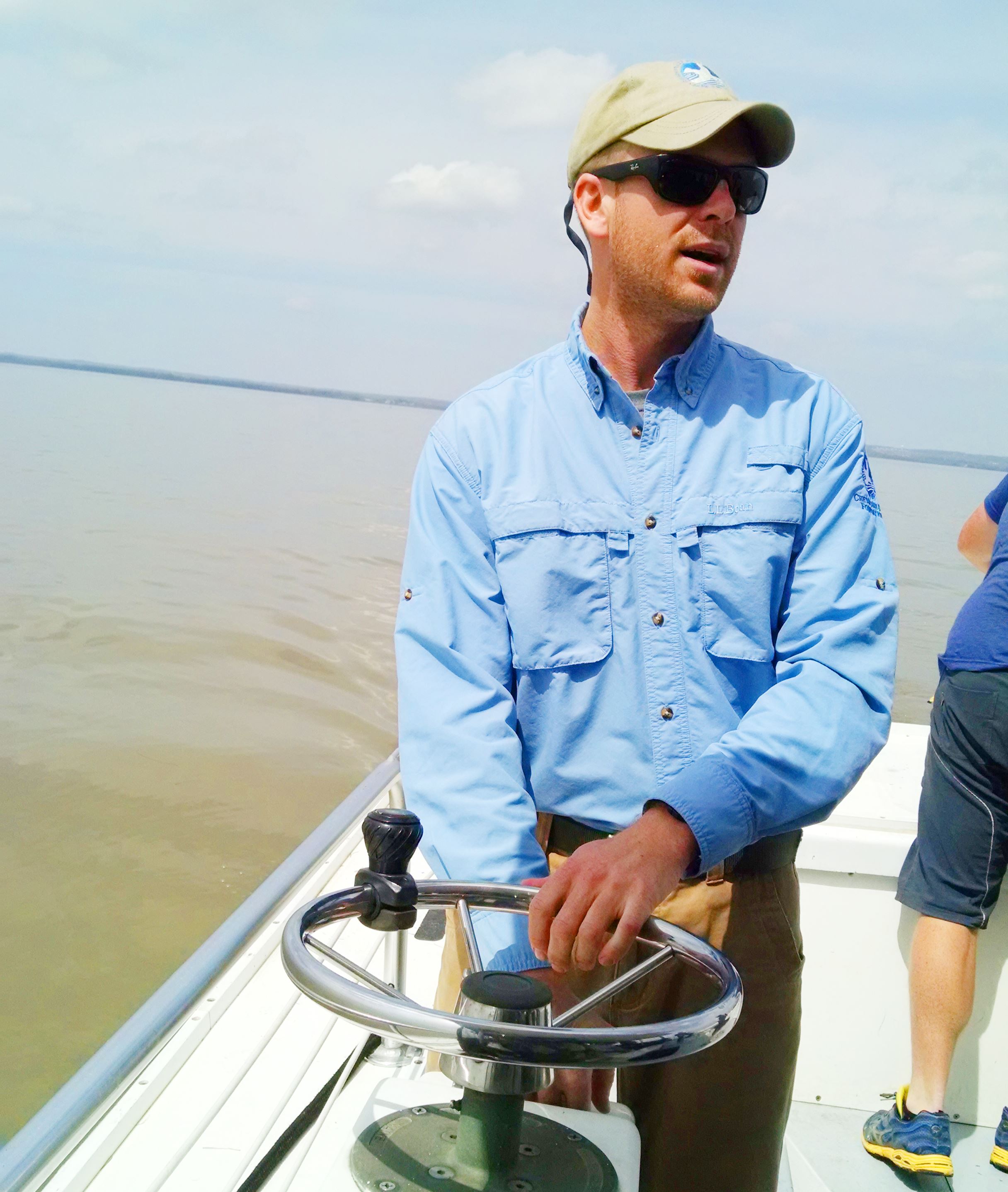


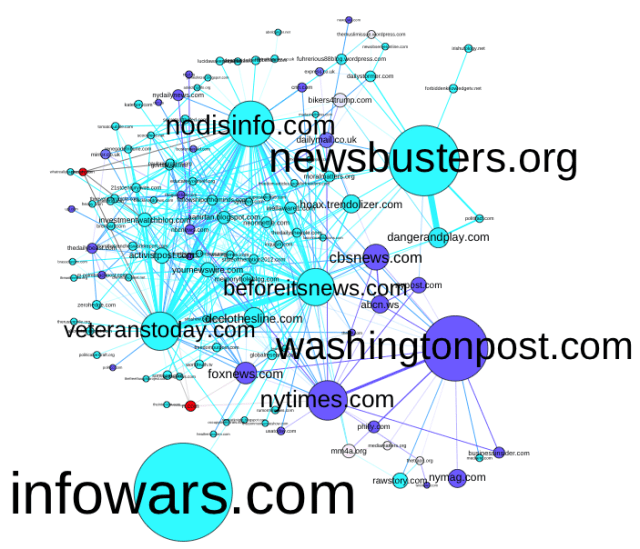

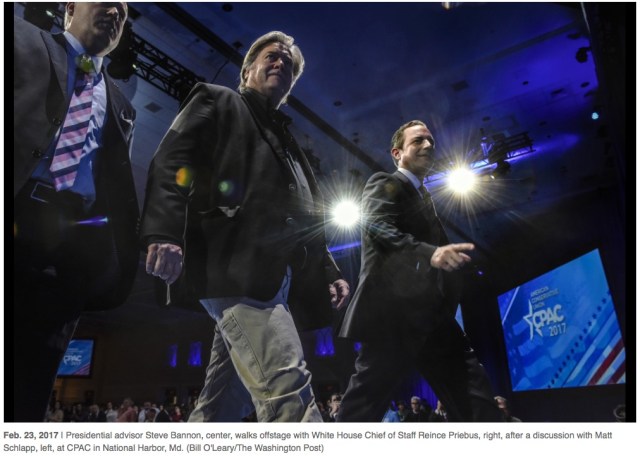


 Potter's Weal