Living Wall on PNC Bank, Baltimore

Nice work, thanks PNC.

Yeah, those are plants on the front of the PNC Building in downtown Baltimore . .

Posted in Fun | Leave a comment

De-Risking Is De-Linking Small States From Global Finance

Working in sustainable development of small islands, it’s not hard to get blind-sided by bad (or sometimes good!) news from unexpected sources. This article from NASDAQ may spell tough times for many islands — not only financial services specialists.

from NASDAQ on-line <http://www.nasdaq.com/article/de-risking-is-de-linking-small-states-from-global-finance-cm533660>

De-Risking Is De-Linking Small States From Global Finance

By SeekingAlpha, October 23, 2015, 07:29:48 AM EDT
AAA

By Otaviano Canuto and Veronica Ramcharan

Small states, like the Caribbean countries, have been negatively affected by recent “de-risking” policies implemented by international banks, with particularly damaging consequences on correspondent banking relationships. While recommendations from the Financial Action Task Force (FATF) to deal with risks of money laundering and terrorism financing have often been mentioned to justify those de-risking practices, a wide variety of factors seems to have been at play. Urgent action to address the issue is needed to avoid unintended potentially devastating effects on the economies of those countries.

Managing risks is no de-risking

The Financial Action Task Force (FATF) has recommended banks to follow a risk-based approach in doing their part of the Anti Money Laundering and Combating the Financing of Terrorism (AML/CFT) efforts. Together with competent government authorities, financial institutions are expected to identify, assess and understand the risks of money laundering and terrorism financing to which they are exposed and take AML/CFT measures commensurate to those risks in order to mitigate them effectively.

Several international banks have referred to such recommendation as the reason for taking recent de-risking decisions, through which they have denied and/or restricted entire classes of customers from financial services without conducting a comprehensive assessment of their level of risk or risk mitigation measures for these customers. The public statement issued by the FATF in October 2014 refers to “de-risking” as the occurrence of financial institutions terminating or restricting business relationships with clients or categories of customers, to avoid, rather than manage, risk in line with the FATF’s risk-based approach.

According to that same statement, such behaviour is contrary to the intended purpose of FATF’s risk-based approach, which is a fundamental aspect of the FATF standards. FATF recommendations only require financial institutions to terminate customer relationships, on a case-by-case basis, where ML and TF risks cannot be mitigated.

The recently intensified de-risking has had a disproportionate negative effect on small state countries, where specific challenges faced by those countries have exacerbated the effect of de-risking and the subsequent loss of correspondent banking relationships (CBRs) with tier 1 financial institutions in advanced economies. These challenges typically include relatively shallow banking systems, under-developed financial markets, highly concentrated financial systems dominated by foreign banks, domestic currencies that are not internationally traded and often a heavy reliance on remittances. Not only is the adverse effect of de-risking intensified in these countries, but the timeline for an acceptable solution to be implemented has significantly shortened, as the underdevelopment of financial sectors in the majority of these countries make a potential economic collapse imminent if a viable solution is not found in the near future.

Correspondent banking is an essential component of the global payment system, especially for cross-border transactions. Through CBRs, banks can access financial services in different jurisdictions and provide cross-border payment services to their customers, supporting, inter alia, international trade and financial inclusion. In addition, most of the payment solutions that do not involve a bank account at the customer level – such as remittances – rely on correspondent banking for the actual transfer of funds. Therefore, the effects of de-risking through the termination of CBRs have been particularly severe.

De-risking in the Caribbean Small States

In the Caribbean region, comprised mainly of small island developing states, CBRs with financial institutions from advanced economies have steadily declined over the last couple of years. The adverse impact of de-risking is significant and can impact these countries on several fronts, primarily through international trade, financial stability and growth. While the problem associated with de-risking is not entirely new to the Caribbean, it became progressively worse over the years and has now reached a critical point. For example, several years ago, a major US correspondent bank ceased offering cash services to several central banks in the region.

Nonetheless, this loss was replaced by another international bank as the Caribbean countries acceded to more stringent due diligence processes including “know your customers’ customer” attestations – despite the significant constraints and uncertainty of the process. It should be noted that at the FATF Private Sector Consultative Forum Meeting held in March 2015, it was reiterated that the FATF standards do not require a “know-your-customer’s-customer” approach to conducting customer due diligence.

While Caribbean countries have struggled to abide by ever changing standards and requirements, the amount of CBRs continue to decline. The problem is further compounded by the fact that they do not have a long list of international institutions to choose from to begin with, as only a small number of tier 1 financial institutions offer financial services to the Caribbean region. Therefore, given the limited pool of institutions with which they can engage – in most cases, there may be only one or two institutions – the loss of each correspondent bank successively increases the already disproportionately high level of operational risk.

The impact of de-risking on money transfer businesses (MTBs) is of particular concern, as money transfers to the Caribbean exceeded all other forms of external finance in 2014. Remittances to the Caribbean increased by 6.3 percent compared to 2013, totalling US$9.9 billion. However, the MTBs are the latest regional casualties, as correspondent banks have begun to sever ties with these institutions, citing excessive compliance cost to meet corresponding requirements. While it is generally accepted that MTBs are among the higher risk clients, this does not automatically imply that they are conducting illegal business activities, as they are often held to the same standard of AML/CFT requirements as the banking sector.

Further to this, remittances themselves have intrinsic “growth value” as they can promote development and facilitate greater financial inclusion, all of which can help drive strong, sustainable and balanced growth. Therefore, the continued erosion of CBRs can significantly reverse the level of financial inclusion in small state countries. De-risking also presents challenges for financial inclusion goals by further limiting access to formal bank accounts for potential customers – who may not meet requirements because they lack a previous banking history – and MTBs who cannot operate without a centralized account to temporarily hold funds.

Difficulties to address the de-risking challenge

To avoid penalties and the related reputational damage, financial institutions in advanced economies have developed an increased sensitivity to the risks associated with correspondent banking. However, a major challenge in addressing the problem of unwarranted de-risking is the ambiguity surrounding the criteria for de-risking actions and a lack of uniformity in its implementation across institutions. Moreover, there seems to be no obligation on the part of international banks to provide a comprehensive explanation to regional banks for the withdrawal of their financial services.

This has proven to be a significant obstacle for the Caribbean and other small states, to appropriately address the issue as they are unable to determine the specific causes for the loss of the CBRs, despite considerable efforts on their part. The general experience of the Caribbean countries is that global banks have not been transparent and forthcoming on their reasons for terminating CBRs. According to regional authorities, when international banks withdraw their services, there is normally no explanation for the action taken, or in a few instances when a reason was cited, it was as a result of an “operational decision” being made by the international bank.

Consequently, given the lack of clarification for the heightened level of de-risking taking place, several possible reasons have been put forward, with the most obvious being possible deficiencies in the AML/CFT frameworks of the respondent banks in the Caribbean region. Unfortunately, this perception continues to prevail, despite being unsubstantiated, as no Caribbean country is currently subject to FATF’s monitoring process.

Beyond this primary rationale, another assumption for de-risking is that correspondent banks took the decision to sever high-risk relationships – such as the cash intensive businesses – and product lines that are not sufficiently profitable to justify the significant associated risk or compliance assessment requirements. However, this indiscriminate blanket approach to de-risking by foreign correspondents runs counter to the expectation that the global banks can and should assess the risk of their customers on a case by case basis.

A further reason cited is the fear of regulatory enforcement action that carries substantial litigation costs. This idea is by no means far-fetched as the penalties for US, UK and EU banks are exorbitant, even if they are found to have unknowingly facilitated money laundering and tax evasion. Other possible reasons for de-risking include, but are not limited to (( 1)) general retrenchment by global banks, ((2)) apprehension about possible reputational damage, ((3)) misinterpretation of the FATF standards on correspondent banking and customer due diligence, and ((4)) a domino effect caused by the actions by other international correspondent banks.

Possible way forward
De-risking thus appears to have been driven by a variety of factors. Given the ambiguity surrounding the de-risking process, explicit guidance to all relevant stakeholders is strongly needed. This guidance should be specific to the level of requirements and expectations, within a comprehensive and measurable framework under which the risk-based approach can be applied. There is also a need for a greater level of accountability from correspondent banks who withdraw their services, whereby they are mandated to provide tangible evidence that they undertook all the required measures, prior to withdrawing their services.

According to ” International Alliance of MTO Associations ” the expectations and responsibilities of correspondent banks in relation to sanctions and extraterritoriality also need to be defined. Clarification is essential on the responsibilities and extent of liability of correspondent banks, pertaining to sanctions and AML/CFT requirements, if they are operating in foreign countries and/or providing overseas correspondent banking facilities. Consideration of legislative changes to shift the liability of extraterritorial sanction and AML/CFT breaches to the entity immediately responsible for that breach as opposed to the correspondent bank itself was also put forward by the association.

Several possible actions to address the challenge of de-risking were also outlined at the Alliance for Financial Inclusion ( [[AFI]]) and G-24 roundtable in Peru October 12. They include:

  1. Central banks as regulators should be proactive, especially in terms of the guidance given to financial institutions, and move quickly to stem the tide when de-risking happens.
  2. Greater partnership among the IMF, World Bank, Financial Stability Board, G24, Alliance for Financial Inclusion and the Commonwealth Secretariat, is required to advocate for developing countries with regards to implementation of FATF’s risk-based approach. The issue has only started to be discussed at G20 meetings
  3. A safe harbour and/or “freeze” on de-risking actions should be instituted, until the various ongoing studies by international organizations are concluded. This will provide a clearer picture of the scale, drivers and impact of de-risking and put the relevant regulatory bodies in a more enlightened position, in order to implement appropriate risk-based policy solutions.
  4. A review of best practices among jurisdictions to build a “bottom-up” approach to strengthening AML/CFT regimes.
  5. Assistance for capacity building efforts, enabling countries to undertake mandatory natural risk assessments (NRSs) to more efficiently identify, assess and manage ML/FT risks.

Bottom line

The presence of CBRs is essential to small states for trade and investment. Given their dependence on CBRs with financial institutions in advanced economies, loss of these relationships as a result of de-risking can have severe and almost immediate implications on their macroeconomic stability and potentially result in financial destabilization, financial exclusion and ultimately economic collapse.

These countries depend on correspondent banking arrangements as they represent their lifeline with the world. The urgency of the matter cannot be over-emphasized, as the current efforts by the international community may not provide a viable solution in time to prevent the economic devastation of some countries, making it imperative that these efforts are accelerated, and/or some interim action is taken to ensure that the development and stability of these countries are preserved.

Otaviano Canuto is an Executive Director at the International Monetary Fund and Veronica Ramcharan is a Senior Adviser to the Executive Director. All opinions expressed here are their own and do not represent those of the IMF or of those governments Mr. Canuto represents at the IMF Board.

See also M&T Bank’s Integration Of Hudson City Bancorp Will Drive The Stock Lower on seekingalpha.com

The views and opinions expressed herein are the views and opinions of the author and do not necessarily reflect those of The NASDAQ, Inc.

Read more: http://www.nasdaq.com/article/de-risking-is-de-linking-small-states-from-global-finance-cm533660#ixzz3phOw7tor

Posted in Development, Finance Services | Leave a comment

Guana Island Research Film Documents “French Grunt” Behaviors in the BVI

Fascinating link from Lianna Jarecki, the coordinator of the well-respected science programs at Guana Island, in the British Virgin Islands. Maybe it’s just the geek in me, but I really think these projects that convey how science is done are really important to STEM education, especially in small islands where “science” may seem to be exclusive to continental areas.

From: Lianna Jarecki <liannaj>

Subject: Guana Island Coral Reef Research Film

Date: October 23, 2015 at 12:45:06 PM EDT

Guana Science scientist Paul Sikkel came to Guana this past summer with documentary film-maker Jennifer Berglund (Harvard Museum) to produce educational videos of Paul’s research discoveries. The resulting video shows the daily migration of French Grunts to and from Guana’s White Bay reefs and the parasites that drive this migration, according to Paul’s research findings. All the footage is taken on Guana. The reef looks terrible, I know, but one of our replanted Elkhorn corals is shown. And Paul mentions his finding that more live corals equals fewer parasites.

The video can be viewed at https://vimeo.com/139517759

Jennifer is now working on a second video about Guana’s Marine Science Program.

Lianna

Posted in Biodiversity, Coral Reefs, Media, Science | Leave a comment

1st of 2 Annapolis Stories: Washington Post: Woman, two teenagers charged in what police call a love-triangle slaying

Woman, two teenagers charged in what police call a love-triangle slaying
The Md. mother enlisted the teens to plan the murder of her husband and their female housemate, officials say. http://wapo.st/1LdKSWZ

A note from Bruce Potter

Posted in Close to Home | Leave a comment

He claimed to be ex-CIA and was quoted as an expert on Fox News. Prosecutors say it was a lie. from The Washington Post

http://wpo.st/TrYh0

Posted in Close to Home | Leave a comment

Climate change causing biggest coral destruction in the Caribbean

Source: Climate change causing biggest coral destruction in the Caribbean

Posted in Climate Change, Coral Reefs, Science | Leave a comment

John Ashe,the UN and the media

from a blog by Felix Dodds, a friend and well respected commentator on international development and especially the Sustainable Development Agenda. . . .

http://blog.felixdodds.net/2015/10/john-ashethe-un-and-media.html

OCT
8

John Ashe,the UN and the media

I wasn’t going to blog on this issue, because it seems to be all over the media. However, when reading the media stories I’m very unimpressed by how they are reporting this.

Prosecutor Preet Bharara, in his diagram led with the headline, “Alleged United Nations Bribery Scheme”. This gives the impression that the UN is somehow involved in the bribery. From my reading of the situation and the evidences he is presenting, it isn’t UN or UN staff or even those who were members of staff of the office of the former president of the GA, who are, at the moment, being accused of anything. It is a representative and deputy representative of two member states of the UN. This is totally different from the organization being involved in any kind of wrongdoing. This is totally different to the way it has been presented by Mr. Bharara which has then been translated into the way that much of the media has presented the story as organizational corruption at the UN.

Let’s take a step back and look at the facts that have been reported. There is an accusation that former Ambassador John Ashe, while an Ambassador for Antigua and Barbuda to the UN, may have not paid tax on some money for work he completed while he was President of the UN General Assembly – but not as UNPGA.

Now lets look at the issue of who the President of the UN General Assembly (UNPGA) is. The President of the UN General Assembly is elected by member states.

For those readers who do not know – this includes the media – the President of the UN General Assembly is NOT a UN staff person.

And the composition of the UNPGA office is also mostly composed of Member States representatives not UN staff.

“Compensation of the President of the General Assembly is determined by the home Member State, which pays the President a salary. This salary is in addition to the privileges of all persons acting in service of the UN or its member states.” (www.unelections.org )

He is NOT answerable to the UN Secretary General but as Rule 36 states “the President, in the exercise of his functions remains under the authority of the General Assembly.” (UN rules of procedure)

It is the responsibility of the media to report accurately what the state of affairs is. What would be more accurate to say is that an Ambassador at the UN, appointed by his country and later elected by his peers, and answerable to the 193 member states to the UN, while undertaking his work as President of the UN General Assembly is being compensated by his country for this work is accused of bribery. Of course, this is not as dramatic.

If he and representatives of a number of other member states also signed a letter to the UNGA to try to have a conference centre built at a location in Macau, then this is an issue again for those member states. On its own, it is not the improper act it is being made out to be by the media because member states can and do send letters to the UNGA all the time calling for whatever they want. Neither the UNGA nor the UN has taken up any of the suggestions in the letter. So where is the UN at fault?

The President of the UNGA is operating under his or her own countries rules as far as how they conduct their business. There may be a need for member states consider making it a requirement for the UNPGA to publish any additional funds he or she receives in the course of their Presidency. The present UNPGA may want to consider publishing his countries rules regarding additional income acquired while being one of THEIR civil servants. This would set a very good example.

Finally, there is clearly more to come out of Mr. Bharara. He has indicated that there are other people being investigated and if I see any further indication of the media not doing their job professionally I will come back to this issue. But can we in the meanwhile ask the media to do their job and report accurately after doing the proper research.

Lets get back to focusing on one of the UN’s great success the adoption of the Sustainable Development Goals – an agenda that will change the way we live on this planet.

Bruce
bpotter

Posted in Governance | Leave a comment

Good Sense about Morality from the NewScientist

On-line at <https://www.newscientist.com/article/mg22730400-700-morality-2-0-how-manipulating-our-minds-could-save-the-world/>

Morality 2.0: How manipulating our minds could save the world

[Emphasis added]

Our moral instincts are failing to cope with the dilemmas of the modern world. Is it time to use tricks, pills or brain zaps to hack this outdated mind set?

(Image: Raymond Besinger)

IN JUNE, a new voice backed up what many scientists have been saying for a while – that climate change is caused by human activity and we have a moral responsibility to tackle it. In an historic edict, Pope Francis warned that failing to act would have “grave consequences”, the brunt of which would fall on the world’s poorest people. His words came as a stark reminder that global climate change is among the most pressing moral dilemmas of the 21st century.

It joins a long list. He could have added spiralling inequality, persistent poverty, death from preventable diseases and nuclear proliferation to the ethical challenges that define our times. Some are newer than others, but all could plausibly be fixed. The fact we’re struggling with all of them raises a troubling question: does our moral compass equip us to deal with the threats we face today?

For many of the pope’s billion-strong flock and other believers, moral judgement is an operation of the mind beyond scientific explanation. In recent years, however, psychologists and neuroscientists have gone a long way towards understanding the machinery underlying our moral thinking and behaviour. In the process they are getting to grips with what really drives how we decide what is right or wrong. Their insights are not only revealing the limitations of our moral minds, but also suggesting how we might manipulate them – by employing psychological tricks, or even pills and brain zaps.

Human moral psychology evolved over tens of thousands of years as we became an ever more cooperative, social species. Early humans living in small bands were forced to hunt and forage collectively or starve. That requires cooperation, which fuelled the evolution of cognitive facilities underlying collective action – the ability to share goals, responsibilities and rewards.

“Morality is a device for solving the social challenges of everyday life, where the basic problem is to get otherwise selfish individuals to work together as a group and enjoy the benefits of cooperation,” says Joshua Greene, a neuroscientist at Harvard University.

So how do we make these everyday decisions? One key insight came from New York University psychologist Jonathan Haidt, who revealed that moral judgements are frequently driven not by rational, reflective thought but by intuitions and gut feelings.

In one study he quizzed people about the morality of various acts, from cleaning a toilet with the US flag to having sex with a chicken bought from the supermarket. Participants often said these acts were immoral and clung to these judgements even when they couldn’t provide good reasons for doing so. Frequently, they’d throw their hands up and say, “It’s just wrong!” – a phenomenon Haidt calls “moral dumbfounding”.

This moral intuition is often fuelled by emotional reactions. Most people are repulsed by the thought of a human engaging in coitus with a deceased chicken, and that alone is enough to condemn the act. When reasoning comes into play, it is frequently to rationalise these intuitive decisions after the event.

Yet we are not slaves to emotion. “We have gut reactions that guide our judgements and behaviour,” says Greene, “but we can also stop and think, and reason explicitly about situations to try to make better decisions.”

“We tend to make quick-fire moral judgements based on emotion and gut reaction”

Greene has shown how this plays out in the brain by getting people to mull over dilemmas as they lie in an fMRI machine. A famous example considers whether it is morally permissible to push one person off a bridge on to railway tracks to stop a runaway train from hitting five people stuck just ahead, killing the person in the process. Most people feel a strong gut reaction to say no, which shows up as increased activity in brain regions that process social emotions. The upshot is that aversion to up-close-and-personal violence trumps the greater good.

But if you instead ask whether it’s OK to flick a switch so that the runaway train is diverted from the track with the five people on it and towards another where it will hit and kill just one person, most people say yes. The moral maths is the same, but hitting a switch just doesn’t feel as bad. Greene’s studies indicate that responses to these kinds of dilemmas are dominated by colder, calculating processes grounded in the “rational” dorsolateral prefrontal cortex.

Greene likens our moral psychology to a digital camera. Intuitive moral sentiments are akin to the automatic settings, he says, while rational deliberation is analogous to manual mode, where you adjust everything by hand. “The automatic settings are good for the situations for which they’ve been programmed, making them efficient but not very flexible,” says Greene. “Manual mode is flexible but not so efficient, as it takes time to punch in the settings.”

In the same way that many of us rely on auto mode on our cameras because it is easier, we tend to make quick-fire moral judgements based on gut reactions. So here’s the question: is auto-mode moral decision-making, which evolved to navigate small-scale social worlds, suited to handling issues that impact millions of distant strangers and future generations?

Greene thinks not. “These are very good at solving the problems of everyday life, but not global moral problems like environmental destruction or poverty in faraway places”.

Take empathic concern, one of the key features of auto-mode morality. Roughly speaking, this is feeling the pain of others. It functions like a spotlight, throwing into stark relief the plight of whoever falls under its beam, and moving us to action. So you might think empathic concern is an unalloyed force for good.

“You might think empathy is an unalloyed force for good. You would be wrong”

You would be wrong, says Paul Bloom, a psychologist at Yale University. “Empathy, being a spotlight, is very narrow,” he says. It illuminates the suffering of a single person rather than the fate of millions, and it is more concerned with the here and now than the future. “It’s because of empathy that we care more about, say, the plight of a little girl trapped in a well than we do about potentially billions of people suffering or dying from climate change,” says Bloom. The visceral reactions towards recent photographs of a dead Syrian boy washed up on a Turkish beach provide another case in point.

Empathy’s shortcomings are compounded by the fact that we end up pointing its beam on causes that happen to come into our field of view – typically the most newsworthy moral issues, rather than those where we can do the most good. The response to the 2004 Boxing Day tsunami, in which some charities received more donations than they could spend, is one example.

All this sounds a bit disheartening, but there is hope. “We can use manual mode to train automatic mode,” says Fiery Cushman, who runs a moral psychology lab at Harvard University. “In the past 10 years, we’ve learned that there’s an enormous role for learning in shaping our moral intuitions.”

In a study out last year, for example, Cushman asked people how they would feel about performing a mercy killing on a terminally ill man by various methods, including giving him a poison pill, suffocating him and shooting him in the face. You might expect opposition to each method would be predicted solely by the amount of suffering it causes. But Cushman found that it was better predicted by participants’ aversion to performing the action (Emotion, vol 14, p 573).

Would linking flying with harming our kids make us more aware of climate change? (Image: YAY Media AS/Alamy Stock Photo)

So it looks like we base our instinctive moral judgements not only on our emotional reaction to suffering, but also on how the physical acts that cause it make us feel. And here’s where we might be able to change ourselves. We learn to assign moral value to actions through the brain’s dopamine system and the basal ganglia, and Cushman suggests we might manipulate this process to shape our instinctive moral reactions.

One approach is to deliberately seek out particular experiences, he says. Imagine an aspiring vegetarian who is concerned about animal welfare. If bacon sandwiches are proving too much of a temptation, they might watch videos documenting the mistreatment of animals. “This could change their automatic attitudes, so when they see meat in front of them they find it disgusting rather than appetising,” says Cushman. The same tactics might help people forge an aversion to actions that increase their carbon footprint, say, or add to the plight of the world’s poorest people.

New age of reason

But the choices made by a select few are hardly going to be sufficient. When it comes to creating the large-scale moral change required to solve the planet’s greatest problems, Kwame Anthony Appiah, a philosopher at New York University, argues that “the question isn’t ‘What should I do?’, but ‘What should we do?’”. And although manual-mode thinking can help us set our sights on the causes “we” should pursue, reshaping moral thinking en masse takes more than deliberation and reasoning.

Appiah has studied the history of moral revolutions such as British abolitionism – the 19th-century movement to end the transatlantic slave trade. “The rational, moral and legal arguments for ending the slave trade were well known long before abolition,” says Appiah. What tipped the argument over into becoming a movement was that broad swathes of society came to feel collectively ashamed of being engaged in the trade. That shift was driven by activist groups raising awareness of the dreadful human cost and making the anti-slavery cause part of British national identity.

In Birmingham, for example, local politicians and thousands of citizens signed anti-slavery petitions, to be delivered to the British government. “They wanted to be part of a city that had done something about this trade,” says Appiah. “This civic pride was a big part of the abolitionist movement.”

Appiah suggests campaigns that speak to our sense of collective identity – as members of a city, nation, religion or social movement are likely to be most effective. So why not scale up and play on our shared identity as humans to tackle problems that affect us all? “The problem with the notion of humanity is that there’s no outside group to compare against,” says Appiah. “It would be a more useful notion if there were some aliens around.”

Still, shame at immoral actions and pride in tackling moral problems could yet prove effective. Jennifer Jacquet, an environmental scientist from New York University, argues that we may need to recruit the power of shame to modify moral behaviour on social issues like climate change. Aimed cautiously and well“, shaming can be deployed for the greater good, she thinks.

Take BankTrack, a global network of NGOs that exposes banks involved with projects that threaten the environment and human rights. BankTrack has looked at banks lending to the coal industry, a major source of global carbon dioxide emissions, and compiled a list of the top “climate killers”.

Its manifesto is simple: “By naming and shaming these banks, we hope to set the stage for a race to the top, where banks compete with each other to clean up their portfolios and stop financing investments which are pushing our climate over the brink.”

However, harnessing the power of rational reflection, collective identity and shame may not be the only options for would-be moral revolutionaries. In their book Unfit for the Future, philosophers Ingmar Persson of the University of Gothenburg in Sweden and Julian Savulescu of the University of Oxford argue that our moral brains are so compromised that the only way we can avoid catastrophe is to enhance them through biomedical means.

Barclays ended financing mountaintop removal mining in 2015 after protests (Image: Daniel Leal-Olivas/i-Images)

In the past few years, researchers have shown it might actually be possible to alter moral thinking with drugs and brain stimulation. Molly Crockett of the University of Oxford has found that citalopram, a selective serotonin reuptake inhibitor used to treat depression, makes people more sensitive to the possibility of inflicting harm on others. Earlier this year, for instance, Crockett and colleagues found that participants who had taken citalopram were willing to pay twice as much money as controls to prevent a stranger from receiving an electric shock (Current Biology, vol 25, p 1852).

“It might actually be possible to alter moral thinking with drugs and brain stimulation”

Biomedical enhancement may even work on complex social attitudes. Roberta Sellaro at the University of Leiden in the Netherlands has shown that delivering low-current electrical signals through the scalp to stimulate the medial prefrontal cortex, a brain area implicated in regulating social emotions, can reduce stereotyped attitudes towards members of different social groups.

Don’t expect to see morality pills on pharmacy shelves any time soon, though. These studies are far from conclusive and the effects demonstrated are subtle. Even so, the fact that such behavioural modification is possible raises the prospect that someone might use it.

Of course that raises moral questions in itself – who to treat, how, and at what age? But Persson and Savulescu argue that if the techniques can be shown to change our moral behaviour for the better (who or what defines “better” is another question), then there are no good ethical reasons not to use them. Take the issue of consent, which children could not provide. “The same is true of all upbringing and education, including moral instruction,” says Persson.

Moral robots

But wouldn’t biomedical moral enhancement undermine responsibility by turning us into moral robots? Persson and Savulescu argue that biomedical treatment poses no more threat to free will and moral responsibility than educational practices that push us towards the same behaviour.

Yet even if moral hacking with drugs and brain zaps could be deemed ethically sound, putting it into practice is another matter. “It’s not as if there’s a moral circuit in the brain that you simply want to ramp up,” says Greene. “Moral decision-making draws on a number of major brain circuits, so you’re not going to be able to enhance people’s morality in a pinpointed way.”

And assuming you could get people to make the “right” choices, how would you deliver artificial moral enhancement across entire populations? Would we add drugs to the water supply? Would we fortify kids’ cereal with moral enhancers?

Even if we could overcome these obstacles, Bloom insists that artificial enhancement is not the way to go. “I think people approach it the wrong way, and work under the illusion that we’d be better people if we messed with our emotions in one way or another.”

Bloom argues that when it comes to tackling moral problems such as climate change, which we have no reliable instinctive way of dealing with, the best way forward is to try to spend more time in manual mode.

“Moral issues are complicated and hard, and they involve serious trade-offs and deliberation. It would be better if people thought more about them.”

Leader:We can’t rely on science alone to make us better people

This article appeared in print under the headline “Morality 2.0″

By Dan Jones

Dan Jones is a science writer based in Brighton, UK

Magazine issue 3040 published 26 September 2015

Posted in Climate Change, Governance, Information, Resource Management | Leave a comment

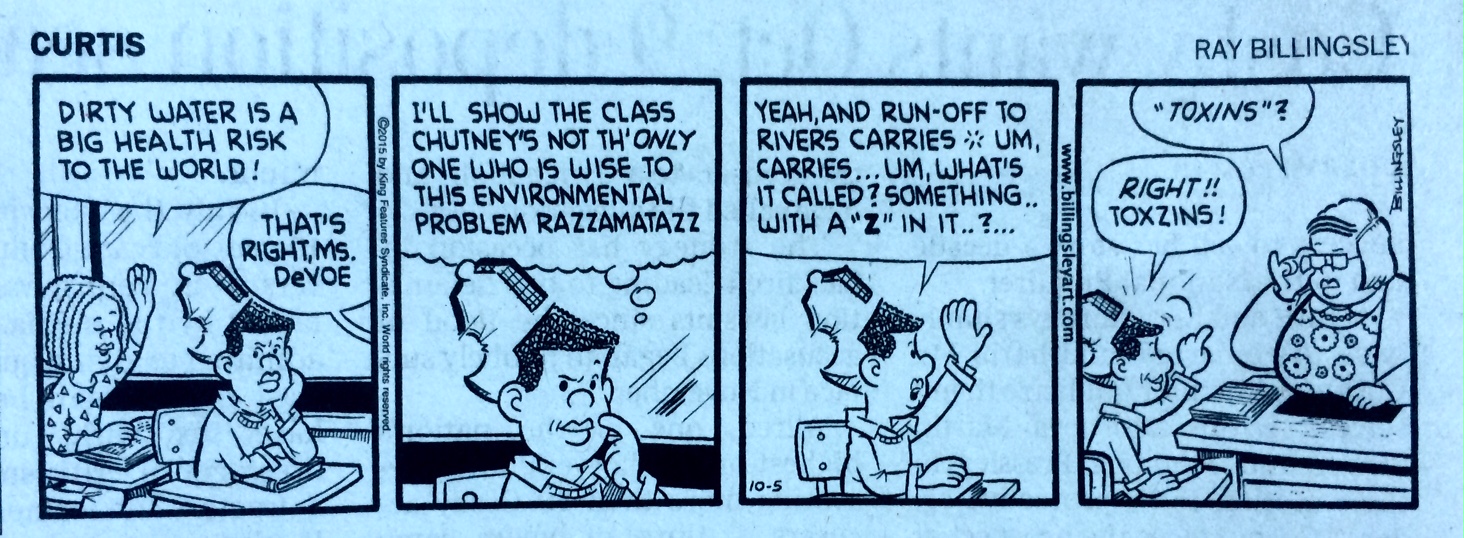
Hooray! Runoff is becoming Mainstream

A note from Bruce Potter

Posted in Erosion & Sediment Control, Watershed Management | Leave a comment

A Wallace Fountain in Paris, France.

I found this version of the famous Wallace fountains in Paris, a week ago — on the Left Bank of the Seine, just across the river from Notre Dame Cathedral, in a small public space in front of a remarkable bookstore called The Shakespeare Company, a place that Alister Hughes would have loved.

This version of the fountain has a thin stream of running water in the center, which tourists use to refill their water bottles — there is a sign by the fountain saying that the water is potable.

Read the story of Alister and Margaret Hughes saving the GRENADA Wallace Fountain at <http://www.grenada-history.org/fountain.htm>.

Bruce Potter

– – – – – – – – – – – – – – – – –

Bruce
bpotter

Posted in Fun | Leave a comment