Good Sense about Morality from the NewScientist

On-line at <https://www.newscientist.com/article/mg22730400-700-morality-2-0-how-manipulating-our-minds-could-save-the-world/>

Morality 2.0: How manipulating our minds could save the world

[Emphasis added]

Our moral instincts are failing to cope with the dilemmas of the modern world. Is it time to use tricks, pills or brain zaps to hack this outdated mind set?

(Image: Raymond Besinger)

IN JUNE, a new voice backed up what many scientists have been saying for a while – that climate change is caused by human activity and we have a moral responsibility to tackle it. In an historic edict, Pope Francis warned that failing to act would have “grave consequences”, the brunt of which would fall on the world’s poorest people. His words came as a stark reminder that global climate change is among the most pressing moral dilemmas of the 21st century.

It joins a long list. He could have added spiralling inequality, persistent poverty, death from preventable diseases and nuclear proliferation to the ethical challenges that define our times. Some are newer than others, but all could plausibly be fixed. The fact we’re struggling with all of them raises a troubling question: does our moral compass equip us to deal with the threats we face today?

For many of the pope’s billion-strong flock and other believers, moral judgement is an operation of the mind beyond scientific explanation. In recent years, however, psychologists and neuroscientists have gone a long way towards understanding the machinery underlying our moral thinking and behaviour. In the process they are getting to grips with what really drives how we decide what is right or wrong. Their insights are not only revealing the limitations of our moral minds, but also suggesting how we might manipulate them – by employing psychological tricks, or even pills and brain zaps.

Human moral psychology evolved over tens of thousands of years as we became an ever more cooperative, social species. Early humans living in small bands were forced to hunt and forage collectively or starve. That requires cooperation, which fuelled the evolution of cognitive facilities underlying collective action – the ability to share goals, responsibilities and rewards.

“Morality is a device for solving the social challenges of everyday life, where the basic problem is to get otherwise selfish individuals to work together as a group and enjoy the benefits of cooperation,” says Joshua Greene, a neuroscientist at Harvard University.

So how do we make these everyday decisions? One key insight came from New York University psychologist Jonathan Haidt, who revealed that moral judgements are frequently driven not by rational, reflective thought but by intuitions and gut feelings.

In one study he quizzed people about the morality of various acts, from cleaning a toilet with the US flag to having sex with a chicken bought from the supermarket. Participants often said these acts were immoral and clung to these judgements even when they couldn’t provide good reasons for doing so. Frequently, they’d throw their hands up and say, “It’s just wrong!” – a phenomenon Haidt calls “moral dumbfounding”.

This moral intuition is often fuelled by emotional reactions. Most people are repulsed by the thought of a human engaging in coitus with a deceased chicken, and that alone is enough to condemn the act. When reasoning comes into play, it is frequently to rationalise these intuitive decisions after the event.

Yet we are not slaves to emotion. “We have gut reactions that guide our judgements and behaviour,” says Greene, “but we can also stop and think, and reason explicitly about situations to try to make better decisions.”

“We tend to make quick-fire moral judgements based on emotion and gut reaction”

Greene has shown how this plays out in the brain by getting people to mull over dilemmas as they lie in an fMRI machine. A famous example considers whether it is morally permissible to push one person off a bridge on to railway tracks to stop a runaway train from hitting five people stuck just ahead, killing the person in the process. Most people feel a strong gut reaction to say no, which shows up as increased activity in brain regions that process social emotions. The upshot is that aversion to up-close-and-personal violence trumps the greater good.

But if you instead ask whether it’s OK to flick a switch so that the runaway train is diverted from the track with the five people on it and towards another where it will hit and kill just one person, most people say yes. The moral maths is the same, but hitting a switch just doesn’t feel as bad. Greene’s studies indicate that responses to these kinds of dilemmas are dominated by colder, calculating processes grounded in the “rational” dorsolateral prefrontal cortex.

Greene likens our moral psychology to a digital camera. Intuitive moral sentiments are akin to the automatic settings, he says, while rational deliberation is analogous to manual mode, where you adjust everything by hand. “The automatic settings are good for the situations for which they’ve been programmed, making them efficient but not very flexible,” says Greene. “Manual mode is flexible but not so efficient, as it takes time to punch in the settings.”

In the same way that many of us rely on auto mode on our cameras because it is easier, we tend to make quick-fire moral judgements based on gut reactions. So here’s the question: is auto-mode moral decision-making, which evolved to navigate small-scale social worlds, suited to handling issues that impact millions of distant strangers and future generations?

Greene thinks not. “These are very good at solving the problems of everyday life, but not global moral problems like environmental destruction or poverty in faraway places”.

Take empathic concern, one of the key features of auto-mode morality. Roughly speaking, this is feeling the pain of others. It functions like a spotlight, throwing into stark relief the plight of whoever falls under its beam, and moving us to action. So you might think empathic concern is an unalloyed force for good.

“You might think empathy is an unalloyed force for good. You would be wrong”

You would be wrong, says Paul Bloom, a psychologist at Yale University. “Empathy, being a spotlight, is very narrow,” he says. It illuminates the suffering of a single person rather than the fate of millions, and it is more concerned with the here and now than the future. “It’s because of empathy that we care more about, say, the plight of a little girl trapped in a well than we do about potentially billions of people suffering or dying from climate change,” says Bloom. The visceral reactions towards recent photographs of a dead Syrian boy washed up on a Turkish beach provide another case in point.

Empathy’s shortcomings are compounded by the fact that we end up pointing its beam on causes that happen to come into our field of view – typically the most newsworthy moral issues, rather than those where we can do the most good. The response to the 2004 Boxing Day tsunami, in which some charities received more donations than they could spend, is one example.

All this sounds a bit disheartening, but there is hope. “We can use manual mode to train automatic mode,” says Fiery Cushman, who runs a moral psychology lab at Harvard University. “In the past 10 years, we’ve learned that there’s an enormous role for learning in shaping our moral intuitions.”

In a study out last year, for example, Cushman asked people how they would feel about performing a mercy killing on a terminally ill man by various methods, including giving him a poison pill, suffocating him and shooting him in the face. You might expect opposition to each method would be predicted solely by the amount of suffering it causes. But Cushman found that it was better predicted by participants’ aversion to performing the action (Emotion, vol 14, p 573).

Would linking flying with harming our kids make us more aware of climate change? (Image: YAY Media AS/Alamy Stock Photo)

So it looks like we base our instinctive moral judgements not only on our emotional reaction to suffering, but also on how the physical acts that cause it make us feel. And here’s where we might be able to change ourselves. We learn to assign moral value to actions through the brain’s dopamine system and the basal ganglia, and Cushman suggests we might manipulate this process to shape our instinctive moral reactions.

One approach is to deliberately seek out particular experiences, he says. Imagine an aspiring vegetarian who is concerned about animal welfare. If bacon sandwiches are proving too much of a temptation, they might watch videos documenting the mistreatment of animals. “This could change their automatic attitudes, so when they see meat in front of them they find it disgusting rather than appetising,” says Cushman. The same tactics might help people forge an aversion to actions that increase their carbon footprint, say, or add to the plight of the world’s poorest people.

New age of reason

But the choices made by a select few are hardly going to be sufficient. When it comes to creating the large-scale moral change required to solve the planet’s greatest problems, Kwame Anthony Appiah, a philosopher at New York University, argues that “the question isn’t ‘What should I do?’, but ‘What should we do?’”. And although manual-mode thinking can help us set our sights on the causes “we” should pursue, reshaping moral thinking en masse takes more than deliberation and reasoning.

Appiah has studied the history of moral revolutions such as British abolitionism – the 19th-century movement to end the transatlantic slave trade. “The rational, moral and legal arguments for ending the slave trade were well known long before abolition,” says Appiah. What tipped the argument over into becoming a movement was that broad swathes of society came to feel collectively ashamed of being engaged in the trade. That shift was driven by activist groups raising awareness of the dreadful human cost and making the anti-slavery cause part of British national identity.

In Birmingham, for example, local politicians and thousands of citizens signed anti-slavery petitions, to be delivered to the British government. “They wanted to be part of a city that had done something about this trade,” says Appiah. “This civic pride was a big part of the abolitionist movement.”

Appiah suggests campaigns that speak to our sense of collective identity – as members of a city, nation, religion or social movement are likely to be most effective. So why not scale up and play on our shared identity as humans to tackle problems that affect us all? “The problem with the notion of humanity is that there’s no outside group to compare against,” says Appiah. “It would be a more useful notion if there were some aliens around.”

Still, shame at immoral actions and pride in tackling moral problems could yet prove effective. Jennifer Jacquet, an environmental scientist from New York University, argues that we may need to recruit the power of shame to modify moral behaviour on social issues like climate change. Aimed cautiously and well“, shaming can be deployed for the greater good, she thinks.

Take BankTrack, a global network of NGOs that exposes banks involved with projects that threaten the environment and human rights. BankTrack has looked at banks lending to the coal industry, a major source of global carbon dioxide emissions, and compiled a list of the top “climate killers”.

Its manifesto is simple: “By naming and shaming these banks, we hope to set the stage for a race to the top, where banks compete with each other to clean up their portfolios and stop financing investments which are pushing our climate over the brink.”

However, harnessing the power of rational reflection, collective identity and shame may not be the only options for would-be moral revolutionaries. In their book Unfit for the Future, philosophers Ingmar Persson of the University of Gothenburg in Sweden and Julian Savulescu of the University of Oxford argue that our moral brains are so compromised that the only way we can avoid catastrophe is to enhance them through biomedical means.

Barclays ended financing mountaintop removal mining in 2015 after protests (Image: Daniel Leal-Olivas/i-Images)

In the past few years, researchers have shown it might actually be possible to alter moral thinking with drugs and brain stimulation. Molly Crockett of the University of Oxford has found that citalopram, a selective serotonin reuptake inhibitor used to treat depression, makes people more sensitive to the possibility of inflicting harm on others. Earlier this year, for instance, Crockett and colleagues found that participants who had taken citalopram were willing to pay twice as much money as controls to prevent a stranger from receiving an electric shock (Current Biology, vol 25, p 1852).

“It might actually be possible to alter moral thinking with drugs and brain stimulation”

Biomedical enhancement may even work on complex social attitudes. Roberta Sellaro at the University of Leiden in the Netherlands has shown that delivering low-current electrical signals through the scalp to stimulate the medial prefrontal cortex, a brain area implicated in regulating social emotions, can reduce stereotyped attitudes towards members of different social groups.

Don’t expect to see morality pills on pharmacy shelves any time soon, though. These studies are far from conclusive and the effects demonstrated are subtle. Even so, the fact that such behavioural modification is possible raises the prospect that someone might use it.

Of course that raises moral questions in itself – who to treat, how, and at what age? But Persson and Savulescu argue that if the techniques can be shown to change our moral behaviour for the better (who or what defines “better” is another question), then there are no good ethical reasons not to use them. Take the issue of consent, which children could not provide. “The same is true of all upbringing and education, including moral instruction,” says Persson.

Moral robots

But wouldn’t biomedical moral enhancement undermine responsibility by turning us into moral robots? Persson and Savulescu argue that biomedical treatment poses no more threat to free will and moral responsibility than educational practices that push us towards the same behaviour.

Yet even if moral hacking with drugs and brain zaps could be deemed ethically sound, putting it into practice is another matter. “It’s not as if there’s a moral circuit in the brain that you simply want to ramp up,” says Greene. “Moral decision-making draws on a number of major brain circuits, so you’re not going to be able to enhance people’s morality in a pinpointed way.”

And assuming you could get people to make the “right” choices, how would you deliver artificial moral enhancement across entire populations? Would we add drugs to the water supply? Would we fortify kids’ cereal with moral enhancers?

Even if we could overcome these obstacles, Bloom insists that artificial enhancement is not the way to go. “I think people approach it the wrong way, and work under the illusion that we’d be better people if we messed with our emotions in one way or another.”

Bloom argues that when it comes to tackling moral problems such as climate change, which we have no reliable instinctive way of dealing with, the best way forward is to try to spend more time in manual mode.

“Moral issues are complicated and hard, and they involve serious trade-offs and deliberation. It would be better if people thought more about them.”

Leader:We can’t rely on science alone to make us better people

This article appeared in print under the headline “Morality 2.0″

By Dan Jones

Dan Jones is a science writer based in Brighton, UK

Magazine issue 3040 published 26 September 2015
Posted in Climate Change, Governance, Information, Resource Management | Leave a comment

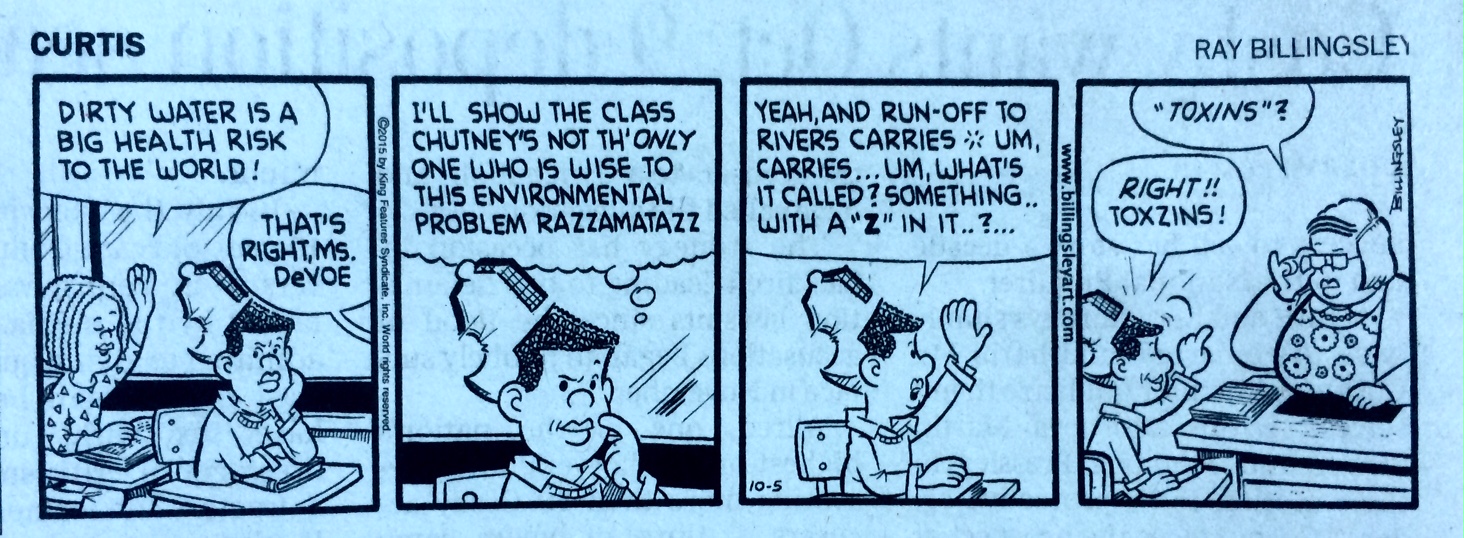
Hooray! Runoff is becoming Mainstream

A note from Bruce Potter

Posted in Erosion & Sediment Control, Watershed Management | Leave a comment

A Wallace Fountain in Paris, France.

I found this version of the famous Wallace fountains in Paris, a week ago — on the Left Bank of the Seine, just across the river from Notre Dame Cathedral, in a small public space in front of a remarkable bookstore called The Shakespeare Company, a place that Alister Hughes would have loved.

This version of the fountain has a thin stream of running water in the center, which tourists use to refill their water bottles — there is a sign by the fountain saying that the water is potable.

Read the story of Alister and Margaret Hughes saving the GRENADA Wallace Fountain at <http://www.grenada-history.org/fountain.htm>.

Bruce Potter

– – – – – – – – – – – – – – – – –

Bruce
bpotter

Posted in Fun | Leave a comment

Jenny Daltry: Antigua Clears Alien Mammals from 15 Offshore Cays

An Article by Dr. Jenny Daltry, the Fauna & Flora International (FFI) expert who has worked with the Antigua Environmental Awareness Group (EAG), and other partners to clear rats, mongooses and similar alien species from offshore cays in Antigua-Barbuda in the northeastern Caribbean since 1995. Led by Kevel Lindsay, Island Resources Foundation was a founding member of the Offshore Island Conservation Programme of EAG.
PDF.js viewer.pdf

Posted in Monitoring | Leave a comment

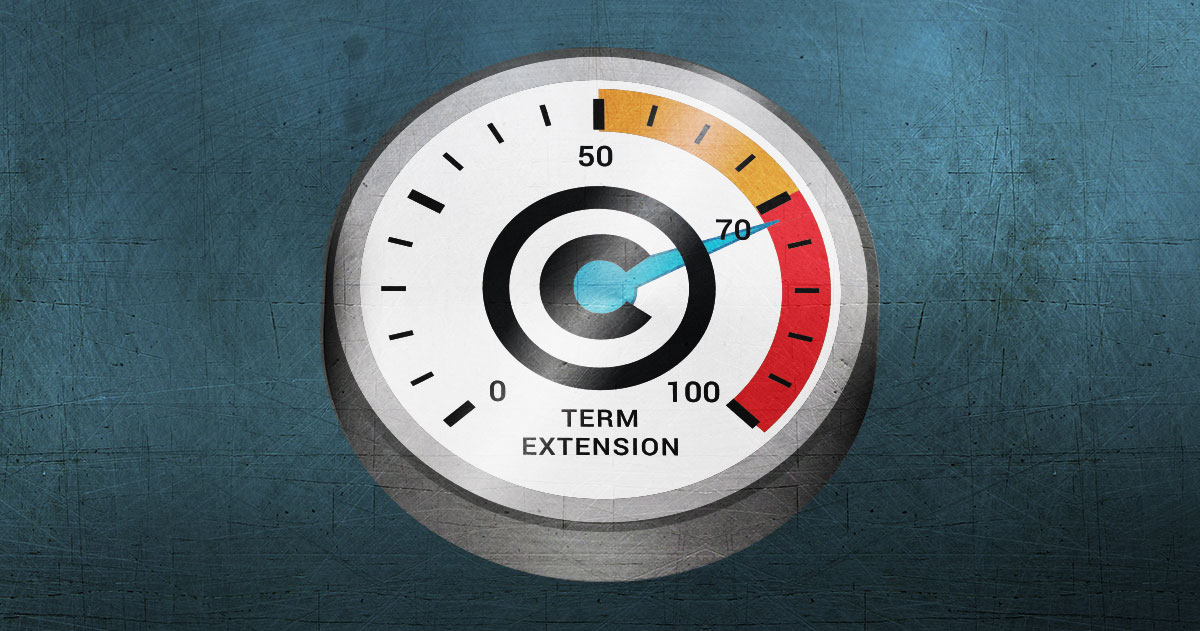
Anatomy of a Copyright Coup: Jamaica’s Public Domain Plundered

from a post on the Civic e-mail group

JULY 24, 2015 | BY JEREMY MALCOLM

HTTPS://WWW.EFF.ORG/DEEPLINKS/2015/07/ANATOMY-COPYRIGHT-COUP-JAMAICAS-PUBLIC-DOMAIN-PLUNDERED


A bill extending the term of copyright by an additional 45 years—almost doubling it, in the case of corporate and government works—sailed through the Jamaican Senate on June 26, after having passed the House of Representatives on June 9. The copyright term in Jamaica is now 95 years from the death of the author, or 95 years from publication for government and corporate works. This makes it the third-longest copyright term in the world, after Mexico and Côte d’Ivoire respectively with 100 and 99 years from the death of the author.

Worse than this, the extension was made retroactive to January 1962. Besides being the year when Jamaica attained independence, 1962 also just so happens to have been the year when Jamaican ska music (a popular genre in its own right, but also a precursor of the even more popular reggae) burst onto the international music scene. The parallels with the extension of the U.S. copyright term in the “Mickey Mouse Protection Act” are quite eerie. But, worse than what happened into the U.S., the retrospective effect of the law means that works that havealready passed into the public domain in Jamaica are now to be wrenched back out again. Jamaica will now be one of the last countries in the entire world to enjoy free access to works that are already in the public domain in the United States—such as Charlie Chaplin’s The Kid, from 1921.

If Jamaica hoped that this measure would bring in additional royalties for its musicians from overseas markets, then the tactic that it chose to pursue was doomed to failure from the outset. Foreign users of Jamaican copyrights are not bound by the extended copyright term; only Jamaicans are; but conversely, Jamaicans are now obliged to honor foreign copyrights for the full extended term.1 As opposition spokesperson on culture Olivia Grange put it during debate on the new law, “what will happen is that we will, in fact, be paying out to foreign copyright holders in foreign exchange for the continued use of foreign works in Jamaica, while our own rights holders will only benefit up to the 50, 70 or 80 years that exist in other countries”. So all that this measure has accomplished is that citizens of Jamaica, a developing country, will be paying more money into Hollywood’s coffers, while Jamaica’s own rich cultural heritage draws in not a penny more in return. Yay?

This measure is so stupid on its face that it is a wonder it passed through parliament at all. But what pains us even more is that it was deemed a trivial enough change to the law that it went unreported in the press until it was already a fait accompli. We could’ve spotted it earlier, and we’re not proud of missing it. But it also came as an unwelcome shock to all the other activists with whom we work, including the International Federation of Library Associations and Institutions, whose members in Jamaica have suffered a sudden and severe setback to their mission to preserve and disseminate the early written records of newly-independent Jamaica.

That fact that proposals to lock up copyright works for an additional two, three or four decades or more isn’t even considered newsworthy is something that we want to urgently change—especially now that six countries around the Pacific Rim are facing that very prospect, all at the same time, with the impending conclusion of the Trans-Pacific Partnership (TPP) that could enshrine a life plus 70 year copyright term in stone. Copyright term extension is not a positive sum, or even a zero sum game. It enriches big media corporations, not struggling artists; it impedes libraries, archives, educators and people with disabilities; and it locks away an entire corpus of works that belong in the public domain, preventing them from being repurposed by a new generation of artists and innovators (particularly in countries, like Jamaica, that lack a “fair use” right).

Jamaica has sadly fallen into the copyright trap, and it may be too late for it to escape. But it isn’t yet too late for Canada, Japan, Malaysia, Brunei, New Zealand or Vietnam. Over the following weeks we will be highlighting the harmful effects of the extension of copyright terms in some of these countries, and providing an easy mechanism for you to use to take action, in these final days of the negotiations of the TPP.

On our TPP’s Copyright Trap page we link to more articles about how the threat of copyright term extension under the TPP impacts users around the world.

Posted in Access, Governance, Information | Leave a comment

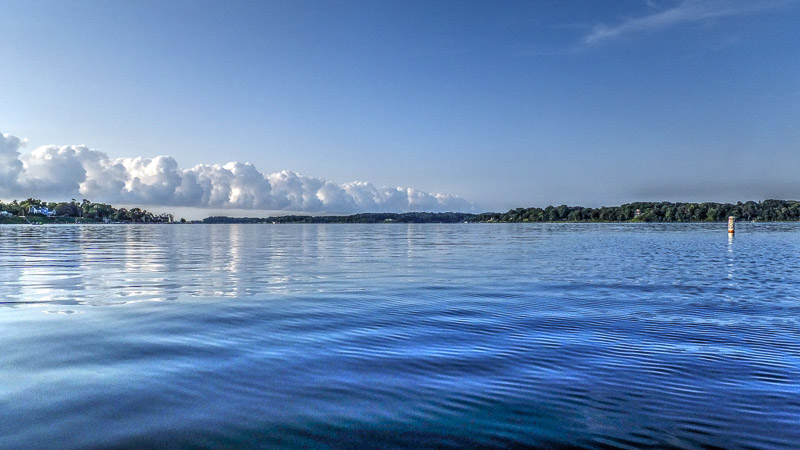
Last Saturday on the South River . . .

Posted in Watershed Management | Leave a comment

Kincey’s Kit

Kit, growing into his ears, on Childs Point Road, 15 July 2015

Posted in Fun | Leave a comment

Intelligent Tourism Talk from VietNam

from the English-language VietNam News <http://vietnamnews.vn/sunday/features/273049/limited-tourism-helps-keep-island-green.html>

Updated
July, 12 2015 08:38:00

Limited tourism helps keep island green

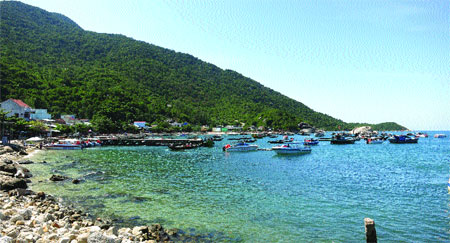
Still pristine: Many visitors to Hoi An City cannot resist the unspoilt beauty of Cham Island, which they can reach in just 25 minutes.

Tourism has been a boon for residents of islands off the coast of Hoi An, but it is the authorities decision to limit the number of visitors that will help sustain these benefits. Cong Thanh reports.

Born and raised on the Cham Islands, Tran Quy Tay has seen the area undergo a complete facelift in the last almost half a century.

The quiet, green islands, 20km off the coast of Hoi An, are a favourite rendezvous for travellers and nature lovers. Thousands of tourists visit the islands each day.

About 2,400 people live in the four villages on the islands, 80 per cent of whom immigrated there. In total they earn VND75 billion (US$3.6 million), 65 per cent of which is from tourism and service. Most islanders have stopped fishing and turned to the eco-tourism sector, which has doubled its income since the area was recognised as a World Biosphere Reserve in 2009.

“It’s a great change,” Tay said. “I had seen a poor life in the island when I was a child here. My parents were emigrants in the island in 1968 and I was born eight years later. Most islanders lived by onshore fishing, and they trade the fish they catch for daily food and other necessities from the mainland.”

You’ve arrived: The wharf on Cham Island where speed boats from Hoi An dock. Thousands of visitors flock to the Islands on day tours. — VNS Photos Truong Vi

Of the four villages, Bai Huong, Bai Lang, Bai Ong and Cam, the beaches of Bai Ong attract 70 per cent of the total visitors.

“Tourism is a crucial part of the Cham Islands’ sustainable development,” said Nguyen Van An, chairman of the Tan Hiep Commune People’s Committee. “Islanders were asked to change livelihoods from inshore fishing to the ‘green and clean’ trade. It could create a good income for them, while protecting the islands’ environment and culture.”

He said local residents earned about VND27 million (US$1,300) per month, double what they earned in 2009.

“We encourage investment in tourism, while boosting environment, biodiversity and native culture,” he said.

Tourism has seen rapid development over the past year, with a fleet of 125 speedboats carrying passengers from Hoi An to the islands and back every day.

“It would result in overloaded accommodations and service and over exploitation of seafood and other marine resources, or destruction of the ecological system,” he added.

Getting to know the locals: Visitors look at samples of marine life at the Marine Protection Centre on Cham Island.

The number of tourists can exceed the number of villagers on the islands at times, so the Hoi An People’s Committee set a daily tourist limit of 3,000.

“It’s a bit of a shame for us, as we get less money from our speedboat services, but it’s the right decision and we (travel agencies and speedboat services) support it,” said Phan Van Tin of Dao Xanh (Green Island) Travel Agency.

No plastic bags

Islanders and tourists are told not to use plastic bags, to protect the coral reefs and fish. It is the first place in Viet Nam to ban plastic bags.

“Previously, plastic bags and rubbish released by local fishermen and tourists heavily polluted the islands,” Tay said. “Plastic bags, which are stuck at coral reefs, killed sea turtles and polluted water and food for fish. Most residents are educated on protecting the environment, and being friendly with tourists.”

Truong Thanh Phuong, a local fisherman, said he quit fishing and started working in tourism.

“My small boat could only catch fish in water near the island, so I wasn’t very productive and didn’t make much money,” Phuong said. “I was told to shift to tourism service and that I would get VND30 million ($1,400) in support from the local administration.”

The 40-year-old said his family could earn VND300,000 ($14) per visitor by opening a restaurant and homestay service, or provide fishing tourism.

Efforts paying off

Efforts to protect the marine environment by local residents and the Maritime Protection Centre over the past decade have paid off.

Le Vinh Thuan, an official from the Management Board of the Cham Islands, said a small colony of young coral had been growing back off the islands’ coast in recent years.

Sunny days: Cham Island is a perfect getaway, where visitors can relax and do nothing, or have fun swimming in the sea.

“It’s a sign of a well-protected environment,” Thuan said. “The environment around the port, which was seen as a heavily polluted area, has improved due to the 3-R (reduce, reuse and recycle) programmes that have been in operation since 2011.

“We have grown 4,800 colonies of coral on an area of 4,000sq.m since 2012. We also localised some areas of corals that are vulnerable to human activities.”

He said experts from the islands’ Maritime Protection Centre also collect crown-of-thorns starfish (acanthaster planci) – a shellfish that eats and destroys coral reefs.

Chu Manh Trinh, an expert from the centre, said islanders have gradually recognised the importance of protecting coral reefs in the area.

“Local people have nearly stopped dumping garbage and plastic bags,” Trinh said. “They are working on creating a clean and safe environment for coral reef to grow again. Now they join us in protecting the environment.

“We provide between five and seven educational training courses on fauna and flora conservation for the locals, and the benefits from marine and environmental protection,” Trinh said.

The seas around the Cham Islands is home to 1.26sq.km of coral reef. It also houses sea snail species, coral reefs, land crabs, lobster, and seaweed.

A community-based group of 30 households were formed to get the exploitation of crabs under control. Land crabs have been conserved and protected by the residents and the centre for the past 10 years.

“Only grown crabs (about 14 years or older) caught by the group under the centre’s supervision can be sold in the market,” said Cham Islands chairman An.

Nguyen Van Nga, a resident in Bai Ong Village, said the crab would have gone extinct on the islands if the centre had not taken such strong steps to protect it.

“The crab has been a source of income for local people in the offseason. We only caught 7,000 crabs, a fourth of the total on the island. We could sell crabs for VND1.2 million ($57) per kilo at the market,” Nga said, adding that the crab population has grown in recent years.

Tourism services

“Tourists can easily find homestay services on the islands,” Tay said. “Sixty households offer accomodation, with prices of between VND100,000 and 200,000 per night per person, and VND100,000 per meal.

People just going for the day can get to the islands from Hoi An’s Cua Dai Beach for VND30,000. They can take their bicycles on board to explore the islands, as well. It takes 25 minutes to travel to the islands by speedboat.

Various tourism services are also offered off the islands’ coasts, including scuba diving, snorkeling, sunbathing, trekking and bird watching at Hon Lao (Lao Islet).

Tourists can rent motorbikes and bicycles to travel around the islands during the day, before enjoying night fishing with fishermen off the coast.

Despite their success in tourism, the islands have had trouble with power, education, fresh water and sanitation.

A diesel-generated power source provides electricity for nine hours a day, with subsidised prices for the locals. It still limits tourism, seafood storage and living conditions, said chairman An.

WiFi is available, but the lack of power at night is still a problem for homestays. So most foreign tourists prefer day trips over staying overnight.

Green technology applications such as wind and solar power, sea water filters or recycled waste water have failed because of a lack of funds.

“Many projects have opened on the islands, but they are limited due to a lack of funds for restoring and repairing equipment,” An said. “Only the recycled waste treatment plant is operating effectively, with a capacity of 1 tonne per day. An 80,000 cubic metre reservoir provides enough water for islanders and tourists, but it’s a natural water source.”

Sanitation has yet to be improved, though, he said. Flies swarm the islands in the summer as organic waste from restaurants piles up.

Pham Vu Dung, director of Rose Travel, said the islands should find safer ways to clean the environment.

“Safe chemical agents should be used to clean the islands several times per month,” Dung suggested.

Every Saturday, art performances, good food and shopping markets open to lure in more overnight visitors.

“All tourists are welcome, but don’t take plastic bags or litter on the islands,” Tay said. “We offer you all nature and the freshest seafood you have ever tasted.” — VNS

Posted in Resource Management | Leave a comment

Coral Bleaching Threat Increasing in Western Atlantic and Pacific Oceans

Coral bleaching threat increasing in western Atlantic and Pacific oceans

Rising ocean temperatures threaten spread of major heat stress to Hawaiian reefs

[For added information on this topic, see Nick Robson’s Climate Change blog.]

July 6, 2015

Bleached and dead Acorpora coral in the NOAA Fagatele Bay National Marine Sanctuary in American Samoa. Warm Pacific ocean temperatures may lead to an increase in coral bleaching, NOAA scientists said. (Credit: NOAA)

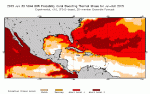
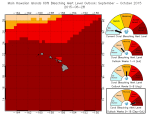
As unusually warm ocean temperatures cover the north Pacific, equatorial Pacific, and western Atlantic oceans, NOAA scientists expect greater bleaching of corals on Northern Hemisphere reefs through October, potentially leading to the death of corals over a wide area and affecting the long-term supply of fish and shellfish.
While corals can recover from mild bleaching, severe or long-term bleaching kills corals. Even if corals recover, they are more susceptible to disease. Once corals die, it usually takes decades for the reef to recover — but recovery is only possible if the reefs are undisturbed. After corals die, reefs degrade and the structures corals build are eroded away, providing less shoreline protection and less habitat for fish and shellfish.
“The bleaching that started in June 2014 has been really bad for corals in the western Pacific,” said Mark Eakin, NOAA Coral Reef Watch coordinator. “We are worried that bleaching will spread to the western Atlantic and again into Hawaii.”
Earlier this year, NOAA’s Coral Reef Watch four-month Coral Bleaching Outlook accurately predicted coral bleaching in the South Pacific, including the Solomon Islands, Papua New Guinea, Nauru, Fiji, and American Samoa. It also recently predicted the coral bleaching in the Indian Ocean, including the British Indian Ocean Territory and the Maldives.

(Credit: NOAA)

Coral bleaching occurs when corals are stressed by changes in environmental conditions such as temperature, light or nutrients. The coral expels the symbiotic algae living in its tissue, causing the tissue to turn white or pale. Without the algae, the coral loses its major source of food and is more susceptible to disease. Scientists note, however, that only high temperatures can cause bleaching over wide areas like those seen since 2014.
In fall 2014, Hawaii saw widespread coral bleaching for the first time since 1996. If corals in Hawaii bleach again this year, it would be the first time it happened in consecutive years in the archipelago.
Warmer ocean temperatures in 2014 also dealt a blow to coral nurseries in the Florida Keys, where scientists are growing threatened coral species to transplant onto local reefs. Coral reefs in Florida and the Caribbean have weathered repeated and worsening coral bleaching events for the past thirty years. The NOAA Coral Reef Watch monitoring team says that more bleaching so soon could spell disaster for corals that have yet to recover from last year’s stress.
“Many healthy, resilient coral reefs can withstand bleaching as long as they have time to recover,” Eakin said. “However, when you have repeated bleaching on a reef within a short period of time, it’s very hard for the corals to recover and survive. This is even worse where corals are suffering from other environmental threats, like pollution or overfishing.”
NOAA’s bleaching prediction for the upcoming months supports the findings of a paper published in the journal Science last week that examined the threat to marine ecosystems and ecosystem services under two different carbon dioxide emission pathways.
“The paper reports that even if humans limit the Earth’s warming to two degrees C (3.8 degrees F), many marine ecosystems, including coral reefs, are still going to suffer,” said Eakin, an author on the paper. “The increase we are seeing in the frequency and severity of bleaching events is part of why the climate models in that paper predict a dire future for coral reefs.”
The NOAA Coral Reef Watch program’s satellite data provide current reef environmental conditions to quickly identify areas at risk for coral bleaching, while its climate model-based outlooks provide managers with information on potential bleaching months in advance. The Coral Reef Watch mission is to utilize remote sensing and in situ tools for near-real-time and long term monitoring, modeling and reporting of physical environmental conditions of coral reef ecosystems.
The four-month Coral Bleaching Outlooks, based on NOAA’s operational Climate Forecast System, use NOAA’s vast collection of environmental data to provide resource managers and the general public with the necessary tools to help reduce effects of climate change and other environmental and human caused stressors.
The outlook is produced by NOAA’s Satellite and Information Service and funded by the Coral Reef Conservation Program, Climate Program Office, and National Centers for Environmental Prediction.
For more information on coral bleaching and these products, visit: http://www.coralreefwatch.noaa.gov/satellite/index.php.
NOAA’s mission is to understand and predict changes in the Earth’s environment, from the depths of the ocean to the surface of the sun, and to conserve and manage our coastal and marine resources. Join us on Facebook, Twitter, Instagram and our other social media channels.

Posted in Climate Change | Leave a comment

Who Is the Greatest Threat to Western Civilization?

A note from Bruce Potter

Posted in Civil Society | Leave a comment