What Happened to the Uyghurs Who Went to Palau . . .

A great story from the Globe and Mail . . . <http://www.theglobeandmail.com/news/world/after-guantanamo-life-on-pacific-island-was-difficult/article25172787/>

After Guantanamo, life on Pacific island was difficult

NATHAN VANDERKLIPPE
BEIJING — The Globe and Mail
Published Sunday, Jun. 28, 2015 10:24PM EDT

A piece of plywood seals the hand-dug tomb on a hill in Palau. Buried inside is a toddler, a young boy of perhaps four placed with his face toward Mecca.

His grave is the only remaining trace of the six men who came to the tiny Pacific island state in 2009. The men were Muslim Uyghurs, leaving U.S. detention in Guantanamo Bay, and the Republic of Palau was one of the few places on earth to let them in. In exchange for money from the U.S. – including $93,333 (U.S.) for each man – Palau allowed the Uyghurs to trade life behind barbed-wire fences for life in one of earth’s most isolated places, an island chain with a local population of just 20,000.

They are gone now. The last man, a gregarious dreamer named Davut Abdurahim, left earlier this year. Where the six men and their families went is a secret kept even from some of the country’s most senior leaders.

What remain, instead, are memories of men who, from the day they touched down, fit uncomfortably amid a heavily Christian population that viewed their arrival – after a deal struck in secret with the U.S. by Palau’s then-president – with skepticism. A local newspaper greeted their arrival with a story declaring them “six bearded Moslem terrorists in shackles.” It was, in parts, a factual account: the U.S. transported the men to Palau on a military aircraft, shackled to their seats and accompanied by more than 30 Marines. They were bearded. They initially scared people in Palau.

Soon after they arrived, they walked and prayed on the beach to taste new freedom – and invited then-president Johnson Toribiong to a celebration. “They wanted to offer a sacrifice to Allah so we found them a goat and they killed it according to the Islamic ritual,” Mr. Toribiong said in an interview. “After they made a sacrifice, they cooked it for the first time in their own way. I joined them for dinner.”

The men were given individual rooms in a house owned by Mr. Toribiong’s sister-in-law – a potential conflict that prompted a lawsuit which remains unresolved. Palau set up a private tutor at the local Palau Community College for English instruction, and built the men a private bathroom to allow them to participate in ablution rituals.

Within a year, some of the men’s wives and family had arrived in Palau, and some began work. They found a local department store that had already started importing halal products for a small local Bangladeshi population. They tried a variety of jobs, working in construction, lawn maintenance and rock quarrying. But the men chafed at the hours, and conflicts arose over their prayer schedule. Eventually, most of them took jobs as security guards, one at the local port, others at the college.

“For them, dealing with people was the hard part,” said Ngiraibelas Tmetuchl, a local real-estate developer who was Mr. Toribiong’s special assistant and charged with caring for the Uyghur men. “Getting them security guards’ jobs was easy, because they don’t have to deal with anybody.”

But it was difficult to merge with a tropical island society so different from their own homes in the sprawling desert-and-mountains Xinjiang region of western China, and its heavily Muslim Uyghur population. The nearest imams lived in the Philippines and Indonesia, both nearly 1,000 kilometres away.

“Their traditional ways of doing things were very different from ours. They dressed differently. And I don’t think they really felt comfortable,” said Camsek Elias Chin, a former vice-president who is now president of Palau’s Senate. “Not in the sense that they were discriminated against, but the way they live is just different from Palauans.”

The Uyghur men made progress in English, and were able to communicate. But they found life hard on a small island that, for all its natural beauty, still felt constrained. They compared it to a bigger, lusher Guantanamo. (Palau initially agreed to accept 17 Uyghurs; 11 chose not to go.)

At first, they thought “we are restored, this is our vacation, everything beautiful, and the swimming, and the view, and the weather,” Ahmad Tourson, one of the men, told PBS in 2013. They pooled money to buy a used car and moved into separate apartments with family members. They took positions of religious leadership among the small local Muslim community. Some had skills as makers of jewellery and leather, and talked about securing tools to make products they could sell. But they never succeeded.

After years as security guards on an island they were unable to leave, they were left feeling “homeless, stateless, moneyless,” Mr. Tourson said.

Their lives saw joy, such as marriages with new brides who flew in from Russia and other places. But they could not shake tragedy, too, such as when the toddler fell off a balcony while his father washed a car below. A few days later, the boy died in hospital. The men struggled to find a suitable place to bury the child, rejecting offers of local plots as religiously incompatible. They chose instead a hill overlooking a small village.

The men spoke only rarely of the nightmare that had brought them here – how they were taken into American custody after the U.S. military promised money to Afghans who turned in “enemies.”

“Listening to their stories was sort of surreal – biblical, to an extent,” said Mr. Tmetuchl. “The way they told it, they were sold as terrorists. All they were were merchants, or looking for jobs in Afghanistan.”

Palau, too, offered no escape from the crush of secrecy and politics that surrounded the men’s lives. Mr. Toribiong, the former president, lost an election in part due to anger over his handling of their situation. But the men also welcomed their freedom relative to Guantanamo: they spoke regularly with Uyghur activists from around the world.

“They were very active politically from here,” said Mr. Tmetuchl.

He is among the few in Palau who know where the men are now – not even Mr. Chin, the Senate president, has been informed. But Mr. Tmetuchl won’t say where they’ve gone, save that they are not all in the same country – and that they haven’t been in touch since the U.S. pulled them out, in groups of one or two at a time, melting onto commercial flights and new lives.

“They went to a country that is favourable to their style of living,” he said. “I think they are more happy than they were here.”

Posted in Civil Society, Governance, Small Island | Leave a comment

Conservation Magazine: Science-based Biodiversity Conservation for the Continental USA

The kind of approach to conservation planning that needs to be extended to lots of areas, including multi-island/transnational planning for island areas.

From the April edition of Conservation Magazine —  conservationmagazine.org


The US Could Save its Unique Wildlife
by Protecting 9 Areas

The United States has one of the oldest systems for protecting wilderness in its many forms in the world. There’s just one problem: in general, protected areas in the US were designated to protect landscapes, not biodiversity. Sure, the biodiversity within those landscapes often benefits from living inside a protected space, but many of the species most in need of protection live elsewhere. The basic mismatch is that most of the country’s protected lands are in the West, while most of the vulnerable species are in the Southeast. That’s the result of a new analysis published this week in PNAS.

Researcher Clinton N. Jenkins from Brazil’s Instituto de Pesquisas Ecológicas, together with colleagues from NOAA, Duke University, and the University of Maryland, set about comparing the United States’ current map of protected areas with data on the conservation status of terrestrial vertebrates, freshwater fish, and trees, in order to identify future conservation priorities.

They began by noting the distinction between species richness and species in need of conservation efforts. Wide-ranging species like coyotes or raccoon, for example, tend to dominate species richness trends, but many are designated as species of least concern. Vulnerable species, on the other hand, tend to have small geographic ranges (and are by definition more rare), or are anatomically large but sparsely distributed, and in many cases (like wolves) are locally extirpated and subject to persecution where they persist. To make the greatest impact on US biodiversity, Jenkins needed to identify landscapes high in species richness that also contained the greatest number of vulnerable species. An area high in biodiversity itself is not necessarily worthy of protection if all the species there are thought of as species of “least concern.”

Next, they classified which vulnerable species were endemics. These are species’ whose entire range falls within the United States. That means the US has the unique ability to protect them from extinction. 70% of amphibians and 68% of freshwater fish considered by the study were US endemics, followed by 30% of reptiles, 29% of trees, 28% of mammals, and 3% of birds. The highest levels of endemism, for all taxa, were in the Southeast.

endemics combined small

In all cases, their areas of greatest need fell outside of protected lands, which generally come in one of two flavors.

Most publicly owned lands (at the local, state, or federal levels) are in the West, where landscapes are less suited to agriculture and development. Even still, while enjoying some measure of protection, the majority of those places are subject to extractive industries like logging, mining, or grazing.

US Protected Lands, with their IUCN classifications.

In the Midwest and in the East, most land is unprotected and privately owned. In those places, the main tools for conservation are easements, rather than federally owned lands. “The partial data [that currently exist] suggest that much of the land thus far protected is not ideally positioned for biodiversity conservation,” write the researchers.

For example, 22.6% of the documented easement area is in Maine and Montana. Together, the two states cover just 6% of the total area of the lower 48 states, and have “almost no endemism or small-ranged species.” Southeastern states that have high rates of endemism, like Tennessee, Kentucky, North Carolina, South Carolina, Mississippi, Alabama, Georgia, contain only 7.8% of the country’s easement area. “It appears that private land protection efforts, similar to public protected areas, are not prioritizing the most endemic-rich areas of the country, or at least are having less success in those areas,” conclude the researchers.

By calculating the ratio of the proportion of a species’ range that is currently unprotected to the species’ entire known range, the researchers created a “priority score.” As a species’ range size decreases, the score increases. That pattern is supported by empirical data: as a species’ range becomes smaller, its risk of extinction grows. Likewise, if a species’ range is mostly contained within protected areas, the score goes down, because they are already being reasonably well protected, at least theoretically.

USA_biodiversity_priorities_topo

After combining all that data, nine “priority areas” emerged. Protecting these places would disproportionately protect US biodiversity in places currently not protected:
(1) Blue Ridge Mountains (salamanders, fish, trees)
(2) Sierra Nevada Mountains (amphibians, trees)
(3) California Coast (trees, amphibians, mammals)
(4) Tennessee, Alabama, and northern Georgia watersheds (fish, reptiles, amphibians)
(5) Florida panhandle (trees, fish, reptiles)
(6) Florida Keys (trees)
(7) Klamath Mountains (trees, amphibians, fish)
(8) South-Central Texas, particularly Austin & San Antonio areas (amphibians, fish, reptiles)
(9) California’s Channel Islands (trees, reptiles, mammals)

Posted in Biodiversity, Conservation, Science | Tagged | Leave a comment

Complexities of the Foreign Assistance Game — from the US Side

from DevEx <https://www.devex.com/news/does-ird-have-a-case-against-usaid-86379>

INSIDE DEVELOPMENTSUSPENSION AND DEBARMENT

Does IRD have a case against USAID?

By Molly Andersmollyanders_dev19 June 2015

Posted in Civil Society, Development, Governance | Leave a comment

Strange Small World — The line between Vietnam and Annapolis via Berry, Oz and the Ecuadorian Embassy.

[There’s a new on-line newspaper called OZY being advertised pretty extensively on media such as US National Public Radio — The news feed is sort of interesting, and seems to have more than casual references to Australia, so I get its daily feed of articles. . .

Came across the story below about a woman that I’ve long admired, Jennifer Robinson, the attorney who has been a frequent defender of WikiLeaks.
Discovered that Jennifer Robinson is from Berry, New South Wales, Australia. (There’s an interesting article on Wikipedia about “Berry, New South Wales.” The population of Berry is about 1,500 people.). Berry also happens to be the hometown of 8 or 9 tourists that we were with on the small cruise boat that we enjoyed in Halong Bay, last year in Vietnam. So, ok, yes — coincidences do happen. . .

bp]

http://www.ozy.com/rising-stars/julian-assanges-consigliere/3682

Julian Assange’s Consigliere

By Pooja BhatiaNOV 142013

Whether or not you side with Assange, it’s hard to find fault with his lawyer.

Q: What do an Australian priest who has spoken out against child sexual abuse, a West Papuan activist who escaped from prison, and WikiLeaks publisher Julian Assange have in common?

A: That would be Jennifer Robinson, a 32-year-old Australian attorney who may well be the new face of human-rights law. The telegenic former Rhodes scholar has advocated on behalf of all of them in one way or another, and though you may not have heard of the priest or activist, Robinson sees commonalities: They’re dissidents, whistle-blowers and activists who’ve suffered for challenging power. Understanding that is a key to understanding why and how Robinson does what she does.

Her clients are dissidents, whistle-blowers and activists who’ve taken on power and suffered for it.

“All three of them, in their own ways, took on powerful interests to stand up for what is right,” says Robinson, now based in London, “and I am definitely compelled to help people to do that.”

Many are the photos and television interviews that show Robinson speaking on some aspect of the WikiLeaks case or at Assange’s side, toting a briefcase or sheaf of documents. Robinson is probably the organization’s longest-serving lawyer and has helped work on nearly every thread in its complex legal tangle, from financial blockades to a Swedish attempt to extradite Assange. These days, with Assange going on 18 months in an austere chamber in London’s Ecuadorian embassy, Robinson worries about his well-being and legal future. A sealed indictment of Assange likely lurks in some United States courtroom, and though Assange has been offered asylum in Ecuador, the British government probably wouldn’t let him out of the county. Things are “quite unfortunately at an impasse,” says Robinson.

Robinson has become a sort of consigliere to Assange. She visits him in the embassy every week or two to discuss legal issues and strategy and also, inevitably, to lend moral support and friendship. She was one of a small number of guests at his embassy birthday party, and says, “Julian’s one of my favorite people to debate with, actually. He’s incredibly smart and lots of fun to engage in debates with — cracking debates.”

Whether you think WikiLeaks performs a sacrosanct public function or unjustifiably endangers national interests, it would be hard to find fault with Robinson. “She works too hard?” hazards Eben Kirksey, an anthropologist who knows Robinson through their work on West Papua, after describing her as kind, down-to-earth, caring and charismatic.

Julian’s one of my favorite people to debate with, actually. He’s incredibly smart and lots of fun to engage in debates…

Enlarge


Robinson, who grew up as one of six siblings in a “big country family” in the tiny town of Berry, Australia, says her time in West Papua was formative. “It was probably the best thing I’ve ever done, to this day, and I can’t imagine what my life would be like now if I hadn’t done it,” she says. She was 21 when she volunteered for a legal organization in West Papua, which has been under Indonesian military rule since the 1960s. Estimates of the number of West Papuans killed since then range from 100,000 to 500,000; activists say that violence against West Papuans who advocate independence is common and that it could qualify as a genocide.

Jennifer Robinson during a TED Talk with Benny Wenda

Though she spoke fluent Indonesian at the time, Robinson was thrust into a situation she perhaps did not expect. The lawyers around her were subjected to constant ancaman, or threats, sometimes in person, sometimes by text message, sometimes clear, sometimes vague. One was shot at. Robinson’s work involved investigating extrajudicial killings and arbitrary detentions, including that of Benny Wenda, an activist imprisoned on false charges of killing a policeman. Robinson helped transport his wife and baby to a refugee camp in Papua New Guinea.

Watch Robinson at , talking about the West Papuan struggle for self-determination.

Then came the 2002 Bali bombings, which killed more than 200 people, including 88 Australians. Robinson’s university gave her “marching orders” back to Australia, much against her wishes. She felt “devastated and horribly guilty about leaving — because I could leave,” she says, but soon learned that Wenda had managed to escape from prison. Later, Robinson helped Wenda and his family get asylum in the United Kingdom. They now live in Oxford, and Robinson is a frequent visitor.

“She could have just let West Papua and this particular family slip by the wayside, but instead she’s maintained a personal relationship,” says Kirksey, “not only ensuring their legal right to be in the U.K., but that daily life is good for them.” Many foreigners “go to these conflict zones to get a notch on their CV or the latest exclusive story, but Jen hasn’t been like that. She’s very under the radar.”

Robinson is at her most fluid and passionate when speaking about her clients and causes. Last year, when TV news reporters interviewed her about being temporarily at London’s Heathrow Airport, Robinson took the opportunity to plug her work in West Papua, which “doesn’t get the attention it deserves,” and tried to shift focus to frontline activists: “If it’s happening to lawyers, who are one step removed, what’s happening to the activists and the people we defend?”

“She’s one of the most remarkable people I’ve ever met,” says human-rights lawyer Michael Ratner, president emeritus of the Center for Constitutional Rights. He’s worked with Robinson on WikiLeaks matters as well as many others. At the 2012 Sundance Film Festival, Ratner watched Robinson approach Attorney General Eric Holderand ask, as she tells it, “How do you think history will reflect upon your treatment of WikiLeaks and Assange?” Holder’s guard went up, and he wouldn’t answer when she asked whether the U.S. government intends to prosecute Assange.

Source: Renee Nowytarger

“That kind of courage,” says Ratner, “in public places to take people on and not back off, without screaming — just solid, strong — I haven’t really encountered that in someone so young.”

Robinson has a sunniness to her, a certain vivacity that you might not expect, given her intense workload, the threats she and her clients receive, and the high profile of her cases. Apparently she can carouse till the wee hours: “She’s Australian, and those people can stay out very late,” Ratner says. She also can surf, is adamant about physical exercise, and likes good food and drink. (“I get really knarky about bad food,” says Robinson. “And I’m sorry, but when you’re working on hard-core stuff all the time, you need a glass of wine now and then.”)

In 2011, Robinson took a position at a new organization called the Bertha Foundation. Her job is to meet with established human-rights lawyers around the world and connect them with ambitious potential protégés. The idea is to provide up-and-coming human-rights lawyers mentorship opportunities like the ones she had in West Papua.

As for what’s next? “We all ask ourselves that all the time,” says Ratner. Among the possibilities he’s envisioned: Robinson as a future prime minister of Australia, continuing as an activist lawyer, or becoming a rare queen’s counsel. Others could see her as head of Amnesty International or another human-rights defense organization.

For now, though, it’s obvious that Robinson derives fulfillment from her job. “This kind of work is fun!” she says. “It doesn’t mean it’s not hard or challenging or difficult, but it’s also really, really fun.” For her, working for human rights is not about being some sort of dour martyr, and she doesn’t understand why it’s sometimes made out to be.

Anyway, she adds, “You can’t take yourself too seriously. That’s a very Australian trait.”

Top Image Source: Stefan Wermuth/Corbis

Read more: Julian Assange’s Consigliere | Rising Stars | OZY

Posted in Media | Leave a comment

Banking Regulation in Small — VERY Small — Islands: St. Helena

Forwarded by our friend Bob Conrich from the metropolis of Anguilla . . .

Begin forwarded message:

Wall Street Journal
Meet the Banking Regulator With an 8,000-Mile Commute

Mr. Duncan’s territory has a volcano, Napoleon’s empty tomb and no ATMs
By Max Colchester
June 15, 2015

One day in February, a British bank regulator caught the boat on his regular commute.

Six days later, Chris Duncan arrived at work on a remote island in the South Atlantic Ocean. The critical things were there: Napoleon Bonaparte’s empty tomb; Jonathan the tortoise; the stacks of cash to count in what may be the world’s smallest regulated financial system.

Mr. Duncan is Chairman of the Financial Services Regulatory Authority of St. Helena, a rocky tropical isle 1,200 miles off Africa’s coast. Amid burgeoning global financial regulation, even tiny outposts need oversight, Mr. Duncan says.

Could the financial system of St. Helena, population about 4,600, ever implode? “Yes,” he says. Among other things, “the bank is on top of a volcano.”

St. Helena is a British Empire relic. Queen Elizabeth II has executive authority over it. The U.K. helps appoint the governor who administers its 47 square miles.

The only way to get there is by sea, as Mr. Duncan does every year. There isn’t cellphone reception. It has a currency—the St. Helena Pound—but no ATMs. It has one bank and, hence, needs a bank regulator.

Its residents, many of British, Asian or African origin call themselves “Saints.” Some are descendants of settlers who made it a stopover for sailing ships after its discovery, uninhabited,
in the 16th century. Today, big exports are fish and an expensive coffee said to have been enjoyed by Napoleon, who died there in exile and was later reburied in France.

The volcano that created the island is extinct, not much of a threat to its financial system. But St. Helena faces upheaval of another sort: It is preparing for a global debut when its first airport opens next year.

“We will be the newest tourist destination in the world,” says Niall O’Keeffe, chief executive for economic development at Enterprise St. Helena, which promotes investment into the island.

Touted attractions include picturesque walks, Napoleon’s first tomb and Jonathan, a giant tortoise that lives on a colonial-mansion lawn and may be 183 years old. The rocky coastline doesn’t offer white-sand beaches, but it is pleasantly warm year-round.

Mr. O’Keeffe hopes airplanes will bring visitors to invigorate an economy long reliant on U.K. subsidies. Mr. Duncan worries visitors may include shadier types, perhaps money launderers aiming to exploit the offshore banking system. “I have been preparing for the time,” he says, “when the potential eyes of criminals will come into focus on such a place.”

Thousands of miles north, from his house on England’s south coast, 67-year-old Mr. Duncan can oversee much of what happens at the island’s bank via computer.

But some things he just can’t see without going.

The credit-card system is limited, so cash prevails for many things. The Bank of St. Helena’s busiest day is Thursday, says Rosemary Bargo, its general manager. That is when fresh vegetables arrive and a queue snakes outside as customers withdraw cash.

“Most people go on Thursdays to avoid Fridays,” says Richard Wallis, who runs a St. Helena media company. On Fridays, airport-construction workers get paid, causing slightly longer lines in what some locals dub “Black Friday.”

It once hand-delivered pay envelopes to government workers, who then queued to deposit them back. Now there is online banking; the bank expects an ATM soon.

The bank closes at 3 p.m. “But on the upside, there’s rarely any reason to spend money after dark anyway,” says August Graham, a Briton who recently moved to the island.

There are several pubs and general stores, a cathedral, a hotel and two local radio stations. Popular programs include “Prime Time,” in which two math teachers discuss numerical conundrums and play number-related songs.

Mr. Duncan spent his career with British bank Barclays PLC working in West Africa, Japan and South Korea. Four years ago, as Mr. Duncan lined up at a lunch buffet for Barclays retirees, a former colleague suggested the St. Helena job.

After consulting a map, he applied. “In retirement,” he says, “I have refused to go to the golf course.”

Mr. Duncan takes his St. Helena trip in February, when British weather is inclement.

It is a regulatory odyssey. Flying the roughly 6,000 miles to South Africa, he boards a Royal Mail Ship for St. Helena, about 2,000 miles away. It boasts a fine galley, and sometimes passengers play cricket on deck. When it storms, he reads banking rules on his bunk.

Disembarking at the capital, Jamestown, he dons blazer and tie and embarks on a whirlwind tour. After checking in to a bed-and-breakfast, he meets the governor and bank management.

He goes on a radio phone-in show. “I get asked, ‘Is my money safe?’ and I say ‘Yes, it is.’ ”

Mr. Duncan takes a hands-on regulatory approach. He looks inside the bank’s Victorian-era vault and inspects the bank notes that make up its £500,000 customer cash reserves. He visits the pub for local gossip. “It’s important to really kick the tires.”

Outside a few minor procedural issues, he hasn’t found anything amiss.

More problematic is overseeing other islands under St. Helena’s jurisdiction, including Tristan da Cunha, an archipelago of about 300 residents 1,500 miles farther south.

The archipelago includes Inaccessible Island and has no bank branch. “I don’t know what they do there,” Mr. Duncan says, adding he can’t justify the cost of visiting and relies on emailed reports and phone calls. Sometimes, he says, the U.K. Foreign Office calls him to check if the islands are solvent.

He isn’t worried St. Helena’s government-owned bank is “too big to fail” but about how its 36 staff handle a visitor influx. He wants it to keep up with a global push to make banks safer, particularly by increasing money-laundering controls like identity checks.

Ms. Bargo, the bank manager, says its “Know Your Customer” protocols are up to scratch: “We know everyone on the Island.”

Off work, Mr. Duncan hikes, fishes and visits Jonathan. He soon ships back out: “A week for me is fine.”

…………………………………………………..

Posted in Development | Leave a comment

Old News from WaPo: Sesame Street Is Good Education

In the early 1970’s, my first job after Peace Corps was working with Bill Darnell and Allen Benn at their start-up company, UNCO, a group that was applying advanced analytical processes (a al “operations research”) to social systems, such as Job Corps Training Centers and Sesame Street. Bill (who had his degree in Educational Technology) was a great fan of Sesame Street, claiming that it had impacts on the young audience that were orders of magnitude greater than any other instructional system that he had ever studied or heard about.

Bill and Allen were both in awe of the consistency and rigor that Joan Ganz Cooney enforced on the program’s design in the early years of its production (the Children’s Television Workshop model,” described in Wikipedia).

from Monday’s Washington Post front page: <Economy> — check the politically charged (isn’t everything) comments on-line, at the link above.

Economy

Study: Kids can learn as much from ‘Sesame Street’ as from preschool


This is how Cookie Monster makes your kid smarter(2:58)

Jennifer Kotler Clarke, VP of research and evaluation at Sesame Workshop, breaks down the Biscotti Kid scene starring Cookie Monster, explaining what this skit teaches kids. (Lee Powell/The Washington Post)

By Jim Tankersley June 7 at 9:49 PM

NEW YORK — Most Americans born since the mid-1960s have a favorite “Sesame Street” skit. Jennifer Kotler Clarke watched hers on a black-and-white television set in her family’s Bronx apartment. There were two aliens: One of them had long arms that didn’t move, while the other had short, moving arms. The aliens wished to eat apples from a tree, and they succeeded, after a couple of minutes, by working together. “Let’s call this cooperation,” one of them says. “No,” the other replies, “let’s call it Shirley.”

Clarke grew up to be the show’s vice president for research and evaluation, and she has long believed that the program’s laughs and lessons stick with children. Now, landmark academic research appears to back her up.

The most authoritative study ever done on the impact of “Sesame Street,” to be released Monday, finds that the famous show on public TV has delivered lasting educational benefits to millions of American children — benefits as powerful as the ones children get from going to preschool.

The paper from the University of Maryland’s Melissa Kearney and Wellesley College’s Phillip Levine finds that the show has left children more likely to stay at the appropriate grade level for their age, an effect that is particularly pronounced among boys, African Americans and children who grow up in disadvantaged areas.

After “Sesame Street” was introduced, children living in places where its broadcast could be more readily received saw a 14 percent drop in their likelihood of being behind in school. Levine and Kearney note in their paper that a wide body of previous research has found that Head Start, the pre-kindergarten program for low-income Americans, delivers a similar benefit.

VIEW GRAPHIC
How to explain the impact of ‘Sesame Street’ to your kids

The researchers also say those effects probably come from “Sesame Street’s” focus on presenting viewers with an academic curriculum, heavy on reading and math, that would appear to have helped prepare children for school.

While it might seem implausible that a TV show could have such effects, the results build on Nixon-era government studies that found big short-term benefits in watching the show, along with years of focus-group studies by the team of academic researchers who help write “Sesame Street” scripts. Several outside researchers have reviewed the study, and none are known to have questioned its results.

The new findings offer comforting news for parents who put their children in front of public TV every day and/or memorized entire Elmo DVDs, unwittingly.

They also raise a provocative question, at a time when many lawmakers are pushing to expand spending on early-childhood education: Do kids need preschool if a TV show works just as well?

Yes, say the economists — and the “Sesame Street” educational team. Head Start, Kearney and Levine write, was designed to provide more than an academic boost: It delivers family support, medical and dental services, and development of emotional skills that help kids in social settings.

Levine and Kearney see the study as a clear lesson in the value of a (very cheap) mass-media complement to preschool. The potentially controversial implication they embrace from the study isn’t about early-childhood education. It’s about college, and the trend toward low-cost massive open online courses, or MOOCs.

“Sesame Street,” Levine and Kearney write, was the original MOOC. “If we can do this with ‘Sesame Street’ on television, we can potentially do this with all sorts of electronic communications,” Kearney said in an interview. “It’s encouraging because it means we might be able to make real progress in ways that are affordable and scalable.”

Sesame Street: ‘The Biscotti Kid'(5:04)

In this “Sesame Street” clip, Martial Arts Master takes on Cookie Monster as a student of Biscotti Karate. Can he train Cookie Monster to be The Biscotti Kid? (Sesame Street)

The research can’t say whether the show continues to deliver such high benefits to children, said Diane Whitmore Schanzenbach, an economist at Northwestern University’s School of Education and Social Policy, who has read drafts of the paper and given feedback to the authors.

But, she said, it clearly shows “the importance of childhood education, which is really having its moment right now.”

Natural experiment

The economists’ study was brought to you, so to speak, by the letters U, H and F.

“Sesame Street” debuted in 1969 with a diverse cast of humans and brightly colored fuzzy Muppets, including Oscar the Grouch, Bert and Ernie, and, of course, Big Bird. It was the country’s first explicitly educational children’s program, and it was an immediate hit: In the early 1970s, one-third of all American toddlers watched it.

That’s a Super Bowl-level audience share. But it’s even more striking because another third of the nation’s toddlers couldn’t have watched the show if they wanted to — they didn’t have the right antenna to tune in to their local public television station.

This was well before the popularization of cable. TV broadcasts arrived over the air, on two different kinds of signals. The higher-quality signal was known as VHF, or Channels 1 to 13 on a standard TV set. The lower-quality signal was called UHF, and many households at that time were unable to tune it in. By a quirk of federal licensing, the public broadcasting channels in many major cities, including New York and Boston, aired on VHF channels, while others, including Los Angeles and Washington, aired on UHF.

As a result, about two-thirds of the nation’s households were able to watch “Sesame Street.” The other third weren’t.

Levine read about that divide in early 2014. He realized it was the sort of rare natural experiment that economists live for — two groups of people, divvied up by fate and the Federal Communications Commission, who could be compared over time to see whether there was a difference in their educational outcomes.

“It’s econometrically phenomenal,” he said, “because it’s essentially random, who had UHF and who had VHF.”

Levine and Kearney pinpointed which cities had high or low levels of access to the show. Then they used census data to track children from those cities throughout school, to see whether they were staying at grade level. They couldn’t study individual people, or even determine whether people in particular areas watched the show. But they found a large and statistically meaningful effect on the educational progress of children who, because of where they lived, were much more likely to be able to watch. (The effect appears to fade out before high school graduation, they also found.)

Shared experience

“Sesame Street” writers design their shows to have those effects.

From the start, the program rooted its scripts in an academic curriculum designed to help children — particularly low-income urban kids — prepare for school.

At first the writers focused on basics: letters, numbers, cooperation. Over the decades they expanded to incorporate research on what children needed to succeed in the classroom and in life. “We’re constantly changing the show, for good reasons,” said Rosemarie Truglio, the senior vice president of global educational content at Sesame Workshop.

When writers wanted to emphasize science learning, Truglio said in an interview in “Sesame Street” offices just off Central Park in Manhattan, they turned Super Grover into a one-Muppet embodiment of the scientific method.

When they realized that media-soaked children needed more help paying attention and controlling impulses, they decided to make an example out of Cookie Monster — the character who cannot resist sweets.

“As an educator, I was a little worried about that,” Truglio said. “Because he was going to fail, a lot.” Then she realized that was the point: Children needed to see someone struggle with the attention issues they struggle with, and try multiple techniques to overcome them. In one recent skit, modeled on the “Karate Kid” movies, Cookie Monster needs three tries to learn a special move from his sensei, but he finally masters listening with his whole body and, as a reward, he earns a cookie belt.

Which he eats.

“Sesame Street” researchers aggressively test their shows via focus groups to see what works. Their success, they said, rests on a simple formula that wraps education in entertainment, harnessing the power of human narrative. They said the approach could easily extend to college students — to MOOCs — as well as preschoolers.

“Storytelling is critical,” Clarke said. “If you organize information in storytelling, children are more likely to learn it. And adults are, too.”

Like Clarke, Kearney grew up loving “Sesame Street.” (Levine, her co-author, was of school age when the show hit the air.) Kearney remembers running through her house with her sisters, singing a Big Bird song about the alphabet. Her favorite character was the Count — the one who most resembled an economist.

Posted in Fun | Leave a comment

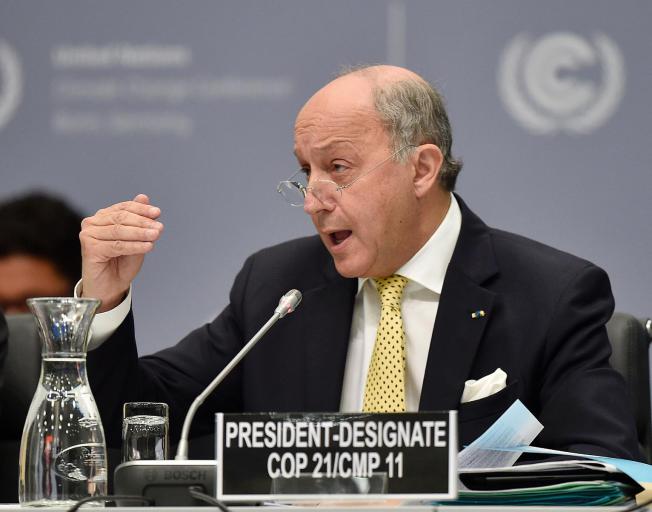
French minister: 2015 climate deal must not require approval by US Congress

from the website of US News and World Report: <http://www.usnews.com/news/business/articles/2015/06/01/european-oil-and-gas-majors-call-for-carbon-price>

French minister: 2015 climate deal must take a form that doesn’t need approval by US Congress

French foreign minister Laurent Fabius talks to delegates during the United Nations Framework Convention on Climate Change in Bonn, Germany, Monday, June 1, 2015. (AP Photo/Martin Meissner)
Associated Press

June 1, 2015 | 12:57 p.m. EDT+ More

By SYLVIE CORBET and KARL RITTER, Associated Press

BONN, Germany (AP) — The global climate agreement being negotiated this year must be worded in such a way that it doesn’t require approval by the U.S. Congress, the French foreign minister said Monday.

Laurent Fabius told African delegates at U.N. climate talks in Bonn that “we know the politics in the U.S. Whether we like it or not, if it comes to the Congress, they will refuse.”

If negotiators follow his plan, that would exclude an international treaty that has legally-binding limits on greenhouse gas emissions — something some countries still insist on but which would have no chance of being ratified by the Republican-controlled Congress.

“We must find a formula which is valuable for everybody and valuable for the U.S. without going to the Congress,” said Fabius, who will host the U.N. climate summit in Paris in December where the new agreement is supposed to be adopted.

Those pushing for a legally binding deal in Paris include the 28-nation European Union and small island nations who fear being wiped out by rising seas.

Amjad Abdulla, a Maldives delegate who is the chief negotiator for the small-island group, said while the group still wants a binding agreement “I think it’s important that we get everyone on board.”

“We are still looking into options,” he said.

One possible outcome in Paris is a deal in which some elements are binding but not the emissions targets set by individual countries.

The Obama administration has pledged to reduce U.S. emissions by 26-28 percent below 2005 levels by 2025.

Peruvian Environment Minister Manuel Pulgar-Vidal said he was “completely sure that we will have an agreement in Paris,” despite the complex political situation in the U.S.

Jennifer Morgan, a climate policy expert at the World Resources Institute, said it was encouraging that Fabius was raising the legal issue now so it can be dealt with before the Paris conference.

“It’s a sign that he’s really pushing countries to come to terms with what the agreement can and cannot be,” she said.

Negotiators also need to decide how to differentiate between what rich and poor countries should do to fight climate change, and how to verify that countries are doing what they say they would.

The main goal for the two-week session in Bonn that began Monday is to shorten the sprawling climate change negotiating text.

Ahead of the meeting, six European oil and gas companies called for a global price on carbon.

In a letter to Fabius and U.N. climate chief Christiana Figueres, the chief executives of Royal Dutch Shell, BP, Eni, Total, Statoil and the BG Group said carbon markets should be introduced around the world and eventually linked into an international system.

Carbon markets set limits on the pollution a company can release and allow them to trade emission permits using the market to set the price.

“Our companies would like to open direct dialogue with the U.N. and willing governments,” the companies said.

Some environmental groups were suspicious of the letter, with Greenpeace calling it a “smokescreen,” and the role carbon markets will play in the Paris agreement is still unclear.

“In the long term, they have the wrong business model. And that’s something they have to acknowledge,” said Martin Kaiser, a Greenpeace climate policy expert.

____

Ritter reported from Stockholm.

Copyright 2015 The Associated Press. All rights reserved. This material may not be published, broadcast, rewritten or redistributed.

Posted in Climate Change, Development, Governance | Leave a comment

FORGOTTEN FORESTRY INFORMATION OF PUERTO RICO

Frank Wadsworth’s useful blog on things forestal in the insular Caribbean has this valuable review of information in back issues of the “Caribbean Forester.”

frankhwadsworth's avatarFrank H. Wadsworth

FORGOTTEN FORESTRY INFORMATION OF PUERTO RICO

Frank H. Wadsworth

8-24-2014

Volunteer, International Institute of Tropical Forestry

Now that the island is more than half covered with forests and we are having an unprecedented number of students searching for the ecology of nature in Puerto Rico there is an unexpected fundamental source of information about the trees and forests that appeared between 1940 and 1964.  It was also a period in which the objectives were different. Reservation of abandoned farmland called for reforestation. It called for trees propagated, adapted, fast growing, and productive of useful woods.

Tree propagation in nurseries rose to 9 million trees per year, and in a 9-year period more than 29 million trees were planted.  The number of tree species used was 500, 190 natives and 310 introduced species. An array of sites throughout the island was included, making the findings of interest almost everywhere. Much was…

View original post 480 more words

Posted in Conservation, Information, Resource Management | Tagged | Leave a comment

The US Bloom is off the Rose of Globalization

from the Sunday Business section of the Washington Post: <http://www.washingtonpost.com/business/reconsidering-the-value-of-globalization/2015/04/24/7b5425c2-e82e-11e4-aae1-d642717d8afa_story.html>

This analysis, however, does not hold for developing countries, especially small islands, who remain very dependent on overseas trade issues like natural resources (fish, alumina), tourism, and offshore financial processing of various sorts.

Posted in Development, Finance Services | Leave a comment

Jean Wiener Islands and Island Nations 2015 Goldman Prize Recipient

From the Goldman Prize web site: <http://www.goldmanprize.org/recipient/jean-wiener/>

Jean Wiener

Islands and Island Nations 2015 Goldman Prize Recipient

In a country plagued by extreme poverty and political instability, Jean Wiener led community efforts to establish the nation’s first Marine Protected Areas by empowering Haitians to see the long-term value in sustainably managing fisheries and mangrove forests.

Haiti is home to an incredibly diverse array of marine life, housed in mangrove forests and coastal reefs. It is also the poorest country in the Western Hemisphere, with 80 percent of the population living in poverty. Natural disasters and political instability have further hampered the nation’s ability to create meaningful economic opportunities for its citizens.

Driven by extreme poverty, many Haitians have resorted to overfishing. Fish stocks have been further decimated as locals cut down mangrove trees—key habitat for young fish—to illegally make and sell charcoal. Others have turned to harvesting coral reefs, which also provide protection and shelter for fish, for construction material such as rocks and lime. The deforestation of coastal mangroves brings more cause for alarm: The trees are known to sequester carbon at a rate five times greater than tropical rainforests and protect coastlines from storm surges, making their destruction a further threat to the future of an island nation already vulnerable to climate change.

Growing up in Haiti, Jean Wiener relished family trips to the beach, which would typically end with his parents struggling to pull him away from the water when it was time to go home. To the young boy, swimming in the Haitian coast felt like swimming in an aquarium, with beautiful coral reefs and vibrant colors. Wiener’s parents had plans for him to become a doctor and sent him to pursue a medical education in the United States. During his studies, he reconnected with his childhood love for the ocean and ended up with a degree in marine biology instead.

He returned to Haiti in 1989 and began working in the science department at a local school. While Wiener had seen signs of the damaged marine wildlife during his visits home, he now fully realized the serious extent of the toll the ecosystem had taken from unchecked exploitation. He frequently heard stories from local fishermen of how much harder it was to find fish. “We used to be able to fish for a half day and feed our family for two weeks,” they said. “Now we fish for two weeks and feed our family for a half day.” Determined to restore the marine wildlife of his childhood and bring sustainable economic opportunities for the people of Haiti, Wiener started the Foundation for the Protection of Marine Biodiversity (FoProBiM)in 1992.

Wiener immediately set out to create opportunities for communities to help themselves. Core to FoProBiM’s work was for villagers to see beyond the short-term gains from overfishing and mangrove harvesting. Wiener not only created tools to help communities create promising livelihoods through small-scale enterprises such as tree nurseries and beekeeping; he engaged them in paid research work and mangrove restoration and helped them see that protecting fisheries, coral reefs and mangrove forests today will strengthen their future and the country’s long-term sustainability.

Recognizing that Haiti was the only country in the Caribbean without any official Marine Protected Areas (MPAs), Wiener brought together coastal communities and government officials to identify key areas for protection while supporting local needs. He trained local people to conduct biodiversity assessments, which ended up being essential in identifying boundaries and priority locations for MPAs.

His work paid off in July 2013, when Haiti’s government announced the country’s first MPA on the island’s southwestern coast, followed by a second in December that year on the island’s northeast coast. In doing so, Wiener had to overcome the seemingly insurmountable challenge of conducting outreach and building support in a constant stream of changing government officials. He would pour weeks and months into building relationships with key ministers and officials, only to have office holders change months later.

Wiener is now working to involve local communities in the successful implementation and management of the two MPAs to ensure they don’t end up as “paper parks.” He also hopes to develop a broader system of Marine Protected Areas throughout the rest of the country by assisting other communities with MPA proposals. Key to his success will be securing funding for the MPAs’ implementation and enforcement of marine protection laws.

Posted in Uncategorized | Leave a comment