
from Dustin: <http://dustincomics.com/comics/november-14-2015/>
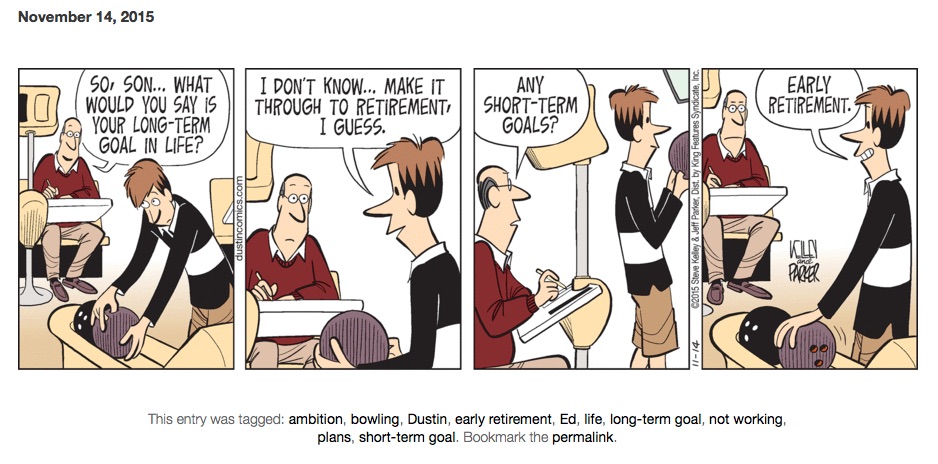
from Dustin: <http://dustincomics.com/comics/november-14-2015/>

© 2015 – Routledge
612 pages | 103 B/W Illus.
This comprehensive handbook provides a global overview of ocean resources and management by focusing on critical issues relating to human development and the marine environment, their interrelationships as expressed through the uses of the sea as a resource, and the regional expression of these themes. The underlying approach is geographical, with prominence given to the biosphere, political arrangements and regional patterns – all considered to be especially crucial to the human understanding required for the use and management of the world’s oceans.
Part one addresses key themes in our knowledge of relationships between people and the sea on a global scale, including economic and political issues, and understanding and managing marine environments. Part two provides a systematic review of the uses of the sea, grouped into food, ocean space, materials and energy, and the sea as an environmental resource. Part three on the geography of the sea considers management strategies especially related to the state system, and regional management developments in both core economic regions and the developing periphery. The primary themes within each chapter are governance (including institutional and legal bases); policy – sets of ideas governing management; and management, both technical and general.
For details and to order, go to <https://www.routledge.com/products/9780415531757> and search on Routledge Handbook.
An excellent overview by Doug Rutzen, president of the International Center for Non-Profit Law (ICNL, http://www.icnl.org) documenting steps taken in the last decade to restrict actions and freedoms of organizations of civil society. Published in the Journal of Democracy Volume 26, Number 4 October 2015, page 28.
Conclusion:
Several recent studies examining constraints on international funding and the political environments in which they arise support the UN Special Rapporteur’s (UNSR’s) assertions. One study found that in most countries where political opposition is unhindered and voting is conducted in a “free and fair” manner, international funding restrictions generally are not imposed on CSOs. By contrast, in countries where election manipulation takes place, governments tend to restrict CSO access to foreign support, fearing that well-funded CSOs could contribute to their defeat at the polls. In other words, vulnerable regimes hoping to cling to power sometimes restrict international funding in order to weaken the opposition.
After the fall of the Berlin Wall, many countries saw the importance of defending civil society. Today, however, many countries are de-funding civil society. Using all sorts of pretexts, governments that feel threatened by such organizations impose restrictions on them. These governments are able to do so in part because the cornerstone concepts of civil society are still being developed, debated, and—at times—violently contested. The outcome of this debate will shape the future of civil society for decades to come.
2015_10_AuthoritarianismGoes Global-2_CivilSocietyUnderAssault-ICNL_Pres_Doug_Rutzen

Nice work, thanks PNC.
Yeah, those are plants on the front of the PNC Building in downtown Baltimore . .
Working in sustainable development of small islands, it’s not hard to get blind-sided by bad (or sometimes good!) news from unexpected sources. This article from NASDAQ may spell tough times for many islands — not only financial services specialists.
from NASDAQ on-line <http://www.nasdaq.com/article/de-risking-is-de-linking-small-states-from-global-finance-cm533660>
De-Risking Is De-Linking Small States From Global Finance
By SeekingAlpha, October 23, 2015, 07:29:48 AM EDT
AAABy Otaviano Canuto and Veronica Ramcharan
Small states, like the Caribbean countries, have been negatively affected by recent “de-risking” policies implemented by international banks, with particularly damaging consequences on correspondent banking relationships. While recommendations from the Financial Action Task Force (FATF) to deal with risks of money laundering and terrorism financing have often been mentioned to justify those de-risking practices, a wide variety of factors seems to have been at play. Urgent action to address the issue is needed to avoid unintended potentially devastating effects on the economies of those countries.
Managing risks is no de-risking
The Financial Action Task Force (FATF) has recommended banks to follow a risk-based approach in doing their part of the Anti Money Laundering and Combating the Financing of Terrorism (AML/CFT) efforts. Together with competent government authorities, financial institutions are expected to identify, assess and understand the risks of money laundering and terrorism financing to which they are exposed and take AML/CFT measures commensurate to those risks in order to mitigate them effectively.
Several international banks have referred to such recommendation as the reason for taking recent de-risking decisions, through which they have denied and/or restricted entire classes of customers from financial services without conducting a comprehensive assessment of their level of risk or risk mitigation measures for these customers. The public statement issued by the FATF in October 2014 refers to “de-risking” as the occurrence of financial institutions terminating or restricting business relationships with clients or categories of customers, to avoid, rather than manage, risk in line with the FATF’s risk-based approach.
According to that same statement, such behaviour is contrary to the intended purpose of FATF’s risk-based approach, which is a fundamental aspect of the FATF standards. FATF recommendations only require financial institutions to terminate customer relationships, on a case-by-case basis, where ML and TF risks cannot be mitigated.
The recently intensified de-risking has had a disproportionate negative effect on small state countries, where specific challenges faced by those countries have exacerbated the effect of de-risking and the subsequent loss of correspondent banking relationships (CBRs) with tier 1 financial institutions in advanced economies. These challenges typically include relatively shallow banking systems, under-developed financial markets, highly concentrated financial systems dominated by foreign banks, domestic currencies that are not internationally traded and often a heavy reliance on remittances. Not only is the adverse effect of de-risking intensified in these countries, but the timeline for an acceptable solution to be implemented has significantly shortened, as the underdevelopment of financial sectors in the majority of these countries make a potential economic collapse imminent if a viable solution is not found in the near future.
Correspondent banking is an essential component of the global payment system, especially for cross-border transactions. Through CBRs, banks can access financial services in different jurisdictions and provide cross-border payment services to their customers, supporting, inter alia, international trade and financial inclusion. In addition, most of the payment solutions that do not involve a bank account at the customer level – such as remittances – rely on correspondent banking for the actual transfer of funds. Therefore, the effects of de-risking through the termination of CBRs have been particularly severe.
De-risking in the Caribbean Small States
In the Caribbean region, comprised mainly of small island developing states, CBRs with financial institutions from advanced economies have steadily declined over the last couple of years. The adverse impact of de-risking is significant and can impact these countries on several fronts, primarily through international trade, financial stability and growth. While the problem associated with de-risking is not entirely new to the Caribbean, it became progressively worse over the years and has now reached a critical point. For example, several years ago, a major US correspondent bank ceased offering cash services to several central banks in the region.
Nonetheless, this loss was replaced by another international bank as the Caribbean countries acceded to more stringent due diligence processes including “know your customers’ customer” attestations – despite the significant constraints and uncertainty of the process. It should be noted that at the FATF Private Sector Consultative Forum Meeting held in March 2015, it was reiterated that the FATF standards do not require a “know-your-customer’s-customer” approach to conducting customer due diligence.
While Caribbean countries have struggled to abide by ever changing standards and requirements, the amount of CBRs continue to decline. The problem is further compounded by the fact that they do not have a long list of international institutions to choose from to begin with, as only a small number of tier 1 financial institutions offer financial services to the Caribbean region. Therefore, given the limited pool of institutions with which they can engage – in most cases, there may be only one or two institutions – the loss of each correspondent bank successively increases the already disproportionately high level of operational risk.
The impact of de-risking on money transfer businesses (MTBs) is of particular concern, as money transfers to the Caribbean exceeded all other forms of external finance in 2014. Remittances to the Caribbean increased by 6.3 percent compared to 2013, totalling US$9.9 billion. However, the MTBs are the latest regional casualties, as correspondent banks have begun to sever ties with these institutions, citing excessive compliance cost to meet corresponding requirements. While it is generally accepted that MTBs are among the higher risk clients, this does not automatically imply that they are conducting illegal business activities, as they are often held to the same standard of AML/CFT requirements as the banking sector.
Further to this, remittances themselves have intrinsic “growth value” as they can promote development and facilitate greater financial inclusion, all of which can help drive strong, sustainable and balanced growth. Therefore, the continued erosion of CBRs can significantly reverse the level of financial inclusion in small state countries. De-risking also presents challenges for financial inclusion goals by further limiting access to formal bank accounts for potential customers – who may not meet requirements because they lack a previous banking history – and MTBs who cannot operate without a centralized account to temporarily hold funds.
Difficulties to address the de-risking challenge
To avoid penalties and the related reputational damage, financial institutions in advanced economies have developed an increased sensitivity to the risks associated with correspondent banking. However, a major challenge in addressing the problem of unwarranted de-risking is the ambiguity surrounding the criteria for de-risking actions and a lack of uniformity in its implementation across institutions. Moreover, there seems to be no obligation on the part of international banks to provide a comprehensive explanation to regional banks for the withdrawal of their financial services.
This has proven to be a significant obstacle for the Caribbean and other small states, to appropriately address the issue as they are unable to determine the specific causes for the loss of the CBRs, despite considerable efforts on their part. The general experience of the Caribbean countries is that global banks have not been transparent and forthcoming on their reasons for terminating CBRs. According to regional authorities, when international banks withdraw their services, there is normally no explanation for the action taken, or in a few instances when a reason was cited, it was as a result of an “operational decision” being made by the international bank.
Consequently, given the lack of clarification for the heightened level of de-risking taking place, several possible reasons have been put forward, with the most obvious being possible deficiencies in the AML/CFT frameworks of the respondent banks in the Caribbean region. Unfortunately, this perception continues to prevail, despite being unsubstantiated, as no Caribbean country is currently subject to FATF’s monitoring process.
Beyond this primary rationale, another assumption for de-risking is that correspondent banks took the decision to sever high-risk relationships – such as the cash intensive businesses – and product lines that are not sufficiently profitable to justify the significant associated risk or compliance assessment requirements. However, this indiscriminate blanket approach to de-risking by foreign correspondents runs counter to the expectation that the global banks can and should assess the risk of their customers on a case by case basis.
A further reason cited is the fear of regulatory enforcement action that carries substantial litigation costs. This idea is by no means far-fetched as the penalties for US, UK and EU banks are exorbitant, even if they are found to have unknowingly facilitated money laundering and tax evasion. Other possible reasons for de-risking include, but are not limited to (( 1)) general retrenchment by global banks, ((2)) apprehension about possible reputational damage, ((3)) misinterpretation of the FATF standards on correspondent banking and customer due diligence, and ((4)) a domino effect caused by the actions by other international correspondent banks.
Possible way forward
De-risking thus appears to have been driven by a variety of factors. Given the ambiguity surrounding the de-risking process, explicit guidance to all relevant stakeholders is strongly needed. This guidance should be specific to the level of requirements and expectations, within a comprehensive and measurable framework under which the risk-based approach can be applied. There is also a need for a greater level of accountability from correspondent banks who withdraw their services, whereby they are mandated to provide tangible evidence that they undertook all the required measures, prior to withdrawing their services.According to ” International Alliance of MTO Associations ” the expectations and responsibilities of correspondent banks in relation to sanctions and extraterritoriality also need to be defined. Clarification is essential on the responsibilities and extent of liability of correspondent banks, pertaining to sanctions and AML/CFT requirements, if they are operating in foreign countries and/or providing overseas correspondent banking facilities. Consideration of legislative changes to shift the liability of extraterritorial sanction and AML/CFT breaches to the entity immediately responsible for that breach as opposed to the correspondent bank itself was also put forward by the association.
Several possible actions to address the challenge of de-risking were also outlined at the Alliance for Financial Inclusion ( [[AFI]]) and G-24 roundtable in Peru October 12. They include:
- Central banks as regulators should be proactive, especially in terms of the guidance given to financial institutions, and move quickly to stem the tide when de-risking happens.
- Greater partnership among the IMF, World Bank, Financial Stability Board, G24, Alliance for Financial Inclusion and the Commonwealth Secretariat, is required to advocate for developing countries with regards to implementation of FATF’s risk-based approach. The issue has only started to be discussed at G20 meetings
- A safe harbour and/or “freeze” on de-risking actions should be instituted, until the various ongoing studies by international organizations are concluded. This will provide a clearer picture of the scale, drivers and impact of de-risking and put the relevant regulatory bodies in a more enlightened position, in order to implement appropriate risk-based policy solutions.
- A review of best practices among jurisdictions to build a “bottom-up” approach to strengthening AML/CFT regimes.
- Assistance for capacity building efforts, enabling countries to undertake mandatory natural risk assessments (NRSs) to more efficiently identify, assess and manage ML/FT risks.
Bottom line
The presence of CBRs is essential to small states for trade and investment. Given their dependence on CBRs with financial institutions in advanced economies, loss of these relationships as a result of de-risking can have severe and almost immediate implications on their macroeconomic stability and potentially result in financial destabilization, financial exclusion and ultimately economic collapse.
These countries depend on correspondent banking arrangements as they represent their lifeline with the world. The urgency of the matter cannot be over-emphasized, as the current efforts by the international community may not provide a viable solution in time to prevent the economic devastation of some countries, making it imperative that these efforts are accelerated, and/or some interim action is taken to ensure that the development and stability of these countries are preserved.
Otaviano Canuto is an Executive Director at the International Monetary Fund and Veronica Ramcharan is a Senior Adviser to the Executive Director. All opinions expressed here are their own and do not represent those of the IMF or of those governments Mr. Canuto represents at the IMF Board.
See also M&T Bank’s Integration Of Hudson City Bancorp Will Drive The Stock Lower on seekingalpha.com
The views and opinions expressed herein are the views and opinions of the author and do not necessarily reflect those of The NASDAQ, Inc.
Fascinating link from Lianna Jarecki, the coordinator of the well-respected science programs at Guana Island, in the British Virgin Islands. Maybe it’s just the geek in me, but I really think these projects that convey how science is done are really important to STEM education, especially in small islands where “science” may seem to be exclusive to continental areas.
From: Lianna Jarecki <liannaj>
Subject: Guana Island Coral Reef Research Film
Date: October 23, 2015 at 12:45:06 PM EDT
Guana Science scientist Paul Sikkel came to Guana this past summer with documentary film-maker Jennifer Berglund (Harvard Museum) to produce educational videos of Paul’s research discoveries. The resulting video shows the daily migration of French Grunts to and from Guana’s White Bay reefs and the parasites that drive this migration, according to Paul’s research findings. All the footage is taken on Guana. The reef looks terrible, I know, but one of our replanted Elkhorn corals is shown. And Paul mentions his finding that more live corals equals fewer parasites.
The video can be viewed at https://vimeo.com/139517759
Jennifer is now working on a second video about Guana’s Marine Science Program.
Lianna
Woman, two teenagers charged in what police call a love-triangle slaying
The Md. mother enlisted the teens to plan the murder of her husband and their female housemate, officials say. http://wapo.st/1LdKSWZ

A note from Bruce Potter
from a blog by Felix Dodds, a friend and well respected commentator on international development and especially the Sustainable Development Agenda. . . .
http://blog.felixdodds.net/2015/10/john-ashethe-un-and-media.html
I wasn’t going to blog on this issue, because it seems to be all over the media. However, when reading the media stories I’m very unimpressed by how they are reporting this.
Prosecutor Preet Bharara, in his diagram led with the headline, “Alleged United Nations Bribery Scheme”. This gives the impression that the UN is somehow involved in the bribery. From my reading of the situation and the evidences he is presenting, it isn’t UN or UN staff or even those who were members of staff of the office of the former president of the GA, who are, at the moment, being accused of anything. It is a representative and deputy representative of two member states of the UN. This is totally different from the organization being involved in any kind of wrongdoing. This is totally different to the way it has been presented by Mr. Bharara which has then been translated into the way that much of the media has presented the story as organizational corruption at the UN.
Let’s take a step back and look at the facts that have been reported. There is an accusation that former Ambassador John Ashe, while an Ambassador for Antigua and Barbuda to the UN, may have not paid tax on some money for work he completed while he was President of the UN General Assembly – but not as UNPGA.
Now lets look at the issue of who the President of the UN General Assembly (UNPGA) is. The President of the UN General Assembly is elected by member states.
For those readers who do not know – this includes the media – the President of the UN General Assembly is NOT a UN staff person.
And the composition of the UNPGA office is also mostly composed of Member States representatives not UN staff.
“Compensation of the President of the General Assembly is determined by the home Member State, which pays the President a salary. This salary is in addition to the privileges of all persons acting in service of the UN or its member states.” (www.unelections.org )
He is NOT answerable to the UN Secretary General but as Rule 36 states “the President, in the exercise of his functions remains under the authority of the General Assembly.” (UN rules of procedure)
It is the responsibility of the media to report accurately what the state of affairs is. What would be more accurate to say is that an Ambassador at the UN, appointed by his country and later elected by his peers, and answerable to the 193 member states to the UN, while undertaking his work as President of the UN General Assembly is being compensated by his country for this work is accused of bribery. Of course, this is not as dramatic.
If he and representatives of a number of other member states also signed a letter to the UNGA to try to have a conference centre built at a location in Macau, then this is an issue again for those member states. On its own, it is not the improper act it is being made out to be by the media because member states can and do send letters to the UNGA all the time calling for whatever they want. Neither the UNGA nor the UN has taken up any of the suggestions in the letter. So where is the UN at fault?
The President of the UNGA is operating under his or her own countries rules as far as how they conduct their business. There may be a need for member states consider making it a requirement for the UNPGA to publish any additional funds he or she receives in the course of their Presidency. The present UNPGA may want to consider publishing his countries rules regarding additional income acquired while being one of THEIR civil servants. This would set a very good example.
Finally, there is clearly more to come out of Mr. Bharara. He has indicated that there are other people being investigated and if I see any further indication of the media not doing their job professionally I will come back to this issue. But can we in the meanwhile ask the media to do their job and report accurately after doing the proper research.
Lets get back to focusing on one of the UN’s great success the adoption of the Sustainable Development Goals – an agenda that will change the way we live on this planet.
Bruce
bpotter
 | Bruce on Dr Kenrick Leslie, CBE, ED of… |
 | Bruce Potter on K Street at Twilight |
| bpotter1 on Who is putting us in the … |
| Michael O'Neal on Virgin Islands Natural Resourc… |
| Bruce Potter on Maybe this is how the end of t… |
 Look Inside
 Potter's Weal