Here’s the CASSE Petition for a Sustainable World

Read it and then go to <http://steadystate.org/act/sign-the-position/> to sign it on-line at the web page for the Center for the Advancement of the Steady State Economy (CASSE)

Whereas:

1) Economic growth, as defined in standard economics textbooks, is an increase in the production and consumption of goods and services, and;

2) Economic growth occurs when there is an increase in the multiplied product of population and per capita consumption, and;

3) The global economy grows as an integrated whole consisting of agricultural, extractive, manufacturing, and services sectors that require physical inputs and produce wastes, and;

4) Economic growth is often and generally indicated by increasing real gross domestic product (GDP) or real gross national product (GNP), and;

5) Economic growth has been a primary, perennial goal of many societies and most governments, and;

6) Based upon established principles of physics and ecology, there is a limit to economic growth, and;

7) There is increasing evidence that global economic growth is having negative effects on long-term ecological and economic welfare…

Therefore, we take the position that:

1) There is a fundamental conflict between economic growth and environmental protection (for example, biodiversity conservation, clean air and water, atmospheric stability), and;

2) There is a fundamental conflict between economic growth and the ecological services underpinning the human economy (for example, pollination, decomposition, climate regulation), and;

3) Technological progress has had many positive and negative ecological and economic effects and may not be depended on to reconcile the conflict between economic growth and long-term ecological and economic welfare, and;

4) Economic growth, as gauged by increasing GDP, is an increasingly dangerous and anachronistic goal, especially in wealthy nations with widespread affluence, and;

5) A steady state economy (that is, an economy with a relatively stable, mildly fluctuating product of population and per capita consumption) is a viable alternative to a growing economy and has become a more appropriate goal in large, wealthy economies, and;

6) The long-run sustainability of a steady state economy requires its establishment at a size small enough to avoid the breaching of reduced ecological and economic capacity during expected or unexpected supply shocks such as droughts and energy shortages, and;

7) A steady state economy does not preclude economic development, a dynamic, qualitative process in which different technologies may be employed and the relative prominence of economic sectors may evolve, and;

8) Upon establishing a steady state economy, it would be advisable for wealthy nations to assist other nations in moving from the goal of economic growth to the goal of a steady state economy, beginning with those nations currently enjoying high levels of per capita consumption, and;

9) For many nations with widespread poverty, increasing per capita consumption (or, alternatively, more equitable distributions of wealth) remains an appropriate goal.

Does the CASSE Position Change with the Times?

The CASSE position has been available for e-signing since May 1, 2004. Although it was designed with global implications, it was also focused to some degree on economic growth in the United States. It was slightly revised on June 3, 2008, to reflect growing concerns about global economic growth and the need for wealthy nations to take the first steps in moving toward a steady state economy. CASSE does not modify the technical aspects of the position, as these are based on long-established scientific principles. The original CASSE position is posted here, with the revisions readily discernible.

Sign the position:

View support for the position:

Posted in Uncategorized | Leave a comment

“County Defeats Proposals to Change Stormwater Fees ” Doesn’t someone have an oak stake . . . ?

Not sure this “interim win” for the supporters of the essential Watershed Protection and Restoration Fee (yes, the “Rain Tax,” as it’s labeled by the right) for repairing the streams and watersheds in Anne Arundel County has been shared on the Pottersweal blog before. Kincey would never say she was solely or even mostly responsible for effectively organizing the opposition to this pair of repeal bills, but she did have a list with about 40 of the names of the people who testified in opposition, and recruited many of them . . .

There were six or seven people who voted for the repeal of the Stormwater Restoration program, but many of them seemed to base their arguments on erroneous interpretations of the existing program. (“We believe the County should have a program based on priorities for restoration projects across the County!” Yes, lady, they should and DO, and it’s already available on the County web site, accessible through the links at <http://www.aacounty.org/DPW/Watershed/Stormwater/WPRF.cfm>)

In true Republican governance mischief, at the same session of the County Council that defeated these two bills, the County Council Chairman, Republican Jerry Walker of District 7 <www.jerrywalker.org>, introduced yet another bill to reduce the Stormwater Restoration Fee by 32%, which would prevent the County from meeting the Federal and State pollution targets that are required by 2025 with interim milestones as early as 2017. I’m sure that “death by a thousand cuts” and “create administrative chaos and uncertainty by throwing sand in the eyes of the program managers just for the heck of it” never occurred to the sponsors of these silly bills. But it does help to stir up their friends.

… from the Capital Gazette web site <http://www.capitalgazette.com/news/annapolis/ph-ac-cn-stormwater-council-0407-20150407,0,3093935.story>

Council defeats proposals to change stormwater fees

50 speak at public hearing on measures

Rema Rahman, rrahman

April 7, 2015

Anne Arundel County’s stormwater fees are staying put — for now.

Two bills that aimed to repeal collection of the fee were defeated by the County Council after a three-hour debate that saw more than 50 members of the public testify.

Republican councilmen Derek Fink of Pasadena, Michael Peroutka of Millersville and Chairman Jerry Walker of Crofton voted in favor of the bills.

All have advocated for proposals to fund stormwater remediation projects from the general fund as opposed to a dedicated lockbox the council created in 2013.

Republican John Grasso of Glen Burnie and Democrats Andrew Pruski of Gambrills, Chris Trumbauer of Annapolis and Pete Smith of Severn, voted to defeat the measures. Smith was a key vote on the bill.

Riverkeepers, residents, property managers and environmental representatives implored the council to defeat two bills that aimed to stop the county from collecting more than $20 million in stormwater fees per year.

The vote followed the first public hearing on the stormwater measures Monday. The council also amended a bill aimed at limiting where state medical licensed clinics can go, in part by allowing them in more areas than the original bill intended.

Some members of the public said one problem area is there is no alternative funding mechanism to pay for projects if a dedicated fund was taken away for projects currently in planning and design stages.

“There simply is no credible Plan B,” Barbara Miller, of Fairhaven, told the council.

Others invoked a higher power.

“God makes the rain,” naturalist John Page Williams, of Annapolis, said. “Man makes the runoff.”

Brad Knopf, of Annapolis, called it “penny wise and pound foolish.”

Opposition was voiced by several council members who were in favor of repealing the fee.

Fink said it would not make sense for the county to increase the fee in fiscal 2016 only to work to phase it out completely over the following three fiscal years.

The fee will increase to $85 per average household starting July 1. When creating the program, the council created a three-year phase-in program for the fee.

If the proposals both aim to repeal the fee, it should come sooner rather than later, Fink said, advocating for an “automatic repeal.”

Bill 16-15, sponsored by request of Republican County Executive Steve Schuh, along with Walker and Peroutka would have phased out collecting more than $20 million in fees over three years starting in fiscal 2017.

Bill 17-15, sponsored by Fink, Peroutka and Walker aimed to repeal collecting all fees at once starting in fiscal 2016. The council was debating amendments on both bills as the meeting stretched into its fourth hour.

In other action, the council passed five amendments to a bill sponsored by Fink that aims to limit where state-licensed medical clinics may go.

The changes opened up more areas where such facilities can go than under the original proposal.

One amendment introduced by Schuh’s administration allows such facilities to be exempt from a 1,000-foot buffer provision from public parks and religious facilities. The provision would remain in place for homes and schools.

Another amendment would allow county-owned land to be leased to private organizations or nonprofits to open clinics. Those facilities would be exempt from being 1,000 feet from a school, park or religious facility, which was part of the original intent of the bill.

The measure was born out of a controversial proposal to open a methadone clinic in Pasadena that sparked an outcry from nearby residents who did not want it in the neighborhood.

The bill would define “state-licensed medical clinics,” add parking criteria for them, and establish conditional use and zoning requirements.

Another change to the bill would make it applicable to clinics that begin operation when the measure takes effect instead of Jan. 1.

Another public hearing on the measure is scheduled for the council’s April 20 meeting. If passed, it would take effect in early June.

Posted in Small Island | Leave a comment

University of Washington Helps NOAA Examine Potential for Citizen Science During Oil Spills

New post on NOAA’s Response and Restoration Blog

University of Washington Helps NOAA Examine Potential for Citizen Science During Oil Spills

by Office of Response and Restoration

Group of people with clipboards on a beach.One area where volunteers could contribute to NOAA’s scientific efforts related to oil spills is in collecting baseline data before an oil spill happens. (Credit: Heal the Bay/Ana Luisa Ahern, CC BY-NC-SA 2.0)

This is a guest post by University of Washington graduate students Sam Haapaniemi, Myong Hwan Kim, and Roberto Treviño.

During an oil spill, how can NOAA maximize the benefits of citizen science while maintaining a high level of scientific integrity?

This was the central question that our team of University of Washington graduate students has been trying to answer for the past six months. Citizen science is characterized by volunteers helping participate in scientific research, usually either by gathering or analyzing huge amounts of data scientists would be unable to do on their own.

Dramatic improvements in technology—particularly the spread of smartphones—have made answering this question more real and more urgent. This, in turn, has led to huge growth in public interest in oil spill response, along with increased desire and potential ability to help, as demonstrated during the 2007 M/V Cosco Busan and 2010 Deepwater Horizon oil spill responses.

As the scientific experts in oil spills, NOAA’s Office of Response and Restoration has a unique opportunity to engage citizens during spills and enable them to contribute to the scientific process.

What’s in it for me?

Our research team found that the potential benefits of citizen science during oil spills extend to three groups of people outside of responders.

  • First, professional researchers can benefit from the help of having so many more people involved in research. Having more citizen scientists available to help gather data can strengthen the accuracy of observations by drawing from a potentially greater geographic area and by bringing in more fine-grain data. In some cases, citizen scientists also are able to provide local knowledge of a related topic that professional researchers may not possess.
  • The second group that benefits is composed of the citizen scientists themselves. Citizen science programs provide a constructive way for the average person to help solve problems they care about, and, as part of a collective effort, their contributions become more likely to make a real impact. Through this process, the public also gets to learn about their world and connect with others who share this interest.
  • The final group that derives value from citizen science programs is society at large. When thoughtfully designed and managed, citizen science can be an important stakeholder engagement tool for advancing scientific literacy and reducing risk perception. Citizen science programs can provide opportunities to correct risk misconceptions, address stakeholder concerns, share technical information, and establish constructive relationships and dialogue about the science that informs oil spills and response options.

How Should This Work?

Volunteer scrapes mussels off rocks at Hat Island.A volunteer samples mussels off of Everett, Washington, as part of the citizen science-fueled NOAA Mussel Watch Program. (Credit: Lincoln Loehr, Snohomish County Marine Resources Committee)

Recognizing these benefits, we identified three core requirements that NOAA’s Office of Response and Restoration should consider when designing a citizen science program for oil spills.

  1. Develop a program that provides meaningful work for the public and beneficial scientific information for NOAA.
  2. Create a strong communication loop or network that can be maintained between participating citizens and NOAA.
  3. Develop the program in a collaborative way.

Building on these core requirements, we identified a list of activities NOAA could consider for citizen science efforts both before and during oil spill responses.

Before a response, NOAA could establish data collection protocols for citizen scientists, partner with volunteer organizations that could help coordinate them, and manage baseline studies with the affiliated volunteers. For example, NOAA would benefit from knowing the actual numbers of shorebirds found at different times per year in areas at high risk of oil spills. This information would help NOAA better distinguish impacts to those populations in the event of an oil spill in those areas.

During a response, NOAA could benefit from citizen science volunteers’ observations and field surveys (whether open-ended type or structured-questionnaire type), and volunteers could help process data collected during the response. In addition, NOAA could manage volunteer registration and coordination during a spill response.

How Could This Work?

Evaluating different options for implementing these activities, we found clear trade-offs depending on NOAA’s priorities, such as resource intensity, data value, liability, and participation value. As a result, we created a decision framework, or “decision tool,” for NOAA’s Office of Response and Restoration to use when thinking about how to create a citizen science program. From there, we came up with the following recommendations:

  1. Acknowledge the potential benefits of citizen science. The first step is to recognize that citizen science has benefits for both NOAA and the public.
  2. Define goals clearly and recognize trade-offs. Having clear goals and intended uses for citizen scientist contributions will help NOAA prioritize and frame the program.
  3. Use the decision tool to move from concept to operation. The decision tool we designed will help identify potential paths best suited to various situations.
  4. Build a program that meets the baseline requirements. For any type of citizen science program, NOAA should ensure it is mutually beneficial, maintains two-way communication, and takes a collaborative approach.
  5. Start now: Early actions pays off. Before the next big spill happens, NOAA can prepare for potentially working with citizen scientists by building relationships with volunteer organizations, designing and refining data collection methods, and integrating citizen science into response plans.

While there is not one path to incorporating citizen science into oil spill responses, we found that there is great potential via many different avenues. Citizen science is a growing trend and, if done well, could greatly benefit NOAA during future oil spills.

You can read our final report in full at https://citizensciencemanagement.wordpress.com.

Sam Haapaniemi, Myong Hwan Kim, and Roberto Treviño are graduate students at the University of Washington in Seattle, Washington. The Citizen Science Management Project is being facilitated through the University of Washington’s Program on the Environment. It is the most recent project in an ongoing relationship between NOAA’s Office of Response and Restoration and the University of Washington’s Program on the Environment.

Office of Response and Restoration | March 25, 2015 at 10:14 am | Tags: Emergency Response Division (ERD), oil spills, preparedness, response, science, volunteers | Categories: oil spills, science | URL: http://wp.me/p1t6lz-1tx
Posted in Beaches, Monitoring, Science | Leave a comment

FAO Takes Action to Assist Small Islands

Linked to a tweet from FAOSIDS:

#UNFAO Council: Use of FAO Technical Cooperation Programme 2 help #smallislands adapt to #climatechange bit.ly/1xVcMP6 @FAO4Members

It looks as though much of the programme activity listed below actually took place a year or two before the SIDS Samoa Pathway, but that probably makes more sense to those working in agricultural promotion in SIDS and the Caribbean SIDS. . .

from the FAO web site at <http://www.fao.org/3/a-mn211e.pdf>, based on documents for the FAO Council, this week.

C 2015/3 – Medium Term Plan 2014-17 (reviewed) /

Programme of Work and Budget 2016-17

Information Note no. 5 – March 2015

Use of FAO’s Technical Cooperation Programme to help Small Island Developing States adapt to climate change

Summary: This note provides information on FAO’s Technical Cooperation Programme and how it is being used and can be enhanced to help Small Island Developing States adapt to the challenges posed by climate change, as requested by the Programme and Finance Committees.

I. FAO Technical Cooperation Programme (TCP)

1. The FAO Technical Cooperation Programme (TCP) was established in 1976 by a Resolution of the Conference, as a Programme funded from the Organization’s Net Appropriation. The purpose of the TCP is to make FAO’s technical knowledge available to support development efforts of member countries and their regional organizations as well as provide emergency assistance in the case of disasters that affect rural livelihoods. More information on the TCP is provided in Annex 1.

II. Increasing TCP appropriation to support Small Island Developing States (SIDS)

Proposal in PWB 2016-17

2. In the PWB 2016-17, the Director-General proposes a 0.6 percent (USD 6.1 million) increase in the TCP so as to bring it to 14 percent of FAO’s Net Appropriation, as recommended by the FAO Conference (CR 9/89) initially in 1989 and reiterated on several occasions.

3. This increase is aimed at supporting the 40 Small Island Developing States (SIDS) members of FAO, the group of countries most affected by climate change. SIDS are distributed across FAO regions as follows: Africa (6); Asia and the Pacific (17); Latin America and the Caribbean (16); Near East and North Africa (1).

4. As an indication of the scale of the proposal, for the 2012-13 biennium, 15.3 percent of the TCP appropriation was committed for SIDS, i.e. 66 projects (TCP and TCPf)1 were approved. TCP projects support a wide range of activities in the SIDS from support to national statistics, capacity development for implementation of international guidelines and treaties, monitoring and control of pests and diseases, and adaptation to climate change. Examples of recent and ongoing TCP projects in support of SIDS to address the challenges of climate change are provided in Annex 2.

5. An additional USD 6.1 million for the TCP would mean that on average an extra
USD 150 000 could be made available per eligible SIDS country. As seven SIDS are also classified as high-income economies and thus have more limited access to TCP projects (Emergency and TCPf only), this average per country could rise slightly.

Increased international financing to support SIDS sustainable development

6. The Intergovernmental Panel on Climate Change (IPCC) has highlighted the extent to which SIDS are vulnerable to climate change and sea level rise. As their population, agricultural land and infrastructure tend to be concentrated in coastal zones, any rise in sea level can have a significant and profound effect on their economies and living conditions. For some low-lying SIDS, their very survival is threatened.

7. The effects of climate change – rising sea level, air and sea surface temperatures, extreme weather events, and changing rainfall patterns – are affecting countries worldwide, but there is no doubt that SIDS are more vulnerable to these external shocks. The recent dramatic impact of tropical cyclone Pam on Vanuatu illustrates the vulnerability of these nations to extreme weather events.

Climate change conditions the development of SIDS. It affects their food security, livelihoods and economies – and SIDS already face a multiple burden of malnutrition ranging from undernourishment to obesity.

-=-=-=-=-=-=-=-=-=-=-=-=-=-=-=-=-=-=-=-=-=-=-=-=-

1 TCP facility (TCPf)

-=-=-=-=-=-=-=-=-=-=-=-=-=-=-=-=-=-=-=-=-=-=-=-=-

8. At the UN Conference on SIDS which took place in Samoa in September 2014, a wide partnership involving 166 countries, 85 international organizations and 1,200 major groups (including from civil society and private sector) agreed to address the long standing challenges of the islands. The outcome document of the conference recognized the need to support and invest in these nations so they can achieve sustainable development. It also recognized that financing, from all sources, is critical for the sustainable development of SIDS, and UN Member States reaffirmed their commitment to help these countries gain access to financing for development.

9. SIDS have consistently taken the leadership on climate action over the last two decades, as evidenced by the outcome documents from the three global SIDS’ summits: Barbados Programme of Action (BPoA) 1994; the Mauritius Strategy 2005; and the SAMOA Pathway 2014. FAO participated actively in these summits and undertook to assist in implementing the outcomes. It is now time for the international community to take up the calls for concrete action when the post-2015 development agenda is being negotiated and for the FAO membership to step up its effort in this regard.

FAO support to the SIDS: from commitment to action

10. FAO is already providing support to SIDS in the areas of policy advice; technical assistance in agriculture, fisheries, forestry; and natural resource management to support resilient livelihoods and enhance food security. The FAO Web site Small Island Developing States provides ample illustrations of the Organization’s activities and good practices to support SIDS. There is also a growing portfolio of projects funded through voluntary contributions, aimed at strengthening climate resilience in agriculture at large (including forestry and fisheries) and preserving the oceans and fragile islands ecosystems.

11. FAO’s support, delivered through the TCP and voluntary contributions, addresses specific challenges, prioritized in the Country Programming Frameworks (CPFs), that SIDS face with respect to climate change in terms of disaster risk management and resilience, food and nutrition security policy support and agricultural development, and sustainable use and management of natural resources. Annex 2 lists some examples of recent and ongoing TCP projects that support SIDS in addressing these challenges with concrete results, also helping to mobilize additional resources through upscaling or replication of good practices.

12. FAO, through its corporate priorities and delivery mechanisms at global, regional and national levels such as “Climate-Smart Agriculture”, “the Blue Growth Initiative”, “Improving Food Systems in the Caribbean”, and “Value Chains for Food Security and Nutrition in the Pacific islands” (see Annex 3),2 as well as its CPFs, is already working to replicate and upscale good practices to help SIDS meet the challenges faced, drawing on the immediate availability of catalytic resources from the TCP and mobilizing the necessary voluntary contributions.

13. Increasing the TCP allocation to support SIDS will be a sound investment, i.e. an investment for results, with potential for high returns in terms of sustainable development, to help these countries adapt and cope with the impact of climate change and improve their resilience to shocks.

-=-=-=-=-=-=-=-=-=-=-=-=-=-=-=-=-=-=-=-=-=-=-=-=-

2 Detailed information is available at Investing for Results

-=-=-=-=-=-=-=-=-=-=-=-=-=-=-=-=-=-=-=-=-=-=-=-=-

Annex 1: FAO Technical Cooperation Programme

Overview

1. The FAO Technical Cooperation Programme (TCP) was established in 1976 by a Resolution of the Conference, as a Programme funded from the Organization’s Net Appropriation. Through the TCP, FAO is able to provide technical assistance to its Members without having to first raise funds. Since its creation, the TCP has allowed the funding of projects for a total value of over USD 1.4 billion.

2. The purpose of the TCP is to make FAO’s technical knowledge available to support development efforts of member countries and their regional organizations, as well as provide emergency assistance in the case of disasters that affect rural livelihoods. TCP projects should produce tangible and immediate results in a cost-effective manner. Within the Programme, the TCP facility (TCPf) is available as a flexible tool to support local field activities and strengthen programme development processes. A TCPf project is an umbrella project under which several requests for specific and very short-term technical assistance can be addressed. Each TCP project has a budgetary ceiling of USD 500 000 while the maximum budget for an umbrella TCPf is USD 200 000 per biennium.

3. All FAO member countries have access to TCP assistance. FAO’s governing bodies instructed however that the TCP should give special attention to those countries most in need, especially Low-income, Food-Deficit Countries (LIFDCs); Least Developed Countries (LDCs); Land-locked Developing Countries (LLDCs) and Small Island Developing States (SIDS). The governing bodies further indicated that high-income countries can access TCP development assistance but on a full cost- recovery basis.

4. The TCP addresses needs from FAO’s Members for technical assistance in all areas of action that pertain to FAO’s mandate in alignment with its Strategic Framework, and to the CPFs agreed with governments at country level. Rules and criteria approved by Members govern the use of TCP resources and ensure that projects:

i) are aligned to FAO and national priorities defined in the CPF;

ii) address a critical gap;

iii) ensure sustainable impact;

iv) act as a catalyst for change and for promoting the mobilization of resources to continue or scale-up results;

v) build upon government commitment; and

vi) are gender sensitive.

5. As decided by FAO Members, 82 percent of the TCP appropriation for projects is distributed across FAO’s five regions to support development projects, with the following distribution: Africa (40 percent); Asia and the Pacific (24 percent); Latin America and the Caribbean (18 percent); Europe and Central Asia (10 percent); and Near East and North Africa (8 percent). Fifteen (15) percent of the appropriation is earmarked for emergency projects, and 3 percent for inter-regional projects.

6. The TCP appropriation voted by Conference should be committed into approved projects over the two-year period of the Programme of Work and Budget (PWB) and the funds spent by the end of the following biennium. The TCP appropriation for the biennium 2014-15 amounts to 13.4 percent of the PWB Net Appropriation (USD 134.7 million), while for 2012-13 it accounted for 11.5 percent of the PWB (USD 116 million). Overall, as at 28 February 2015, 79 percent of the 2012-13 appropriation was spent and 55 percent of the 2014-15 appropriation committed. Further information can be found in the Programme Implementation Report 2012-13 and Mid-Term Review synthesis report – 2014.3

Enhancements put in place since 2012 to make the TCP better fit for purpose

7. Member countries highly value the TCP, they acknowledge first hand its usefulness and appreciate the concrete results it promotes to address their needs.

8. TCP projects are subject to established auditing and evaluation processes, and Members give particular attention to the performance of the management of the Programme. The Assistant Director- General, Technical Cooperation (ADG/TC), who has the delegated overall responsibility for the oversight of the TCP, reports on a regular basis on the use of the TCP appropriation to the governing bodies who in turn provide advice regarding its enhancement to ensure that appropriate attention be given to results-based, efficient and cost effective management.

-=-=-=-=-=-=-=-=-=-=-=-=-=-=-=-=-=-=-=-=-=-=-=-=-

3 C 2015/8 PIR 2012-13 paragraphs 336-354, PC 117/5 – FC 157/7 MTR 2014 paragraphs 145-157
-=-=-=-=-=-=-=-=-=-=-=-=-=-=-=-=-=-=-=-=-=-=-=-=-

9. In December 2013, the 148th session of the Council endorsed the Secretariat’s proposed enhancement measures and related implementation plan, and in particular supported the alignment of the enhanced TCP to the reviewed Strategic Framework and the bottom-up alignment to national priorities through Country Programming Frameworks (CPFs).4 Since early 2014, enhancement efforts to further strengthen the Programme management were directed at:

i) better aligning the TCP to the Strategic Framework and the national priorities through the CPFs;

ii) ensuring a greater role and responsibilities for decentralized offices; and

iii) identifying further simplification of procedures and alignment to the corporate project cycle guidelines.

One effect of these changes was a reduction in transaction time required between identification and approval of projects (currently 74 percent of projects are approved within three months of receipt of request).

-=-=-=-=-=-=-=-=-=-=-=-=-=-=-=-=-=-=-=-=-=-=-=-=-

4 JM 2013.2/2, CL 148/8, CL 148/REP paragraph 9a
-=-=-=-=-=-=-=-=-=-=-=-=-=-=-=-=-=-=-=-=-=-=-=-=-

Annex 2: Examples of recent and ongoing TCP projects in support to SIDS

and related to climate change

A. Examples of TCP projects assisting SIDS addressing climate change related issues

Dominica – TCP/DMI/3203 “Assistance to improve Disaster Risk Management (DRM) capacities in agricultural sectors” (from September 2012 to December 2014; budget USD 169 000). Dominica, due to its geographical location in the hurricane belt and its topography, is recurrently threatened by severe natural hazards and disasters. This project was approved to enhance the resilience of Dominica’s agriculture sector (as well as fisheries and forestry) to natural disasters, thus contributing to the promotion of sustained economic growth and poverty reduction. The project established demonstration plots to show soil conservation and sustainable land management practices such as use of grass barriers, strip cropping, contour planting, check dams, to reduce surface and/or gully erosion and loss of nutrients; storm and contour drains to control removal of excess water and compost, green manures and other
organic materials to enhance the physical and chemical characteristics of soils. Capacity building, including the preparation of a training manual and video on soil fertility management and soil conservation methods was completed. A DRM plan for the agricultural sector was developed.

Fiji – TCP/FIJ/3402 “Emergency assistance to support the recovery of agriculture livelihood systems of affected families in Fiji following cyclone Evan” (from April 2013 to January 2015; budget USD 280 000). Agriculture in Fiji is highly vulnerable to destructive cyclones and floods with significant repercussion for food security. One of the predicted impacts of climate change in the Pacific will be more frequent and intense extremes in weather conditions. Following Tropical Cyclone Evan, the most affected farmers were assisted to rebuild their livelihoods by providing planting material and related inputs so that they could restore agricultural production and productivity. In addition, an assessment tool to measure damage in the agriculture sector after natural disasters was developed. This approach responded to an immediate need and strengthened the capacity of the sector to respond to future extreme events.

Seychelles – TCPf – TCP/SEY/3202 “Natural Disaster Insurance Scheme for Farmers and Fishermen” (from November 2008 to December 2009; budget USD 23 840). The Seychelles is battered by heavy rainstorms leading to flooding of low coastal areas, extensive soil erosion on the slopes and damages to socio-economic infrastructure. Since 1997 the Seychelles has been experiencing extreme weather events impacting negatively on the agricultural sector. Damages and losses to the agriculture and fisheries sectors have been a key concern for local communities and the Government, as these activities are very important economic factors in terms of employment and food security. The Government recognizes that mitigation of risks involved is urgently needed to safeguard these important economic sectors. The TCPf helped to develop the type of data required towards designing of a Natural Disaster Insurance Scheme for fishers and farmers.

Subregional Office for the Pacific Islands – TCP/SAP/3404 “Strategies and capacity building in Pacific SIDS to address climate change impacts on jurisdictional claims” (from November 2013 to October 2015; budget USD 414 000). A genuine threat posed by sea level rise is the submergence of physical demarcation points of baselines from which a coastal state’s territorial sea and exclusive economic zones (EEZ) is measured. This could lead to a smaller combined territorial areas and EEZs and inter alia decreasing related control of fishing and access to the resources occurring in those areas. Working with the Secretariat for the Pacific Community and the Pacific Forum Fisheries Agency, FAO aims to enhance understanding and recognition in the Pacific SIDS region of the full impact of the physical and jurisdictional implications of sea level rise. It will also lead to the development and endorsement of a regional strategy, with policy and legal approaches and options for recognition and preservation of Pacific SIDS jurisdictional claims presented and strategy for ensuring global uptake is developed. The project is expected to provide impetus for early action by Pacific SIDS on the preservation of jurisdictional claims. This will ultimately contribute to achieving sustainable socio-economic development in the Pacific SIDS and to the sustainable conservation and management of the living resources in the EEZs of the SIDS.

Regional Office for Latin America and the Caribbean – TCP/RLA/3314 “Preparation of National Food and Nutrition Security Policies and Action Programmes in the Member States of the Caribbean Community (CARICOM)” (from December 2011 to December 2013; budget USD 497 000). The project was approved to contribute to the enhancement of CARICOM countries’ capacities to address the root causes of hunger, food insecurity and malnutrition. It contributed in particular to: i) the preparation of national food security and nutrition policies and programmes within the subregion; ii) comprehensive gender-sensitive assessment of agricultural and food value chains policies and programmes; iii) development of nutrition security policy plans for member countries; iv) improved DRM and Climate Change Adaptation (CCA) policies and strategies; v) improved institutional mechanisms to enhance the coordination and management of food security and nutrition agenda; vi) design and targeting of social protection programmes and safety nets for poor and vulnerable households improved. The project prepared ten food and nutrition policies and ten action plans for different member countries in the CARICOM region. These included attention to Disaster Risk Management policies and strategies.

B. Examples of TCP projects implemented in SIDS with particular catalytic effect

Subregional Office for the Caribbean – TCP/SLC/3402 “Development of integrated programmes and action plans for Black Sigatoka management” (from June 2012 to December 2013; budget USD 112 000). This project in Dominica, Grenada, Guyana, Saint Lucia, Saint Vincent and the Grenadines developed national and regional programmes for banana Black Sigatoka Disease management (a major threat to smallholders livelihood systems), as well as prepare proposals for resource mobilization. Utilizing this experience, the countries have raised funds from the European Union, Caribbean Development bank, Government of Taiwan and the International Cooperation Centre of Agricultural Research for Development (CIRAD, France) to further increase their disease resistance and prevention capacity.

Grenada – TCP/GRN/3302 “Assistance to develop a methodology for national and local level land degradation assessment” (from June 2011 to December 2012; budget USD 140 000). This project evaluated the type, extent and severity of land degradation, the impact on productivity and the presence and effectiveness of sustainable land management measures. National land degradation maps and a manual on local land degradation assessment methodology for SIDS were prepared. A land degradation information and monitoring system was established and workshops held on local and national assessment methods for SIDS. As a result, the Government has been able to mobilize funding to develop a functional Land Degradation Monitoring Network as part of the Global Environment Fund (GEF) funded Ridge to Reef project to improve the provision of ecosystems services in and around protected areas. Additional funding was obtained from European Union, along with government funding, to

survey and map severely affected watersheds. Funding is being sought from the United Nations Convention to Combat Desertification (UNCCD) to conduct detailed degradation assessments of two local area sites which were deemed severely degraded under the TCP project and expand the network to include drought and develop the land degradation and drought monitoring network.

Annex 3: FAO Delivery mechanisms to support sustainable development of SIDS

1. Climate-Smart Agriculture: Climate-Smart Agriculture (CSA) is a conceptual framework that aims to simultaneously address food security and climate change challenges. As such, it also helps translate the post-2015 development goals related to agriculture, food security and rural livelihoods into action and scale-up impact. It will also contribute to the changes needed in order to improve resilience of food systems for growing cities. CSA supports the adaptation of the agricultural sectors to cope with the expected changing climatic conditions and builds improved resilience of production systems and local communities to adverse and extreme weather conditions.

2. Blue Growth Initiative: this initiative aims at restoring the potential of the oceans and wetlands by introducing responsible and sustainable approaches to reconcile economic growth and food security together with the conservation of aquatic resources. It aims to create an enabling environment for people employed in fisheries and aquaculture to act not only as resource users, but also as stewards. Fisheries and aquaculture make a significant contribution to food security and livelihoods of millions of people. Likewise, some 200 million direct and indirect employment opportunities occur along the value chain from harvesting to distribution, making the livelihoods of some 880 million people dependent on the sector.

3. Building Resilience in Protracted Crises and Natural Disasters: disasters and crises undermine development. More people face hydro-meteorological hazards (for example, floods, droughts, storms and wildfires) and geological hazards (for example, earthquakes and landslides) than ever before. The intensity and frequency of natural disasters is increasing, compromising sustainable development by affecting livelihoods and threatening food security and nutrition. Agriculture, livestock, forestry, fisheries and aquaculture are among the most exposed and affected sectors. Existing risk reduction and management measures need to be improved and scaled up. Many countries are poorly equipped to prevent, prepare and mitigate the impacts of current extremes and risks, including climate change, let alone those projected for the future. Natural hazards also occur in protracted crises, which represent extremely challenging contexts that affect over 350 million people globally.

4. Asia and the Pacific’s Blue Growth Initiative: this initiative focuses on supporting sustainable management of natural resources for better production efficiency. This will be done through improved governance, ecosystem approaches and participatory processes in planning and management and action to improve implementation at different levels, which contribute to reduction of poverty, increased food security and improved nutrition of rural communities. It emphasizes promoting good production practices, applying appropriate tools for effective monitoring ecological and social and economic impacts, improved resource rents, supporting management of transboundary issues and adaptation to climate change to ensure the sustainable intensification in aquaculture production.

5. Value Chains for Food Security and Nutrition in the Pacific Islands: Pacific institutions and national partners will be supported to improve the capacity of local food producers and related businesses to supply more food to domestic and tourist markets to meet demands for a balanced and nutritious diet. This includes supporting the development of policy and regulatory frameworks which, in turn, rely on improvements in capacity to assemble, integrate, analyse and disseminate information on food, nutrition and natural resources. In addition, capacity to participate in the development of international standards relevant to the food systems of the Pacific Islands will be enhanced and national systems to assure compliance with such standards will be strengthened.

6. Improving Food Systems in the Caribbean: the initiative will address two fundamental problems faced by countries across the Caribbean region: limited value chain development of food and feed crops; and low utilization of domestic agricultural products. Priority countries are expected to develop and establish sustainable food systems through improved policy and governance for increased investment, production, employment, trade and consumption. This will result in improved access to quality food and improved nutrition through changed consumption patterns. Priority countries: the poorest, most food insecure and vulnerable member countries of Caribbean Community (CARICOM), especially Belize, Grenada, Guyana, Haiti, Jamaica, Saint Vincent and the Grenadines and Suriname.

Posted in Resource Management, Science, Small Island | Leave a comment

Measuring Development: the Importance of Statistics on the Post-2015 Sustainable Development Agenda.

from a blog of the London School of Economics <http://blogs.lse.ac.uk/impactofsocialsciences/2015/03/23/measuring-development-the-importance-of-statistics-post-2015/>

Wonder if the UN Statistical Office agrees that “there is no reason why data should remain the remit of statistical offices?”

Measuring development: the importance of statistics on the post-2015 Sustainable Development Agenda.

In 2013 the UN set up a specific group to look at broadening its data gathering. This is part of a wider trend looking to embrace partnerships that can provide regular evidence of development progress. Thomas Wheeler and Craig Fagan argue that in the age of ‘open’ government, budgets, contracts and aid, there is no reason why data should remain the remit of statistical offices. Civil society, the private sector and governments can and must work together in these efforts. Indicators should be chosen based on clear criteria and provide a mix of data collected from official and non-official sources.

Big data may be the trending buzzword these days but more often than not the nitty-gritty of statistics usually sends people to sleep. But statistics matter for every aspect of life, particularly when it comes to questions of inequality and poverty. Last week in New York the United Nations Statistical Commission met to discuss what indicators it can use to measure the new set of development targets that the UN will adopt in September to follow up on the Millennium Development Goals.

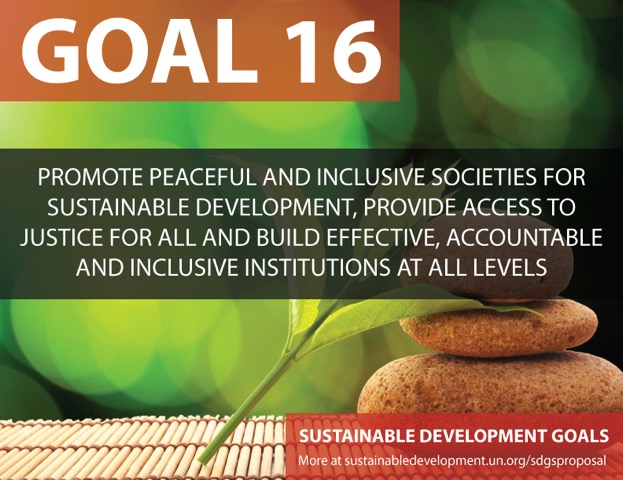
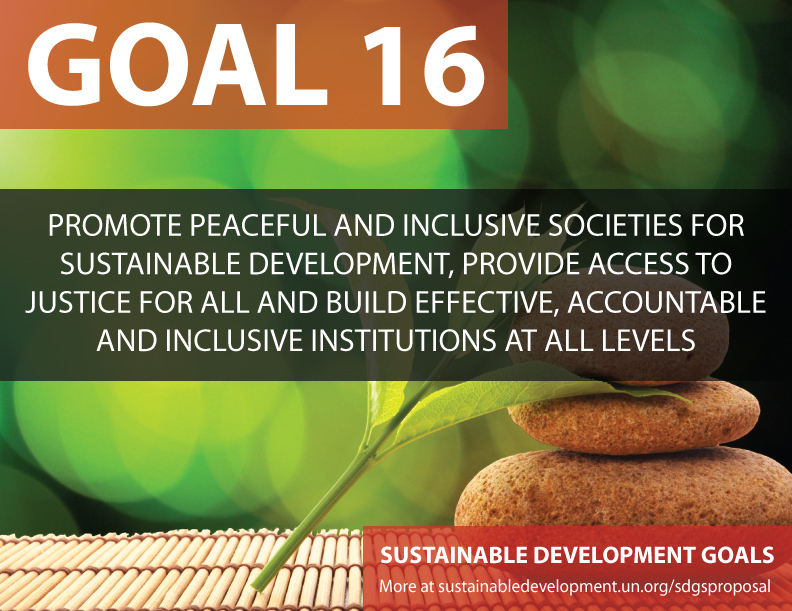
This is important because it could determine the outcome of the post-2015 Sustainable Development Agenda. If topics are disputed because the UN thinks they can’t be measured or the wrong indicators are used, it will distort the next phase of how the world works to rid the world of poverty and its causes. That’s why Transparency International and Saferworld have been working to identify the relevant statistical indicators – the monitoring framework — to deliver on the promise of Goal 16: “peaceful and inclusive societies, justice for all, and open and accountable government institutions”. This is one of 17 potential goals that the UN is considering for the post 2015 agenda. We believe it is a pivotal goal because it will help combat corruption, which threatens the well-being of the poor disproportionately and undermines peace. Where people have access to justice, and government is accountable, there is less room for corruption and violent conflict and insecurity.

Open Working Group proposal for Sustainable Development Goals Credit UN

So what should the monitoring framework include? At present there are 12 targets identified under Goal 16. This is where statistics and indicators get interesting. Without the right indicators, it won’t be possible to know, for example, whether a target to “substantially reduce corruption and bribery” has actually been met. We believe that indicators should be chosen based on clear criteria and provide a mix of data collected from official and non-official sources.

For Goal 16, this would include:

  • Administrative data points collected by governments. This is already happening – we just need to make the data better and more widely used. For example, we believe that corruption in government procurement happens when there is no information about procurement tenders – so we need to monitor data about the percentage of publicly available procurement tenders. The same can be said about monitoring advances on peace and safety, by using government figures on violent deaths for example.
  • Surveys (experiential, factual, opinion): these would capture and collate the experiences and perceptions of citizens of key issues related to governance, justice and peace. For example, there would be a survey asking if people had paid a bribe to access a government service or whether people feel safe.
  • Expert assessments of relevant regulations and performance by organisations like Global Integrity, International Budget Partnership, or Transparency International.

We also need to look at different types of indicators to capture a full story of progress, especially on the complex issues related to peace, governance and justice in Goal 16. We need to show that effort is being made to address the problem (using ‘capacity’ or ‘input’ indicators, for example measuring the number of judicial personnel per 100,000 people). We need to show change is happening on the ground (‘objective’ or output indicators, such as reduced case backlogs). Finally, we need to show that people see the differences in their lives (through indicators that show whether people feel improvements have been achieved – for example, measuring whether citizens have confidence in the justice system).

Many different organisations collect and analyse data on these issues. So the key will be to embrace partnerships that can provide regular evidence of progress. Civil society, the private sector and governments can and must work together in these efforts. In the age of ‘open’ government, budgets, contracts and aid, there is no reason why data should remain the remit of statistical offices. In 2013 the UN set up a specific group to look at broadening its data gathering. Called the UNSC Friends of the Chair Group, it says “the necessary data revolution is a joint responsibility of Governments, international and regional organisations, the private sector and civil society”.

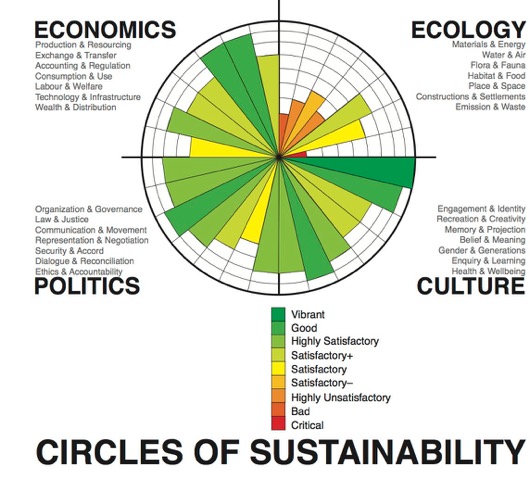
Framing of sustainable development progress according to the Circles of Sustainability, used by the United Nations. (Wikimedia, SaintGeorgeIV)

Citizen or third-party generated data complements what governments collect and fills potential gaps. The UN understands that measuring the new goals will be difficult and it must be open to all the help it can get, with the obvious proviso that the data is vetted and validated, just like officially-collected government data.

While statistical offices will lead on the data collection task, there are opportunities for a range of civil society actors to get involved. There is a shared responsibility for all stakeholders to ensure the right indicators are adopted, expanded and enhanced to provide real accountability on the development promises that world leaders will make in September 2015.

This piece originally appeared on Saferworld’s website and is reposted with the authors’ permission.

Top left image credit: Rdghalayini Wikimedia CC BY-SA

Note: This article gives the views of the author, and not the position of the Impact of Social Science blog, nor of the London School of Economics. Please review our Comments Policy if you have any concerns on posting a comment below.

About the Authors

Thomas Wheeler is Conflict and Security Advisor for Saferworld’s Policy Programme where he focuses on the role of rising powers in conflict-affected states, as well as the intersection between aid and conflict and the post-2015 Millenium Development Goals discussions. He previously worked on Saferworld’s China Programme, which examined China’s role in international arms transfers, China-Africa relations and Chinese economic cooperation with conflict-affected states. Thomas holds an MA in Conflict, Security and Development from the Department of War Studies, King’s College London.

Craig Fagan is Head of Policy for Transparency International. Craig joined TI from the Poverty Group of the United Nations Development Programme (UNDP) where he worked as Policy Research Analyst advising countries on issues such as civil society engagement, monitoring and evaluation and Millenium Development Goal-based initiatives. He has an undergraduate degree in International Studies/Spanish from the University of Richmond (Virginia) and a master’s in International Affairs/Development Economics from SAIS-Johns Hopkins University (Washington, DC).

Share this:

March 23rd, 2015|Big Data, Evidence-based Policy, Featured, Government, Impact|0 Comments

Posted in Information, Monitoring, Science | Leave a comment

Sustainable Tourism Policy for the Caribbean: Op-Ed Carib Journal

Tourism Policy and Sustainability in the Caribbean Region

March 20, 2015 | 5:54 pm | Print

sus

By Julio Orozco and Tevin Gall
Op-Ed Contributors

Regional policies with respect to Tourism development initially arose as a response to threats to tourism sustainability, which began to appear in the 1970’s as a result of the rapid global expansion of mass tourism.

In the Caribbean, these challenges manifested in the environmental and socio-cultural spheres, and were exacerbated by the region’s high level of vulnerability, often due to the risk of natural disasters, limited natural and human resources, fragile domestic markets and a high level of trade dependency, which created additional pressures to maintain the sustainability element in the region’s tourism practices.

Today, a number of tourism policies, specific to individual countries have been developed over the years to varying degrees of success: Barbados, Dominica, Belize, Costa-Rica, St Lucia and Trinidad and Tobago are among the countries, who, after consultation with numerous Ministries, Boards and relevant Regional and International Agencies have established sustainable tourism policies of their own.

One of the principal objectives of establishing a tourism policy is to guarantee and safeguard the effective standardisation of processes and practices within the respective tourism industry in which the policy is implemented.

This standardisation fosters uniformity and consensus regarding practices which can result in increased sustainability and an overall improvement in the quality of the tourism product.

Furthermore, an appropriate use of environmental and human resources should take place as a result of the implementation of a tourism policy.

As it relates to application and enforcement of Tourism policies, thorough assessment and analysis must take place in order to identify disparities and missteps, an essential step towards maintaining consensus.

It is this analysis which allows the development of a tourism policy that is specifically tailored to a territory or region, thereby addressing issues that are indigenous to the respective area targeted.

According to Lisa Shandilya, a hospitality professional of Trinidad and Tobago in an Article in the Trinidad Express, Nov. 14, 2014, “A tourism policy cannot be copied and adapted to a destination, especially if [said destination] is to offer a unique and identifiable product offering in a global market place.”

Shandilya criticises as archaic the model of governance that applies a “one-size-fits-all” tourism policy, adding that Tourism policies should be in flux to correspond to a changing market and economy. She also lists the advantages of having a focused tourism policy, explaining that such a policy is, in itself a clear plan of action seeking to identify destinations as targets not only for travel, but for cultural and commercial development, in order to attract investors and foster broad social and economic growth.

One of priority concerns in the drafting of sustainable tourism policies is to ensure the adequate involvement of the local community in tourism activity, to guarantee increased socio-economic benefits can be generated as it relates to increasing employment and entrepreneurship, creating opportunities for local businesses and preserving the local heritage and culture.

The ACS maintains a keen interest in this area and through its Directorate for Sustainable Tourism is currently engaged in the implementation of a project which focuses on strengthening entrepreneurship among women and enhancing handicraft production as part of efforts to promote diversification and enhancement of the tourism landscape.

This cross-cutting initiative which led to the establishment of a Regional Network of Artisans of the Greater Caribbean, also includes the development of a Regional policy, an endeavour which seeks to ensure continuity and also guarantee the sustainability of efforts in this regard.

Another initiative the Association is currently engaged in is the Training for Careers in Sustainable Tourism project, an initiative which is being implemented with the support of the French Development Agency (AFD). The project entails the commission a Comprehensive Research activity to develop a Publication that documents the current status, challenges, needs and priorities related to Technical and Vocational Education and Training (TVET) in Tourism.

The primary objective is to highlight the role of education and training to tourism competitiveness and sustainability, and create awareness among Regional Policy makers of its importance to the sector. Among its main outcomes, this project will facilitate the development of a Regional TVET Framework for the Tourism sector, which would support the implementation of future Professional Training and Capacity-building Programs, and thus contribute to strengthening the competencies and productivity of the Regions human resources.

Yet another advantage of a having a sustainable tourism policy is to facilitate government’s heightened involvement in the activities of the tourism sector. If policies are implemented, leading to decrees and laws being entered into force, the result should be an increased effectiveness and efficiency of tourism activities. It is with this understanding that the ACS, in collaboration with the National University of Colombia and the Colombia based Centre for Caribbean Thought, will be hosting a workshop on Components for the Creation of Public Policies for Sustainable Tourism Development on the Island of San Andrés from March 18 to 20 in San Andrés, Colombia.

The workshop is designed to inform the development of a Sustainable Tourism Policy for San Andrés, based on best practises and lessons learnt from other countries in the region, and guide next steps as the Colombian Government seeks to promote the island as a Global Tourism destination.

As the region seeks to maintain its status as the world’s leading tourism destination, it is important that all countries have a comprehensive, clear and effective public policy developed that is enforced and can inform its activities relative to the sustainable development of tourism.

Cognizant of the advantages of having a fully functional policy whether regional or territorial, it remains that its implementation can only serve to enhance the tourism activities of the Greater Caribbean, at both the local or regional levels.

Julio Orozco is the Director of Sustainable Tourism of the Association of Caribbean States and Tevin Gall is the Research Assistant of the Directorate of Sustainable Tourism.

Note: the opinions expressed in Caribbean Journal Op-Eds are those of the author and do not necessarily reflect the views of the Caribbean Journal.

EmailFacebookShare

Opinioncaribbean, caribbean news, opinion, policy, sustainability, tourism

RELATED STORIES

  1. 11 Things Caribbean Islands Need to Do
  2. The Early Days of Caribbean Aviation
  3. Rum Journal: Monkey Coconut Rum
  4. St Martin’s Beach Bar Island
  5. Talking With New St Kitts and Nevis Tourism Minister Lindsay Grant

MOST POPULAR

  1. The 25 Best Caribbean All-Inclusive Resorts – 2014
  2. The 10 Best All-Inclusive Resorts in Punta Cana
  3. 10 Timeless Caribbean Hotels
  4. The Best Caribbean Islands to Retire To
  5. The Caribbean’s 10 Best All-Inclusive Resorts For Weddings

« Previous
Next »

Posted in Governance, Tourism | Leave a comment

How can the Caribbean Claim to be a Center of Innovation for Cyberspace with These Bandwidths??

For example, look at “innovation leader” St. Vincent (by its own admission) with downloads ONE-QUARTER of the average speed in the EU:

Snapshot: update of actual Internet download speeds from across the Caribbean, March 2015

http://www.ict-pulse.com/2015/03/snapshot-update-actual-internet-download-speeds-caribbean-march-2015/
An update of actual Internet download speeds in 27 Caribbean countries and a comparison of results recorded in September 2014.

In May 2014, we launched a new Snapshot that presented actual (real life) upload and download speeds from across the Caribbean. In light of the dynamic nature of the Internet globally, and even in the Caribbean, the exercise was repeated in September. In this post, we update the actual Internet download speeds from across the Caribbean, and compare them with those recorded in September.

Methodology

The methodology that has been used for this assessment has remained the same. The data was drawn from Internet speed tests conducted by Ookla, a recognised provider of broadband testing and web-based network diagnostic applications. Using the results of its speed test applications, it is able to continuously track Internet speeds and performance globally.

Ookla has formulated two indices – a Household Upload Index and a Household Download Index – which compares and ranks consumer upload and download speeds worldwide, and represents them as a rolling mean speed in Megabits per second (Mbps) over the past 30 days. The results presented in the next section were recorded on 17 March 2015 for the countries listed in Table 1.

Table 1: List of countries examined for household download speeds as of 17 March 2015 (ICT Pulse)

Internet download speeds performance

Internet download speeds continue to vary considerably across the 27 Caribbean countries examined, as shown in Figure 1. The fastest download speed was recorded in Aruba, which was ranked 53rd out of the 198 countries assessed, at 18.53 Mbps, and was followed by the Puerto Rico at 14.66 Mbps, which was 65th on the list, and Trinidad and Tobago at 13.38 Mbps, which was 70th on the list. At the other end of the spectrum, the slowest download speeds were recorded in Cuba, 1.81 Mbps, which was 191st, and thereafter, Guyana, 2.69 Mbps and was ranked 182nd, and Belize, at 3.23 Mbps, and 174th out of 198 countries.

Figure 1: Mean household Internet download speeds in select Caribbean countries as of 17 March 2015 (Source: Ookla)

Globally, the fastest household Internet download speeds were recorded in Singapore (110.16 Mbps); Hong Kong (102.83 Mbps); and South Korea (78.73 Mbps), and the global average was 22.30 Mbps. The average download speed across the Caribbean countries examined was 8.62 Mbps, whilst those across other international country groupings, were as follows:

· APEC: 25.10 Mbps

· EU: 28.30 Mbps

· G8: 29.40 Mbps

· OECD: 28.10 Mbps.

What changes have occurred since September2014?

Over the past six months, there has been a net increase in household download speeds across the region. The average speed across the Caribbean rose by +0.9 Mbps, from 7.72 Mbps. Similarly, and across other groups of countries, the following change in speeds occurred:

· APEC: +2.60 Mbps

· EU: +1.80 Mbps

· G8: +2.60 Mbps

· OECD: +2.20 Mbps.

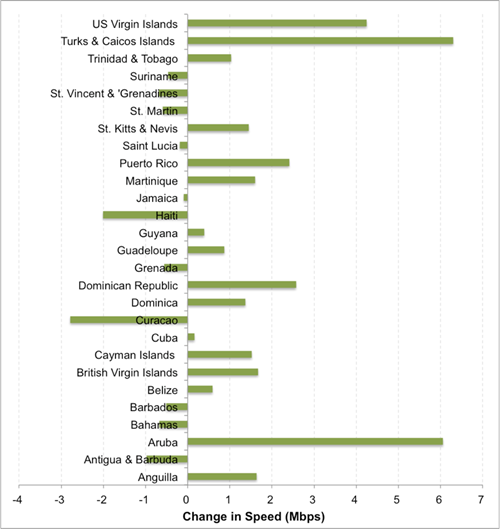
With regard to the changes in household download speed in individual Caribbean countries, they varied widely, as shown in Figure 2. The greatest increases in downloads speeds were recorded in the Turks and Caicos Islands, by +6.30 Mbps, and followed by Aruba, by +6.06 Mbps, and the Unites States Virgin Islands, by +4.25 Mbps.

Figure 2: Changes in download speeds in select Caribbean countries between September 2014 and March 2015 (Source: Ookla)

On the other hand, 11 countries recorded a decrease in their household download speeds. The top three were: Curacao, with a drop of -2.79 Mbps; Haiti, where the average download speed slowed by -2.01 Mbps; and Antigua and Barbuda, with a decrease of -0.98 Mbps.

With regard to country ranking in the global index, the 11 countries that recorded lower averaged download speeds, also slipped in the country ranking as reflected in Figure 3. However, two additional countries, the Cayman Islands and Guyana, also lost their earlier positions, though they both recorded increased download speeds. Also, Belize, which recorded an increase in download speed of 0.59 Mbps, was only able to maintain its May ranking, at 174.

Figure 3: Change in mean household download speed ranking between September 2014 and March 2015 in select Caribbean countries (Source: Ookla)

– See more at: http://www.ict-pulse.com/2015/03/snapshot-update-actual-internet-download-speeds-caribbean-march-2015/#sthash.hcup3aOL.dpuf

Posted in Media, Small Island | Leave a comment

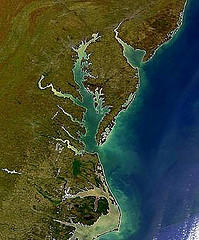
The Latest Strategies For Bay Clean-up

The article makes it seem that the only reason the Bay Program Strategy mentions climate change is because public comment was strong. Not too encouraging, coming as it does from the same people who failed the first 25 years.

from WYPR — public radio in Baltimore <http://news.wypr.org/post/latest-strategies-bay-clean?utm_source=Chesapeake+Bay+News&utm_campaign=eca3288ed6-Chesapeake_Bay_News4_23_2013&utm_medium=email&utm_term=0_71ced15df1-eca3288ed6-61676821>

The Latest Strategies For Bay Clean-up

By JOEL MCCORD 23 HOURS AGO
SHARETwitter Facebook Google+ Email


CREDIT UNIVERSITY OF MARYLAND CENTER FOR ENVIRONMENTAL SCIENCE VIA FLICKR

The Chesapeake Bay Program, that multi-state, multi-federal agency partnership working on bay restoration, released Monday the latest set of draft strategies to guide the next steps in restoring America’s largest estuary to the health it once enjoyed.

As expected, it includes calls for more effective management of blue crab harvests, protecting restored oyster reefs and getting better control of storm water run-off. But it also has some new wrinkles.

For the first time since the first Chesapeake Bay Agreement was inked in 1983, the document mentions climate change and the need to prepare low lying areas for the inevitable sea level rise that will come with it. Nick DiPasquale, head of the Chesapeake Bay Program, said the section was included because the topic came up repeatedly during public meetings with scientists and others.

The strategies also take into account existing healthy waters within the bay region.

“It’s the first time we’ve ever acknowledged that there are a lot of really great, clean places from New York to West Virginia to Pennsylvania and everywhere else in between,” said Mark Bryer, head of the Nature Conservancy’s Chesapeake Bay Program. “And we, collectively as a partnership, want to protect these places.”

The 25 management strategies are the next step under the Chesapeake Bay Watershed Agreement and will be open for public comment for the next 45 days. They should become final in July.

TAGS:

Posted in Uncategorized | Leave a comment

So If Miami Can’t Protect Corals When Everyone is Looking . . . . . ???

from Sunday NY Times: <http://www.nytimes.com/2015/03/08/us/despite-protections-miami-port-project-smothers-coral-reef-in-silt.html?ref=todayspaper>

Despite Protections, Miami Port Project Smothers Coral Reef in Silt

By LIZETTE ALVAREZ
MARCH 7, 2015

Photo

A barge at the Port of Miami is part of a dredging program that activists say is hurting coral.CreditRyan Stone for The New York Times Continue reading the main story

MIAMI — The government divers who plunged into the bay near the Port of Miami surfaced with bad news again and again: Large numbers of corals were either dead or dying, suffocated by sediment.

The source of the sediment, environmentalists say, is a $205 million dredging project, scheduled to end in July and intended to expand a shipping channel to make room for a new generation of supersize cargo ships.

The damage to the fragile corals was never supposed to have happened. In 2013, federal agencies created a plan to protect the animals from the churn of sand and rock by placing them at a distance from the dredge site. It was a strategy intended to balance Miami’s economic interests with the concerns of environmentalists, who worry about the rapid deterioration of reefs across South Florida

Crucial to the plan was safeguarding the staghorn coral, a variety listed under the federal Endangered Species Act. But the vast majority of staghorn in the area was never relocated: Either it was missed during the initial 2010 survey by contractors for the Army Corps of Engineers, or it had spawned just as work began in 2013.

Photo

Rachel Silverstein leads the main group suing over the damage.CreditPete Zuccarini

The corps, the agency in charge of the project, did relocate 924 other, nonendangered corals.

Florida and the Caribbean are rapidly losing their coral reefs, some of the most diverse ecosystems in the world, and the damage has raised intense criticism of how the Army Corps of Engineers has managed the project.

Environmentalists sued the corps in October, saying it violated the Endangered Species Act and the terms of a permit issued by the State Department of Environmental Protection.

“We’ve seen profound and severe impacts to our reef just off of Miami; it looks like a moonscape,” said Rachel Silverstein, the executive director of Biscayne Bay Waterkeeper, the lead environmental group bringing the lawsuit. “This damage stems from the fact that the corps and the contractors simply weren’t following the rules that were laid out for them when they started this project.”

Reefs around the world have experienced drastic declines as a result of pollution, acidification and overfishing. Higher ocean temperatures, which can bleach coral and kill it, have also damaged reefs. Some coral near the port suffered from bleaching last summer. In certain areas of South Florida, 90 percent of the coral is gone.

In Florida, coral reefs lure residents and tourists, who dive and snorkel to see their vivid colors and the tropical fish that they attract. Just as important, reefs serve as crucial wave buffers during tropical storms, protecting beaches and shoreline homes.

A report completed last month by the National Oceanic and Atmospheric Administration, which oversees endangered and threatened marine species, said 23 percent of the staghorn identified in the area by its divers in October was dead or dying. Another tract of nearby staghorn also appeared badly damaged but could not be fully surveyed.

The damage has prompted the corps and other federal agencies to dissect what went wrong, the extent of the harm and how best to avoid a repeat of similar problems.

Continue reading the main storyContinue reading the main story
Continue reading the main story

A speedy review is especially important, environmentalists said, because Broward County, just north of here, is hoping to expand its shipping channel at Port Everglades, one of the country’s biggest ports and an area with considerably more staghorn than Miami. Environmentalists said they feared those plans repeated some of the mistakes in the Port of Miami dredging.

“The Army Corps will really need to sit down and try to figure out what happened in this case so we can design some better responses in the future,” said David Bernhardt, NOAA’s division chief for protected resources in the southeast.

The corps said it was possible that the Miami corals had been affected by the dredging, but it called the effects of the program “short term.” The corps defended its actions and said it had continually reported its concerns and findings to federal and state oversight agencies.

“We are reporting all of these things,” said Susan J. Jackson, a spokeswoman for the Army Corps of Engineers.

The corps, she said, is abiding by the rules of the permit and increased its monitoring of the corals once it learned they were ailing. In addition, Ms. Jackson said, the corps has not been charged with any violations by enforcement agencies and has diligently worked to correct problems as they have arisen. Lessons, she said, are always learned.

“We’re a learning organization,” Ms. Jackson said, adding that the corps was already better prepared for the Port Everglades expansion. “We take the lessons learned and apply them, not only to projects under execution, but to our future planning for projects.”

The loss of coral near the Port of Miami is indisputable. Federal and state divers reported finding some colonies so buried by sediment that they were virtually invisible. The sediment, reports by several government agencies said, was having a “profound” and “long lasting” effect on many corals.

Because coral needs light to survive, the cloudiness of the water has also worsened conditions. Divers reported difficulty seeing beyond five feet.

Though the dredge being used protects the reef from scraping, it appears to have caused more sediment than anticipated.

“Everyone was feeling the sedimentation issues would really be minor, so it sounded reasonable,” Mr. Bernhardt of NOAA said.

Shortly before dredging began, the corps realized it had significantly undercounted the staghorn near the channel; there were at least 243 colonies, not 31. NOAA approved a plan to move the 38 corals closest to the dredge about 820 feet away from the channel.

Things got worse from there. Underwater monitors created to measure the sediment did not work. The corps relied on divers to keep weekly tabs on the coral. Additionally, barges used to move the dredged material to shore were spilling or leaking sediment into the water.

Federal and state environmental agencies both asked the corps to remedy the barge problems. In a December letter to the corps, the federal Environmental Protection Agency listed 49 violations. The state sent its own letters about violations. The corps responded that it would fix the problems but denied that they were violations.

Last summer, NOAA, alarmed by the field reports, recommended the immediate relocation of the staghorns. After a delay, the corps paid NOAA to do the job in October. But half the dives were aborted, in part because the dredge was over the reef, making conditions dangerous. Divers managed to collect tissue from 77 percent of 205 ailing corals, though some had vanished or died.

Whatever the cause, in this case local taxpayers will bear the cost of the damage, which will be determined after the project is completed.

“I’m not quite sure that county taxpayers fully understand that they are on the hook for paying for this,” Ms. Silverstein said.

A version of this article appears in print on March 8, 2015, on page A14 of the New York edition with the headline: Protections Fail Coral as Miami Port Project Smothers Reef in Silt.

RELATED COVERAGE

Order Reprints| Today’s Paper|Subscribe

NEXT IN U.S.

Posted in Beaches, Erosion & Sediment Control, Sand mining | Leave a comment

Tools You Can Use — or BUILD for Small Islands in the Caribbean

from The Guardian . . .<http://www.theguardian.com/global-development-professionals-network/2015/mar/03/mapping-environmental-protest-justice-defending-land?CMP=share_btn_tw>

Mapping the global battle to protect our planet

A new project maps environmental protest across the world, powerfully visualising a growing movement

The Atlas of Environmental Justice project tracks protests over natural resources. Photograph: EJAtlasLeah Temper in Barcelona
Leah Temper is the coordinator and co-editor at EJAtlas. Follow @EnvJustice on Twitter.
Tuesday 3 March 2015 10.08 EST

Shares

397

Comments

2

In 2012 protests erupted in Banja Luka, Bosnia and Herzegovina over the demolition of a much beloved local park to build a business complex. A movement under the slogan “This Park is Ours” aimed originally at protecting the green space soon broadened into a collective movement aimed against corruption, lack of transparency, economic inequality and dwindling social services. Hundreds of protesters from all social classes and religions gathered daily in the endangered park, becoming part of a Bosnian spring that came to represent a struggle for human dignity and accountability under most articulated civic movement since the 1992-1995 war.

From Banja Luka to Gezi Park, Turkey to Rosia Montana, Romania to the land wars across India, social conflicts are increasingly playing out through battles around environmental resources and in defence of common land.

global development professionals

Join the Guardian Global Development Professionals Network

Join up to access commentary and insight from development experts across the world.
Click here

These struggles have sometimes toppled governments, such as the coup in Madagascar in 2008 that brought “land-grabbing” to global attention when Daewoo was given a lease to grow food and biofuels for export on half the country’s land. But most of the time, the evictions, forced relocations and the violent repression of those impacted by contamination from gold mines, oil extraction, plantations and agribusinessoperations are rarely covered in the press. Ecological violence inflicted upon the poor is often not news but simply considered to be part of the costs of “business as usual”.

While statistics on strike action have been collected since the late 19th century for many countries and now globally by the International Labour Organisation, there is no one body that tracks the occurrence and frequency of mobilisations and protests related to the environment. It was this need to better understand and to track such contentious activity that motivated the Atlas of Environmental Justice project, an online interactive map that catalogues localised stories of resistance against damaging projects: from toxic waste sites to oil refining operations to areas of deforestation.

EJatlas aims to make ecological conflicts more visible and to highlight the structural impacts of economic activities on the most vulnerable populations. It serves as a reference for scientists, journalists, teachers and a virtual space for information, networking and knowledge sharing among activists, communities and concerned citizens.

The EJatlas was inspired by the work of participating Environmental Justice Organisations, such as Grain, the World Rainforest Movement and Oilwatch International, OCMAL, the Latin American Observatory of Mining Conflicts, whose work fighting and supporting impacted communities for 20-30 years now has helped articulate a global movement for environmental justice. The global atlas of environmental justice is an initiative of Ejolt, a European supported research project that brings together 23 organisations to catalogue and analyse ecological conflicts. The conflicts are entered by collaborating activists and researchers and moderated by a team at the Autonomous University of Barcelona.

At the moment the atlas documents 1,400 conflicts, with the ability to filter across over 100 fields describing the actors, the forms of mobilisation from blockades to referendums, impacts and outcomes. It resembles in many ways a medieval world map – while some regions have been mapped, others remain “blank spots” still to be filled. While much work remains to be done, the work so far offers several insights into the nature and shape of environmental resistance today.

Brazil drought: water rationing alone won’t save Sao Paulo

Read more

Firstly, it highlights how those on the frontlines of these struggles are often not environmentalists – they are communities defending their livelihoods, the right to participate in decision-making and recognition of their life projects. Nor it this, as governments and companies try to paint it, about a balance between development and conservation. It is rather about the meaning of development itself, who is sacrificed in the name of development and who decides. Pollution is not democratic, nor is it colour blind.

Secondly, it shows how the globalisation of the economy and material and financial flows is being followed by the globalisation of resistance. Mobilisations are increasingly interlinked across locations: anti-incineration activists make alliances with waste-picker movements to argue how through recycling they “cool down the earth”. Foil Vedanta, a group of activists fighting a bauxite mine on a sacred mountain in India, follow the company’s supply chain to Zambia, where they reveal Vedanta is evading tax and spark street protests there. Trans-nationally, new points of convergence unite movements working on issues from food sovereignty to land-grabbing, biofuels and climate justice.

From land grabs to anti union behaviour, businesses are increasingly being held accountable

Rolf Nieuwenkamp

Read more

This globalising of concerns has led to more civil society participation in multi-lateral governance, but the outcomes are often based on voluntary guidelines. While investor-state dispute settlement mechanisms such as those embedded in trade agreements such as the proposed TTIP EU-US trade agreement can allow corporations to sue states, there is no way to hold corporate abusers to account.The Chevron case, where the company has managed to evade a 9.5 billion euro fine imposed by the top Ecuadorean courts for devastating the Amazon is only one example of this challenge.

The evidence shows that “corporate social responsibility” is not a panacea and that until corporate accountability can be enforced, successful “cost-shifting” will remain a defining feature of doing business.

Shedding light on human rights: do businesses stand up to scrutiny?

Read more

Thirdly, the diversity of conflicts demonstrate that technical innovations and the greening of capitalism through “pricing nature” will not solve the environmental crisis. Biofuels, off-setting projects and even geo-engineering of the climate are leading to new conflicts as northern consumers occupy even more environmental space in the south – this time to absorb their atmospheric emissions. Naomi Klein has powerfully pointed out how looming climate chaos can only be addressed through a restructuring of the global economy, calling attention to inter-generational justice and the world we are leaving behind us. But the thousands of actually existing and localised struggles of environmental dispossession in the EJatlas are an even more potent call for the need for systemic change that addresses the unequal distribution of power and lack of democratic participation that are at the root of both social injustice and environmental degradation.

The danger such movements represent to powerful vested interests is attested to by the intensity of the violence and backlash wielded to repress them, with over 30% of cases shown on the map entailing arrests, killings, abuses and other forms of repression against activists. It is not an exaggeration in many countries to speak of a veritable “war against environmental defenders”.

Furthermore the number of violent conflicts is set to increase because the world’s remaining natural capital currently lies on or beneath lands occupied by indigenous and subsistence peoples. Communities who have nothing left to lose are willing to use increasingly contentious tactics to defend their way of life.

Beyond stories of disaster and degradation, the struggles documented in the atlas highlight how impacted communities are not helpless victims. These are not only defensive and reactionary battles but proactive struggles for common land, for energy and food sovereignty, for Buen Vivir, indigenous ways of life and for justice. The environment is increasingly a conduit for frustrations over the shape of capitalist development. Tracking these spaces of ecological resistance through the Environmental Justice Atlas highlights both the urgency and the potential of these movements to trigger broader transcendental movements that can confront asymmetrical power relations and move towards truly sustainable economic systems.

The up-to-date version of the atlas will be presented at the closing meeting of the Ejolt project in Brussels today where the project brings attention to the increasing persecution of environmental defenders and calls on European Unionpolicymakers and parliamentarians to integrate environmental justice concerns into their policy agenda and move towards reducing the current atmosphere of impunity for environmental crimes.

Leah Temper is the coordinator and co-editor at EJAtlas. Follow @EnvJustice on Twitter.

Join our community of development professionals and humanitarians. Follow@GuardianGDP on Twitter.

Posted in Uncategorized | Leave a comment