Chesapeake Region Featured in Site-Specific Non-Point-Source Pollution Control

Precision Conservation

September 9, 2013

Agriculture

site-iconconservationmagazine.org/2013/09/precision-conservation/

surgical-shovel.jpg

If we treat agricultural pollution with a scalpel instead of a hatchet, we might have a fighting chance of cutting the flow of fertilizers into rivers, lakes, and coastal waters.

By John Carey

When Katie Songer started cold-calling farmers in Wisconsin’s Pleasant Valley in 2008, she was the messenger for an uncomfortable truth. It wasn’t just that nutrient pollution from agriculture was choking rivers and lakes, causing harmful algal blooms and creating oxygen-free “dead” zones the size of small states along the nation’s coastline. The starker fact was that the more than $4 billion Congress had been typically spending each year on conservation in a series of Farm Bills was barely making a dent in the problem. In those federal programs, farmers receive payments for taking steps such as voluntarily restoring wetlands, setting aside land from cultivation, or adding buffer zones along streams. Since the early 1990s, farmers have restored more than 2 million acres of wetlands, put more than 31 million acres into conservation reserves (though often just temporarily), and built hundreds of thousands of miles of buffer strips. Yet toxic algal blooms have kept getting bigger and more frequent.

One of the main reasons, scientists realized, is that most of the nutrients flowing from fields and pastures come from a small percentage of farms—about 15 percent, some studies showed. And those farms usually are not the ones that implement programs under Farm Bill conservation provisions, which are strictly voluntary. “Sixty percent of landowners could sign up for conservation practices and accomplish exactly nothing,” says Rich Bowman, director of government relations for The Nature Conservancy in Michigan.

So researchers have begun to talk about a new approach, dubbed “precision conservation.” The basic idea: identify from which farms—and exactly where on each farm—nutrient pollution is coming, and then figure out how to stop the flow. Unlike Farm Bill programs, which are evaluated in terms of miles of buffer installed or acres enrolled in reserves, precision conservation’s effectiveness is measured in terms of the amount of nutrient pollution that actually enters water-ways. “The culture of these federal programs is that they are seen as more of a benefit to farmers than to the environment,” says Craig Cox, former executive director of the Soil and Water Conservation Society, who was among the first to use the term “precision conservation.” So there’s an urgent need to target the money on actual problems, he says.

Sounds great in theory. But making it work in the field requires a wholesale shift in farm policy. Instead of waiting for farmers to walk into the feds’ conservation offices, precision conservation requires experts to go out into the field to identify and fix spot problem areas—some as small as a few hundred square feet—where nutrient pollution pours into creeks and streams. Yet it’s not as impractical as it may seem. The idea has been getting a boost both from early trials and from new technologies that can help spot and eliminate pollution hotspots with surgical accuracy.

Katie Songer was part of a team conducting one of the first big tests of precision conservation on the ground. It was a project born in a tense clash between Wisconsin’s natural resource agency and the state’s farmers in the early 2000s.

Like most states, Wisconsin had a growing water pollution problem. Phosphorus and other nutrients pouring into creeks and streams were causing harmful algal blooms in rivers and lakes. The mounds of rotting Cladophora algae on the Lake Michigan beaches of Cleveland, Wisconsin, were so thick, for instance, that the town had to dig paths though the sludge with backhoes before boats could be launched for a fishing derby. Trying to tackle the worsening water quality in the state, the natural resource agency had asked the legislature to require all farmers to put 30-foot-wide buffer strips along streams to reduce nutrient runoff. No way, the farmers retorted.

Into the fray stepped Pete Nowak, professor of environ-mental studies at the University of Wisconsin, Madison, and a self-described “subversive conservationist.” Taking on sacred cows on both sides of the conflict, Nowak brought the warring farmers and government conservationists together—along with environmental groups and scientists—in a project called the Wisconsin Buffer Initiative (WBI). He snared a $629,000 three-year federal grant for the project. His team ranked the state’s 1,598 watersheds for pollution problems and quickly zeroed in on phosphorus runoff as a major problem. More important, the team suspected that most of the pollution from agricultural runoff was coming from as few as 10 to 15 percent of the farms. So Nowak recommended targeting just those farms with outreach, funding, and conservation measures.

Meanwhile, The Nature Conservancy had been looking to start a precision conservation project in southwest Wisconsin, in a departure from its normal focus on just buying, preserving, and restoring land. The group worked with Nowak and the WBI to pick two similar watersheds feeding into the Pecatonica River. Each had farm fields and pastures with the potential to dump high levels of phosphorus into its creeks and streams. Using leftover WBI money, Nowak brought in the U.S. Geological Survey to install nutrient pollution monitoring instruments in each watershed. Then The Nature Conservancy was able to raise more than $800,000 from the McKnight Foundation and the Monsanto Company for the effort; it also contributed countless hours of staff time.

The plan was to leave one watershed alone as a control. In the other, researchers would go from farm to farm to find the biggest sources of pollution, then figure out how to stop the flow. Contacting the 62 farmers in the Pleasant Valley watershed and convincing them to participate was the job handed to Katie Songer, then a graduate student at the University of Wisconsin.

The area, a pretty landscape of rolling hills and valleys, burbling creeks, well-manicured farms with red barns, and picturesque towns such as New Glarus, which bills itself as America’s Little Switzerland. Generations of farmers have raised dairy cattle and grown crops there. It’s not an easy living: many of today’s farmers work several jobs. Gary Baumgartner, 67, grows corn, soybeans, wheat, and alfalfa on 1,000 acres and also works full-time for a seed supplier. Scott Jelle, 45, raises beef on a farm that’s been in the family for 120 years—while also running a landscaping business and directing public works for New Glarus. These men, and their families and neighbors, say that they care deeply about the land and the environment. “It’s beautiful country and we want to try to keep it beautiful,” says Baumgartner.

But Songer was bringing them a disturbing message: some of the 62 farmers in Pleasant Valley were inadvertently polluting the creeks and streams with significant amounts of phosphorus and sediment. Not surprisingly, she recalls, she found the farmers “guarded” at first. “Us old farmers, we kind of got a mind of our own,” says Baumgartner. “When she called, we wondered, what are we getting into?” She had a few doors slammed in her face, says Nowak.

Once Songer got through the door, though, she earned their trust. “Katie was able to get into kitchen tables that some of the older fellows couldn’t,” says Dane County conservationist Pat Sutter. When the team got to work taking soil samples and observing the operations, the results confirmed the underlying premise of precision conservation. Ten of the 62 farms were the source of most of the phosphorus flowing into the creeks and streams. The team then approached those farmers carefully. “We wanted to avoid the typical agency approach that we’re from the government, you have a problem, and we’re here to help,” says Nowak. “One of the things that we have traditionally failed to do is capture the problem-solving capacity of farmers.”

Nine of the ten farmers eventually agreed to make changes—spurred by federal, state, and nonprofit dollars and by the chance to make their operations both more efficient and more environmentally sound. Some, like Jelle, became downright enthusiastic. On his farm, cattle tromping through Lee Valley Creek had been creating a muddy, manure-laden mess. Plus, rainwater flowing over the cattle’s feeding area had been carrying manure down into the creek. So Jelle and the conservation team fenced off the creek, except for two reinforced cattle crossings. They constructed a building up on a hill and surrounded it with concrete and gravel to create a place to feed the cattle. That kept manure away from the waterway.

The day after the fences went up, “the creek was so much clearer,” Jelle says. “It was an immediate good feeling.” The fencing also solved the problem of cattle getting stuck in the mud when calving, and it enabled him to rotate the animals among different pastures.

On Gary Baumgartner’s farm, the solution was to switch from traditional plowing to “no-till” agriculture (where the ground is left intact with the stalks of the previous crop) and to apply just the amount of fertilizer indicated by soil-sampling data. The new practices were an adjustment for Baumgartner and his son, Kevin. But the changes are paying off in less tractor fuel needed, lower costs for nutriments, and “a lot less runoff,” Baumgartner says. “It makes a tremendous difference.”

Not everyone was as responsive as Jelle and Baumgartner. When the project started, Paul Kittleson was totally opposed. He even tossed the government soil conservationist off his dairy farm. But then he saw how two of his upstream neighbors—and the stream that flowed from their farms–were benefiting from improvements on their land. And he knew that when the rains came, water flowed through his barnyard, washing manure through a culvert and into Kittleson Valley Creek. He agreed to put in a catch basin, a grass waterway, and a buffer strip, creating two collection points to trap the manure.

All told—and with the help of additional funding and staff time from USDA’s Natural Resources Conservation Service—the project converted 2,100 acres of cropland to no-till, installed eight barnyard-runoff systems, fenced off livestock from more than four miles of streams, and added 14 cattle crossings to the streams between 2010 and the end of 2012.

In the nearby Ridgeway Branch “control” watershed, in contrast, it was business as usual. A few farmers continued to participate in voluntary federal conservation programs, but there was no effort to pinpoint problem areas and concentrate resources on them.

Now the researchers will monitor whether the stream gauge at the exit to the Pleasant Valley watershed shows a significant drop in phosphorus and other pollutants, compared to the gauge at the “control” watershed. Given that the pollution readings vary tremendously depending on the weather (big storms bring spikes in runoff and pollution) and also reflect years of previous pollution, determining the ultimate successes of the precision conservation experiment will require several years of measurements.

Modeling by The Nature Conservancy, the USGS, and the University of Wisconsin suggests that the eventual effect should be dramatic—phosphorus levels should drop by 25 percent or more. “We’ve done a great job of targeting fields and pastures, so there’s a lot less runoff,” explains Steve Richter, The Nature Conservancy’s director of conservation for southwest Wisconsin. And the anecdotal evidence is striking. Already “there’s a big difference,” says Dane County’s Pat Sutter. Kittleson Valley Creek used to be murky where it merges with Pleasant Valley Creek. Now, the water runs clear. “We’ve taken some before-and-after photos that are staggering,” Sutter says.

If the project does succeed, it will be one of the first real victories in the fight to slow the nutrient-driven decline in the nation’s water quality. The hope is that the idea will spread, spurred by both new technology and the urgent need to do more with less money. “The whole world of conservation is changing as funding is drying up,” says Jeff Allenby, conservation planner at the Chesapeake Conservancy.

And that’s where precision conservation is intriguing, especially because it also dovetails with another trend sweeping across the farming community for economic reasons—precision agriculture. Using yield sensors, GPS- and autopilot-guided tractors, variable computer-controlled sprayers, and other technologies, farmers can apply just the needed amount of fertilizer and water to each small patch of field. “Precision agriculture is just taking off,” says Colorado State University soil scientist and founder of the International Society of Precision Agriculture, Rajiv Khosla. “It’s making our agriculture more productive, more efficient, more profitable, and more sustainable.” Surveys show that up to three-quarters of American farmers are now using at least some precision technologies, with gains in both productivity and environmental benefits.

Farmers used to think, for instance, that low yields on parts of their fields meant they should dump more nitrogen on those areas, says Ohio crop consultant Joe Nester. Dead wrong, the data have revealed. The low productivity is due to poor soils or other problems, not to lack of nitrogen. So the right tack is to use less nitrogen on those spots, leaving less to flow into streams. Similarly, consultants and farmers learned that applying phosphorus on frozen ground is an invitation to increased runoff—and a waste of valuable fertilizer. Nester has been working with farmers to change their practices, saving them up to $25 per acre in fertilizer costs. “The economically right thing to do is also the environmentally sound thing to do,” he says.

New technologies are also increasing farmers’ abilities to sense how plants are faring—and then to deliver the precise doses of water and nutrients that the crops require, says Khosla. Obviously, plants can’t tell you what they need. But illuminating plants with specific wavelengths of light, and then measuring the absorbance of the light and fluorescence that is induced, provides crucial clues about the crops’ health. The first such sensors worked well only in the dark. But one of Khosla’s experiments recently showed that sensors (made by the French company FORCE-A) using multiple wavelengths of light can provide a detailed assessment of plants’ health and needs—even in broad daylight. The results were so “unbelievable that I had my post-doc repeat the study,” Khosla says. Feed the information from such sensors, mounted on the front of a tractor, to the fertilizer sprayers on the back, and “farming by the foot becomes a reality,” he says.

Reducing fertilizer use is only part of the solution to the pollution problem, though. A lot of nutrient runoff occurs during heavy rains and other extreme weather events, which are becoming more frequent with climate change. So traditional, tried-and-true approaches—such as no-till farming; planting cover crops; and installing buffers, catch basins, and other structures or devices to slow the flow—are still vital. The trick is to put them precisely where needed.

That’s where high-resolution imagery from satellites and light detection and ranging (LIDAR) systems comes into play. The conventional wisdom used to be that steep hillsides were the source of most of the runoff into waterways. Wrong again. “It’s the flat areas where water builds up, where we get runoff,” explains Cornell University biological and environmental engineer Todd Walter. Map the topography and soil type of an area, and it’s possible to precisely chart the slight dips in those flat landscapes where most of the runoff occurs. That information may prove especially useful in the Chesapeake Bay area, where up to 60 percent of the bay’s nutrient pollution comes from headwater areas. Many of those headwaters are still unmapped for runoff flow, says the Chesapeake Conservancy’s Allenby, who coauthored a recent report on the role of technology in precision conservation.

The Chesapeake Conservancy is now using these technologies to map water flows and target pollution hotspots in the Nanticoke River watershed in Delaware and Maryland. Out in the field—using iPads to overlay contour lines, aerial photos, and exact GPS locations—the researchers identify low spots that may otherwise be hard to see. After taking pictures and uploading them to the master map, they can suggest remedial action—such as adding buffers or cover crops—to slow runoff across those low spots.

More tools are coming. Researchers at Intel, one of the high-tech companies that have been working with the Chesapeake Conservancy, are now developing sensors to measure nitrogen, phosphorus, and turbidity and then wirelessly transmit the data to researchers. The immediate challenge is to bring down the cost, now about $500 per device.

Of course, the best technology and intentions are of no help unless the underlying policies are supportive. The grand vision of the precision conservationists is to flip usual government practice on its head. Instead of paying for programs in general, pay only for results or for conservation approaches proven to work. It’s basically a government version of “Moneyball,” the baseball notion of fielding a team based on hard data, not hunches. And this reset is needed not just for farming, but also for everything from medical treatments to social programs. “Less than $1 out of every $100 of government spending is backed by even the most basic evidence that the money is being spent wisely,” argue the Obama administration’s former Office of Management and Budget director Peter Orszag and the George W. Bush administration’s former Domestic Policy Council director John Bridgeland in a recent Atlantic story. Improving on that ratio doesn’t seem like such a difficult target for precision conservation to hit.

Bruce PotterIsland Resources Foundation
<Irf>

Posted in Uncategorized | Leave a comment

Wonderful Old Tradition on the South River . . .

from the Baltimore Sun: <http://articles.baltimoresun.com/2012-09-21/news/bs-md-ancient-south-river-club-20120921_1_charter-members-cell-phones-settlers>

Old South River Club has met for more than 320 years

For more than 300 years, the Old South River Club has fostered “fellowship and fulsome discussion” and a social way of life

  • The Old South River Club, which dates back before 1700, claims to bethe oldest social club in America.

The Old South River Club, which dates back before 1700, claims… (Amy Davis, Baltimore Sun )

September 21, 2012|By Jonathan Pitts, The Baltimore Sun
It’s a sun-splashed morning in rolling southern Anne Arundel County, and a cluster of old oaks and maples make a fine canopy for the 25 gentlemen gathered at the cottage they see as a shrine.

Some wear seersucker blazers and boating shoes. Many sport neckties with their club’s logo — a British flag and an American flag, their staffs crossed. Their laughter echoes off the clubhouse, a bungalow built 34 years before the signing of the Declaration of Independence.


“We have an ancient tradition — it never rains on meeting day at the Old South River Club,” says Chris Wilson, a longtime member of the tiny Harwood society that calls itself “the oldest continuously operating social club in the English-speaking world.”

Wilson, 74, lives a mile or so down Solomons Island Roadicon1.png, where he owns Obligation Farm, a property King Charles II of England first granted to a family of supporters, the Stocketts, in 1666. A few decades later, a Stockett grandson helped found the Old South River Club to promote “fellowship and fulsome discussion” among the area’s English settlers.

Today, the inheritors of that tradition, many of them descended from charter members, still meet half a dozen times a year to feast on Southern Maryland delicacies, fill an ancient punch bowl and entertainicon1.png each other with ribbing, stories and song.

Like the old churches and plantation homes that dot the landscape, the Old South River Club is a remnant of a time long past. But it’s still thriving, membersicon1.png say, because it cultivates an element of life as basic today as it was to the pioneers: a need to connect with like-minded others amiably, regularly and face to face.

Meetings are “a time and place to turn off our cell phonesicon1.png, leave the world behind, forget about how the crops are doing or how someone’s trying to sue you,” says Wilson, who recently completed a two-year stint as club president. “It’s a delightful, enjoyable day. That is still a powerful draw.”

‘Oldest social club’

Head eight miles south of Annapolis on Route 2 past the fast-food joints and gas stationsicon1.png, then east at 343-year-old All Hallows Episcopal Church, and you’ll enter the South River Hundred, what settlers called the wooded area between the South, Rhode and Patuxent rivers near then-bustling London Town. (The term “hundred” dates to 11th-century England, where the Norman conquerors split the nation into units that could provide 100 soldiers apiece if needed.)

You’ll see it after a mile or so, a half-acre of ground surrounded by a post-and-rail fence. The highway marker out front reads: “ORGANIZED 1700; HOUSE BUILT 1742; THE OLDEST SOCIAL CLUB IN AMERICA.” The plain wooden clubhouse stands in the middle.

Old articles in the Maryland Gazette suggest the club was born as early as 1690, which is about when Tom Gassaway, a local landowner’s son, leased the property to the society for 80 pounds — for a total of 999 years. “We’re about a third of the way through [our term],” Wilson says jokingly. “We’d better start making plans.”

The club’s history had a kink in 1740, when a fire destroyed the original clubhouse, but members soon got the “new” one up and running. They’ve kept minutes of every meeting since, and the notes are a sketch of history.


The first settlers, according to the minutes, were mainly planters and merchants, with a few clerics and doctors thrown in — men determined to civilize a rugged land. Living miles apart on farms, they needed a place for sharing information and socializing. About 20 such men used London’s social clubs as models when they started the South River Club, eventually known as the Ancient or Old South River Club.

There was no charter, but traditions took root. The group met weekly, caught local game and cooked it in an open fireplace. They drank. (One bylaw forbade mixing liquor after 6 p.m.; 4 p.m. in the winter.) And though subjects differed from today’s, everyone talked.

“Crops, cattle and horses were ever present and important topics,” according to “The Ancient South River Club: A Brief History,” which four members wrote in 1952. So were “the gossip of the neighborhood, books and papers,” and “there were … stories to be told and jokes to be made.”

By 1800 or so, the group was holding four dinner meetings a year, as it does now. Members alternated as steward, the individual who prepares the dinner and gets it to the site. May’s event featured Maryland leg of lamb, July’s wild mallard, September’s fried chicken and November’s wild turkey. The club later added two “hunt breakfasts” per year.

It was exclusive for space reasons: The cottage could accommodate only 25 people, which in time became the limit on club membership. Any local male could apply, though the process heavily favored descendants of previous members. Surnames like Harwood, Stockett, Iglehart and Worthington recurred in the rolls.

Posted in Uncategorized | Leave a comment

Geekoid Tip for “Information Providers” — How to be (more) user friendly. . . . .

For the past month I’ve been taking a free MOOC (Massive Open Online Course — this course is “Data Driven Journalism” and it’s highly recommended — very likely to be offered again in both English and Spanish), presented by the Knight Center for Journalism in the Americas at the University of Texas at Austin.

I’ve learned a lot, but this tip might be especially significant for those of us who do reports that we want to format nicely on the one hand (so we publish them in PDF format), but where we ALSO want to give users the maximum access to and flexibility for potential users to extract, update, or correct the source documents in the future. For example, over the past five or six years, Island Resources has produced three island “Environmental Profiles” for islands in the British Virgin Islands. These reports include massive species lists of every plant or critter (well, every plant or critter in major defined groups). It takes a great deal of Judith Towle’s time and meticulous effort to get these tables to print neatly as PDFs. At the same time for dedicated birders or herpetologists it would be useful to be able to use these species lists as checklists for their own field activities or to cut and paste them into other works, but to do that efficiently they need access to the source .DOC/.DOCX or .XLS/.XLSX tables.

It turns out you can do that with Adobe Acrobat! There is a provision to attach source documents to a .PDF — and it’s simple to do . . . .

  • Generate your .PDF from any of the standard ways (SaveAs or PRINTing from Microsoft Office products is probably the most common way for most of us);
  • Open the new .PDF in Adobe Acrobat (note for US-based not-for-profit organizations — you can get a low-cost version of Acrobat from TechSoup.org);
  • Click on the paperclip at the bottom of the left margin of the Adobe Acrobat window;
  • Either:

1) Click on ADD in the attachment window and browse to the appropriate source document; or

2) Drag the appropriate source document(s) to the attachments window.

ProPublica has produced a short video showing how at <>

and for more advanced ideas about how to use this (but NO HELP about how to actually do the four steps above), the Adobe web site has an interesting short blog by their chief scientist, Jim King at <http://blogs.adobe.com/insidepdf/2010/11/pdf-file-attachments.html>

So the short message is PROMOTE ACCESS to DATA by ATTACHING SOURCE DOCUMENTS to your .PDF REPORTS.

Bruce

PS — apologies to all who knew this all along . . . .

Posted in Access, Dissemination | Leave a comment

University of Maryland Center for Environmental Studies: Sea Level Rise

from a press release about the latest state projections of Sea Level Rise thru 2100

http://www.umces.edu/sea-level

Sea Level Rise Projections for Maryland

Sea level along Maryland’s shorelines could rise 2 feet by 2050

Flooding in Annapolis from Hurricane IsabelA new report on sea level rise recommends that the State of Maryland should plan for a rise in sea level of as much as 2 feet by 2050. Led by the University of Maryland Center for Environmental Science, the report was prepared by a panel of scientific experts in response to Governor Martin O’Malley’s Executive Order on Climate Change and “Coast Smart” Construction. The projections are based on an assessment of the latest climate change science and federal guidelines.

“The State of Maryland is committed to taking the necessary actions to adapt to the rising sea and guard against the impacts of extreme storms,” said Governor Martin O’Malley. “In doing so, we must stay abreast of the latest climate science to ensure that we have a sound understanding of our vulnerability and are making informed decisions about how best to protect our land, infrastructure, and most importantly, the citizens of Maryland.”

The independent, scientific report recommends that is it is prudent to plan for sea level to be 2.1 feet higher in 2050 along Maryland’s shorelines than it was in 2000 in order to accommodate the high end of the range of the panel’s projections. Maryland has 3,100 miles of tidal shoreline and low-lying rural and urban lands that will be impacted. Maps of predicted sea level riseThe experts’ best estimate for the amount of sea-level rise in 2050 is 1.4 feet. It is unlikely to be less than 0.9 feet or greater than 2.1 feet. Their best estimate for sea level rise by 2100 is 3.7 feet. They concluded that it is unlikely to be less than 2.1 feet or more than 5.7 feet based on current scientific understanding.

“This reassessment narrows the probable range of sea level rise based on the latest science,” said Donald Boesch, president of the University of Maryland Center for Environmental Science and chair of the group of experts that assembled the report. “It provides the State with sea level rise projections based on best scientific understanding to ensure that infrastructure is sited and designed in a manner that will avoid or minimize future loss or damage.”

These estimates were made based on the various contributors to sea level rise: thermal expansion of ocean volume as a result of warming, the melting of glaciers and Greenland and Antarctic ice sheets, changing ocean dynamics such as the slowing of the Gulf Stream, and vertical land movement.

“While there is little we can do now to reduce the amount of sea-level rise by the middle of the century, steps taken over the next 30 years to control greenhouse gas emissions and stabilize global temperatures will largely determine how great the sea level rise challenge will be for coastal residents at the end of this century and beyond,” said Dr. Boesch.

According to Joseph P. Gill, Secretary of the Maryland Department of Natural Resources, impacts associated with sea level rise are already being seen along Maryland’s coast, such as the documented loss of islands within the Chesapeake Bay, as well as visible changes to wetland habitats all along Maryland’s low-lying eastern shore.

“Recognizing the importance of building resilience within our natural and built environments,” said Gill, “DNR’s CoastSmartCommunities Program is dedicated to offering on-the-ground expertise, planning guidance, training, tools, and financial assistance to help others in state plan, prepare and adapt.” For more information on CoastSmart, visit http://dnr.maryland.gov/CoastSmart/.

Governor O’Malley established the Maryland Commission on Climate Change on April 20, 2007. The Commission produced a Plan of Action that included a comprehensive climate change impact assessment, a greenhouse gas reduction strategy, and actions for reducing Maryland’s vulnerability to climate change. On December 28, 2012, Governor O’Malley issued an executive order that requires State agencies to consider the risk of coastal flooding and sea level rise to capital projects.

The 21-member panel comprised of sea-level rise experts from the Maryland, Virginia, Delaware, Pennsylvania, and New Jersey, reviewed projections from Maryland’s 2008 Climate Action Plan and provided updated recommendations based on new scientific results that can better inform projections of sea level rise for Maryland.
The Maryland Department of the Environment (MDE), working with the Federal Emergency Management Agency (FEMA), is updating Flood Insurance Rate Maps (FIRMs) for communities in Maryland. The revised maps are the first update in the coastal areas of Maryland in 25 years and confirm both increases and decreases in the 100-year flood elevations over this period of time.

“MDE is working with seventeen Maryland coastal communities to go through the mapping process, which requires the communities to update their local floodplain management ordinances before the revised maps become effective,” said Maryland Department of the Environment Secretary Robert M. Summers. “Many communities choose to better prepare themselves by adopting additional safety requirements for new or substantially improved structures, which could lead to reductions in flood insurance.”

Watch a video produced by Maryland Sea Grant that explores the reasons for sea level rise in Maryland and the conclusions of the expert panel’s report.

The University of Maryland Center for Environmental Science operates under a State mandate to conduct a comprehensive scientific program to develop and apply predictive ecology for the improvement and preservation of Maryland’s physical environment.

Updating Maryland’s Sea-level Rise Projections Report – June 26, 2013

Posted in Uncategorized | Leave a comment

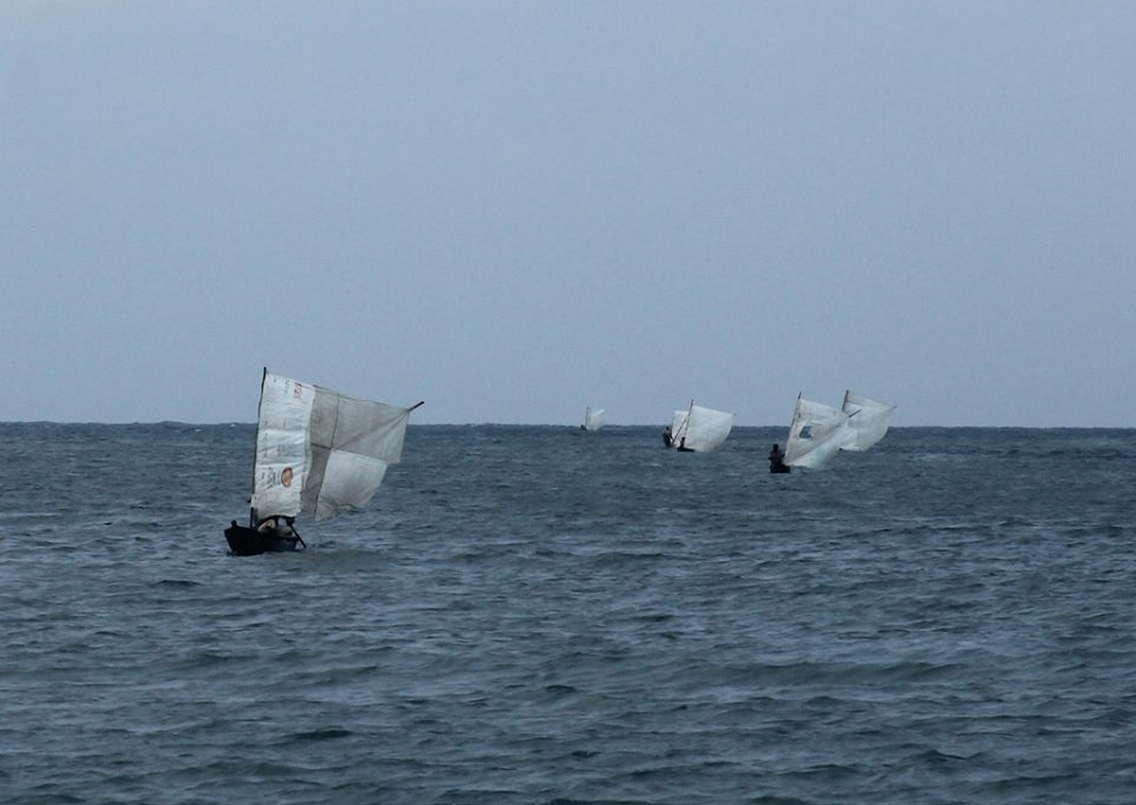
Sao Tomean Navy in full pursuit . . .

From the MARAPA (artisanal fisheries cooperative) Facebook pages — photo taken on a whale watching cruise organized by MARAPA.

bp

Posted in Uncategorized | Leave a comment

Learn Something New Friday . . . .

I don’t often enthuse over cookbook solutions to major strategic questions, but this article that Sean Southey recommended on his Facebook page makes a lot of sense for those of us involved in promoting change:

From Forbes magazine <http://www.forbes.com/sites/skollworldforum/2013/08/01/the-5-secrets-of-storytelling-for-social-change/>

ENTREPRENEURS
|
8/01/2013 @ 2:05PM |2,708 views

The 5 Secrets Of Storytelling For Social Change

b9ba80f52d87cefd0d1f2c3fdf040d94?s=40&r=pg&d=http%3A%2F%2Fb-i.forbesimg.com%2Fassets%2Fimages%2Favatars%2Fgeneric_profile_image_40.jpg
1 comments, 1 called-out
Comment NowFollow Comments

Editor’s Note: Jim Berk is Chief Executive Officer of Participant Media, a Los Angeles-based entertainment company that focuses on socially relevant, commercially viable feature films, documentaries and television, as well as publishing and digital media.

What we do is not new. There have always been socially relevant films that inspired us and spoke to the challenges of the time, movies that helped us understand important issues and thrust them into the zeitgeist—Hotel Rwanda, Norma Rae, Erin Brockovich, Gandhi. Films like this were and still are part of a studio’s slate, but what makes Participant unique is that socially relevant content is our entire focus.

Participant’s Founder Jeff Skoll believed that people, if inspired, and given the tools, would work to make the world a better place. Our strategy: to tell stories that illuminate the issues shaping our world and then invite the audience to become engaged.

Nine and a half years later, after 43 films, thousands of social action events, and, so far this year, over 15 million social actions completed through our digital platform, TakePart.com, we have empirical evidence that you can both entertain and accelerate positive social change. These learnings have happened over time. We have spent—and continue to spend—an inordinate amount of time working to understand what makes people get involved, what makes them interested in issues and how we can present the story in a way that is so meaningful that they raise their hand and say, ‘I want to do something. I have something to say.“

We have learned that lasting change occurs when people trust the source, believe they have the full story and make a personal connection. With this in mind we have refined five strategies to use entertainment to inspire and compel social change.

TELL A STORY & SHINE A LIGHT

It all starts with a good story. It’s how you establish an emotional connection. For us, the story is primary. Without this we will not move forward with a project, no matter how important the issue.

Within the context of a story you can integrate information, which not only make the story richer, but can also simplify a complex issue. Even though Contagion is a suspense thriller about a global pandemic, we grounded the story in scientific facts to do two things: add plausibility to the film’s premise and allow us to embed learning moments within the story.

If you want to get people to engage, you first have to get their interest.

Take an issue like climate change. The sheer volume of information and counter-information is overwhelming. Before An Inconvenient Truth was released, polls suggested that fewer than 30% of Americans believed global warming was a real issue. So our focus was to create a campaign that was an understandable distillation of an extremely complex issue and offer pathways for the audience to learn more and to take action. This approach also allowed us to continue the experience off the screen and take it into the community, the classroom and online. We created a downloadable curriculum that reached 180k educators in the United States. After the film’s release, six countries (England, Scotland, Czech Republic, New Zealand, Germany, Australia and Canada) incorporated the curriculum into their secondary schools.

COLLABORATE

We like to say that saving the world is a team sport. Partners are not just additive; they are essential and create an exponential effect. With our film Food Inc., we set out to pull back the screen of misinformation and misdirection and educate people about how agribusiness and our current food policy affect them. We also formed a coalition of over 100 partners to provide real-world actions people could take to make informed choices about their diet and nutrition. We distributed a curriculum to over 17,000 classrooms. In addition, 3000 high schools received discussion guides and DVD’s to continue the conversation. We still talk weekly to over half a million people in our food community on TakePart.com about issues related to the food industry.

With our documentary Waiting for “Superman, we worked with over 200 organizations who care deeply about the issue of education in America, but did not necessarily agree on a single set of solutions. But that’s ok. To us, part of media literacy is insuring that all sides of the issue are represented. We used the film as a way for everyone to work together to propel education into the national conversation. In the end, our mission isn’t to get people to think a certain way, it’s to get them to just think!

EMPOWER INVOLVEMENT

With Countdown to Zero we targeted seven key states where Senators were unsure how they were going to vote to ratify the New Start Treaty. Their vote was the difference between passage and failure. Because they were given a specific action that spoke to a moment of decision and a tangible positive impact, people responded.

A Place at The Table examines the issue of hunger in America through the stories of three food-insecure individuals. The film was a way to introduce the fact that nearly 50 million Americans go to bed either hungry or not sure where their next meal is coming from. We knew we had to articulate disturbing information, much of which most people were unaware. So with a consortium of non-profits we co-created common messaging to demystify the stigmas around SNAP, designed and launched a national action center where anyone in the country could access both local and national resources to help themselves or to help others, and hosted community screenings across the country to facilitate conversations around this issue. Our goal? To help communities address food insecurity in their local markets.

The Visitor told the story of how many detainees have no access to representation at deportation hearings. Upon researching the issue, we found there was no database of case studies for lawyers to cite when representing a client. With law firm O’Melveny & Myers, we created a program to train lawyers to provide pro-bono representation, and with several non-profits created a national database of cases for lawyers to use for precedence research. To date we have trained over 250 lawyers.

SPEAK TO YOUR AUDIENCE

Sometimes the source material is so expansive that you have to research what your audience really knows and where you might have the biggest impact. With Lincoln we conducted original research to inform the focus of our education and action outreach. The findings told us that more than half of Americans think that Lincoln is one of our best Presidents, which is not necessarily surprising, but two-thirds said they knew little or nothing about the 16th President’s accomplishments. This information guided our decision to reach out to schools as the conduit to the younger generation. Working with our partners we created a discussion guide and provided both the DVD and curriculum to all 37,000 middle and high schools in the country.

Through feature films and the accompanying social action campaigns we have been able to tell stories in a big way, garner a great deal of media attention around issues and engage a large audience. This is why they will always be a core part of our business. However, films don’t allow us to continuously talk to our audience. This is what has fueled the creation of Pivot, our new socially minded television network for Millennials that launches in over 40 million homes on August 1st.

But again, before we went forward, we set out to understand the television marketplace and our audience and how they view content and process information. Most people are familiar with the demographic of Millennials, whom we like to call, ‘The New Greatest Generation’. They are now the largest and arguably most influential generation, but also the hardest to reach.

These 18-34 year olds are being shaped by both crisis and opportunity, 9/11, climate change and safety concerns—while in many cases still being supported by their parents. Millennials define success differently than other generations. When it comes to television, movies and all things media, they are looking for authentic, transparent, independent sources of information they can trust.

BE AUTHENTIC AND TRANSPARENT

Just as Participant is unique in its approach to the film business, Pivot will endeavor to be unique as well. What makes Pivot unlike any other channel is its unprecedented commitment to integrating media literacy into every element of the channel. We want our audience to be aware of and learn to consider the sources of information and media they consume, recognize their role as a source when producing or sharing content, and explore the trade-offs inherent in giving up personal information online. Working with organizations like the National Association for Media Literacy Education (NAMLE), we are creating an on-going flow of programming specifically designed to inform, educate and inspire interest in this area. Pivot will also have a dedicated digital presence designed to expand the network’s initiative around consumption of news and information and sharing and production of content.

Simply, Pivot will integrate media literacy into the channel in ways not seen before in television—not only because it’s the right thing to do, but also because it serves our enlightened self interest. It’s not just storytelling that creates engagement and social impact; it’s understanding the information within the story and believing the source. This is why media literacy is so important to us.

If we get this right we can help empower millions of people to work towards a world of peace and sustainability. So the stakes are high.

Edward R. Murrow said it best: ‘There is a great and perhaps decisive battle to be fought against ignorance, intolerance and indifference.’

Posted in Uncategorized | Leave a comment

The Local Government Ponzi Experiment — Vacation Reading, before you get back to that Spy Novel

Not sure I buy into “Strong Towns'” prescription (haven’t looked at the actual data, but there are several links at the bottom of this article), but their diagnosis is confirmed by a lot of our own experiences and observations, and I wish more local government planners, policy makers, and managers realized how unsustainable current “growth-to-infinity development” models really are.

from <http://www.strongtowns.org/the-growth-ponzi-scheme/>

The Growth Ponzi Scheme

This article originally appeared in Grist. It is available at no charge for non-commercial reprinting. Please credit Strong Towns and link back to our site at www.strongtowns.org.

We often forget that the American pattern of suburban development is an experiment, one that has never been tried anywhere before. We assume it is the natural order because it is what we see all around us. But our own history — let alone a tour of other parts of the world — reveals a different reality. Across cultures, over thousands of years, people have traditionally built places scaled to the individual. It is only the last two generations that we have scaled places to the automobile.

How is our experiment working?

At Strong Towns, the nonprofit, nonpartisan organization I cofounded in 2009, we are most interested in understanding the intersection between local finance and land use. How does the design of our places impact their financial success or failure?

What we have found is that the underlying financing mechanisms of the suburban era — our post-World War II pattern of development — operates like a classic Ponzi scheme, with ever-increasing rates of growth necessary to sustain long-term liabilities.

Since the end of World War II, our cities and towns have experienced growth using three primary mechanisms:

  1. Transfer payments between governments: where the federal or state government makes a direct investment in growth at the local level, such as funding a water or sewer system expansion.
  2. Transportation spending: where transportation infrastructure is used to improve access to a site that can then be developed.
  3. Public and private-sector debt: where cities, developers, companies, and individuals take on debt as part of the development process, whether during construction or through the assumption of a mortgage.

In each of these mechanisms, the local unit of government benefits from the enhanced revenues associated with new growth. But it also typically assumes the long-term liability for maintaining the new infrastructure. This exchange — a near-term cash advantage for a long-term financial obligation — is one element of a Ponzi scheme.

The other is the realization that the revenue collected does not come near to covering the costs of maintaining the infrastructure. In America, we have a ticking time bomb of unfunded liability for infrastructure maintenance. The American Society of Civil Engineers (ASCE) estimates the cost at $5 trillion — but that’s just for major infrastructure, not the minor streets, curbs, walks, and pipes that serve our homes.

The reason we have this gap is because the public yield from the suburban development pattern — the amount of tax revenue obtained per increment of liability assumed — is ridiculously low. Over a life cycle, a city frequently receives just a dime or two of revenue for each dollar of liability. The engineering profession will argue, as ASCE does, that we’re simply not making the investments necessary to maintain this infrastructure. This is nonsense. We’ve simply built in a way that is not financially productive.

We’ve done this because, as with any Ponzi scheme, new growth provides the illusion of prosperity. In the near term, revenue grows, while the corresponding maintenance obligations — which are not counted on the public balance sheet — are a generation away.

In the late 1970s and early 1980s, we completed one life cycle of the suburban experiment, and at the same time, growth in America slowed. There were many reasons involved, but one significant factor was that our suburban cities were now starting to experience cash outflows for infrastructure maintenance. We’d reached the “long term,” and the end of easy money.

It took us a while to work through what to do, but we ultimately decided to go “all in” using leverage. In the second life cycle of the suburban experiment, we financed new growth by borrowing staggering sums of money, both in the public and private sectors. By the time we crossed into the third life cycle and flamed out in the foreclosure crisis, our financing mechanisms had, out of necessity, become exotic, even predatory.

One of humanity’s greatest strengths — our ability to innovate solutions to complex problems — can be a detriment when we misdiagnose the problem. Our problem was not, and is not, a lack of growth. Our problem is 60 years of unproductive growth — growth that has buried us in financial liabilities. The American pattern of development does not create real wealth. It creates the illusion of wealth. Today we are in the process of seeing that illusion destroyed, and with it the prosperity we have come to take for granted.

That is now our greatest immediate challenge. We’ve actually embedded this experiment of suburbanization into our collective psyche as the “American dream,” a non-negotiable way of life that must be maintained at all costs. What will we throw away trying to sustain the unsustainable? How much of our dwindling wealth will be poured into propping up this experiment gone awry?

We need to end our investments in the suburban pattern of development, along with the multitude of direct and indirect subsidies that make it all possible. Further, we need to intentionally return to our traditional pattern of development, one based on creating neighborhoods of value, scaled to actual people. When we do this, we will inevitably rediscover our traditional values of prudence and thrift as well as the value of community and place.

The way we achieve real, enduring prosperity is by building an America full of what we call Strong Towns.

This article is a summary of a larger series on the Growth Ponzi Scheme. The complete series can be read by following these links:

Reprints of this article and other coverage/discussion of the Growth Ponzi Scheme:

Posted in Governance, Uncategorized | Leave a comment

That’s the Problem with this Planet: Nature’s Hassles . . .

from a catalogue cover:

Posted in Uncategorized | Leave a comment

Hovnanian to Sell Underwater Lots . . . .

Well, not exactly, but before you buy one of these 1000+ houses proposed for the mouth of the Chester River, you might want to check predictions for sea level rise in this part of the Bay — it’s big!

from the Chesapeake Bay Daily of the Chesapeake Bay Foundation <http://cbf.typepad.com/bay_daily/2013/08/what-do-you-see-in-this-picture-the-blue-waters-of-the-mouth-of-the-chester-river-as-it-flows-into-the-chesapeake-bay-a.html#more>:

Pictures Show Chesapeake Bay Waterfront Threatened by New Jersey Developer

Four seasons development siteWhat do you see in this picture? The blue waters of the mouth of the Chester River, as it flows into the Chesapeake Bay. A scenic shoreline on Kent Island, with a tree casting a shadow beside a farm field. Clouds drifting peacefully overhead.

Here’s what you don’t see: 1,079 houses and condominiums that New Jersey-based developer Hovnanian Enterprises is proposing to build right here, blacktopping much of this waterfront scenery.

This photo –- and the massive Four Seasons housing project planned here, north of Route 50 in Stevensville, Maryland — is an illustration of weaknesses in Maryland’s environmental and land-use laws. The development may be one of the largest ever built within 1,000 feet of the Chesapeake Bay since the 1984 passage of Maryland’s landmark Critical Areas law, which is supposed to protect waterfront areas.

Four seasons planEconomic development is great, but it should be well planned. And there is no need for a massive construction project like this in fields right on the banks of the Chesapeake Bay. Kent Island is already overwhelmed with residential development and traffic problems, and the waterfront land here is vulnerable to flooding and sea level rise.

On July 24, the Maryland Board of Public Works (made up of Governor Martin O’Malley; Comptroller Peter Franchot; and Treasurer Nancy Kopp) decided not to act on the developer’s request for a state license to destroy wetlands on the 425-acre development site. (The plans for the site are shown at left)

Jay Falstad, Executive Director of the Queen Anne’s Conservation Association (below), shook his head in disgust as he looked out on the fields threatened by the project on a recent morning. “It is our view that putting in this type of development -– to this size and scale -– on the waters of the Chester and the Chesapeake makes no sense,” Falstad said.

“Hopefully, the legislature -– and certainly the governor, the comptroller and the treasurer -– will find a way…to deny the wetlands license and prevent this monstrosity from occurring.”

Jay Falstad at Four Seasons siteThe state board’s decision last week sent the project back down to the Queen Anne’s County government, which approved a controversial development agreement for the project more than a decade ago. The county must now consider a land preservation easement for part of the land that the builders say they will protect as a park. And the local government may also consider amending the development agreement to add additional environmental protections.

Some conservationists believe the county should now go back to the drawing board and reconsider – and hold more public hearings and votes on – the whole project. The developers maintain such a new round of local approvals and hearings will not be necessary.

Four seasons site 3The best resolution now could be to have the state and perhaps partners step in and buy the land, turning it into a public park or wildlife preserve.

The immediate picture is the snapshot at the top of this story: Beautiful waterfront property threatened with yet more ugly suburban sprawl.

But the bigger question is about control over development decisions. Yes, local governments deserve some control over land use within their boundaries. But huge projects such as the Four Seasons can cause harm far beyond municipal boundaries –- including to traffic on state and federal roads, and runoff pollution that flows downstream to contaminate the Chesapeake Bay and other bodies of water.

Four seaons site 4These issues transcend local political boundaries. And so control over projects like this should include more authority for state governments that can step back and take a more global view. The question should be: What’s in the best interests of everybody, not just the best interest of a few developers and local supporters interested in short-term cash.

We all have a stake in a healthy Chesapeake Bay. And so we should all raise our voices to oppose poorly-conceived projects like the Four Seasons.

By Tom Pelton

Chesapeake Bay Foundation

Also keep in mind Hovnanian’s reputation for environmental compliance (NOT), as illustrated by this selection from the first page of a Google search on “Hovnanian” and “fines.”

  1. Hovnanian Enterprises, Inc. Settlement Information Sheet | Civil

    www.epa.gov/compliance/resources/cases/civil/cwa/hovnanian.html‎

    Jump to Civil Penalty – As part of the settlement, Hovnanian has agreed to pay a total civil penalty of $1 million to the United States, the District of Columbia

  2. Hovnanian Enterprises and PulteGroup, Inc. Settle Clean Water Act

    yosemite.epa.gov/opa/…nsf/0/7625F14D264560B285257B2600764688

    Mar 6, 2013 – (PHILADELPHIA – March 6, 2013) Hovnanian Enterprises, Inc. and PulteGroup, Inc. have agreed to pay civil penalties of $130,000 and $56,000

  3. DOCUMENT: U.S. EPA fines Hovnanian for runoff water

    www.morningjournal.com/articles/2010/04/22/news/mj2633641.txt

    Apr 22, 2010 – The Morning Journal is your source for all Northeast Ohio 24-hour breaking news, local news, sports, entertainment and more. View daily

  4. Homebuilders to Pay $186K in EPA Case : Durability + Design News

    www.durabilityanddesign.com/news/?fuseaction=view&id=9275

    Mar 11, 2013 – Founded in 1959, Hovnanian operates in 17 states. The company has agreed to settle EPA’s allegations with a $130,000 penalty and other

  5. Hovnanian Fined For EPA Violations – Two River Times

    www.trtnj.com/issues/100430/news4.php

    Hovnanian Fined For EPA Violations. By John Burton. Hovnanian Enterprises, Inc., one of the largest homebuilders in the country, and headquartered in Red

  6. Feds fine top home company $1 million – Severn River Association

    severnriver.org/press/fedsfinetop.htm‎

    Apr 22, 2010 – Hovnanian Enterprises must pay a $1 million fine and improve its stormwater controls at construction sites as a result of a consent decree

  7. [PDF]

    Stormwater Pollution Prevention.pdf – K. Hovnanian® Homes

    images.khov.com/…/Stormwater%20Pollution%20Prevention.pdf

    Mar 25, 2010 – working at a. K. Hovnanian site in regard to stormwater compliance. Potential fines are very large; as much as $36,000 per violation, per

  8. Water Pollution | Builder to pay $1 million for pollution violations

    articles.baltimoresun.com/…/bs-gr-hovnanian-stormwater-20100421_1_…‎

    EPA settles with Hovnanian over projects in Md., 17 other states. April 21, 2010|By Timothy B. EPA fines city, counties for pollution violations. October 29, 2010.

  9. Eastern Shore homebuilder investigated for storm water runoff | The

    www.publicintegrity.org › … › Maryland

    Aug 20, 2008 – Hovnanian, which has been fighting for almost a decade to The policy change left builders open to investigation and large fines, and they are

Posted in Uncategorized | Leave a comment

IPCC Study by Stanford U Professor Says Pace of Climage Change is Very High

from a Stanford University press release. . . . . <http://news.stanford.edu/news/2013/august/climate-change-speed-080113.html>

Print
Stanford Report, August 1, 2013

Climate change on pace to occur 10 times faster than any change recorded in past 65 million years, Stanford scientists say

Not only is the planet undergoing one of the largest climate changes in the past 65 million years, Stanford climate scientists Noah Diffenbaugh and Chris Field report that it’s on pace to occur at a rate 10 times faster than any change in that period. Without intervention, this extreme pace could lead to a 5-6 degree Celsius spike in annual temperatures by the end of the century.

BY BJORN CAREY

Courtesy of Stanford UniversityTwo 'heat maps' depicting aspects of climate changeThe top map shows global temperatures in the late 21st century, based on current warming trends. The bottom map illustrates the velocity of climate change, or how far species in any given area will need to migrate by the end of the 21st century to experience climate similar to present. (Click image to enlarge)

The planet is undergoing one of the largest changes in climate since the dinosaurs went extinct. But what might be even more troubling for humans, plants and animals is the speed of the change. Stanford climate scientists warn that the likely rate of change over the next century will be at least 10 times quicker than any climate shift in the past 65 million years.

If the trend continues at its current rapid pace, it will place significant stress on terrestrial ecosystems around the world, and many species will need to make behavioral, evolutionary or geographic adaptations to survive.

Although some of the changes the planet will experience in the next few decades are already “baked into the system,” how different the climate looks at the end of the 21st century will depend largely on how humans respond.

The findings come from a review of climate research by Noah Diffenbaugh, an associate professor of environmental Earth system science, and Chris Field, a professor of biology and of environmental Earth system science and the director of the Department of Global Ecology at the Carnegie Institution. The work is part of a special report on climate change in the current issue ofScience.

Diffenbaugh and Field, both senior fellows at the Stanford Woods Institute for the Environment, conducted the targeted but broad review of scientific literature on aspects of climate change that can affect ecosystems, and investigated how recent observations and projections for the next century compare to past events in Earth’s history.

For instance, the planet experienced a 5 degree Celsius hike in temperature 20,000 years ago, as Earth emerged from the last ice age. This is a change comparable to the high-end of the projections for warming over the 20th and 21st centuries.

The geologic record shows that, 20,000 years ago, as the ice sheet that covered much of North America receded northward, plants and animals recolonized areas that had been under ice. As the climate continued to warm, those plants and animals moved northward, to cooler climes.

“We know from past changes that ecosystems have responded to a few degrees of global temperature change over thousands of years,” said Diffenbaugh. “But the unprecedented trajectory that we’re on now is forcing that change to occur over decades. That’s orders of magnitude faster, and we’re already seeing that some species are challenged by that rate of change.”

Some of the strongest evidence for how the global climate system responds to high levels of carbon dioxide comes from paleoclimate studies. Fifty-five million years ago, carbon dioxide in the atmosphere was elevated to a level comparable to today. The Arctic Ocean did not have ice in the summer, and nearby land was warm enough to support alligators and palm trees.

“There are two key differences for ecosystems in the coming decades compared with the geologic past,” Diffenbaugh said. “One is the rapid pace of modern climate change. The other is that today there are multiple human stressors that were not present 55 million years ago, such as urbanization and air and water pollution.”

Record-setting heat

Diffenbaugh and Field also reviewed results from two-dozen climate models to describe possible climate outcomes from present day to the end of the century. In general, extreme weather events, such as heat waves and heavy rainfall, are expected to become more severe and more frequent.

For example, the researchers note that, with continued emissions of greenhouse gases at the high end of the scenarios, annual temperatures over North America, Europe and East Asia will increase 2-4 degrees C by 2046-2065. With that amount of warming, the hottest summer of the last 20 years is expected to occur every other year, or even more frequently.

By the end of the century, should the current emissions of greenhouse gases remain unchecked, temperatures over the northern hemisphere will tip 5-6 degrees C warmer than today’s averages. In this case, the hottest summer of the last 20 years becomes the new annual norm.

“It’s not easy to intuit the exact impact from annual temperatures warming by 6 C,” Diffenbaugh said. “But this would present a novel climate for most land areas. Given the impacts those kinds of seasons currently have on terrestrial forests, agriculture and human health, we’ll likely see substantial stress from severely hot conditions.”

The scientists also projected the velocity of climate change, defined as the distance per year that species of plants and animals would need to migrate to live in annual temperatures similar to current conditions. Around the world, including much of the United States, species face needing to move toward the poles or higher in the mountains by at least one kilometer per year. Many parts of the world face much larger changes.

The human element

Some climate changes will be unavoidable, because humans have already emitted greenhouse gases into the atmosphere, and the atmosphere and oceans have already been heated.

“There is already some inertia in place,” Diffenbaugh said. “If every new power plant or factory in the world produced zero emissions, we’d still see impact from the existing infrastructure, and from gases already released.”

The more dramatic changes that could occur by the end of the century, however, are not written in stone. There are many human variables at play that could slow the pace and magnitude of change – or accelerate it.

Consider the 2.5 billion people who lack access to modern energy resources. This energy poverty means they lack fundamental benefits for illumination, cooking and transportation, and they’re more susceptible to extreme weather disasters. Increased energy access will improve their quality of life – and in some cases their chances of survival – but will increase global energy consumption and possibly hasten warming.

Diffenbaugh said that the range of climate projections offered in the report can inform decision-makers about the risks that different levels of climate change pose for ecosystems.

“There’s no question that a climate in which every summer is hotter than the hottest of the last 20 years poses real risks for ecosystems across the globe,” Diffenbaugh said. “However, there are opportunities to decrease those risks, while also ensuring access to the benefits of energy consumption.”

Posted in Uncategorized | Leave a comment