Tom Horton’s Growing, Growing Gone Article

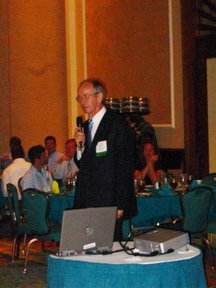
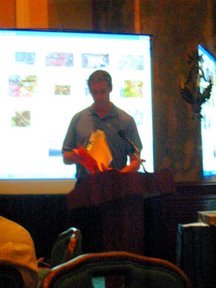
In our local area, retired Baltimore Sun columnist, Tom Horton is one of the few opinion leaders who is willing to take on questions of economic and population growth as fundamental drivers of pollution and environmental degradation. We had the pleasure of hearing Tom speak last week and he was handing out this copy of his article, appended below.

For more general (up to the global level) information about this issue, search for links to the “Steady State Economy,” or start with the CASSE web site at http://steadystate.org/

from that page:

Perpetual economic growth is neither possible nor desirable. Growth, especially in wealthy nations, is already causing more problems than it solves.

Recession isn’t sustainable or healthy either. The positive, sustainable alternative is a steady state economy. Learn More >>

“Growth for the sake of yet more growth is a bankrupt and eventually lethal idea. CASSE is the David fighting the Goliath of endless expansion, and we know how that one turned out.”~ David Orr

Posted in Uncategorized | Leave a comment

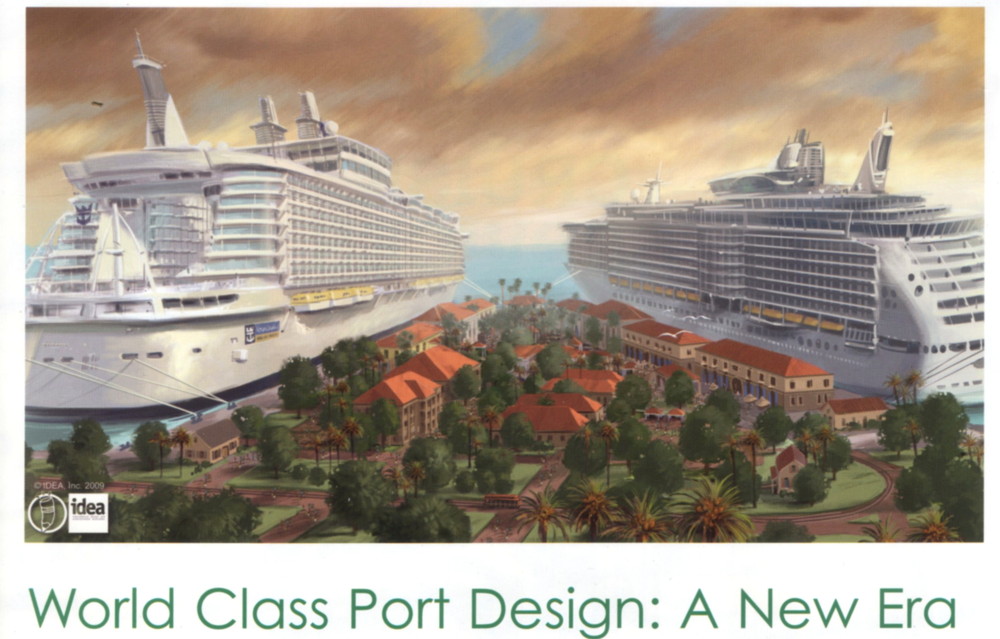
Our Goal is to Preserve the Human Scale of the Cruise Experience

World_class_port_design_cruzma
Posted in Uncategorized | Leave a comment

C. Hofberger Killing Rain Garden

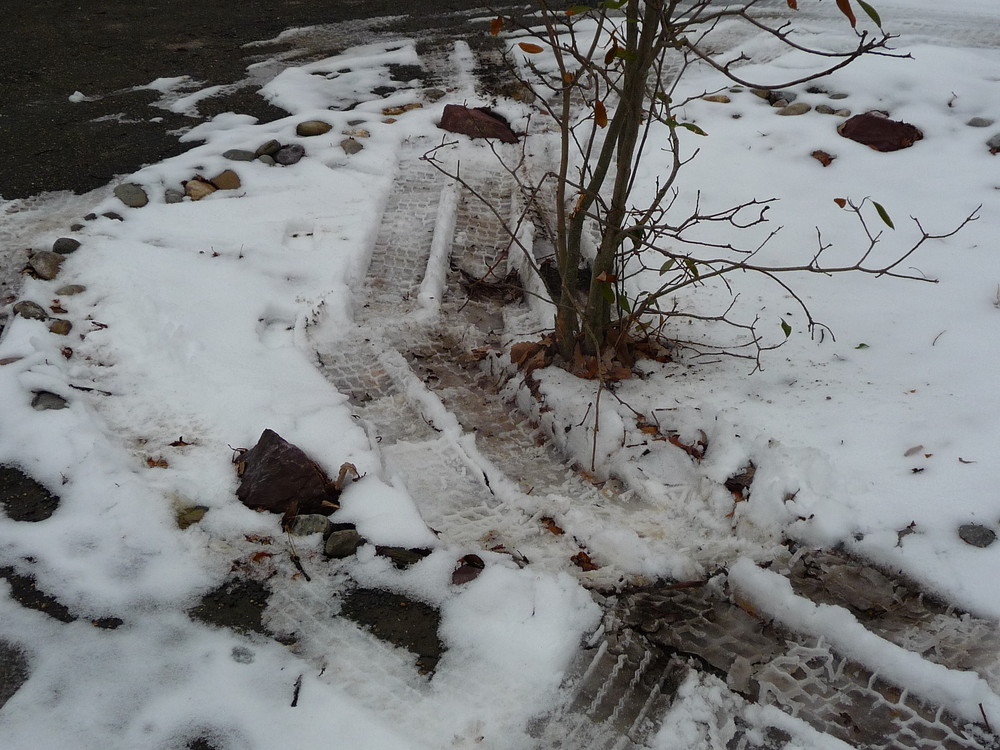
February 5, 2010, C.Hofberger Fuel Company made a last minute fuel delivery before the February 5th snow storm. That was MUCH appreciated.

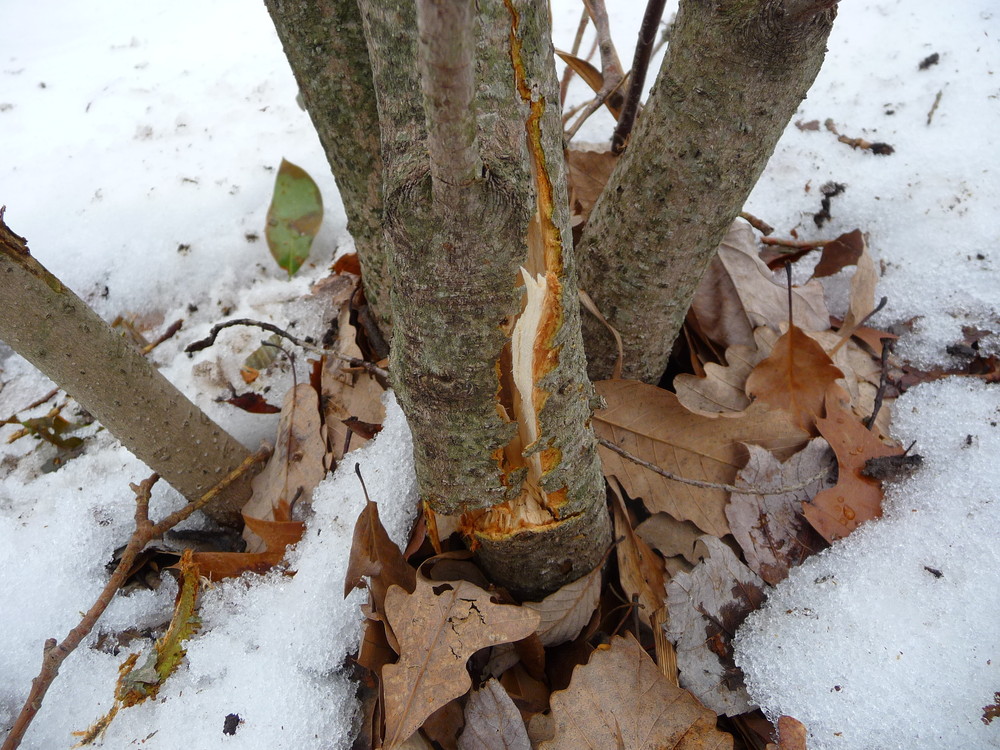
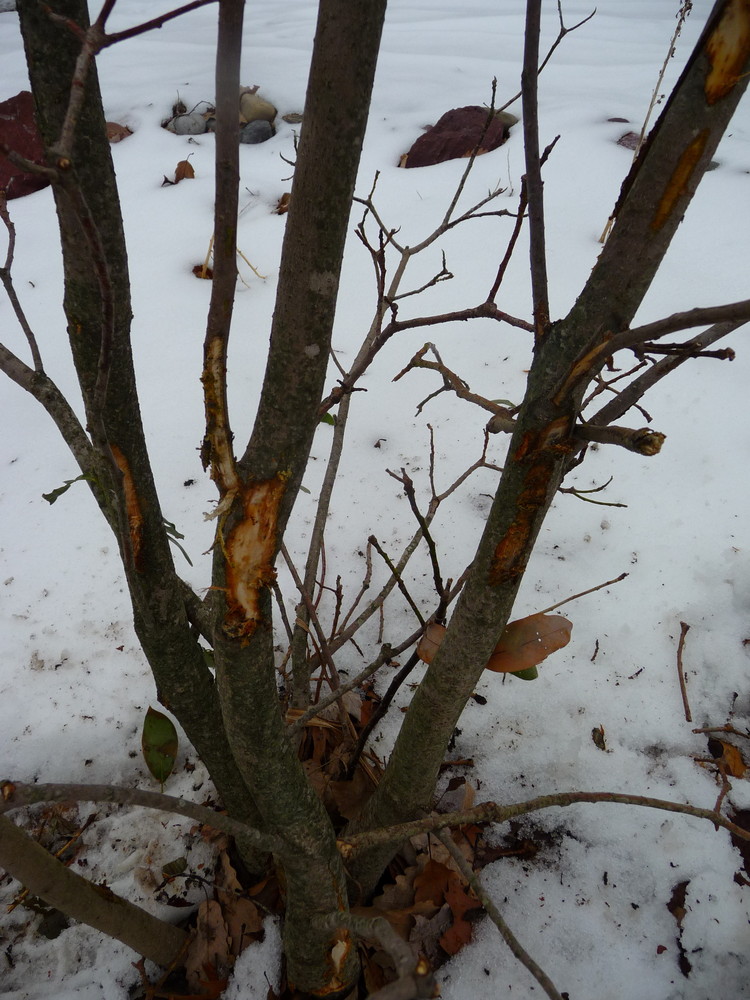
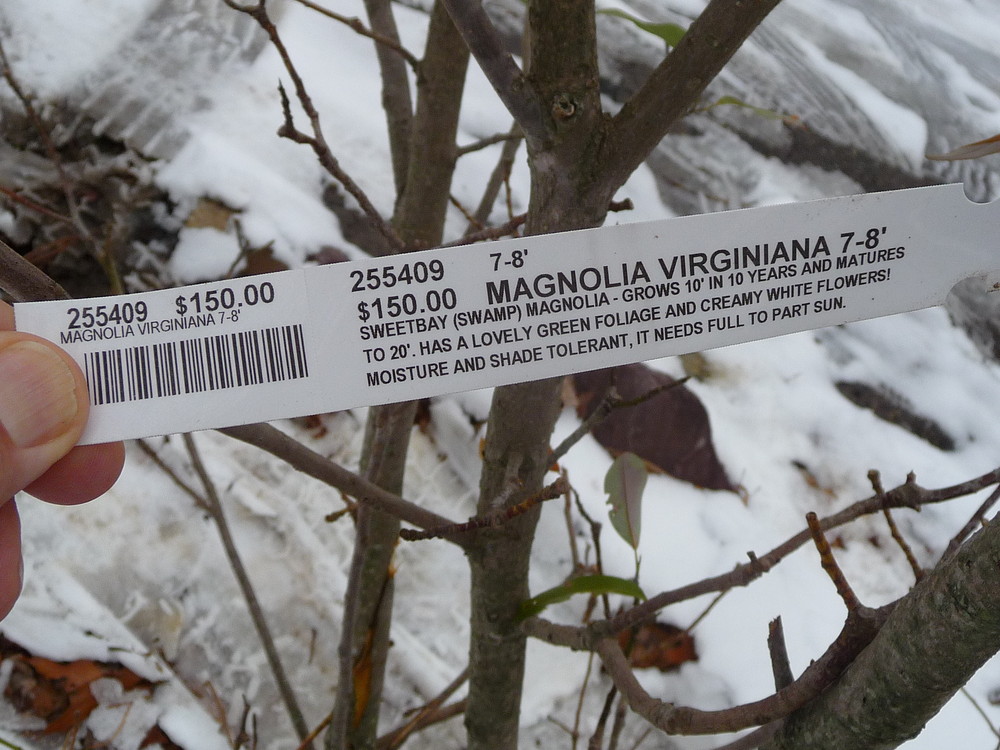
In the course of making the delivery the tank truck, which had to back up by the yellow square in the first picture below, maneuvered to back over the rain garden — apparently twice by the tracks visible in the photos — and smash the rather pricey magnolia in the middle of the garden.

THAT WAS NOT NICE.

Couple of additional points: this was NOT the first time the Hofberger driver went through this garden — and we complained the first time.

The driver is an experienced driver to this address.

Until a couple years ago, there was a 120-year-old oak tree in this spot of the driveway, and no one drove over it during the 120 years.

P1030058P1030059P1030061P1030064P1030067

Posted in Uncategorized | Leave a comment

Beaver Lodge in Church Creek. . .

January 24th the ice finally melted from Church Creek and I went out for a little [kayak] navigation.

Tide was real high so I decided to go up one of the branches of the creek by the the house. Based on Erik Michelsen’s blog in the South River Federation web pages (www.southriverfederation.net), I thought I’d see if I could get up to the beaver dam that he found.

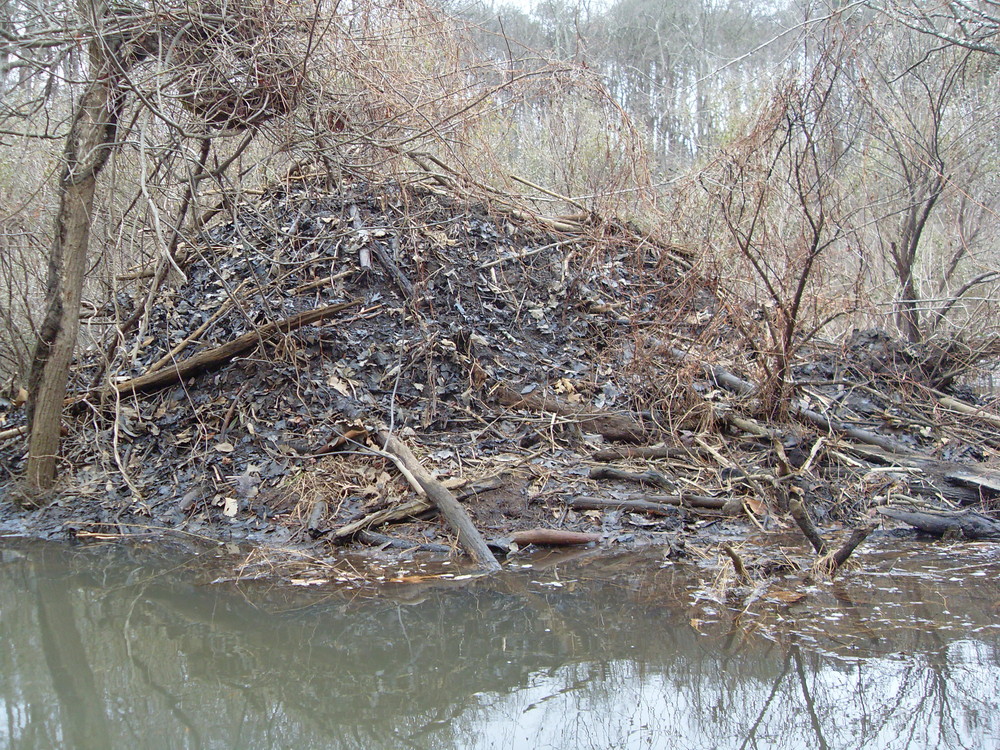
I didn’t get to the dam, but I was surprised to find this BIG BEAVER LODGE — it doesn’t look like much here (and note Aris T. Allen Blvd bridge in the background), but the lodge is AT LEAST six feet high, above the water in this picture, and that was on a very high tide — maybe 1.5 or 2.0 feet above normal high tide.

Those little beavers have been working on this for quite a while — obviously busy as beavers. (sorry).

Sdc12267Sdc12262

Posted in Uncategorized | Leave a comment

Bin Laden’s Legacy: Terrorists hurt America most by making it close its borders

from Lexington’s column in The Economist, January 14th at http://www.economist.com/world/unitedstates/displaystory.cfm?story_id=15270716

[ . . . as the husband of a woman who walked out of The World Trade Center 10 minutes before it collapsed, I agree . . . ]

Americans are, by and large, a courteous bunch. Interactions with strangers are typically sweetened with a generous frosting of “Sir”, “Ma’am” and “Excuse me”. Yet in a survey commissioned by the travel industry, more than half of visitors found American border officials rude and unpleasant. By a two-to-one margin, the country’s entry process was rated the world’s worst. This is not a problem only for whingeing journalists and other foreign riff-raff. It is also a problem for America.

The system is geared towards keeping out a tiny number of terrorists. Fair enough—such people should indeed be kept out. But there should be a trade-off. An immigration official lives in fear of admitting the next Mohammed Atta, but there is no penalty for excluding the next Einstein, or for humiliating tourists who subsequently summer in France. Osama bin Laden has arguably inflicted more harm on America indirectly than directly. To stop his acolytes from striking again, the government has made entering America far more difficult and degrading than it need be.

This has slowed the influx of foreign brains. In 2001, 28% of students who studied abroad did so at American universities. By 2008 that figure had shrunk to 21%, though since the absolute number of globally mobile students grew by 50% over that period, the absolute number in America has flattened, not fallen. Does this matter? Well, foreigners and immigrants make up more than half of the scientific researchers in the United States, notes Edward Alden, the author of a fine book called “The Closing of the American Border”. Among postdoctoral students doing top-level research, 60% are foreign-born. Boffins flock to America because its universities are the best, but the ordeal of getting a visa prompts many to take their ideas elsewhere.

A similar problem afflicts even short-term visitors. Organisers of international scientific conferences are increasingly reluctant to hold them in America because not everyone they invite will be able to attend. Last year, for example, Alik Ismail-Zadeh, a prominent Russian geophysicist, applied for a visa to attend a meeting of the American Geophysical Union. He allowed three months, but did not get his passport back until after his plane had departed. Kathie Bailey-Mathae of the National Academy of Sciences says that the hassles have eased in the past year, but only somewhat. When foreign scientists run into problems repeatedly, they become loth to collaborate with their American peers, she says.

. . . 

Posted in Uncategorized | Leave a comment

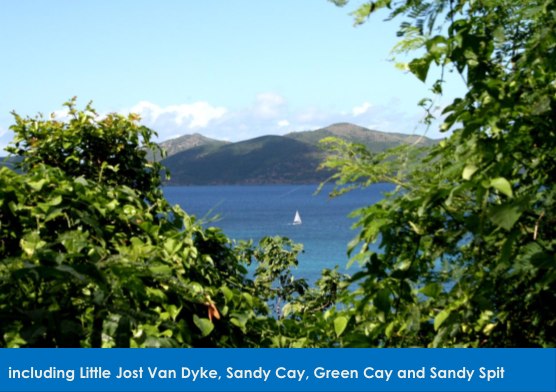
Jost van Dykes Preservation Society Releases JVD Environmental Profile

Executive_summary_jvd_profile
—– Forwarded Message —-

From: Susan Zaluski 
To: 
Sent: Wed, January 20, 2010 4:04:24 PM
Subject: Jost Van Dyke, BVI January 2010 Newsletter and Environmental Profile

Dear All:

Attached please find our January 2010 edition of the JVD Green Newsletter, which chronicles “Jost Van Dyke’s Community-based Programme Advancing Environmental Protection and Sustainable Development” funded by the UK’s Overseas Territories Environment Programme (OTEP).

As you’ll notice from reading the newsletter, project partner, Island Resources Foundation (IRF) delivered the completed copies of the Environmental Profile to Jost Van Dyke in late 2009.  You can read this comprehensive document, which provides a synthesis of the current state of the environment for Jost Van Dyke, British Virgin Islands (including information on history and culture of the island). You can view it online at   http://www.jvdgreen.org/Final_Profile.html .

Finally, a belated Happy 2010 to you and yours from all of us on Jost Van Dyke!
— 
Susan Zaluski
Director
Jost Van Dykes Preservation Society
Great Harbour, Jost Van Dyke VG1160
(284)540-0861

www.jvdps.org

Posted in Uncategorized | Leave a comment

Coral Reef Stars – a gorgeous book of reef photos by Caroline S. Rogers

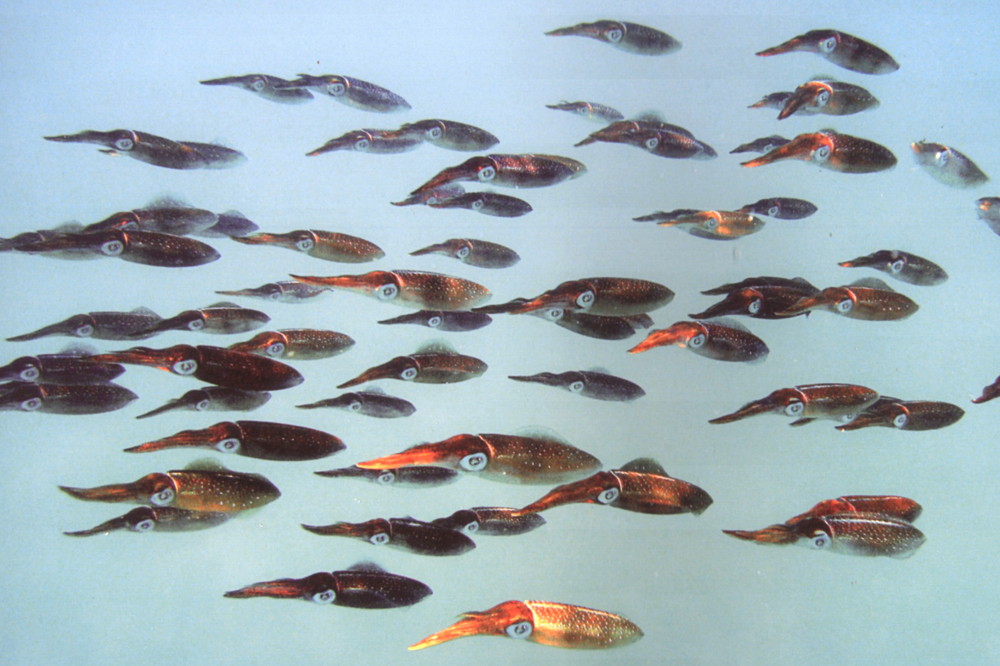
This is taken from page 12 of Coral Reef Stars by Dr. Rogers . . . 

Coral_reef_stars_csr

Squid are one of the stars of the Coral Reef Stars book — it’s available for only $25.00 plus shipping — a steal for some of the best marine photos I’ve ever seen.  Write to <coralreefstars@gmail.com> for details. 

Bruce Potter
Posted in Uncategorized | Leave a comment

How to Report (AND READ) complex science stories. . . .
From Andrew Revkin’s NYTimes environment blog —

http://dotearth.blogs.nytimes.com/2010/01/13/climate-whiplash-in-the-greenhouse/

Kenneth Caldeira, a climate researcher for the Carnegie Institution and Stanford University, criticized a British newspaper article — “Climate change experts clash over sea-rise ‘apocalypse’” — for overplaying the momentousness of one paper projecting a calamitous rise in seas by 2100 and then overplaying the level of dispute over the finding based on new work. Double whiplash, in a way.

Dr. Caldeira wrote:

“I think this story in the Times is indicative of the press’s tendency to make a big story out of every individual paper, rather than reporting the picture that emerges out of the findings of a field of science over time.”

He went on to discuss how the original paper’s sea-rise projection was, in his view, flawed, but also how the way it was described distracted from overall confidence about rising seas in a warming world. Then he wrapped his thoughts up this way:

“I think science journalism is in a terrible spot right now. Most scientific stories unfurl slowly, in a process that involves many different published papers, but journalists are tied to the news cycle and need to make a news event out of each story. So, to get space in the newspaper, they need to make it seem as if each published paper is a major event and the science is being whiplashed back and forth by each published study. (This is supported by the scientists who do each study and naturally feel the importance of their own study.) As a result, the public gets an exaggerated view of the volatility of scientific understanding. If the journalist[s] do not overemphasize the importance of individual studies, the stories will not get in the paper, and stories on the rising seas will be nowhere in the newspaper. Where is there a place for journalism that focuses on long-term trends?”

Check Revkin’s original piece (and monitor the blog over time) for more elucidation on the science of climate change impacts. 
Posted in Uncategorized | Leave a comment

Preliminary GIS links from the Caribbean GIS blog by Vijay —

at the url — http://caribbean-gis.blogspot.com/2010/01/earthquake-in-haiti-via-georss-feed.html

Geographic Information Systems/ Science (GIS), and its application in and around the Caribbean.

Wednesday, January 13, 2010

Earthquake in Haiti via GeoRSS feed

Media_http2bpblogspot_dpmdb

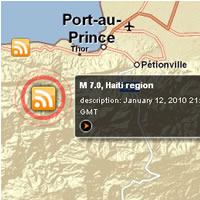
The scale of the humanitarian crisis caused by the earthquake in Haiti is now beginning to be understood. One source of information is the new GEOSS Viewer. Its use of up-to-date data, via RSS feeds, and its smooth interface makes it an excellent visualisation tool for both GIS Specialists and wider users such as the news media. It is a website that allows for the search of data across multiple data portals and has analytical capabilities, such as population estimations. It is currently focused on the disaster area of Haiti. There is a GeoRSS feed that will show the locations of the earthquakes there – from the USGS Earthquake data. The site is being enhanced with additional data and imagery to support humanitarian response operations.

The site is built using the ArcGIS Server API for Flex Sample Viewer, which is a free API for non-commercial use – which any organization can download and use from here:http://resources.esri.com/arcgisserver/apis/flex/. Additional widgets are available from the code gallery here:http://resources.esri.com/arcgisserver/apis/flex/index.cfm?fa=codeGallery.
Thanks to Carmelle Terborgh for the details.

Posted in Uncategorized | Leave a comment

Bring Sunlight to Annapolis. . . .

Sunlight in the Year Ahead
For almost four years, the Sunlight Foundation has used cutting-edge technology and ideas to make government more transparent and accountable.

Now, to really take things to the next level we are going to be launching a nationwide campaign for greater government transparency – from city councils to Capitol Hill – and we can’t do it without you.

One thing that we know for sure is that we won’t get much of anywhere without your skills, your best ideas, your political action and your leadership to bring this campaign to life.

Would you be willing to learn more about how you can help? If so, let us know who you are, and we’ll be in touch shortly.

go to the URL below for details. . . .
http://sunlightfoundation.com/campaign/

Posted in Uncategorized | Leave a comment