Reviews of Two Hard-Headed Critiques of Modern American Society

This first from the Sunday — NY Times Book Review:

Nonfiction

Meet the ‘Change Agents’ Who Are Enabling Inequality


Inside view at the World Economic Forum in Davos, Switzerland, last year.CreditCreditMichel Euler/Associated Press

Review by Joseph E. Stiglitz                                                                 Aug. 20, 2018

WINNERS TAKE ALL

The Elite Charade of Changing the World
By Anand Giridharadas
288 pp. Alfred A. Knopf. $26.95.

First came the books describing just how much worse economic inequality had become over the past 20 years, with all the dramatic political implications now impossible to ignore. Then there were the tomes about globalization (including my own, I admit), detailing the West’s unfettered pursuit of neoliberal policies that abetted all this unfairness.

Well, prepare for a new genre: books gently and politely skewering the corporate titans who claim to be solving such problems. It’s an elite that, rather than pushing for systemic change, only reinforces our lopsided economic reality — all while hobnobbing on the conference circuit and trafficking in platitudes.

Anand Giridharadas, a former columnist for The New York Times, spoke about this phenomenon at an Aspen Institute conference in 2015, and he takes his ideas further in his entertaining and gripping new book, “Winners Take All.” As the Democratic Party struggles to figure out its future and global demagogy thrives, it’s worth considering where we went wrong and how best to save the world from the dangerous turn it has taken. It’s now very clear that globalization, technology and market liberalization did not bring their promised benefits — at least not for the vast majority of Americans and those in advanced countries around the world.


Credit Brian Stauffer

For those at the helm, the philanthropic plutocrats and aspiring “change agents” who believe they are helping but are actually making things worse, it’s time for a reckoning with their role in this spiraling dilemma. I suggest they might want to read a copy of this book while in the Hamptons this summer.

In a series of chapters centered on different individuals who are part of this rarefied class, Giridharadas exposes the rationalizations of the 0.001 percent who actually believe they are making the world a better place. The Sacklers helped create the opioid crisis but give money to important causes. The chief executive of Cinnabon thinks that being transparent about the fat and sugar she peddles offsets the harm her company creates. It’s a land of PowerPoint presentations and cuddly good intentions.

Giridharadas calls this prevailing ethos “MarketWorld,” made up of people who want “to do well and do good.” He beautifully catches the language of Aspen, Davos and the recently extant Clinton Global Initiative, which will doubtless reappear in the newly born Bloomberg initiative. It’s a world of feel-good clichés like “win-win” and “make a difference.” The rote conversations of this crowd were on recent display at the Public Theater, in the beginning of the second act of the Bruce Norris play “The Low Road.” As Giridharadas describes the ethos of MarketWorld, it’s made up of people like former President Bill Clinton who saw the anger bubbling up but proved unable to “call out elites for their sins: or call for power’s redistribution and fundamental systemic change; or suggest that plutocrats might have to surrender precious things for others to have a mere shot of transcending indecency.”

Like the dieter who would rather do anything to lose weight than actually eat less, this business elite would save the world through social impact investing, entrepreneurship, sustainable capitalism, philanthro-capitalism, artificial intelligence, market-driven solutions. They would fund a million of these buzzwordy programs rather than fundamentally question the rules of the game — or even alter their own behavior to reduce the harm of the existing distorted, inefficient and unfair rules. Doing the right thing — and moving away from their win-win mentality — would involve real sacrifice; instead, it’s easier to focus on their pet projects and initiatives. As Giridharadas puts it, people wanted to do “virtuous side projects instead of doing their day jobs more honorably.”

In order to really have an economy with the greatest opportunity for all, the kind of economy they seem to champion, the MarketWorlders would have to pay high levels of corporate and personal income tax, offer decent wages to their workers, allow unions, fund public schools (instead of pet charter projects) and support some form of single payer health care and campaign finance reform. One simply can’t arrive at a more economically equal reality when the rungs of the ladder are so far apart.

At Davos and the other international conclaves where the muckety-mucks celebrate the new economic world they have helped create, which has rewarded them so amply, corporate leaders move seamlessly from sessions discussing the risks of climate change, growing inequality and financial instability, to dinners at which they praise tax cuts for billionaires and corporations and applaud proposals for deregulation. They conveniently don’t mention the increases in taxes on a majority of those in the middle, the Republican moves to eliminate health insurance for some 13 million in a country where life expectancy is already in decline, the increase in pollution, the risk of another financial crisis, the ever increasing evidence of moral turpitude — whether it’s Wells Fargo cheating its customers or Volkswagen cheating on its emission tests. Cognitive dissonance is intrinsic to MarketWorld.

Giridharadas rightly argues that this misallocation of resources creates a grave opportunity cost. The money and time the MarketWorlders spend fixing the edges of our fraying social order could be used to push for real change. This is especially so in the political battles in which the country is currently engaged, where a majority of the Supreme Court and members of Congress seem hellbent on rewriting the rules of the American economy and political system in ways that will exacerbate economic disparities, increase monopoly power, and decrease access to health care and women’s reproductive rights.

Moreover, the ideology of the MarketWorlders has spread and just espousing it has come to seem like a solution instead of the distraction that it is. Giridharadas shows how this is done. One category of enabler he describes is the cringeworthy “thought-leader,” who nudges plutocrats to think more about the poor but never actually challenges them, thus stroking them and allowing them to feel their MarketWorld approaches are acceptable rather than the cop-outs they are. Another recent book, the historian Nancy MacLean’s “Democracy in Chains,” provides a salutary lesson on the dangerous ways a self-serving ideology can spread.

Giridharadas embedded himself in the world he writes about, much as the journalist David Callahan (who edits the Inside Philanthropy website) did for his recent book, “The Givers: Wealth, Power and Philanthropy in a New Gilded Age.” And like Callahan, Giridharadas is careful not to offend. He writes on two levels — seemingly tactful and subtle — but ultimately he presents a devastating portrait of a whole class, one easier to satirize than to reform.

Perhaps recognizing the intractability and complexity of the fix we are in, Giridharadas sidesteps prescriptions by giving the book’s last words to a political scientist, Chiara Cordelli. “This right to speak for others,” Cordelli says, “is simply illegitimate when exercised by a powerful citizen.” Although a more definitive conclusion would have been welcome, Cordelli does point to the real lesson of the book: Democracy and high levels of inequality of the kind that have come to characterize the United States are simply incompatible. Very rich people will always use money to maintain their political and economic power. But now we have another group: the unwitting enablers. Despite believing they are working for a better world, they are at most chipping away at the margins, making slight course corrections, while the system goes on as it is, uninterrupted. The subtitle of the book says it all: “The Elite Charade of Changing the World.”

Joseph E. Stiglitz was chief economist of the World Bank from 1992 to 2000 and was awarded the Nobel Prize in Economics in 2001. He is a professor at Columbia and has been writing about inequality since the late 1960s.

Follow New York Times Books on Facebook and Twitter, sign up for our newsletter or our literary calendar. And listen to us on the Book Review podcast.

A version of this article appears in print on Aug. 26, 2018, on Page 1 of the Sunday Book Review with the headline: On Top Of the World.

———————————-
And here’s another . . . . . . 
———————————-
Nonfiction

On the Ground in Afghanistan and Iraq

A wounded Naval officer shielded by soldiers, Kunduz, Afghanistan, 2010.CreditCreditDamon Winter/The New York Times

Review by Robert D. Kaplan                                                        

THE FIGHTERS 

Americans in Combat in Afghanistan and Iraq

By C. J. Chivers
374 pp. Simon & Schuster. $28.

C. J. Chivers, a senior writer for The New York Times and a former Marine infantry officer, begins his new book with a description of an American weapon, equipped with GPS sensors and a guidance system, hitting “precisely the wrong place” and killing and mutilating a family of women and children on the Afghan steppe as a consequence. But Chivers’s narrative has only begun to slam you in the gut; later on, the author captures the psychological effect the errant bomb has on the Marines at the scene. Indeed, because of the way the stories and characters spool into one another with mathematical intensity, and the second-by-second in-your-face descriptions of prolonged battles from a sergeant’s eye view, “The Fighters: Americans in Combat in Afghanistan and Iraq” could be the most powerful indictment yet of America’s recent Middle East wars.

Chivers is interested in the chemistry between platoons and companies, not that between battalions and brigades: In other words, this is a book about the lower ranks who experience the thing itself, the gut-wrenching violence and confusion of war — history from the ground up, not from the top down, precisely what Washington elites miss. “The Fighters” constitutes an illusion-free zone, where the concrete triumphs over the abstract, where the best and most indelible of those profiled, from that vast working-class heart of the country, begin their military service in a blaze of patriotism following 9/11, and end up confused, cynical, betrayed and often disfigured or dead.

Of course, all wars are messy in the bloodiest and worst ways. What can redeem them for the combatants is only strategy, so that their ordeals contain a larger purpose within a realistic context. But in the background of this book is the very absence of such strategy, not only on the larger political level but on the microlevel, too: missions, one after the other, that even the grunts can see make no sense at all.

In the author’s telling, the American footprint in Afghanistan grows over the years from a sensible light-and-lethal affair to a mushrooming network of urban blast-barrier mazes of soldiers and Marines, even as the purpose of the war becomes completely lost. Specialist Robert Soto, an old man still in his teens, “had joined the Army to protect America. He was unsure how the Korengal Outpost” — in northeastern Afghanistan — “served that end. The circumstances in the valley, and many of the missions his platoon was ordered to perform, caused him to wonder what the Army was thinking. … Soto reduced the mission to its most basic rationale, We’re here because we’re here. If nothing else, the soldiers could fight for one another.”


What makes this book such a classic of war reporting is the very absence of panorama. Rather, Chivers has reconstructed the moment-by-moment experiences of Navy corpsmen, helicopter pilots, soldiers and Marines at their most narrow and fundamental level. Minutes become hours and eat up breathless spells of 20 and more pages at a stretch. Soto, in the instant before battle, when there is often the click-on-click of metal coming from the automatic rifles, has a feeling of “absolute, intoxicating clarity.”

There are the cousins Joe Dan Worley and Dustin Kirby, hospital corpsmen from Powder Springs, Ga. Their families thought they would be safe in the Navy, but corpsmen are the medics for Marines in combat. After Worley’s first mass casualty event in Iraq, “a solemn cleanup began. The remains of six of the platoon’s Marines, the Marine driver and three Iraqi police officers were put into body bags. Worley was blood-soaked, exhausted, grieving and enraged when he arrived back” at the base. “But he knew he had done what he was supposed to do. He had found his reason for being in Iraq.” Later on, after one more harrowing combat scene, Worley himself is wounded in an I.E.D. attack. “Marines who survived bomb blasts often acted according to pattern,” Chivers explains. “First they would see if they were alive. Then they would seek their weapon. Then they would ask if their genitals were still there. … He loosened his pants. He looked. There were no apparent wounds. … Worley was rushed inside an aid station. … He felt a catheter being pushed down into his urethra.” Worley knew while drifting into unconsciousness that if he survived “he would be an amputee.”

Soldiers mourn fallen comrades at a memorial service in Kandahar Province, Afghanistan, in 2012.    Credit Bryan Denton for The New York Times
Posted in Fun | Comments Off on Reviews of Two Hard-Headed Critiques of Modern American Society

When I Wasn’t Paying Attention . . . .

This Associated Press dispatch by Ellen Knickmeyer (from the National Post) discusses another major underlying government-wide policy change that the Trump Administration thinks it will get away with. This policy says that energy efficiency, and specifically limiting petroleum product use is “no longer an economic imperative for the United States.” My old mind boggles at the thought of what sort of short-sighted vision of human welfare could make such a statement.

I used to work in the Planning Department of Mobil Oil, when it was headquartered on 42nd Street in NY City. Mobil invented many of the fracking technologies — it was called enhanced recovery in those days. Fifteen years ago, no one guessed we would have an oil surplus in the USA. I think that is worth bearing in mind when you think about policies that represent a wild shot-in-the-dark guess as far as petroleum use and production is concerned.

‘There’s a downside to living large’: Conserving oil no longer a economic imperative, says U.S.

Today, the U.S. is vying with Russia for the title of top world oil producer. U.S. oil production hit an all-time high this summer, aided by the technological leaps of horizontal drilling and hydraulic fracturing

In this April 23, 2018, file photo a car is filled with gasoline at a station in Windham, N.H. Conserving oil is no longer an economic imperative for the U.S., the Trump administration declares in a major new policy statement that threatens to undermine decades of government campaigns for gas-thrifty cars and other conservation programs.Charles Krupa / ASSOCIATED PRESS

The Associated Press
Ellen Knickmeyer

August 19, 2018
7:19 AM EDT

Last Updated
August 19, 2018
12:48 PM EDT

WASHINGTON — Conserving oil is no longer an economic imperative for the U.S., the Trump administration declares in a major new policy statement that threatens to undermine decades of government campaigns for gas-thrifty cars and other conservation programs.

The position was outlined in a memo released last month in support of the administration’s proposal to relax fuel mileage standards. The government released the memo online this month without fanfare.

Growth of natural gas and other alternatives to petroleum has reduced the need for imported oil, which “in turn affects the need of the nation to conserve energy,” the Energy Department said. It also cites the now decade-old fracking revolution that has unlocked U.S. shale oil reserves, giving “the United States more flexibility than in the past to use our oil resources with less concern.”

With the memo, the administration is formally challenging old justifications for conservation — even congressionally prescribed ones, as with the mileage standards. The memo made no mention of climate change. Transportation is the single largest source of climate-changing emissions.

President Donald Trump has questioned the existence of climate change, embraced the notion of “energy dominance” as a national goal, and called for easing what he calls burdensome regulation of oil, gas and coal, including repealing the Obama Clean Power Plan.

Despite the increased oil supplies, the administration continues to believe in the need to “use energy wisely,” the Energy Department said, without elaboration. Department spokesmen did not respond Friday to questions about that statement.

It’s like saying, ‘I’m a big old fat guy, and food prices have dropped — it’s time to start eating again.”

Reaction was quick.

“It’s like saying, ‘I’m a big old fat guy, and food prices have dropped — it’s time to start eating again,”‘ said Tom Kloza, longtime oil analyst with the Maryland-based Oil Price Information Service.

“If you look at it from the other end, if you do believe that fossil fuels do some sort of damage to the atmosphere … you come up with a different viewpoint,” Kloza said. “There’s a downside to living large.”

Climate change is a “clear and present and increasing danger,” said Sean Donahue, a lawyer for the Environmental Defence Fund.

In a big way, the Energy Department statement just acknowledges the world’s vastly changed reality when it comes to oil.

Just 10 years ago, in summer 2008, oil prices were peaking at $147 a barrel and pummeling the global economy. The Organization of the Petroleum Exporting Countries was enjoying a massive transfer of wealth, from countries dependent on imported oil. Prices now are about $65.

Today, the U.S. is vying with Russia for the title of top world oil producer. U.S. oil production hit an all-time high this summer, aided by the technological leaps of horizontal drilling and hydraulic fracturing.

How much the U.S. economy is hooked up to the gas pump, and vice versa, plays into any number of policy considerations, not just economic or environmental ones, but military and geopolitical ones, said John Graham, a former official in the George W. Bush administration, now dean of the School of Public and Environmental Affairs at Indiana University.

“Our ability to play that role as a leader in the world is stronger when we are the strongest producer of oil and gas,” Graham said. “But there are still reasons to want to reduce the amount we consume.”

Current administration proposals include one that would freeze mileage standards for cars and light trucks after 2020, instead of continuing to make them tougher.

The proposal eventually would increase U.S. oil consumption by 500,000 barrels a day, the administration says. While Trump officials say the freeze would improve highway safety, documents released this month showed senior Environmental Protection Agency staffers calculate the administration’s move would actually increase highway deaths.

“American businesses, consumers and our environment are all the losers under his plan,” said Sen. Tom Carper, a Delaware Democrat. “The only clear winner is the oil industry. It’s not hard to see whose side President Trump is on.”

Administration support has been tepid to null on some other long-running government programs for alternatives to gas-powered cars.

Bill Wehrum, assistant administration of the EPA’s Office of Air and Radiation, spoke dismissively of electric cars — a young industry supported financially by the federal government and many states — this month in a call with reporters announcing the mileage freeze proposal.

“People just don’t want to buy them,” the EPA official said.

Oil and gas interests are campaigning for changes in government conservation efforts on mileage standards, biofuels and electric cars.

In June, for instance, the American Petroleum Institute and other industries wrote eight governors, promoting the dominance of the internal-combustion engine and questioning their states’ incentives to consumers for electric cars.

Surging U.S. and gas production has brought on “energy security and abundance,” Frank Macchiarola, a group director of the American Petroleum Institute trade association, told reporters this week, in a telephone call dedicated to urging scrapping or overhauling of one U.S. program for biofuels.

Fears of oil scarcity used to be a driver of U.S. energy policy, Macchiarola said.

Thanks partly to increased production, “that pillar has really been rendered essentially moot,” he said.

Posted in Fun | Comments Off on When I Wasn’t Paying Attention . . . .

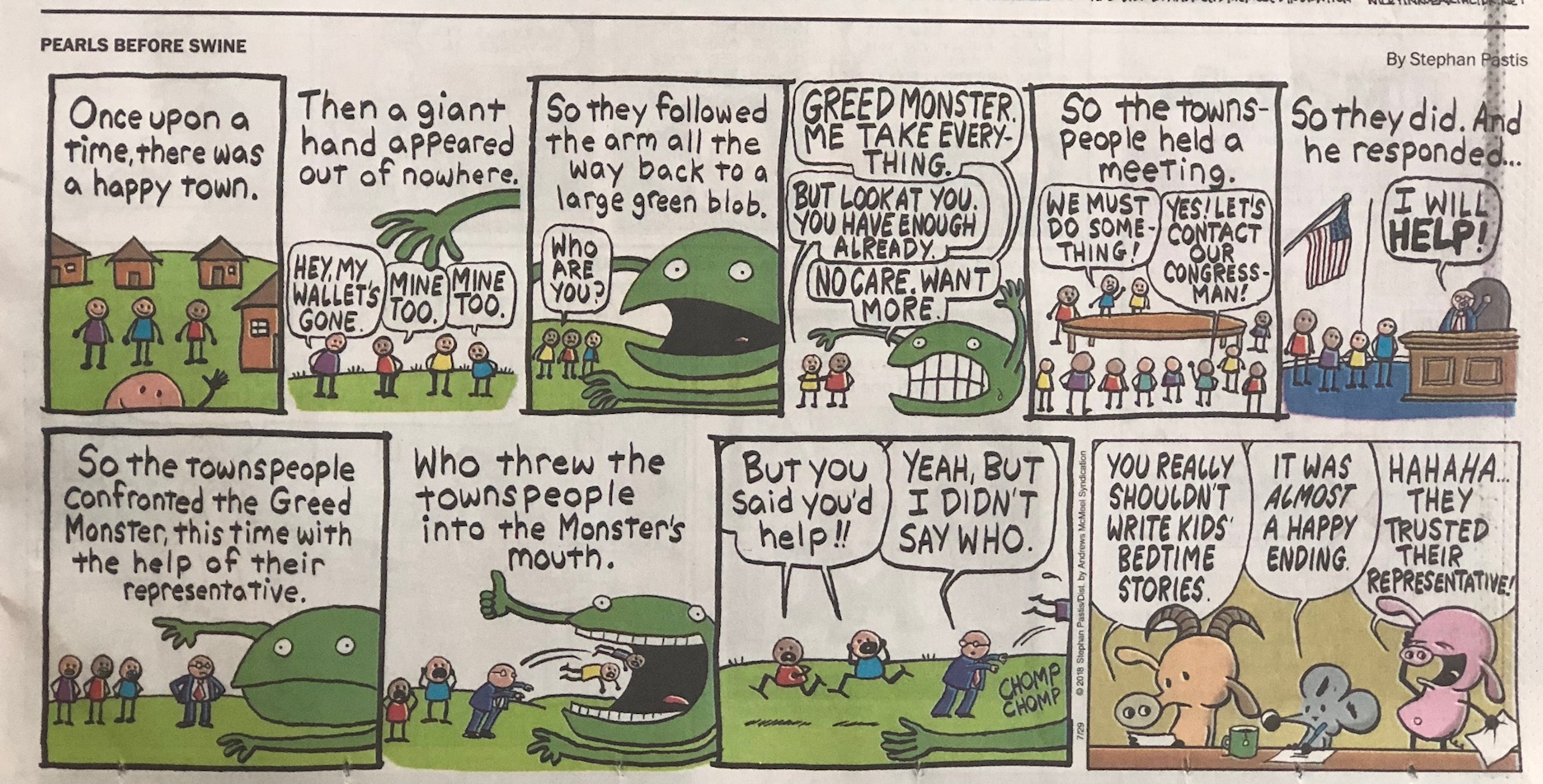
Bedtime Story for Kids

The Russian objective is to make the truth seem unknowable.

Posted in Fun | Comments Off on Bedtime Story for Kids

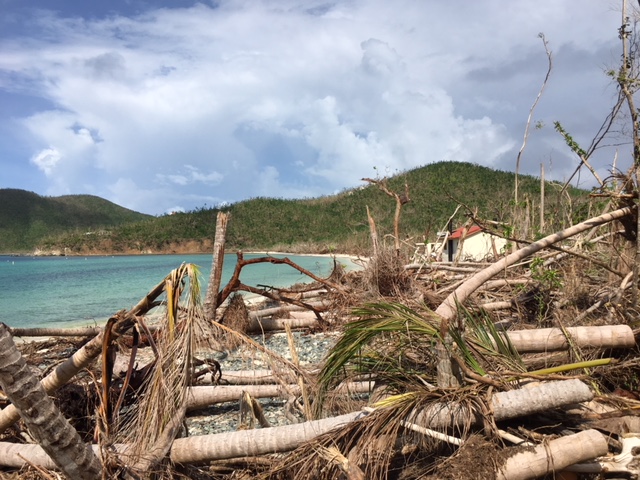
More Insight on the Cost and Pace of Hurricane Recovery, 12 Months On . . .

From the current issue of the St. John Tradewinds <https://www.stjohntradewinds.com/event/july-24-vi-national-park-strategic-planning-discussion/>

July 24: VI National Park Strategic Planning Discussion

July 24 @ 5:30 pm – 7:30 pm

Contact: Steve Black, 340.776.6201 ext 240

Dave Worthington, 340.776.6201 ext 237

The public is invited to attend an open house at the Virgin Islands National Park Cruz Bay Visitor Center on July 24th from 5:30 pm to 7:30 pm.

Park staff will be available to discuss a proposal to replace park offices and housing that were destroyed by hurricanes Irma and Maria, the construction of new pavilions at Maho Bay, and the Strategic Plan for the Caribbean Parks.

The September 2017, hurricanes resulted in the loss of approximately 7,000 square feet of housing and 6,000 square feet of administrative space. The loss of housing, office, and administrative space has resulted in staff relocations off of the island, and hampers both the ability of the park staff to manage hurricane recovery efforts and the day-to-day business of the park.

The park has prepared a draft Environmental Assessment (EA) that examines alternatives for replacing the housing and administrative spaces that were destroyed due to Hurricanes Irma and Maria with a goal of rebuilding in a smart location that limits the impacts to park resources, represents smart investment of financial resources, is as resilient to future storms as possible, and limits impacts to the local community.

The Environmental Assessment will be available for review beginning July 17th at http://parkplanning.nps.gov/VINP_Lind_Point_Construction. Comments will be accepted through July 31st. Copies of the EA will also be available at the open house. Comments can be submitted at the public meeting, via the link above, or they may be mailed to:

ATTN: Lind Point Plan
Virgin Islands National Park
1300 Cruz Bay Creek
St. John, VI 00830

Posted in Fun | Comments Off on More Insight on the Cost and Pace of Hurricane Recovery, 12 Months On . . .

The Advantage of Computers

Computers permit larcenous idiots to design ever more opaque systems for overcharging.

The Russian objective is to make the truth seem unknowable.

Posted in Fun | Comments Off on The Advantage of Computers

Happy Fourth of July

New federal employment and OSHA policy:

Posted in Fun | Comments Off on Happy Fourth of July

I Guess, At the End of the Day, I Do Care . . .

[I know we’re all really tired of this stuff, and for a bunch of reasons I’ve not been reading all of the news and opinions that I had been. But I do think the summary provided by Dana Milbank in this Sunday OpEd piece is a useful reprise of where we’ve arrived after 18 months or so . . . bp]
Opinions

I really don’t care about Trump’s cruelty, do u?

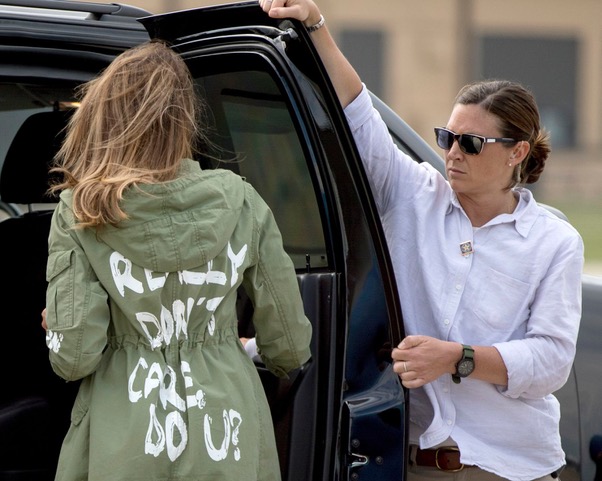
First lady Melania Trump wears a jacket with wording on the back that says, “I really don’t care, do u?” (Andrew Harnik/AP)

By Dana Milbank              Columnist              June 22                   Email the author

In the 1992 campaign, President George H.W. Bush created an unofficial and much-mocked motto for his administration during a town hall meeting in New Hampshire. “Message: I care,” he announced, as if reading aloud the stage directions.

Melania Trump did much the same this week when she went to Texas to see some of the migrant kids who were taken from their parents under her husband’s policy. The now-famous wording on her jacket made her a human billboard for what should be the unofficial motto of the Trump administration: “I really don’t care, do u?”

The administration’s cruelty is particularly prominent lately, because of photos of the anguish of the migrant children — and President Trump’s accompanying allegation of “phony stories of sadness” and his warning that immigrants, like insects, would “infest”  the country. But the current episode, though highly visible, is hardly one of a kind. By now, the administration has amassed an extensive catalogue of cruelty.

On Thursday, Trump doomed the latest attempt to protect from deportation the “dreamers,” those 700,000 people who have known no home but America since they were brought here as children. He tweeted that he didn’t see the “purpose” of the House passing an immigration bill — and, sure enough, the House called off the vote. He previously blew up a Senate compromise on the same subject, during his tirade about immigrants from “shithole countries.” It was his own executive action that exposed the dreamers to deportation in the first place.

I really don’t care, do u?

On Wednesday night, Trump renewed his assault on Sen. John McCain (R-Ariz.) as he dies from brain cancer. Trump again blamed McCain for the failed repeal of Obamacare.

The administration earlier this month decided not to defend the law against a court challenge that if successful would end protections for Americans with preexisting conditions. Trump has also ended subsidies to help insurance companies cover low-income people, and acknowledged the Obamacare repeal he championed was “mean.” He gave a green light to work requirements for Medicaid that could deny health insurance even to many poor Americans who work.

I really don’t care, do u?

The Trump administration this month said that domestic violence and gang violence would no longer be grounds for seeking asylum in the United States.

Trump previously reduced the number of refugees from 110,000 to 45,000 per year — the lowest in almost 40 years; and even fewer are actually being admitted, forcing tens of thousands to remain in refugee camps and return to face persecution or violence in the countries they fled. This is after Trump’s travel ban on several Muslim-majority countries, which resulted in families separated and students and doctors denied entry.

I really don’t care, do u?

Lawmakers complained this week to Trump’s commerce secretary, Wilbur Ross, that the administration’s haphazard implementation of trade barriers is causing havoc for farmers, small businesses and manufacturers. Ross responded by calling such notions “exaggerated” and “not our fault.”

A week earlier, as The Post’s Jeff Stein and Andrew van Dam wrote, Trump’s Bureau of Labor Statistics reported that wages after inflation have fallen over the past year for production and nonsupervisory workers — 80 percent of all privately employed workers. That means economic “gains are going almost exclusively to people already at the top of the economic ladder.” And the tax cuts further widen the gap between the rich and everybody else.

I really don’t care, do u?

Trump’s budget proposal this year, sensibly ignored by Congress, would have cut Medicaid by $306 billion over 10 years, food stamps by $214 billion, nutritional help for mothers and children, and heating assistance for the poor, according to the Center on Budget and Policy Priorities.

The Trump administration is also reducing enforcement of fair-housing laws. And Trump said Hurricane Maria in Puerto Rico was not a “real catastrophe”and said Puerto Ricans “want everything to be done for them.” It now appears thousands died.

I really don’t care, do u?

Trump said there were “very fine people” among the neo-Nazis marching in Charlottesville last summer. He declared a ban on transgender people in the military and later imposed a partial ban. He called for new gun restrictions — then abandoned the effort. His administration ordered prosecutors to seek maximum penalties for even nonviolent drug crimes and removed protections for victims of campus sexual assault.

I really don’t care, do u?

Now come reports that Homeland Security Secretary Kirstjen Nielsen and White House senior policy adviser Stephen Miller — architects and leading defenders of Trump’s child-separation policy — were heckled in separate incidents in recent days while dining at Mexican restaurants. Another report this week highlighted the discovery that Miller’s great-grandfather had his naturalization petition denied because of “ignorance.”

I don’t like incivility, or cheap shots. But you know what else? I really don’t care, do u?

Read more from Dana Milbank’s archive, follow him on Twitter or subscribe to his updates on Facebook.

Posted in Fun | Comments Off on I Guess, At the End of the Day, I Do Care . . .

Deutsche Welle Online: Comment on Barbadian Debt as Typical Caribbean Small Island Problem

from the on-line English version of the paper at <http://www.dw.com/en/drowning-in-debt-barbados-predicament-offers-a-warning-for-small-island-nations/a-44245771>

[Just a minor caveat that there is no evidence that German financiers are necessarily balanced assessors of development options for oceanic small islands. . . . but they probably DO reflect the view of a lot of powerful people in the world banking community. bp ]

BUSINESS

Drowning in debt — Barbados’ predicament offers a warning for small island nations

Barbados has been struggling with weak economic growth over the past decade, putting strains on its public debt and deficit. The ailing economy offers a cautionary tale for other small island nation states in the region.


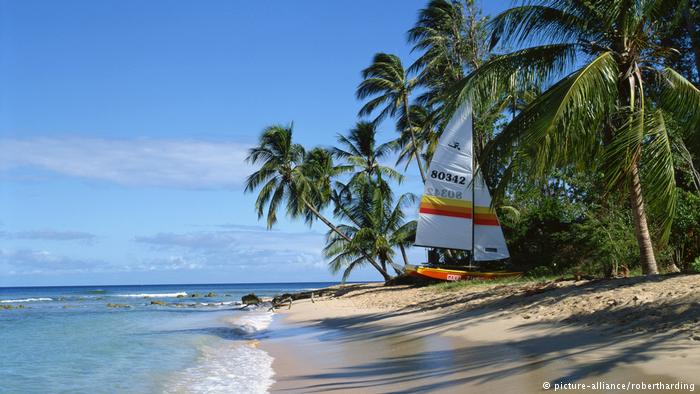
Barbados, an island nation in the North Atlantic, doesn’t usually garner the attention of international media, particularly when it comes to its economy. With a population of about 285,000 in 2016 and total economic output amounting to just over $4.5 billion (€3.9 billion), according to World Bank data, the country’s size and role in the global economy is very limited.

Nevertheless, over the past decade the Barbadian economy has been struggling with severe debt and deficit problems. Growth suffered a sharp contraction in the wake of the 2009 global financial crisis and has remained weak since then.

In 2016, according to the World Bank, the economy expanded by a mere 1.6 percent. Weak growth figures have further strained Barbados’ public debt, putting pressure on foreign exchange reserves and helping to spark repeated downgrades of the island’s credit rating.

Read more: Rebuilding tourism after Irma

Highly vulnerable

Barbados currently has the fourth-highest debt-to-GDP ratio in the world after Japan, Greece, and Sudan with the country’s figure standing at 175 percent. A delegation of the International Monetary Fund (IMF) recently visited the Caribbean nation and described its economy as being in a “precarious” situation.

Insured against the Storm

Barbados’ recently elected Prime Minister Mia Mottley this week announced a raft of measures to tackle the problems and put the nation’s economy on a firmer footing.
The proposals are estimated to cost around $660 million and include new fuel taxes, a 50-percent hike in commercial premises’ water bills and a new health service contribution amounting to 2.5 percent of an individual’s income, among other things.

Motley, who was elected in May as Barbados’ first female prime minister, also announced that the country would seek a restructuring of the public debt and temporarily suspend payments due on debts owed to external commercial creditors. She said that the previous administration, under Prime Minister Freundel Stuart, left almost $7.5 billion in debt.

“We will protect the most vulnerable, but we will all have to make sacrifices for our country. Today we move forward together in a new spirit of openness and with a new covenant of hope and opportunity. I ask our domestic and external creditors to accompany us on this journey of rescue, rebuilding, and transformation,” Mottley was quoted by local media as saying.

But the prime minister now faces the tough challenge of balancing her campaign promises with the difficult fiscal reality. Her government, experts say, has to take measures to boost growth and expand the tax base while containing public expenditures and protecting the most vulnerable sections of society from economic distress.

A region-wide problem

Barbados is not alone in the region when it comes to facing economic problems. Many Caribbean nations are going through a similar phase, experiencing troubles emanating from their high debt and deficit levels.

The origin of many of their woes dates back to the late 1990s. Between 1975 and 1997, a deal between the European Union’s forerunner, European Economic Community, and Caribbean countries gave the latter privileged access to the European market.

The arrangement was intended to bolster economic development in the Caribbean. But the United States argued that it broke free trade rules and filed a complaint with the World Trade Organization in 1997, and won.

As a result, Europe had to change its rules, hurting the Caribbean nations’ growth prospects. To finance growth and investment, these countries then increasingly relied on debt.

The region has been hit by a number of hurricanes over the past two decades, forcing them to undertake debt-driven disaster recovery efforts, in turn weakening their finances further.

To put its economy back on track, observers say Barbados is making all the right moves but the road to recovery will be a long one. If Prime Minister Mottley can make good on her campaign promises while rectifying external and internal debts, analysts underline, Barbados might be out of the red and into calmer economic waters sooner rather than later.


  • HURRICANE IRMA RIPS THROUGH CARIBBEAN AND US SOUTHEASTERN STATES

    Strongest-ever Atlantic storm

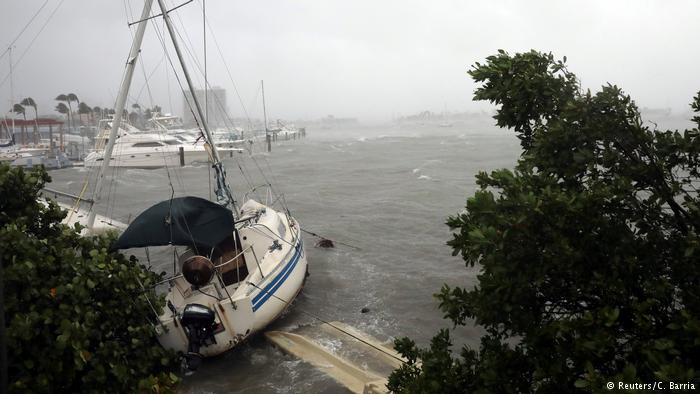
    Hurricane Irma has killed dozens of people and injured many more since the record-breaking storm roared over the French Caribbean islands. With its powerful winds having topped 185 miles (295 kilometers) per hour, Irma is the strongest storm ever recorded in the Atlantic Ocean, according to the US National Hurricane Center based in Miami.

123456789

DW RECOMMENDS

 Insuring against extreme weather in the Caribbean

Extreme weather events linked to climate change can cause major damage — destroying homes and livelihoods. Caribbean islanders have seen some of the worst effects. Could climate insurance help? (15.05.2018)

Rebuilding tourism after Irma

It’s been over a week since hurricane Irma ripped through the Caribbean – but for paradise islands overwhelmingly dependent on the tourist trade, the damage is far from over. (14.09.2017)

New model bucks Jamaican package deals

A Jamaican town tries to beat all-inclusive packages with local food and marine reserves to keep tourist dollars from leaking offshore. (21.10.2012)

Hurricane Irma rips through Caribbean and US southeastern states

Hurricane Irma cut a swathe of destruction as it roared through the Caribbean and southeast US. Tropical islands were turned into piles of rubble while some 6.5 million people in Florida have been left without power. (07.09.2017)

 AUDIOS AND VIDEOS ON THE TOPIC

Insured against the Storm

The Jamaica factor in Germany

=============================

Posted in Development, Governance, Small Island | Comments Off on Deutsche Welle Online: Comment on Barbadian Debt as Typical Caribbean Small Island Problem

Among Real Problems Largely Ignored at an Important Forum

Lost in the static over Trump histrionics <from the Seychelles News site > —

President of Seychelles shocks G7 meeting with photos of ocean trash

Victoria, Seychelles | June 11, 2018, Monday @ 14:21 in National » GENERAL | By: Betymie Bonnelame | Views: 1794

The team on Aldabra is no match for the great amount of trash washing to shore on Aldabra. (Seychelles Islands Foundation)

(Seychelles News Agency) – The President of Seychelles, Danny Faure, shocked the leaders of the Group of Seven (G7) nations with photographs of the damage being done to the island nation’s Aldabra atoll by plastic pollution and other types of litter coming from the rest of the world, State House said on Sunday.

Faure told the roundtable of small islands developing states at the G7 summitin Quebec, Canada that Seychelles and other small island countries already had enough of a challenge managing their own waste, and didn’t need to take on the rest of the worlds.

Aldabra — a UNESCO World Heritage Site in Seychelles – is a remote atoll and the team is no match for the amount of trash washing on its shores. An Aldabra clean-up project was launched last month and will culminate with an expedition to be led by the Queens’s College from the UK to remove tonnes of ocean trash.

Faure added that the islands “needed assistance with handling the vast and increasing amounts of marine litter washing up on and polluting their beaches and coasts from way beyond their shores.”

The roundtable included island leaders from Haiti, Jamaica, the Marshall Islands and Seychelles to discuss the challenges of small islands developing states. (State House, Facebook) Photo License: CC-BY

The leaders of the G7, which includes Canada, France, Germany, Italy, Japan, the United Kingdom and the United States, agreed that President Faure had graphically made his point.

The roundtable included four island leaders from Haiti, Jamaica, the Marshall Islands and Seychelles, an archipelago in the western Indian Ocean, to discuss the challenges of small islands developing states(SIDS).

Faure was also invited to a special session on oceans at the G7 summit by the Canadian Prime Minister Justin Trudeau since Canada holds the presidency for 2018. The session was held under the theme ‘healthy, productive and resilient oceans and seas, coasts and communities.’

In his address at the session on oceans, Faure spoke about Seychelles’ innovative financing for the blue economy and ocean sustainability.

When Seychelles graduated to a high-income country in 2015, instead of complaining about losing grant funding, Faure said the island nation turned to pioneering new innovative sources of financing. This included a first-of-its-kind debt swap for ocean conservation and climate adaptation and the forthcoming and equally novel blue bonds.

“However, try as we might, such new sources of finance will not be enough to meet our sustainable development and climate action obligations under the 2030 Agenda, the Paris Agreement and the SAMOA Pathway for SIDS,” he told the G7 leaders.

Faure called on the G7 and multilateral partners to agree on a SIDS-specific resilience index that takes into consideration small island countries’ unique vulnerabilities to external shocks, be they climate change or economic.

“Islands can no longer afford to see ourselves as dots lost in a sea of blue. We are sentinels, the guardians of two-thirds of our Blue Planet’s surface. We must act accordingly,” added the Seychelles’ President.

Faure also called on Prime Minister Justin Trudeau and Canada to play a prominent and proactive role in high seas negotiations that begin at the United Nations in New York this September.

Posted in Beaches, Coral Reefs, Governance, Small Island | Comments Off on Among Real Problems Largely Ignored at an Important Forum

The Boomers’ Fail

Ron Morgan called my attention to this profound critique of modern social/political deficits by David Brooks from the NY Times, May 29th.

——————

The Strange Failure of the Educated Elite


By David Brooks
Opinion Columnist

May 28, 2018


CreditBrian Snyder/Reuters

Once upon a time, white male Protestants ruled the roost. You got into a fancy school if your father had gone to the fancy school. You got a job at a white-shoe law firm or climbed the corporate ladder if you golfed at the right club.

Then we smashed all that. We replaced a system based on birth with a fairer system based on talent. We opened up the universities and the workplace to Jews, women and minorities. University attendance surged, creating the most educated generation in history. We created a new boomer ethos, which was egalitarian (bluejeans everywhere!), socially conscious (recycling!) and deeply committed to ending bigotry.

You’d think all this would have made the U.S. the best governed nation in history. Instead, inequality rose. Faith in institutions plummeted. Social trust declined. The federal government became dysfunctional and society bitterly divided.

The older establishment won World War II and built the American Century. We, on the other hand, led to Donald Trump. The chief accomplishment of the current educated elite is that it has produced a bipartisan revolt against itself.

What happened? How has so much amazing talent produced such poor results.

A narrative is emerging. It is that the new meritocratic aristocracy has come to look like every other aristocracy. The members of the educated class use their intellectual, financial and social advantages to pass down privilege to their children, creating a hereditary elite that is ever more insulated from the rest of society. We need to build a meritocracy that is true to its values, truly open to all.

I’m among the many who have been telling this story for 20 years. And I enjoy books that fill in compelling details, like Steven Brill’s “Tailspin,”which is being released Tuesday.

But the narrative is insufficient. The real problem with the modern meritocracy can be found in the ideology of meritocracy itself. Meritocracy is a system built on the maximization of individual talent, and that system unwittingly encourages several ruinous beliefs:

Exaggerated faith in intelligence. Today’s educated establishment is still basically selected on the basis of I.Q. High I.Q. correlates with career success but is not the crucial quality required for civic leadership. Many of the great failures of the last 50 years, from Vietnam to Watergate to the financial crisis, were caused by extremely intelligent people who didn’t care about the civic consequences of their actions.

Misplaced faith in autonomy. The meritocracy is based on the metaphor that life is a journey. On graduation days, members for the educated class give their young Dr. Seuss’ “Oh, the Places You’ll Go!” which shows a main character, “you,” who goes on a solitary, unencumbered journey through life toward success. If you build a society upon this metaphor you will wind up with a society high in narcissism and low in social connection. Life is not really an individual journey. Life is more like settling a sequence of villages. You help build a community at home, at work, in your town and then you go off and settle more villages.

Misplaced notion of the self. Instead of seeing the self as the seat of the soul, the meritocracy sees the self as a vessel of human capital, a series of talents to be cultivated and accomplishments to be celebrated. If you base a society on a conception of self that is about achievement, not character, you will wind up with a society that is demoralized; that puts little emphasis on the sorts of moral systems that create harmony within people, harmony between people and harmony between people and their ultimate purpose.

Inability to think institutionally. Previous elites poured themselves into institutions and were pretty good at maintaining existing institutions, like the U.S. Congress, and building new ones, like the postwar global order. The current generation sees institutions as things they pass through on the way to individual success. Some institutions, like Congress and the political parties, have decayed to the point of uselessness, while others, like corporations, lose their generational consciousness and become obsessed with the short term.

Misplaced idolization of diversity. The great achievement of the meritocracy is that it has widened opportunities to those who were formerly oppressed. But diversity is a midpoint, not an endpoint. Just as a mind has to be opened so that it can close on something, an organization has to be diverse so that different perspectives can serve some end. Diversity for its own sake, without a common telos, is infinitely centrifugal, and leads to social fragmentation.

The essential point is this: Those dimwitted, stuck up blue bloods in the old establishment had something we meritocrats lack — a civic consciousness, a sense that we live life embedded in community and nation, that we owe a debt to community and nation and that the essence of the admirable life is community before self.

The meritocracy is here to stay, thank goodness, but we probably need a new ethos to reconfigure it — to redefine how people are seen, how applicants are selected, how social roles are understood and how we narrate a common national purpose.

Follow The New York Times Opinion section on Facebook and Twitter (@NYTopinion), and sign up for the Opinion Today newsletter.

A version of this article appears in print on May 29, 2018, on Page A23 of the New York edition with the headline: The Strange Failure of the Educated Elite. Order Reprints | Today’s Paper | Subscribe

Posted in Civil Society, Futures, Governance | Comments Off on The Boomers’ Fail