New Orleans: The Big Incompetent

Road Home Program Took a Wrong Turn in Mid-City Restorations

Sometimes it seems as though “Brownie” and “official” New Orleans deserved each other — why does Ray Nagin still have a job?

This from the excellent monthly newsletter of the National Hazards Center:

Road Home Program Took a Wrong Turn in Mid-City Restorations

A problematic program meant to help Louisianans rebuild after Hurricane Katrina doled out more than $3.2 million to refurbish houses that will soon be rubble, according to a recent article in the New Orleans Times-Picayune.

Louisiana’s Road Home program, now managed by the Louisiana Recovery Authority, has had no shortage of financial woes and missteps. The program has suffered management issues, budget shortfalls in the billions, and the faltering faith of the pubic since its inception in 2006.

The latest tumble, however, comes from a state plan to flatten 70 acres in New Orleans’ Mid-City for a hotly debated medical campus to replace the hurricane-damaged Charity Hospital and add a Veteran’s Administration hospital, according to the article. The same pot of federal housing funds that support the Road Home program would be used to buy out the freshly restored homes.

“That the state was strongly considering these sites was no secret to the public, but the final site selections for the hospitals had not been made,” Louisiana Recovery Authority Spokesperson Christina Stephens told the Times-Picayune. “We simply could not deny homeowners grants if we were not sure they were in the footprint of the new hospitals.”

Homeowners, it seems, did have some reason to hope that their neighborhood would eventually be spared. Opponents of the sprawling campus and historic preservationists aiming to save Charity and the Mid-City district have worked hard to keep the plan from coming to fruition. As recently as mid-November, Louisiana’s Commission on Streamlining Government recommended conducting an independent study of an alternate plan to retrofit Charity into a state-of-the-art hospital rather than rebuilding, according to another Times-Picayune article.

Despite a state budget shortage and an ongoing dispute with the Federal Emergency Management Agency on what the federal portion of replacing Charity will be, the state has begun buyout offers in the area, according to the Times-Picayune.

Meanwhile, the Road Home program has started to bounce back from some of its earlier setbacks, freeing up funds earlier this year for low-income grantees and recently making good on promises to help residentsinstall mitigation measures, thanks to some help from FEMA’s Hazard Mitigation Grant Program.

Still, those grants that were wasted could have offset rebuilding in other areas and will now cost the state even more if it moves ahead with the hospital campus, according to Stephens.

“The state will base its buyout offerings on current appraised home values, meaning that homeowners who did rebuild their homes likely will get a higher buyout amount,” she told the Times-Picayune.

Natural Hazards Center482 UCBBoulder, CO 80309-0482Contact Us: hazctr@colorado.edu | (303) 492-6818

A Center in the Institute of Behavioral Science

© Regents of the University of Colorado

Posted in Uncategorized | Tagged , , , | Leave a comment

COUNCILS FACE LEGAL DILEMMA OVER SEA LEVEL RISE

[From a friend’s blog in the Seychelles, based on an article in Australia . . guess that globalisation thing is working. . .

hmmm — so maybe we should tell planners at the State, County and City level that they are legally liable for permitting development that might be reasonably expected to be flooded within the reasonable life of the project . . .

COUNCILS FACE LEGAL DILEMMA OVER SEA LEVEL RISE

From: My Sunshine Coast

23 November 2009
COUNCILS FACE LEGAL DILEMMA OVER SEA LEVEL RISE

Australia’s coastal councils face the possibility of costly legal actions as a result of recent changes to projected sea level rise, according to the National Sea Change Taskforce.

The Taskforce, which represents non-metropolitan coastal councils in all states, is advising member councils they will need to take into account the revised sea level rise scenario of 1.1m, which was announced in a new government report on climate change released last week.

Alan Stokes, the executive director of the Taskforce, said the process of approving development applications in coastal areas at potential risk of inundation could be thrown into disarray by recent changes in projected sea level rise.

“Development applications that were approved a week ago based on a projected sea level rise of 0.8m in Victoria, or 0.9m in NSW could already be shown to be based on scientific projections that are now redundant, exposing the consent authority to potential legal liability,” he said.

“The nation’s coastal councils need a greater measure of legal protection in order to provide some certainty in deciding development applications in areas at risk of sea level rise.”

Mr Stokes said it was only last year that some states were basing planning decisions on a projected sea level rise of 0.3m or 0.38m. “The release of the Federal Government report Climate Change Risks to Australia’s Coasts last Saturday has changed all that,” he said.

“No consent authority in the nation can now argue they were unaware of a potential sea level rise of 1.1m by the year 2100. That now appears to have become the default scenario, with some local variation, which planners around Australia will need to take into account when considering any coastal development application.”

“This is a national issue affecting all coastal councils which could have significant impacts on property owners seeking to proceed with developments in areas at perceived risk. It is an issue that urgently requires clarification, as recommended in the report of the coastal Inquiry by the House of Representatives Standing Committee on Climate Change.”

A leading environmental lawyer supported the need for coastal councils to examine the nature and extent of potential climate change impacts very carefully when considering coastal development applications.

Andrew Beatty a partner specialising in environment law with the law firm Baker & McKenzie said there was no doubt that failure to consider climate change impacts when making coastal planning decisions leaves councils exposed to the risk of costly legal actions.

“These cases are complicated by the fact that climate change impacts on coastal land do not occur immediately or in predictable ways,” he said. “Each case will turn on its own facts.”
Posted by Rolph Payet

http://sealevelrise.blogspot.com/2009/12/councils-face-legal-dilemma-over-sea…

Posted in Uncategorized | Leave a comment

Major Sea Level Rise Prediction: 1.4 meter Antarctic Ice Melt by 2100

This report from the BBC at http://news.bbc.co.uk/2/hi/science/nature/8387137.stm

[Excerpt —>>

Major sea level rise likely as Antarctic ice melts
By Richard Black
Environment correspondent, BBC News website

999999_46831569_whalesafp466

The Southern Ocean is the world’s most important feeding ground for whales

Sea levels are likely to rise by about 1.4m (4ft 6in) globally by 2100 as polar ice melts, according to a major review of climate change in Antarctica.

Conducted by the Scientific Committee on Antarctic Research (SCAR), it says that warming seas are accelerating melting in the west of the continent.

Ozone loss has cooled the region, it says, shielding it from global warming.

Rising temperatures in the Antarctic Peninsula are making life suitable for invasive species on land and sea.

The report – Antarctic Climate Change and the Environment – was written using contributions from 100 leading scientists in various disciplines, and reviewed by a further 200.

see the entire article at http://news.bbc.co.uk/2/hi/science/nature/8387137.stm

Posted in Uncategorized | Leave a comment

Business Case for Sustainability – Summary of BCG/MIT Report


Forwarded by: Rajiv Maher <RMaher@ifc.org>
Date: November 26, 2009 4:20:39 PM EST

Subject: Business Case for Sustainability – BCG/MIT Report

Look at their Sustainability Audit on page 26 it has 10 statements for a Self Assessment on operationalizing Sustainability in firms. 

Business Case For Sustainability Report

The MIT Sloan Management Review and consultants Boston Consulting Group have released the findings of a global study into company attitudes towards the business case for sustain-ability. The report findings are based on a survey of over 1,500 global corporate executives and more than fifty in-depth interviews with experts from a range of disciplines. [Look at their Sustainability Audit on page 26 it has 10 statements for a Self Assessment on operationalizing Sustainability in firms.]

Key Findings: The vast majority of corporate executives believe that sustainability-related issues are having or will soon have an impact on their businesses.However, more than 70% of them say their companies have not developed a clear business case for addressing sustainability.

  • There is strong consensus that the underlying drivers of sustainability are highly complex, interrelated, and lasting, and that the corporate sector will play a key role in solving the long-term global issues related to sustainability.
  • Although 92% of respondents said that they were trying to address the issue of sustainability, most said that their companies were either not taking bold action on sustainability or were falling short on execution.
  • Less than a third of survey respondents said that their companies have developed a clear business case for addressing sustainability.
  • Less than 45% said their organizations were pursuing basic sustainability strategies such as reducing or eliminating emissions, reducing toxicity or harmful chemicals, improving efficiency in packaging, or designing products or processes for reuse or recycling.
  • The majority of sustainability actions undertaken to date appear to be limited to those necessary to meet regulatory requirements.
  • The biggest drivers of corporate sustainability investments include government legislation, consumer concerns and employee interest in sustainability.
  • The researchers identified three major barriers to decisive corporate action: a lack of understanding of what sustainability is and what it means to an enterprise, difficulty modeling the business case, and flaws in execution, even after a plan has been developed.
  • Many thought leaders interviewed for the study believe that the risks of failing to act are growing, say the researchers.
  • 68% of executives with sustainability expertise cited improved financial returns as a benefit from their organization’s investments, compared with only 32% of novices.
  • In addition, those executives with more knowledge also considered the economic, social, and even political impacts of sustainability-related changes in the business landscape.
  • Fewer than 25% of respondents said that their company had decreased its commitment to sustainability during the downturn.
  • Respondents in some segments, such as the automotive industry and the media and entertainment industry, reported an increased company commitment to sustainability relative to the average.
  • Once companies begin to pursue sustainability initiatives in earnest, they tend to unearth opportunities to reduce costs, create new revenue streams, and develop more innovative business models.
  • Early movers’ approaches have several key characteristics in common: the incorporate a comprehensive set of data into a robust business case, which they then integrate throughout all relevant aspects of their operations to deliver measurable financial results.
  • http://www.bcg.com/documents/file29480.pdf
Posted in Uncategorized | Leave a comment

Sloppy Work on the South River: River Keeper

A River Keeper on the case:

http://southriverfederation.net/index.php/news/blog/Sloppy-Work-on-the-South-…

Posted in Uncategorized | Leave a comment

Resort Designers Capture Essence of Anguilla. . . NY TIMES ad for Viceroy Anguilla

2009_11_22_viceroy_anguilla_ad

that’s meant be ironic. . . . bp

Posted in Uncategorized | Leave a comment

Rain . . . and more, MUCH MORE, more often, on the way . . .

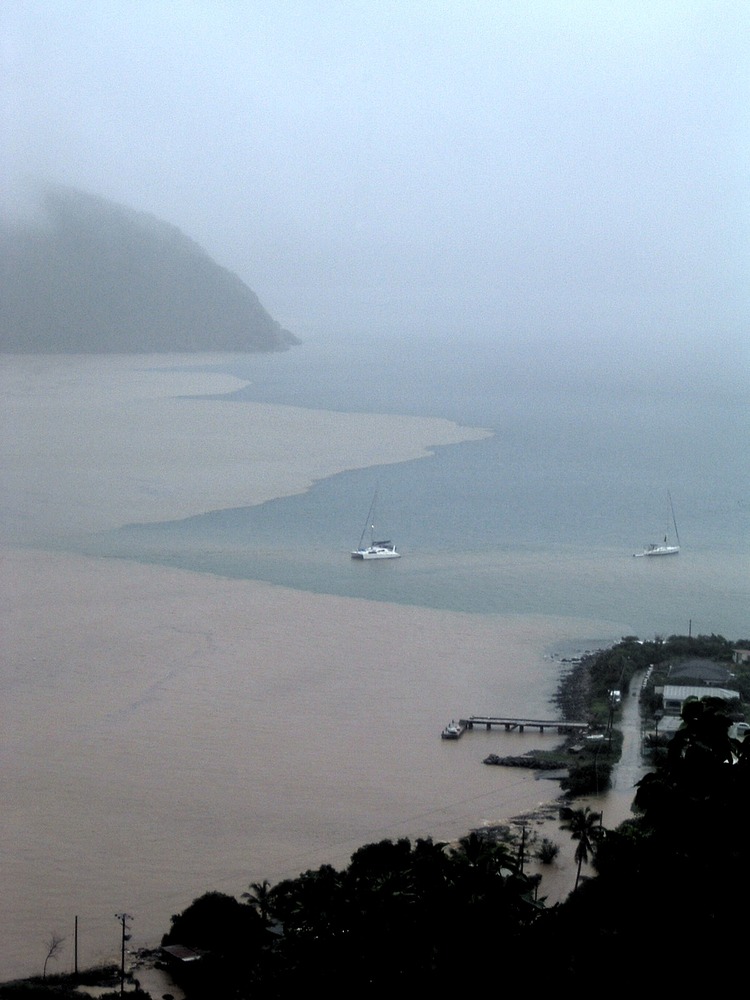
In November of 2003, I was in Tortola for the Gulf and Caribbean Fisheries Institute meeting  which was practically washed out by massive rains which did a lot of damage. They were described as 100-year rains (exclusive of tropical storms).
Dscf0006_cannonballriver
Caption: November 2003 Flooding and Sediment Run-off in Cane Garden Bay

This past week, Judith Towle and Jean Pierre Bacle were in the BVI working on several projects and many of their activities were washed out by massive rains, said to be the equal of the November 2003 storms. 

The article below from the Herald in Scotland, which also suffered from massive storms explains why we can expect a LOT more of these major storms.

The INCREASING FREQUENCY of storms also suggests why construction and erosion and sediment control measures MUST be increased.

Devastation on a ‘Biblical’ scale: is this a glimpse of the future for the UK?


•

4122022961

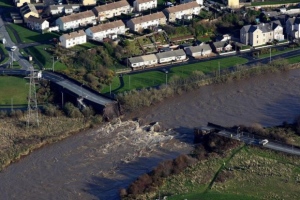
• The destroyed brige in Cumbria

Chris Watt

Blank
Published on 21 Nov 2009

The “biblical” floods that have wreaked havoc across parts of Britain will become more common in future as global weather patterns change, forecasters warn.

North-western England sank yesterday under the heaviest rainfall ever seen in Britain, with more than a foot recorded in just 24 hours at a weather station in Seathwaite, Cumbria.

Hundreds of residents were evacuated as rising water laid waste to towns and farmland, and the RAF scrambled helicopters to offer aid to the worst-hit areas.

The downpour has devastated the town of Cockermouth, just south of the Scottish border, where more than 200 locals have been forced to flee their homes for safety. Two rivers have burst their banks in the area, sending millions of gallons of rainwater flowing through the main streets and leaving vehicles and businesses submerged.

Red Cross worker Ian Rideout said large numbers of people were suffering from shock, and that the centre of Cockermouth “looks like it has been completely destroyed”.

“I’ve never seen anything like it,” he said. “The water has caused so much damage that many of the homes here are completely ruined.

“We’ve been working non-stop and between the Red Cross and RNLI we’ve rescued in the region of 200 people from their homes.

“Most of the people we’ve rescued have been in shock. One minute it’s raining heavily, then the next their home is filling with water and they’re being evacuated by the Red Cross.”

Mr Rideout led a crew from northern Scotland to tackle the flooding, aided by two boats and nine rescue vehicles.

Local resident Alan Smith said the townspeople were worried by forecasts of more rain into the weekend, even though the water level was falling yesterday afternoon. At one point it reached eight feet deep in some parts of the town.

He said: “It’s come down four feet from last night, but the fells are sodden and if we get any more rain, it will just come straight off and into the river and the level will rise again.

“If we have persistent rain like last night and the day before, we will be back to square one.”

The Met Office said the rainfall that was seen in north-western England over the past three days had broken historical records, and the 12.5 inches that hit Seathwaite in just 24 hours was the heaviest downfall recorded in the UK since records began in 1914.

Though the latest weather conditions, described as “a historical event” by MeteoGroup forecaster Julian Mayes, could not be blamed entirely on climate change, experts have warned that such freak occurrences are likely to become normal in the years to come.

Describing the flooding as being of “biblical proportions”, Mr Mayes said: “The fact that there’s eight feet of water in some places is not that surprising.

“Primarily, it’s the sheer quantity in the last 36 hours that has caused the flooding. But in November the ground is saturated. The rain can’t get into the soil, it just runs off. That means rivers rise very quickly and suddenly.”

Chris Bell, a forecaster at the University of East Anglia in Norwich, agreed that a direct link should not be made between the floods and global warming.

“It’s probably not good practice scientifically to blame single weather events on climate change,” he said.

“That being said, if the globe is indeed warming, you’re going to have more heat in the atmosphere. We know that air that is warm is able to carry more water vapour. There is certainly the potential that we could have heavy rain events more commonly in the future.”.

Dr Richard Dixon, director of WWF Scotland, said the flooding underlined the need for a strong deal at the Copenhagen conference on climate change in December.

“In England this is being called a thousand-year flood, but climate change will make that much more common,” he said. “It’s now just a question of how bad it will get. If we don’t get good reduction measures, it will get worse.”


•

0blank

Send to a friend

Posted in Uncategorized | Leave a comment

Looking into cruiseships in the BVI

http://www.facebook.com/photo.php?pid=1236357&op=1&view=all&subj=…

Posted in Uncategorized | Leave a comment

High Rise Ugliness on the South River. . . . .

Another grotesquery. . . .

Not many people in the South River watershed realize that the Parole Town Center development is not only a terrestrial monstrosity, but it also intrudes directly on the the South River viewshed — ironically, it’s doubly ugly from the spot shown here, which is just off the Londontown House dock

P1020745_parole_town_ctr_fr_lo

Posted in Uncategorized | Leave a comment

EPA orders cleanups by Baltimore and Anne Arundel 13 Nov 2009

www.baltimoresun.com/features/green/bal-md.briefs132nov13,0,5346525.story

baltimoresun.com

EPA orders cleanups by Baltimore and Anne Arundel
November 13, 2009

Baltimore City and Anne Arundel County have been cited for water pollution violations in the wake of federal inspections that found spilled oil, trash and other debris in storm drains at local government facilities, the Environmental Protection Agency announced Thursday. Rainfall washing off parking lots lacking in pollution controls often carries nutrients, sediment and other pollutants into streams, rivers and the Chesapeake Bay. The agency ordered each local government to correct the problems, including a lack of paperwork, training and housekeeping, that were identified in inspections of vehicle maintenance shops, landfills and solid-waste transfer stations. The federal agency did not levy any fines, but warned penalties could follow if the governments did not comply. Spokesmen for the city and county said each is taking steps to correct the problems.

– Timothy B. Wheeler

Copyright © 2009, The Baltimore Sun

S32454074877314

Posted in Uncategorized | Leave a comment